

Table of Contents
On the morning of May 1, 1960, a 30-year-old pilot hung under a parachute above the Ural Mountains with a silver dollar around his neck. Hidden inside it was a needle coated in poison.
He did not use it. Francis Gary Powers landed in a plowed field near Sverdlovsk, was quickly arrested, and became the most famous prisoner of the Cold War.
The strange part is what happened when he came home. Many Americans decided that surviving had been his mistake, and the official record took half a century to say otherwise. Here is what he actually did, what he was accused of, and what the declassified files show.
Who Was Francis Gary Powers?
Francis Gary Powers was the CIA pilot whose Lockheed U-2 was brought down by a Soviet surface-to-air missile on May 1, 1960. He was captured, put on trial in Moscow, and freed 21 months later in a spy swap on the Glienicke Bridge in Berlin.
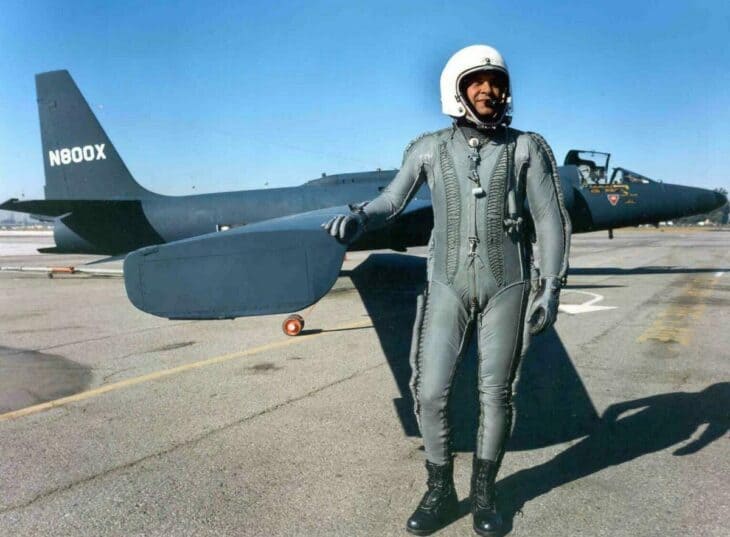

At home he was treated as an embarrassment for years. A CIA board of inquiry cleared him in 1962, but the Air Force did not award him the Silver Star until June 15, 2012, 35 years after he died.
Francis Gary Powers at a glance
Born August 17, 1929, in Jenkins, Kentucky. Air Force F-84 pilot, recruited by the CIA in 1956. Shot down over Sverdlovsk on May 1, 1960, after 27 earlier U-2 missions. Sentenced to 10 years, freed on February 10, 1962, in exchange for KGB officer Rudolf Abel. Killed in a news helicopter crash in Los Angeles on August 1, 1977, aged 47. Buried at Arlington National Cemetery.
From Coal Country to 70,000 Feet
Powers was the son of a Kentucky coal miner who wanted him to become a doctor. He studied biology and chemistry at Milligan College, enlisted in the Air Force in October 1950, and earned his wings flying the T-33 and F-80.
By 1953 he was flying the F-84 Thunderjet with a fighter squadron at Turner Air Force Base, Georgia. In January 1956 the CIA recruited him, and that May he left the Air Force as a captain to become a civilian agency pilot.
The job was the U-2, which the CIA describes as a powered glider that could cruise at 70,000 feet (21,300 m). The theory was simple: Soviet fighters and missiles could not reach that height, so the camera in its belly could photograph missile sites and bomber bases unmolested.
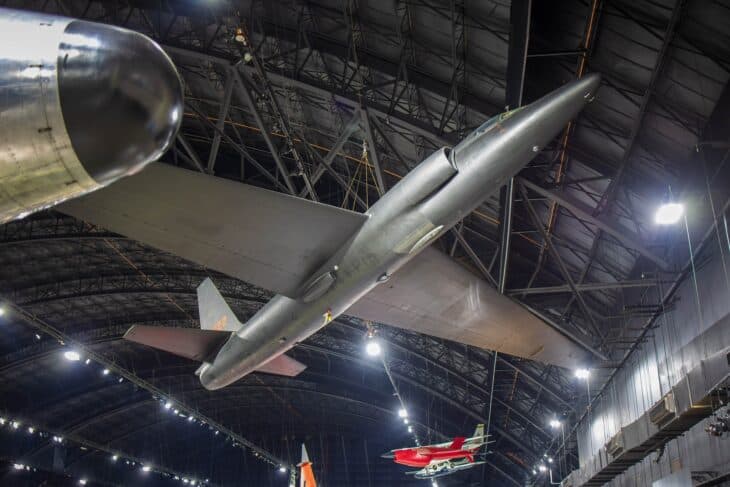
Powers’ family thought he was flying weather research for NASA. In reality his unit, Detachment 10-10, flew from Incirlik in Turkey, and by 1960 he had flown 27 missions.
What Happened on May 1, 1960
The flight, code-named Grand Slam, was the most ambitious U-2 mission yet. Powers took off from Peshawar, Pakistan, to cross the whole Soviet Union, photograph the missile sites at Baikonur and Plesetsk and the Mayak plutonium plant, and land at Bodø, Norway.
The route ran about 3,788 miles (6,100 km), roughly 2,900 of them over Soviet territory. It was planned to take nine hours, and Powers made it about four.
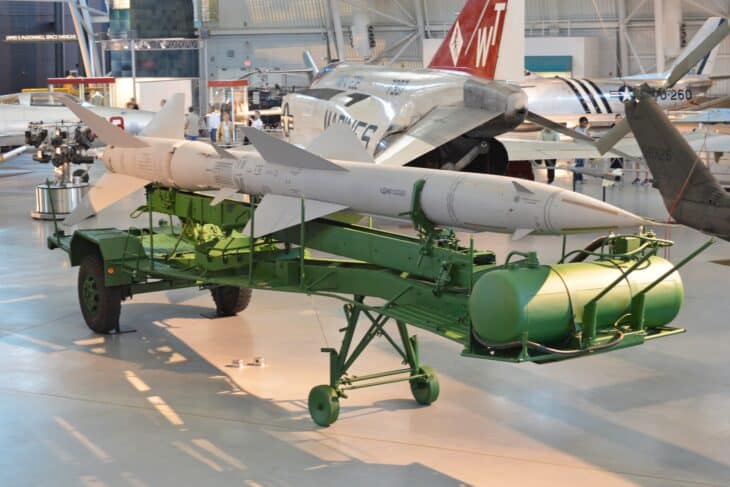
The U-2’s protection was supposed to be altitude alone. What the pilots did not know was that improvements to the Soviet SA-2 Guideline missile now let it reach the U-2’s maximum altitude, at the very edge of its range.
According to the Air Force’s account, the Soviets fired 14 SA-2s at him. None hit the aircraft directly: one exploded behind the U-2 at the limit of its range and radar tracking, and the shock wave tore the fragile airframe apart.

The pilot the Soviets shot down by mistake
Powers was not the only airman hit that day. One of the Soviet missiles destroyed a MiG-19 sent up to chase the U-2, killing its pilot, Sergei Safronov. The friendly-fire loss stayed largely unknown in the West, and Powers’ son only learned of it from former Soviet officials after the USSR collapsed. He later met Safronov’s son.
Powers’ own account was that he saw an orange flash behind and to the right while flying at 70,500 feet (21,500 m). The tail and wings came off, and the U-2 fell into a spin.
He judged that firing the ejection seat in that position would sever his legs, so he released the canopy to climb out. The G-forces threw him clear before he could reach the switches that would have destroyed the camera.
The Cover Story That Fell Apart in a Week
Washington assumed the plane had been destroyed and the pilot was dead. On May 5, NASA put out a press release about a missing weather plane whose pilot had reported oxygen trouble, and a U-2 was painted in NASA colors and shown to reporters.
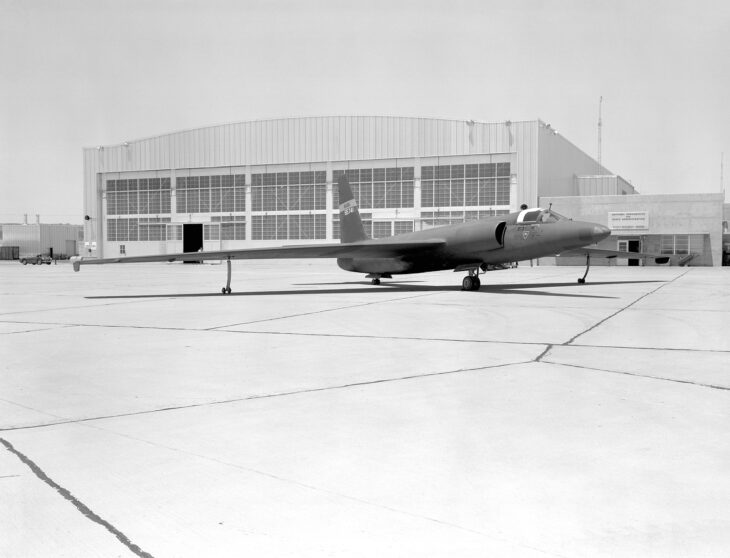

Nikita Khrushchev had been waiting for exactly that. On May 7 he announced that the pilot was alive, and the Soviets later put the wreckage, Powers’ helmet and his flight suit on display in Moscow’s Gorky Park.
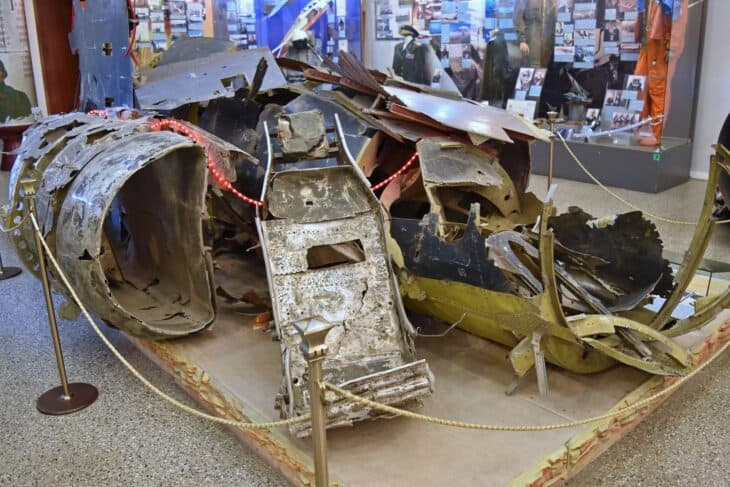

On May 11, President Dwight Eisenhower admitted that he knew about the overflight program and defended it. The Paris summit with Khrushchev collapsed days later, when the Soviet delegation walked out after Eisenhower refused to apologize.
Trial, Prison and the Bridge of Spies
Powers was held in Moscow’s Lubyanka prison and, by the Air Force’s count, interrogated for 107 days. His trial opened on August 17, 1960, his 31st birthday, before the military court of the Soviet Supreme Court.
He told the court he was ashamed and sorry, a display many Americans found hard to accept. On August 19 he was sentenced to 10 years: three in prison and seven in a labor camp.
He served his time in Vladimir Central Prison, where he kept a diary at the suggestion of his Latvian cellmate, Zigurds Krūmiņš, and learned to weave rugs. Both the diary and a rug from his cell are now in the Smithsonian’s National Air and Space Museum collection.
The way out was his father’s idea. Oliver Powers proposed trading his son for Rudolf Abel, a KGB colonel serving a sentence in the United States, and on February 10, 1962, the two men crossed the Glienicke Bridge in Berlin.
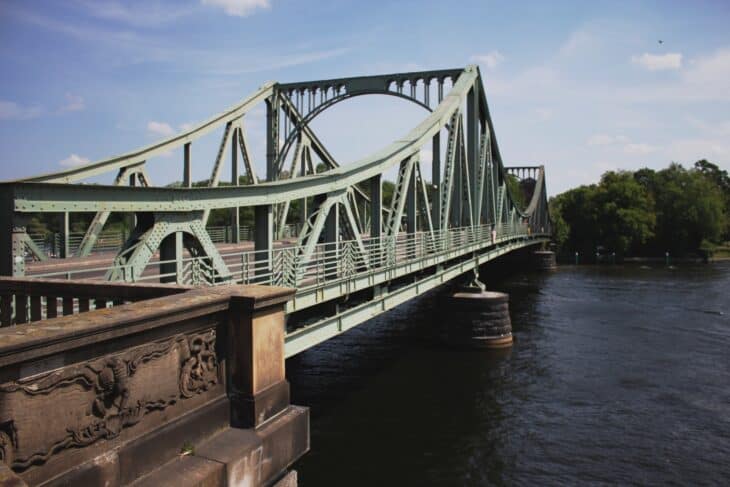

An American student, Frederic Pryor, was released at Checkpoint Charlie as part of the same deal. Powers had been a prisoner for 21 months.
The engineer in line at Gorky Park
Among the visitors who queued to see the U-2 wreckage in Moscow in 1960 was Arnold Spielberg, an American in Moscow on business. His son Steven heard about it at home, and 55 years later directed Bridge of Spies, the 2015 film about the exchange.
Why America Turned on Him
Powers flew home on an Air Force plane whose crew treated him coldly, and that set the tone. Press articles questioned his patriotism and called him “something less than a hero,” and Ian Fleming, the creator of James Bond, said of him: “He was expendable. Expend him!”
The charges against him, spoken and unspoken, came down to three things. He had not used the poison needle, he had not destroyed the aircraft, and he had apologized to the Soviet Union in open court.
A fourth suspicion made the others worse. If Soviet missiles could not reach a U-2 at full altitude, the reasoning went, then Powers must have descended, which made his capture his own fault.
The CIA’s new director, John McCone, set up a board of inquiry. After eight days of closed hearings it exonerated Powers, authorized $52,500 in back pay and returned him to the agency.
He testified to the Senate Armed Services Committee on March 6, 1962, with a CIA-built U-2 model whose wings and tail came off to show how his aircraft broke up.
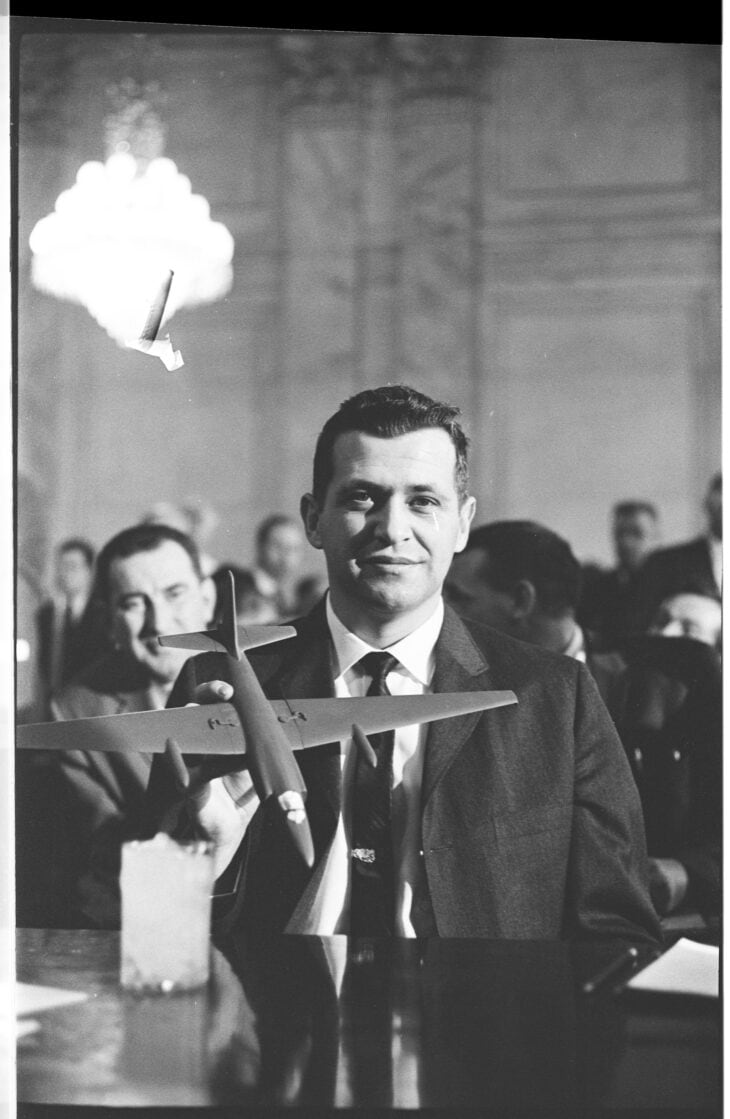
Still, a meeting with President Kennedy was cancelled at the last minute, while the two RB-47 airmen released by the Soviets a year earlier had been welcomed at the White House.
Powers worked as a Lockheed test pilot from 1962 to 1970, and after he published his memoir, Operation Overflight, Lockheed let him go. He and his son believed the CIA was behind it.
The Myths, and What the Record Says
Myth: Powers was supposed to kill himself rather than be captured
He was not. U-2 pilots were neither required nor expected to use the poison pin. It was an option in case of torture, and Powers carried the silver dollar on this flight by his own choice. He later said his faith kept him from using it.
He gave away the program’s secrets. The Air Force’s own account says the opposite: although interrogated and harassed by Soviet secret police, he refused all attempts to give sensitive information or be used for propaganda.
By his own account, he even told his interrogators the U-2 could only reach 68,000 feet, lower than its real ceiling. The trial apology was real, but the classified details stayed with him.
He must have flown low. This was the most damaging suspicion, and it rested on the belief that the SA-2 could not reach 70,000 feet. It could, just, and that is how the Air Force describes the shootdown: a near miss at the edge of the missile’s range.
After a 1998 declassification conference, his son found a document putting the U-2 at 70,500 feet when it was hit, matching what Powers had always said.
A National Security Agency tracking report released by the CIA in 2010 suggested the aircraft had descended, so the argument has never fully died. The CIA board still cleared him, and the Air Force’s 2012 account describes a near miss at the limit of the missile’s reach.
He was a military officer captured in uniform. Technically, he was a civilian CIA employee on the day he was shot down. Files declassified in 1998 showed the flight was a joint CIA and Air Force operation, and that new information led to his Prisoner of War Medal in 2000.
How Francis Gary Powers Died
After Lockheed, Powers flew traffic reports for Los Angeles radio before KNBC television hired him in 1976 to fly its news helicopter, a Bell 206 JetRanger registered N4TV. On August 1, 1977, he was returning from covering a wildfire near Santa Barbara with cameraman George Spears aboard.
Low on fuel, he asked to land at Van Nuys Airport, but the engine flamed out before he got there. He tried an autorotation into the Sepulveda Dam recreation area in Encino, and both men were killed.
The NTSB blamed fuel exhaustion caused by the pilot’s in-flight decisions and fuel management (report LAX77FA060). His son has said a faulty fuel gauge had been repaired without Powers being told, which would have left him misreading how much fuel remained; the NTSB finding does not include that.
The helicopter came down about 50 yards from a group of boys playing baseball, and it has long been suggested that he steered away from them. Nobody on the ground was hurt.
The 52-Year Road to the Silver Star
Powers was buried at Arlington National Cemetery. His son, Francis Gary Powers Jr., was nine when he died and spent much of his adult life working to correct the record, founding the Cold War Museum in 1996.
May 1, 1960
Shot down near Sverdlovsk. An SA-2 explodes behind his U-2 during the Grand Slam overflight.
Aug. 19, 1960
Sentenced in Moscow. Ten years for espionage, three in prison and seven in a labor camp.
Feb. 10, 1962
Freed on the Glienicke Bridge. Exchanged for KGB colonel Rudolf Abel after 21 months in captivity.
1962
Cleared by the CIA. A board of inquiry finds he met his obligations and awards $52,500 in back pay.
1965
Intelligence Star. The CIA awards him the Intelligence Star.
Aug. 1, 1977
Killed in Encino. His KNBC news helicopter runs out of fuel short of Van Nuys Airport.
May 2000
POW Medal. Forty years after the shootdown, he is awarded the Prisoner of War Medal and the Distinguished Flying Cross.
June 15, 2012
Silver Star. Gen. Norton Schwartz presents it at the Pentagon to his grandchildren.
The award recognized his heroism as a captive of the Soviets from May 1960 to February 1962. “At the height of the Cold War, the nation called on extraordinary men like Captain Powers to undertake the most sensitive and dangerous missions,” Air Force Chief of Staff Gen. Norton Schwartz said at the ceremony. “Captain Powers earned this Silver Star.”
The U-2 itself outlived the scandal. Eight months after Powers was freed, U-2 photographs found Soviet missiles in Cuba, and the type earned its place among the most important spy planes ever flown.
Powers is still one of the most looked-up aviators in history, ninth on our list of the most famous pilots with 342,298 Wikipedia readers in the 12 months to August 2026.
The name people search for belongs to the man in the Moscow dock. The record now describes the pilot who fell from 70,500 feet and kept his secrets.
Sources and references used for research and fact-checking.
- CIA, Studies in Intelligence Vol. 63, No. 2, Spy Pilot: Francis Gary Powers, the U-2 Incident, and a Controversial Cold War Legacy (review)
- U.S. Air Force, Cold War U-2 pilot gets posthumous Silver Star
- CIA Museum, U-2 model used by Francis Gary Powers
- U.S. Department of State, Office of the Historian, The U-2 Incident, 1960
- National Park Service, Francis Gary Powers
- Smithsonian Magazine, Gary Powers Kept a Secret Diary With Him After He Was Captured by the Soviets
- The Spokesman-Review, How the U-2 incident went down
- Wikipedia, Francis Gary Powers
- Wikipedia, 1960 U-2 incident
- Wikipedia, 1977 Encino helicopter crash
- This Day in Aviation, Bell 206B JetRanger N4TV crash, Francis Gary Powers, 1 August 1977
Get the Newsletter
The latest aviation news and stories sent to your inbox.
About the Author

Tim is the owner and lead editor of AeroCorner since 2019, overseeing aviation content covering aircraft, airlines, airports, and the broader aviation industry. Through years of researching, writing, editing, and publishing aviation-focused content, he has developed extensive practical knowledge of commercial aviation and air travel. Based in Asia and a frequent traveler himself, Tim also brings firsthand passenger experience to AeroCorner’s coverage. Outside of publishing, he has also explored aviation firsthand through hands-on flight training in New Zealand.