

Table of Contents
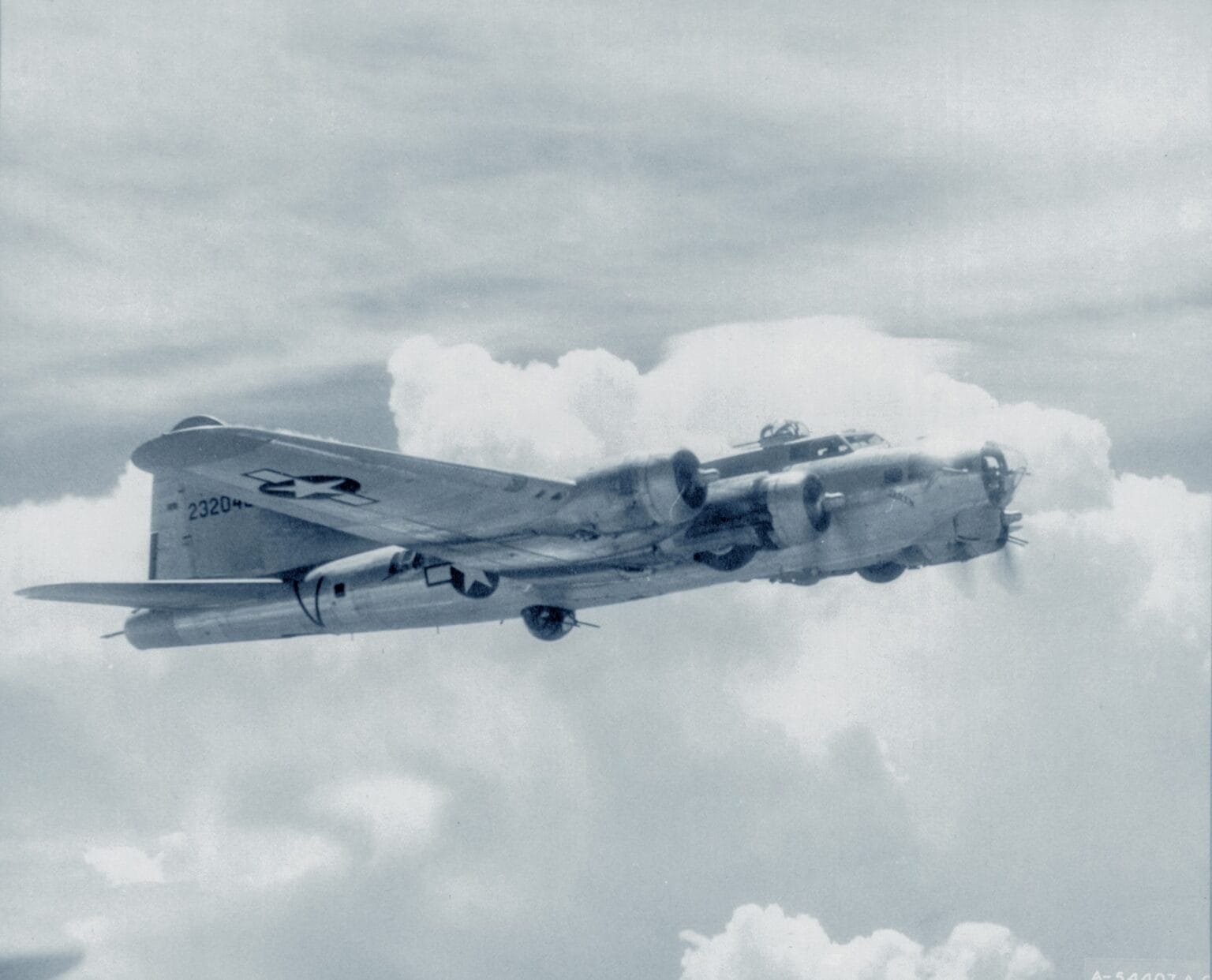
On December 20, 1943, a German fighter pilot named Franz Stigler pulled up beside an American B-17 over northern Germany with his guns ready. The bomber’s nose was shattered, its tail gunner was dead, and only one of its four engines was still giving full power.
He could see the wounded men inside. He did not fire. Instead he flew alongside the bomber until it reached the North Sea, saluted, and turned back home.
The story usually gets told as a single moment of mercy. The more interesting answer is why a 28-year-old ace who had already claimed two bombers that day made that choice, what it could have cost him, and how much of the popular version is actually true.
Why Did Franz Stigler Spare Charlie Brown’s B-17?
Because to him, shooting a helpless, crippled bomber was the same as shooting a man hanging in a parachute. “To me, it was just like they were in a parachute,” Stigler said later. “I saw them, and I couldn’t shoot them down.”
That line traces back to a rule his commander, Gustav Rödel, had laid down: “If I ever see or hear of you shooting at a man in a parachute, I will shoot you myself.” Stigler applied it to a whole aircraft full of men who could no longer fight back.
The encounter at a glance
Date: December 20, 1943, after a raid on Bremen. Bomber: B-17F Ye Olde Pub, serial 42-3167, 379th Bomb Group, flown by 2nd Lt. Charlie Brown, 21. Fighter: Bf 109G-6 of JG 27, flown by Franz Stigler, 28. Outcome: Stigler escorted the bomber to the North Sea and let it go. Brown landed at RAF Seething in England with nine of his ten men alive.
A Bomber That Should Not Have Been Flying
Ye Olde Pub was a B-17F Flying Fortress of the 527th Bomb Squadron, 379th Bomb Group, based at RAF Kimbolton in England. The Bremen raid, aimed at the Focke-Wulf 190 factory there, was its crew’s first combat mission together.
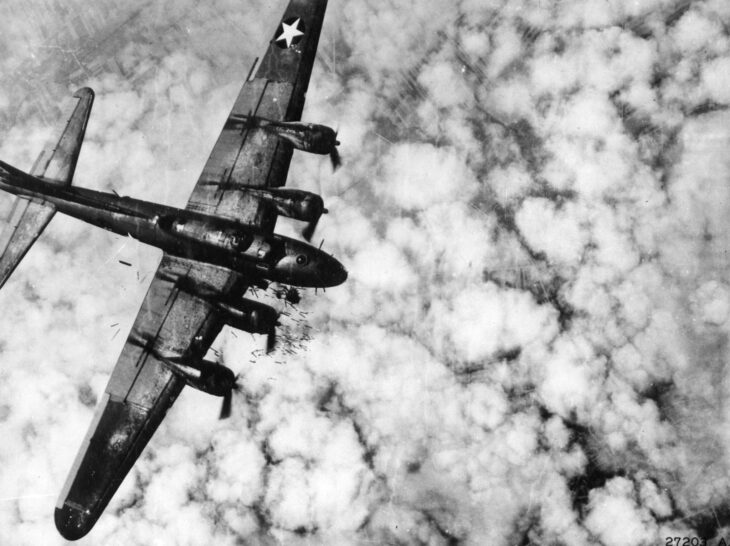

It was a big and costly day. The Eighth Air Force’s VIII Bomber Command sent 546 heavy bombers to Bremen; 13 did not return, 122 came back damaged, and 68 American airmen were killed.
Flak smashed Ye Olde Pub’s nose and damaged two of its engines. After it fell out of formation, more than a dozen Bf 109s and Fw 190s of JG 11 attacked it for over ten minutes.
By the end, half the rudder and the left horizontal stabilizer and elevator were gone, and the oxygen, hydraulic and electrical systems were damaged. Several of the bomber’s guns had frozen solid, leaving the crew with almost nothing to shoot back with.
Tail gunner Sgt. Hugh “Ecky” Eckenrode was killed. Brown was hit in the shoulder, and three other crewmen were wounded or frostbitten. Brown blacked out from lack of oxygen and came to with the bomber diving, recovering at about 1,000 feet (305 m).
The pilot was 21
Charlie Brown, from Weston, West Virginia, was 21 years old on the day of the Bremen raid. Stigler, a former airline pilot and flight instructor, was 28 and had been flying combat since North Africa.
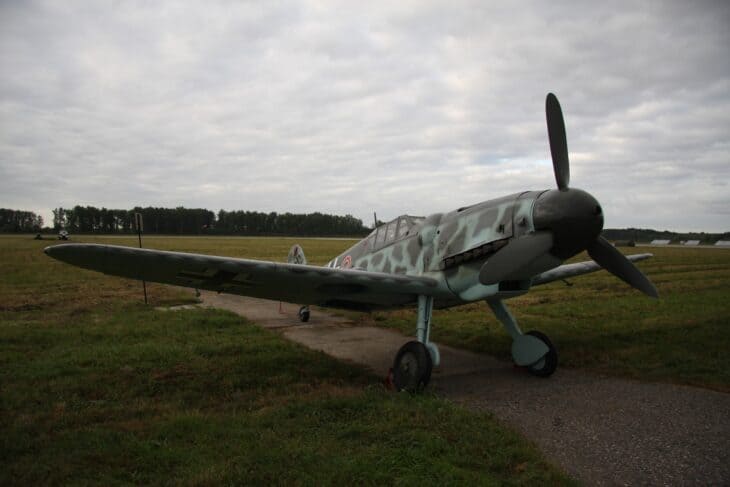
Stigler, a pilot with JG 27, was on the ground refueling and rearming when the battered bomber flew past. He took off in his Messerschmitt Bf 109G-6 and closed in from behind for what should have been an easy kill.

What Stigler Saw, and What He Risked
Coming up on the tail, Stigler expected return fire and got none. The tail gunner had already been killed.
He moved up alongside the bomber, close enough to see the damage and the men inside. That was the moment the parachute rule took over.
Stigler tried twice to signal Brown to land in Germany, where the crew would be captured but treated, or to turn for neutral Sweden. Brown did not understand him and held his course for England.
So Stigler flew on the bomber’s left wing, close enough that German flak gunners below would see a Messerschmitt and hold their fire. Once the B-17 was over open water, he saluted and peeled away.
An act that could have ended his career, or worse
Stigler never reported the flight to his superiors. Popular accounts of the story note that deliberately sparing an enemy bomber that had just hit a German city could have brought a court-martial, and he kept the episode secret for decades.
On the American side, the story stayed quiet too. Brown described the German pilot at his debriefing, and he and his crew were told not to discuss it.
Brown nursed the bomber about 250 miles (400 km) across the North Sea and landed at RAF Seething, home of the 448th Bomb Group, about 10 miles (16 km) southeast of Norwich. Nine of the ten men aboard survived.
How Two Old Enemies Found Each Other
Both men flew on. Brown finished his combat tour, later served in the US Air Force from 1949 to 1965, and then worked as a State Department Foreign Service officer.
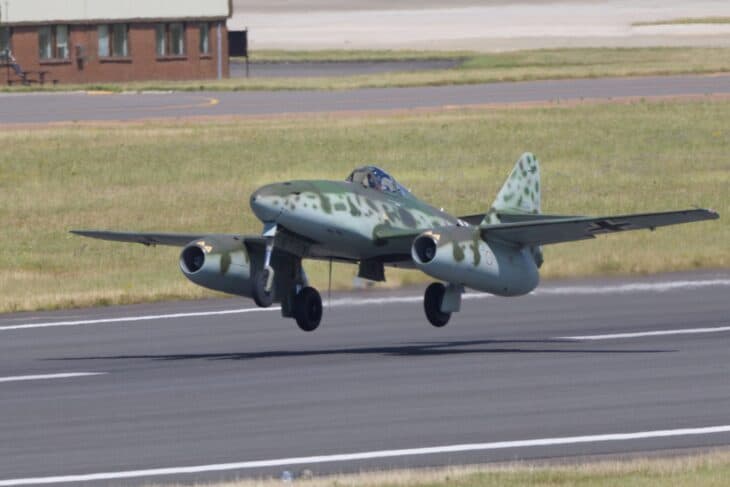
Stigler ended the war flying the Messerschmitt Me 262 jet with Jagdverband 44. He moved to Canada in 1953 and built a successful business in the Vancouver area.

In 1986, after speaking at a Gathering of Eagles event at Maxwell Air Force Base in Alabama, Brown decided to find the German pilot. He searched for four years, then placed a letter in a combat pilots’ association newsletter.
In January 1990, a reply arrived from Canada. “I was the one,” Stigler wrote, and on the phone he described his plane, the escort and the salute, details only the pilot himself could know.
Dec. 20, 1943
The encounter. Stigler escorts Ye Olde Pub to the North Sea after the Bremen raid; Brown lands at RAF Seething.
1953
Stigler emigrates. He moves to Canada and settles in the Vancouver area.
1986
Brown starts searching. A Gathering of Eagles talk at Maxwell AFB sets him looking for the German pilot.
January 1990
The letter. Stigler answers Brown’s newsletter appeal: “I was the one.”
1993
Recognition. Stigler receives the Star of Peace from the Combatants Federation of Europe.
2008
Two deaths, two honors. Stigler dies on March 22, Brown on November 24. That year Brown receives the Air Force Cross and his crew the Silver Star.
2012
The book. Adam Makos and Larry Alexander publish A Higher Call.
The two became close friends and stayed that way for 18 years. Stigler died on March 22, 2008, at 92, and Brown followed on November 24, 2008, about eight months later.
The US Air Force reviewed the mission in 2008 and awarded Brown the Air Force Cross, with Silver Stars for his crew. In 2019 a restored B-17, serial 44-8543, was repainted as Ye Olde Pub by the Erickson Aircraft Collection in Madras, Oregon.
The Myths That Grew Around the Story
Most people met this story through Adam Makos’s 2012 book A Higher Call, a Sabaton song, or a viral post. Along the way, a few details hardened into “facts” that the record does not support.
Myth: one more kill would have won him the Knight's Cross
Retellings cannot even agree on the basics. One history blog says he was exactly one victory short of the Knight’s Cross, Wikipedia calls him an ace with 27 victories at the time, and another widely shared article says he went on to receive the Knight’s Cross. He did not: his listed awards stop at the German Cross in Gold.
The deeper problem with “one kill short” is that the Knight’s Cross was not awarded for a set number of kills. Luftwaffe fighter pilots were scored on points: one for a single-engine aircraft, two for a twin-engine and three for a four-engine bomber, with the bar raised as the war went on.
That is why a B-17 mattered so much. It was worth three times a fighter, which is the honest version of the claim: sparing Ye Olde Pub cost Stigler real progress toward the award, not a guaranteed medal.
His career totals vary in the same way. Wikipedia credits him with 28 aircraft downed in 487 missions, while the claims research it cites lists 26 confirmed and one unconfirmed. He was himself shot down 17 times, bailing out six times.
Second, he did not escort the bomber “all the way to England.” He stayed with it only until it cleared the German coast and its flak, then turned back; Brown flew the long North Sea crossing alone.
Third, the friendly salute was not understood as friendly at the time. Brown could not read Stigler’s signals and ordered his top turret gunner to aim at the Messerschmitt, without firing, as a warning to keep away.
Finally, much of the dialogue and inner thought in the popular telling comes from one book, written decades later and drawn from the two men’s memories. The core facts check out against the mission records; the minute-by-minute details are best read as recollection.
Why the Story Still Lands
Air combat in 1943 was industrial. Stigler had already claimed two American bombers that day, and the men who died on the other 13 lost bombers were just as real as the crew of Ye Olde Pub.
What makes this one different is that both pilots lived long enough to compare notes. It sits among the stories of the most famous pilots in history not because of a score, but because of a shot that was never fired.
The B-17 itself is now one of the rarest sights in the sky, with only a few B-17s still flying. When one passes overhead, it is worth remembering that one of them made it home because the pilot who could have finished it chose not to.
Sources and references used for research and fact-checking.
- Wikipedia, Charlie Brown and Franz Stigler incident
- Wikipedia, Franz Stigler
- This Day in Aviation, Ye Olde Pub (tag archive): 20 December 1943
- Wikipedia, Knight's Cross of the Iron Cross
- All That's Interesting, Franz Stigler, Charlie Brown, And A Friendship Born From The Horror Of War
- Control Towers, Franz Stigler & Charlie Brown incident
Get the Newsletter
The latest aviation news and stories sent to your inbox.
About the Author

Tim is the owner and lead editor of AeroCorner since 2019, overseeing aviation content covering aircraft, airlines, airports, and the broader aviation industry. Through years of researching, writing, editing, and publishing aviation-focused content, he has developed extensive practical knowledge of commercial aviation and air travel. Based in Asia and a frequent traveler himself, Tim also brings firsthand passenger experience to AeroCorner’s coverage. Outside of publishing, he has also explored aviation firsthand through hands-on flight training in New Zealand.