

Table of Contents
At midday on May 8, 1945, hours before Germany’s surrender took effect, a 23-year-old Luftwaffe major spotted a Soviet Yak-9 over Brno, Czechoslovakia, dove on it from 12,000 feet (3,700 m) and shot it down. It was Erich Hartmann’s 352nd credited aerial victory, and the last one he would ever claim.
No fighter pilot before or since has come close. America’s top ace, Richard Bong, finished the war with 40. The top Allied pilot of all, the Soviet Union’s Ivan Kozhedub, had 64.
So how does one pilot outscore the best of the Allies by a factor of five or more? The honest answer has less to do with superhuman skill than most of the legend suggests, and it starts with what the number 352 actually counts.
How Did Erich Hartmann Score 352 Victories?
Hartmann flew 1,404 combat missions with fighter wing Jagdgeschwader 52 (JG 52), almost all of them on the Eastern Front, and fought in the air on 825 separate occasions. That works out to roughly one credited victory for every four missions he flew.
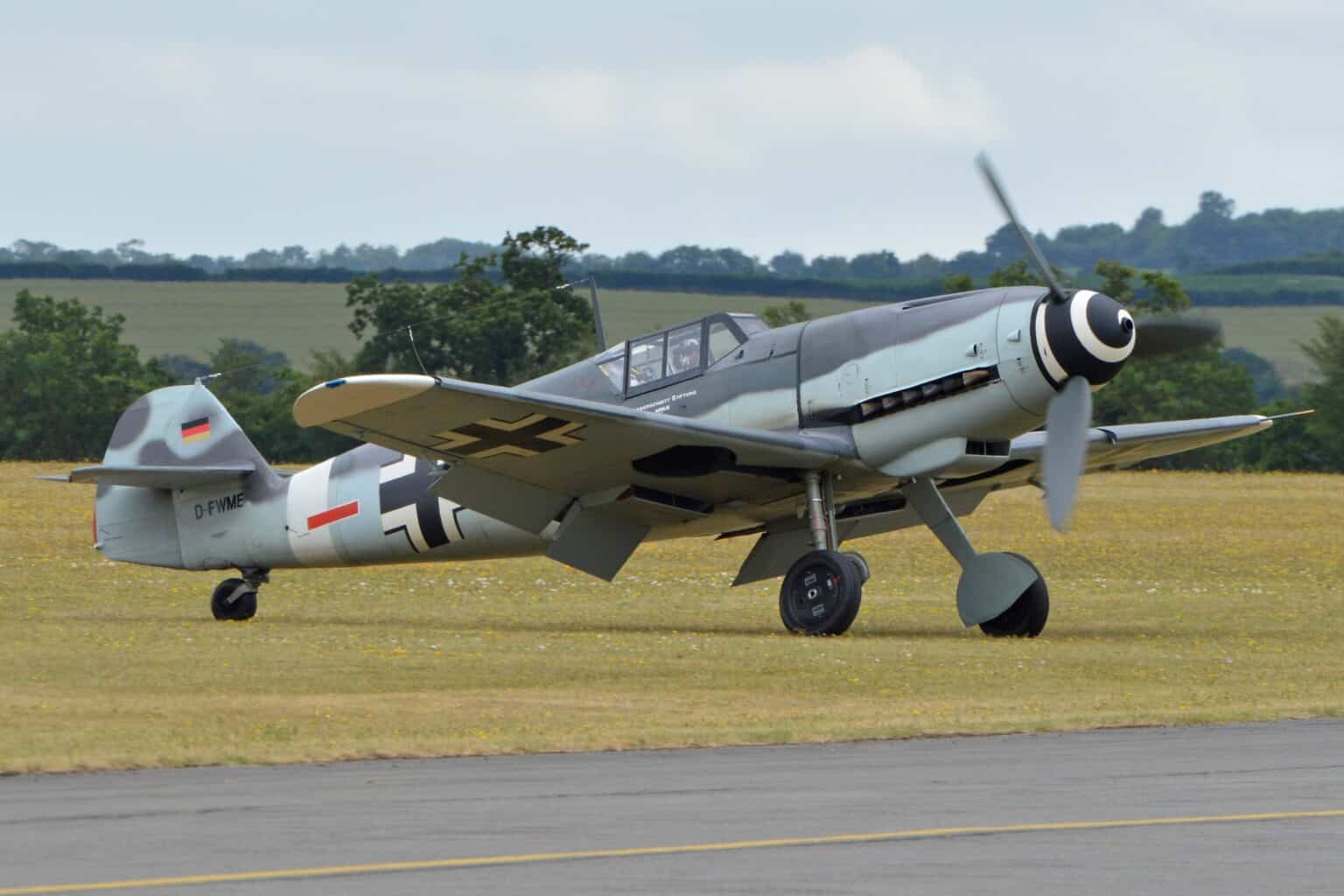
Four things drove the total: he flew far more missions than any Allied pilot could, the Soviet air force put enormous numbers of aircraft in front of him, he used an ambush style that kept him alive, and the Luftwaffe’s scoring system counted claims rather than confirmed wrecks.
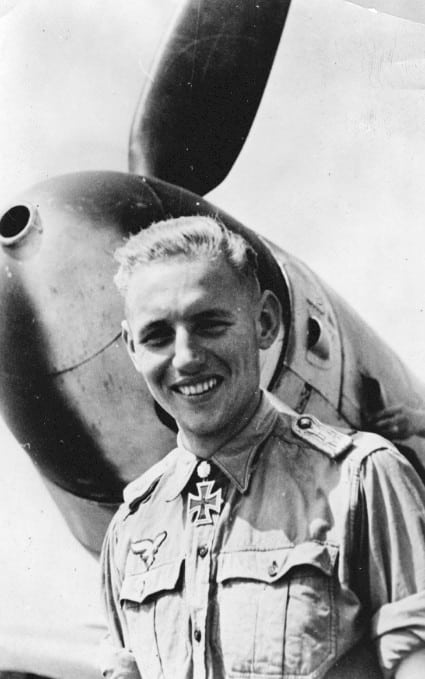
Erich Hartmann at a glance
Born April 19, 1922, in Weissach, Germany. Flew the Messerschmitt Bf 109 on the Eastern Front, mostly with JG 52, from October 1942 to May 1945. Credited with 352 aerial victories in about 1,400 missions, the highest total in history. Spent 10 years in Soviet prison camps after the war, later commanded a West German jet wing, and died September 20, 1993.
He Simply Never Stopped Flying
The biggest single reason for the gap is time in combat. Western Allied pilots usually flew a limited number of missions and then rotated out or went home.
German fighter pilots had no such exit. With too few replacements coming through, they usually flew until they were killed, captured or badly wounded, which is why the top German scorers stacked up mission counts the Allies never reached.
Compare the workloads. Kozhedub flew 330 sorties in his whole war, while Hartmann logged more than four times as many. In early August 1943 alone, Hartmann flew 20 missions in six days.
He was also far from a prodigy at the start. His first combat mission, on October 14, 1942, ended with him breaking formation, missing his target, and crash-landing out of fuel, and by the end of 1942 he had just two victories.
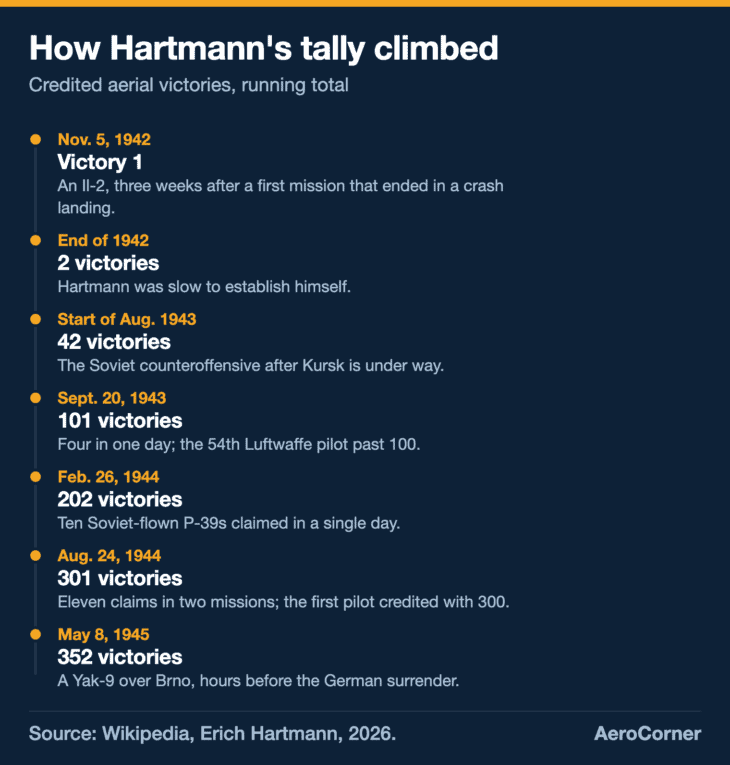
The climb began in the summer of 1943. His tally stood at 42 at the start of August and passed 100 on September 20, when he claimed four in one day.
From there the pace was relentless. He reached 202 on February 26, 1944, after claiming 10 Soviet-flown P-39s in a single day, and on August 24, 1944, he claimed 11 aircraft in two missions to become the first pilot ever credited with 300.
The Eastern Front Was Full of Targets
To score, a fighter pilot needs enemy aircraft in his patch of sky. The Luftwaffe on the Eastern Front was usually matched or outnumbered, so a German pilot there rarely lacked targets.
Early on, the opposition was often poorly equipped. Hartmann later said some Soviet fighters had gunsights painted by hand on the windscreen, and rated the Lend-Lease Bell P-39 Airacobra, the P-40 and the Hurricane below his Messerschmitt Bf 109.
Hartmann was not alone in this. Gerhard Barkhorn, from the same wing, was credited with 301 victories, and Günther Rall with 275. When Hartmann passed 100 in September 1943, he was the 54th Luftwaffe pilot to do it.
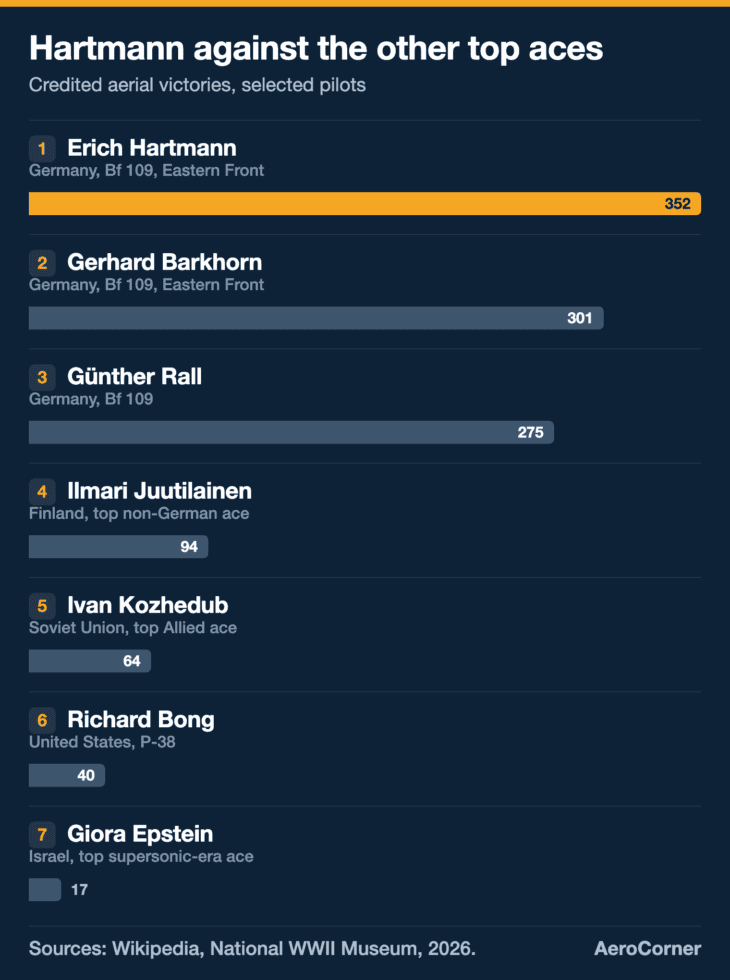
The best non-German total belongs to Finland’s Ilmari Juutilainen, with 94 confirmed victories, also against the Soviets. For more of the war’s top scorers, see our ranking of the highest-scoring WW2 flying ace of every country.
Get Close, Fire Once, Leave
Hartmann was not a marksman in the mold of Hans-Joachim Marseille, who was famous for hard deflection shots. His method was the ambush, which he summed up as “See, Decide, Attack, Break.”
He would spot the enemy first, pick a target that was not maneuvering, close in, and hold fire until he was about 66 feet (20 m) away or less. Then came one short burst and an immediate exit to reassess, rather than a turning dogfight.
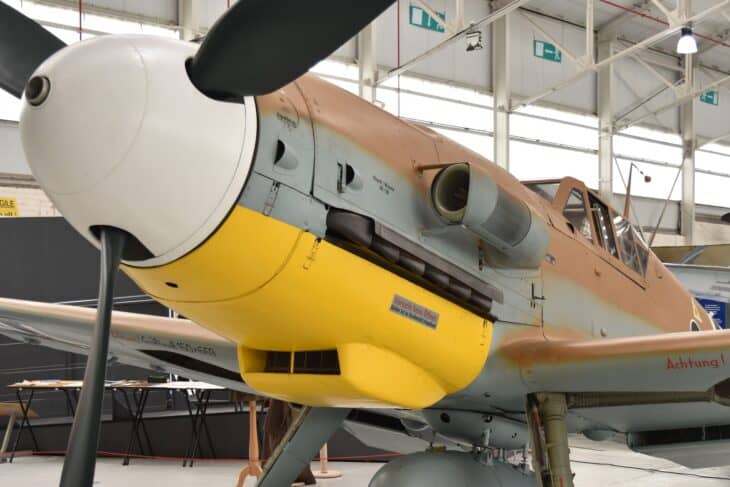

Firing that close gave the target no warning and little chance to evade, and it wasted little ammunition. The catch was debris: several of Hartmann’s 16 forced landings came after parts of an aircraft he had just hit struck his own fighter.
The Black Devil's tulip
Soviet pilots knew Hartmann’s radio call sign, Karaya 1, and reportedly put a 10,000-ruble bounty on him. He briefly flew with a black tulip painted on his cowling, but opposing pilots avoided the marked aircraft so often that his claims dropped. He had it painted over, and in the next two months claimed more than 50 victories.
The Myth: 352 Kills, and Never Shot Down
Two things everyone repeats
Hartmann is routinely described as having 352 kills and as never having been shot down. The first is a count of claims, not confirmed wrecks. The second holds only under a narrow definition.
Start with the number. Under Luftwaffe rules a claim needed a witness, such as a wingman, a ground observer or gun-camera film, and an unwitnessed claim counted only as a probable.
German records released on microfilm in the 1990s show that unwitnessed claims from established pilots sometimes slipped through anyway, and that about 90 percent of all claims submitted were confirmed or judged in order for confirmation.
Every air force of the war overclaimed, because two pilots often hit the same aircraft, and a damaged plane that limped home could look like a kill. The real test is the other side’s loss records, and those were closed to most researchers for decades.
Now that they are opening, the picture is shifting. Daniel and Gabor Horvath, who checked JG 52’s claims over Hungary in 1944 and 1945 against records of every Soviet aircraft lost there, say Soviet loss reports suggest the number Hartmann actually destroyed may be much lower than 352.
Even the breakdown is disputed. The usual figure is 345 Soviet and 7 American aircraft, but Mathews and Foreman’s search of the German Federal Archives found records for 352 claims including just 2 American P-51s, plus two more unconfirmed claims. His second logbook was lost, and his first biographers filled in late-war claims from sources since shown to be unreliable.
Then there is “never shot down.” Hartmann was forced to land 16 times, from mechanical failure or debris, and on August 20, 1943, he came down behind Soviet lines, was captured, faked an injury and escaped. At least one source credits that forced landing to a Soviet Il-2 pilot, Lt. P. Yevdokimov.
In late June 1944, American P-51 Mustangs chased his Bf 109 until it ran out of fuel, and he bailed out. He was never clearly shot down in a dogfight, but saying an enemy never brought him down goes too far.
Why the Record Will Almost Certainly Stand
The conditions that produced 352 are gone. No modern air war puts hundreds of enemy fighters in front of the same pilot for years on end, and modern missiles let one pilot destroy a target from miles away, but there are far fewer targets to find.
The top scorer of the supersonic era, Israel’s Giora Epstein, was credited with 17 victories, all against Egyptian aircraft. That is about one-twentieth of Hartmann’s total.
That is also why historians warn against reading the ranking as a skill table. As the Canadian pilot and writer Wayne Ralph put it, comparing aces on their scores alone ignores how differently each country, front and phase of the war credited victories.
Ten Years in the Gulag, Then the Starfighter Fight
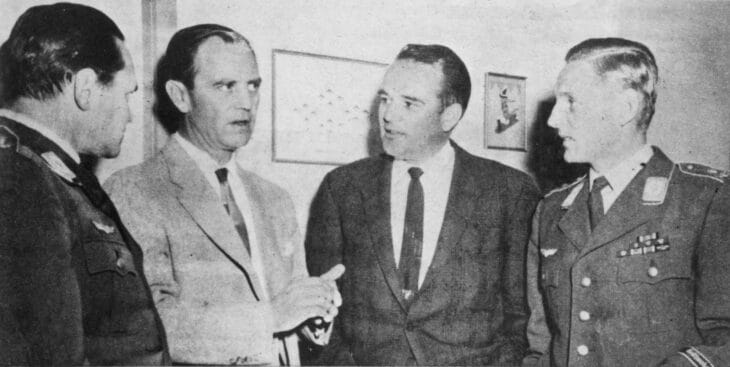
Hartmann surrendered his unit to the US 90th Infantry Division, which handed him to the Soviets days later. He was convicted of war crimes in two trials, sentenced to 25 years of hard labor, and released only in late 1955. In 1997, Russia’s Chief Military Prosecutor ruled he had been wrongly convicted and cleared him.
He then joined the new West German air force and from 1959 to 1962 commanded JG 71 “Richthofen,” the country’s first all-jet fighter wing. Its Canadair Sabres were later replaced by the Lockheed F-104 Starfighter, an aircraft Hartmann considered unsafe.
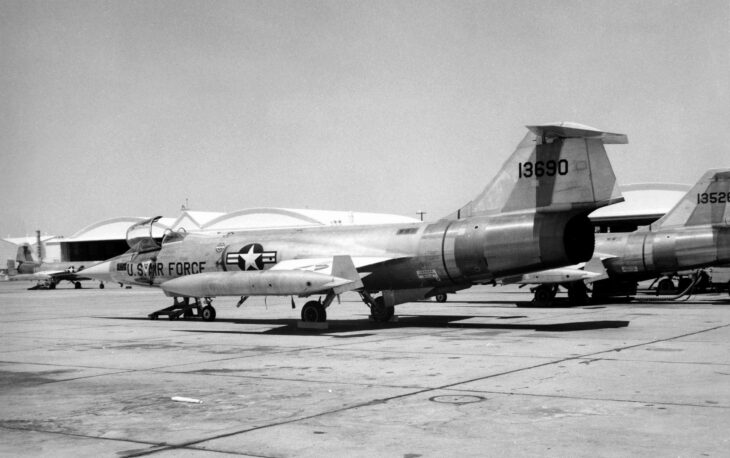

His open criticism of the F-104 cost him his career, and he was pushed into retirement in 1970. The record backed him: West Germany lost 269 Starfighters in non-combat crashes, which killed 116 German pilots.
His reputation has a shadow too. The 1970 biography that made him famous in America, The Blond Knight of Germany, is now criticized by historians for feeding the myth of a “clean” Wehrmacht and borrowing uncritically from Nazi-era propaganda about aces. For how he fits among the era’s other names, see our list of the best fighter pilots in history.
So the next time you read that Hartmann had 352 kills, read it as 352 credited claims from a pilot who flew more than 1,400 missions on the busiest air front of the war. That is still a record nobody will break, just not the one the legend describes.
Sources and references used for research and fact-checking.
- Wikipedia, Erich Hartmann
- Wikipedia, List of aerial victories claimed by Erich Hartmann
- Wikipedia, Confirmation and overclaiming of aerial victories during World War II
- Helion & Company, Verified Victories: Top JG 52 Aces Over Hungary 1944-45
- Military History Visualized, Why did the German Aces have so many air kills?
- Wikipedia, Gerhard Barkhorn
- Wikipedia, Günther Rall
- Wikipedia, Ivan Kozhedub
- Wikipedia, Ilmari Juutilainen
- The National WWII Museum, Major Richard Bong's Medal of Honor
- Wikipedia, Giora Epstein
Get the Newsletter
The latest aviation news and stories sent to your inbox.
About the Author

Tim is the owner and lead editor of AeroCorner since 2019, overseeing aviation content covering aircraft, airlines, airports, and the broader aviation industry. Through years of researching, writing, editing, and publishing aviation-focused content, he has developed extensive practical knowledge of commercial aviation and air travel. Based in Asia and a frequent traveler himself, Tim also brings firsthand passenger experience to AeroCorner’s coverage. Outside of publishing, he has also explored aviation firsthand through hands-on flight training in New Zealand.