

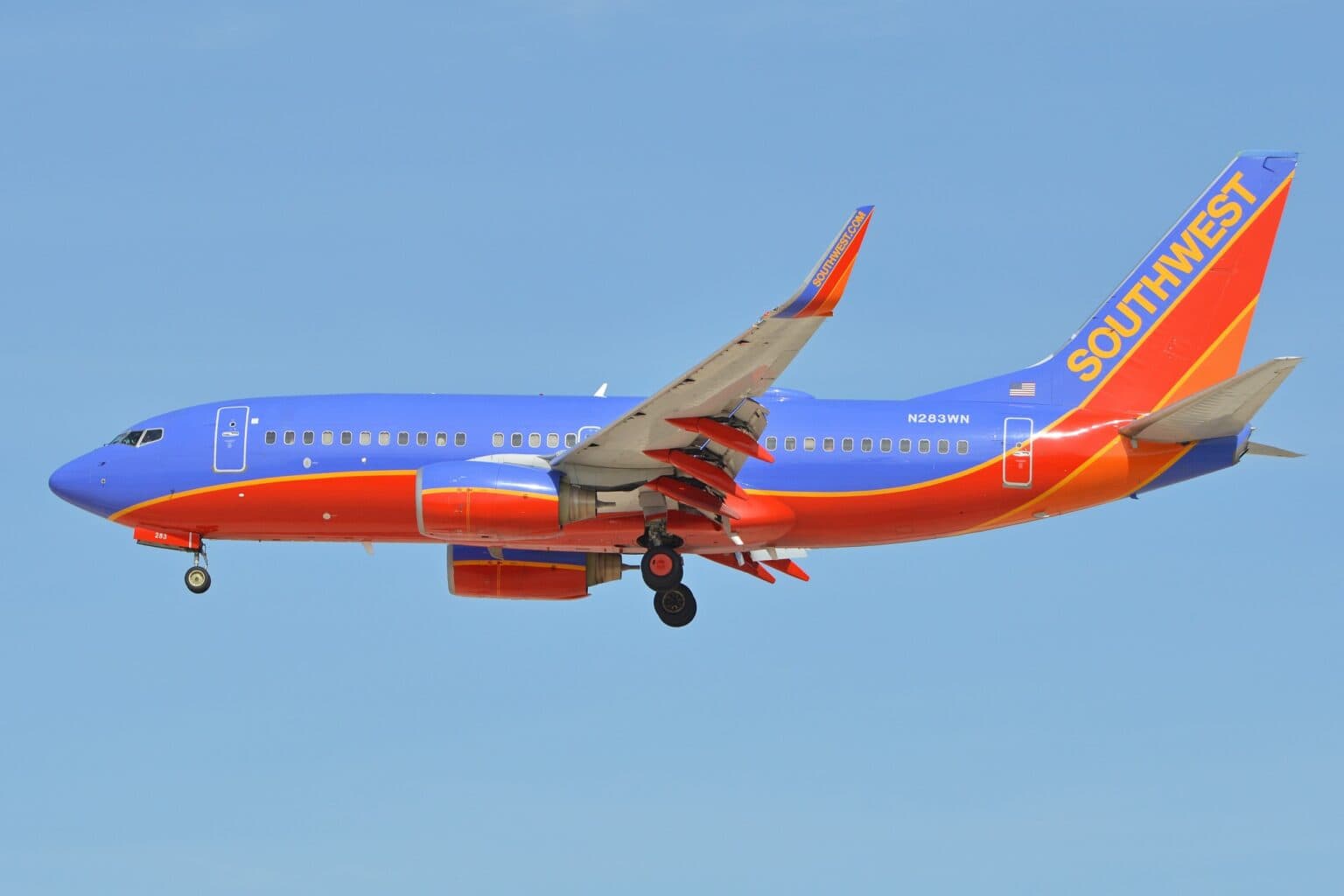
Southwest Airlines flight WN927, a Boeing 737-700 registered N283WN, diverted to Los Angeles International Airport on the morning of November 17, 2026, after its crew reported a stall in the right engine at 30,000 feet. The flight from Hollywood Burbank Airport to San Jose had 123 people on board and landed safely about half an hour later.
The details of the emergency call come from The Aviation Herald, which reported on November 18 that the crew declared PAN PAN about 80 nautical miles north of Los Angeles. The engine, a CFM56, was still running, and the crew could maintain altitude, the site said.
What the Flight Track Shows
FlightAware’s track shows the jet taking off from Burbank at 8:28 a.m. PST and climbing northwest on its way to San Jose. It reached 30,000 feet (FL300) about 10 minutes later.
At about 8:42 a.m., over the southern San Joaquin Valley southwest of Bakersfield, the track turns west and then swings back to the south. The 737 held 30,000 feet for several more minutes and began its descent at about 8:51 a.m.
It touched down at LAX at 9:11 a.m., 43 minutes after leaving Burbank, on runway 24L according to The Aviation Herald. That is roughly 30 minutes after the turn, consistent with the site’s account of a landing about 30 minutes after the stall.
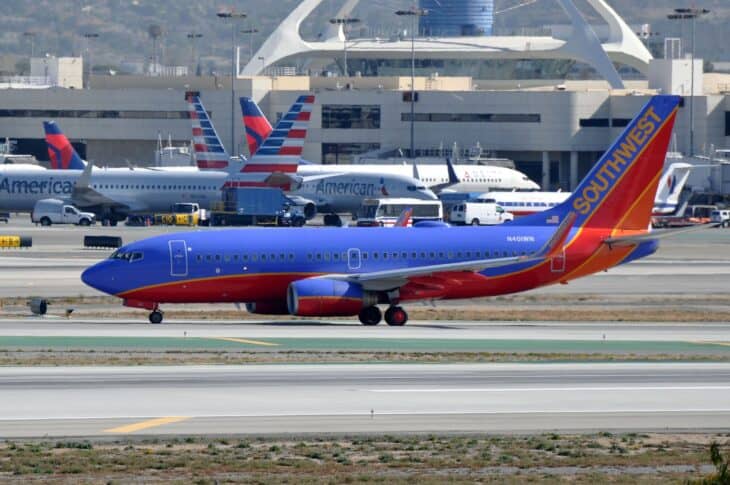

FlightAware’s history for N283WN ties the tail number to the diverted flight. The FAA registry lists N283WN as a 737-7H4 built in 2007, owned by Southwest and recorded with CFM56-7B24 engines.
The Jet Stayed on the Ground
The rest of the flight was cancelled, and the aircraft was still on the ground in Los Angeles about 25 hours after landing, The Aviation Herald reported. As of early November 19, FlightAware showed no flights by N283WN since the diversion, though it listed the jet on a scheduled Los Angeles to Baltimore departure that morning.
AeroCorner found no report of how the passengers reached San Jose, and no statement from Southwest about the flight. The FAA’s incident statements page, last updated November 17, had no entry for WN927 when checked on November 19.
The cause of the stall has not been published.
What an Engine Stall and a PAN PAN Call Mean
In a turbofan, a stall usually means a compressor stall: the smooth flow of air through the compressor breaks down, and the blades stop pushing air rearward efficiently. It can be a single bang that clears by itself or a repeated surge, and crews normally reduce thrust on the affected engine while they watch its readings.
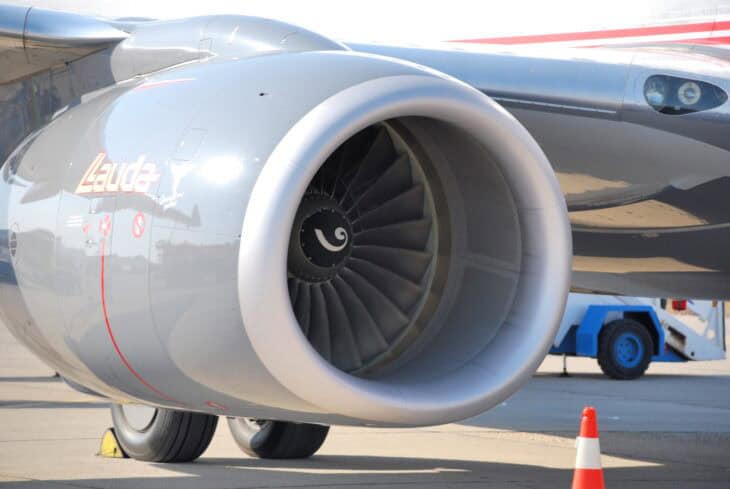

Known triggers range from ingested birds or ice to internal wear and damage, which is why an engine that stalls is usually inspected before it flies again. Which of those, if any, applies to N283WN is not known.
PAN PAN is the urgency call, one step below a mayday distress call. It tells controllers the crew has a problem that needs priority handling but that the aircraft is not in immediate danger, one of the ways pilots can declare an emergency to ATC.
A twin-engine airliner like the 737-700 is certified to keep flying and land on one engine. With an engine that is not behaving, crews generally divert to a suitable nearby airport instead of continuing to the destination, which here was still well over 150 miles away.
Another Southwest Engine Diversion Into LAX This Month
Eleven days earlier, on November 6, Southwest flight WN3396 from Orange County to San Jose also diverted to LAX with a right engine problem. The FAA said that crew reported an engine issue, and the jet landed safely at about 12:25 p.m. local time.
That was a different 737-700, N281WN, and The Aviation Herald reported that its crew shut the CFM56 down in flight. In WN927’s case, the crew reported that the engine was still running.
The two flights share a type, a destination and a diversion airport, but no published source links them, and the cause of neither event has been made public. The CFM56-7B powers every 737 Next Generation jet, a family whose fan blades were the subject of a proposed FAA inspection rule in July, though nothing reported so far points to fan blades in either diversion.
Sources and references used for research and fact-checking.
Get the Newsletter
The latest aviation news and stories sent to your inbox.
About the Author

AeroCorner News is the aviation news desk of AeroCorner.com. It covers accidents and incidents, safety rulings, airline and airport disruption, and new aircraft. It works from primary sources such as the NTSB, FAA, EASA and the manufacturers' own announcements.