

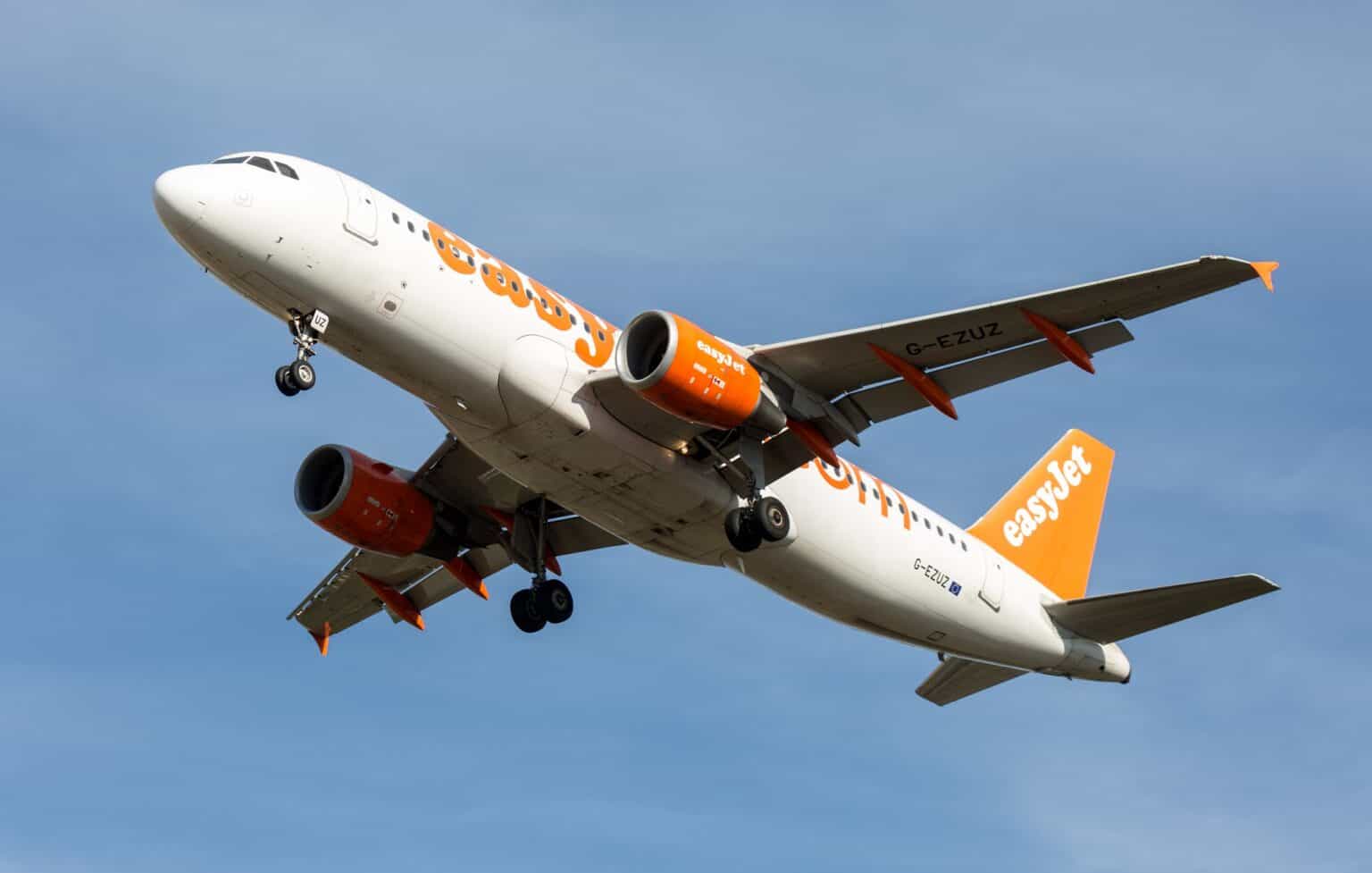
easyJet flight U2213 from Bristol to Edinburgh declared an emergency and returned to Bristol Airport on the morning of Wednesday, November 18, 2026. easyJet said the Airbus A320 had been hit by a bird, and that nobody was hurt.
The jet landed back at Bristol at about 10:05 a.m. GMT, roughly 40 minutes after it took off, according to FlightAware tracking data. easyJet put a replacement aircraft on the route, and the flight reached Edinburgh shortly before 1 p.m.
What happened on U2213
U2213 is the same flight that easyJet’s own statement calls EZY213: U2 is the airline’s two-letter code and EZY its three-letter one. Flight trackers showed it under the radio callsign EZY897J, which is why some early reports used that name instead.
The flight was scheduled to leave Bristol at 9:15 a.m. and left at about 9:24 a.m., according to the BBC. Tracking data compiled by The Aviation Hub identifies the aircraft as the A320 registered G-EZUZ.
Shortly after departure the crew set the emergency transponder code 7700, the Mirror reported. The jet turned back over the Brecon Beacons in South Wales and circled over the Bristol Channel before heading in to land.
The Aviation Hub’s tracking shows the A320 holding at about 15,000 feet before it started down at around 9:52 a.m. It landed on Bristol’s Runway 27 at about 10:06 a.m.

What easyJet said about the bird strike
An easyJet spokesperson told the BBC that the plane landed back in Bristol safely and that nobody was hurt. The aircraft was met by emergency services as a precaution, in line with standard procedures.
“While this was outside of our control, we would like to apologise for the inconvenience caused,” the airline said. It added that it had arranged a replacement aircraft to continue the flight to Edinburgh that morning.
Passengers were told through easyJet’s flight status service that the disruption was “due to a bird strike on your aircraft,” according to the Mirror. Bristol Airport confirmed that the jet had landed safely.
FlightAware shows the replacement flight leaving Bristol at 12:04 p.m. and landing in Edinburgh at 12:58 p.m., almost two and a half hours after the original 10:35 a.m. arrival time. AIRLIVE reported that the replacement was another A320, registered G-EZWL.
What is still unclear
AIRLIVE, citing an unnamed source, reported that the bird hit during the takeoff roll or the first part of the climb and damaged one of the two engines, causing high vibration. It said G-EZUZ was taken out of service for inspection and repair.
easyJet’s statement did not mention an engine, vibration or any damage, and the airline has not said what the inspection found. The number of passengers and crew on board has not been published.
The return came a month after a similar easyJet event, when flight U2415 diverted to Liverpool on October 18 after a bird strike on the way from Glasgow to Southampton.
Why a bird strike can turn a flight around
Bird strikes are mostly a low-altitude hazard. US figures from the Federal Aviation Administration put about 70% of strikes between the ground and 500 feet, and 36% of strikes on fixed-wing civil aircraft during the takeoff run and climb.
The same FAA data ranks engines and wings as the parts most often damaged on US civil aircraft, each accounting for a quarter of damaged components. A bird drawn into an engine can bend fan blades, and an unbalanced fan shows up in the cockpit as vibration.
The Airbus A320, like any twin-engine airliner, is built to fly and land on one engine. A crew with an engine it cannot fully assess still has good reason to go back to the departure airport rather than carry on to Scotland.
Squawking 7700 tells air traffic control that a flight has an emergency and needs priority. Public flight trackers flag the emergency transponder code too, which is how U2213’s turn back was spotted and followed online.
In the UK, wildlife strikes are mandatory occurrence reports to the Civil Aviation Authority, which publishes yearly statistics on them. Its data counts a strike as confirmed only when remains or damage are found after the flight.
Sources and references used for research and fact-checking.
Get the Newsletter
The latest aviation news and stories sent to your inbox.
About the Author

AeroCorner News is the aviation news desk of AeroCorner.com. It covers accidents and incidents, safety rulings, airline and airport disruption, and new aircraft. It works from primary sources such as the NTSB, FAA, EASA and the manufacturers' own announcements.