How High Do Airplanes Fly? Cruise Altitudes and Ceilings Explained

How high do airplanes fly? Airliners cruise at 30,000 to 42,000 feet. Here is what sets that band, plus the real ceiling for every aircraft type.

Published: by Editorial Team

Add AeroCorner as a preferred source on Google
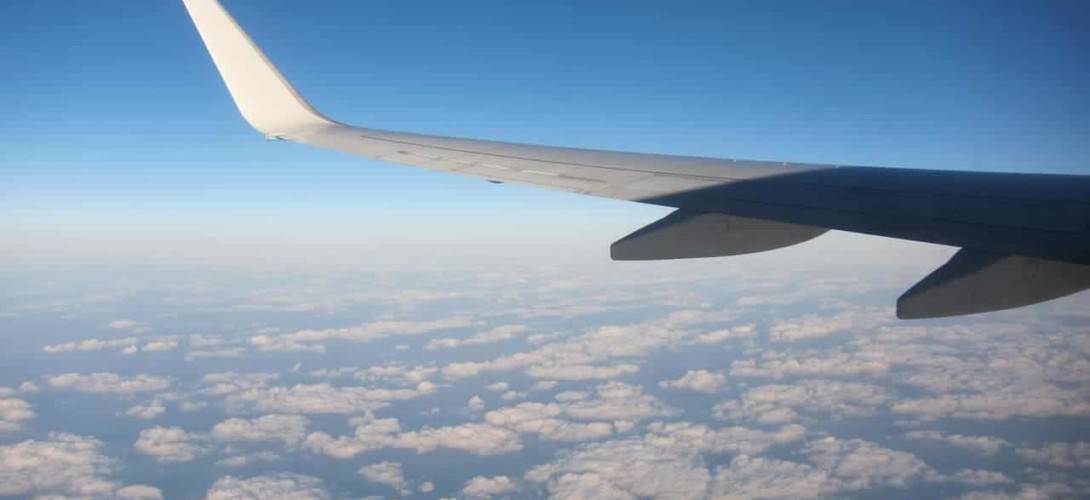
Tip of wing above the clouds
Tip of wing above the clouds – © Editorial Team

Get the Newsletter

The latest aviation news and stories sent to your inbox.

Most commercial airliners cruise between 30,000 and 42,000 feet, which is 5.7 to 8 miles above the ground. A typical long-haul flight settles near 35,000 feet, and a short domestic hop often stays in the 20,000s.

That band is not a rule of thumb or a tradition. It is the narrow window where the air is thin enough to cut drag but still thick enough for the engines to make thrust, and where the airframe is still inside its certified limits.

Below is the cruise band explained, the certified ceiling for each class of aircraft as of 2026, and the altitude records that sit far above anything you will ever fly on.

AircraftCategoryMaximum certified altitudeStatus
Airbus A320neoNarrow-body airliner39,800 ftIn service
Boeing 737 MAXNarrow-body airliner41,000 ftIn service
Boeing 787-10Wide-body airliner41,100 ftIn service
Boeing 787-8 / 787-9Wide-body airliner43,100 ftIn service
Airbus A350-900Wide-body airliner43,100 ftIn service
Gulfstream G700Business jet51,000 ftIn service
ConcordeSupersonic airliner60,000 ftRetired 2003
F-15 EagleFighter65,000 ftIn service
U-2S Dragon LadyReconnaissanceAbove 70,000 ftIn service
SR-71 BlackbirdReconnaissance85,069 ft (record flight)Retired
Maximum certified or officially published altitude, not typical cruise. Figures from manufacturer data, EASA type certificates, and US Air Force fact sheets, 2026.

Three different numbers, three different questions

Cruise altitude is where an aircraft actually flies on a normal day. Maximum certified altitude is the highest it is legally allowed to go. An altitude record is a one-off flight flown light, clean and deliberately. Most articles blur all three, which is why the same aircraft gets quoted at three different heights.

Why Airliners Cruise Between 30,000 and 42,000 Feet

Air gets thinner with height. At 40,000 feet it is only about a quarter as dense as it is at sea level, so an aircraft pushing through it meets roughly a quarter of the drag at the same true airspeed.

Less drag means less fuel for the same distance, which is the entire economic case for climbing. That is the short version of why airliners bother going so high in the first place.

The catch is that a jet engine also needs air to make thrust, and thin air gives it less to work with. Climb far enough and the engine can no longer produce enough thrust to hold speed, so the saving reverses.

Altitude buys two more things. Weather mostly lives in the troposphere, so cruising near or just above the tropopause puts the aircraft above the majority of clouds, storms and turbulence, which is a large part of why airliners fly in the stratosphere at all.

It also buys glide time. An aircraft at 37,000 feet that loses both engines has several minutes and well over 100 miles of range to find somewhere to put down.

What Actually Sets the Ceiling

Three separate limits stop an airliner climbing higher, and the lowest one wins on any given day.

The aerodynamic squeeze

As an aircraft climbs, the indicated speed at which the wing stalls creeps upward, while the speed at which airflow over the wing goes supersonic stays fixed. The gap between “too slow” and “too fast” narrows the higher you go.

Pilots call the point where those two speeds meet the coffin corner, and it is the hard aerodynamic lid on the climb. It is also why a heavy aircraft cannot reach its own ceiling until it has burned off fuel.

This is why a long-haul flight often steps up in stages. It might level at 35,000 feet after takeoff and climb to 39,000 or 41,000 feet hours later, once it is thousands of pounds lighter.

The pressurization limit

Under US regulation 14 CFR 25.841, a pressurized airliner must keep the cabin at no more than an 8,000-foot equivalent altitude in normal operation. The higher the aircraft flies, the harder the fuselage has to work to hold that difference.

Carbon composite structures changed the calculation. The Boeing 787 holds a 6,000-foot cabin altitude instead of 8,000, which is measurably more comfortable on a 14-hour flight, and it does so while cruising higher than the aluminium jets it replaced.

You would have about 30 seconds

If the cabin lost pressure at 35,000 feet, the FAA puts a pilot’s time of useful consciousness at 30 to 60 seconds. At 40,000 feet it falls to 15 to 20 seconds, and at 45,000 feet to 9 to 12 seconds. That collapsing margin is exactly why the oxygen mask briefing says to fit your own first.

The traffic limit

Above 29,000 feet, aircraft stop using local altimeter settings and fly standardised pressure altitudes called flight levels. Between FL290 and FL410 inclusive, approved aircraft are separated by just 1,000 feet under Reduced Vertical Separation Minimum rules.

Above FL410 that separation doubles to 2,000 feet, which halves the usable levels. There is far more room to fit an aircraft in the RVSM band, so that is where controllers put almost everything.

All of this depends on every aircraft measuring height the same way, which is a story of its own: see how airplanes know their altitude for the instruments behind the number.

Why Short Flights Fly Lower

Climbing is expensive. An airliner burns fuel at its highest rate on the way up, and it only starts recovering that investment once it is level in thin air.

On a 200-mile sector there is no cruise worth speaking of. The aircraft would reach 37,000 feet and immediately start down again, having spent more fuel on the climb than the thin air ever gave back.

So short hops level off in the 20,000s, and turboprops on regional routes often cruise lower still. The same flight number on the same aircraft type can cruise 15,000 feet apart on different days depending on distance, weight and winds.

How High Each Type of Aircraft Flies

Airliners: 39,800 to 43,100 feet

The Airbus A320neo is certified to 39,800 feet and the Boeing 737 MAX to 41,000 feet. Wide-bodies go higher: the Boeing 787-8 and 787-9 and the Airbus A350-900 are all certified to 43,100 feet.

The stretched 787-10 is the exception in its own family at 41,100 feet, because a longer, heavier fuselage on the same wing cannot be pushed as high.

43,100 feet is the practical ceiling for airline flying today. Nothing you can buy a ticket on goes meaningfully higher, and that limit is the subject of the invisible ceiling every airliner slams into.

Business jets: up to 51,000 feet

Private jets routinely out-climb airliners. The Gulfstream G700 is certified to 51,000 feet, roughly 8,000 feet above the highest-flying airliner in service.

They can do it because they are small, light and built around a stiff, heavily pressurized fuselage. Getting above the airline flight levels also means less traffic and fewer reroutes.

Concorde: 60,000 feet

No civil aircraft has ever carried passengers higher than Concorde. Its maximum cruise altitude was 60,000 feet, which is 11.4 miles up, high enough that the sky visibly darkens toward black.

Concorde was cleared in a 10,000-foot block and drifted upward through the crossing, entering supersonic cruise around 50,000 feet and climbing as it burned fuel. It has been retired since 2003 and nothing has replaced it.

Military aircraft: 65,000 feet and beyond

Military ceilings depend entirely on the mission. The US Air Force lists the F-15 Eagle at 65,000 feet, while transports and tankers cruise in the same band as the airliners they share airspace with.

The outlier is the Lockheed U-2S Dragon Lady, which the Air Force describes only as flying “above 70,000 feet”. Its pilots wear full pressure suits of the kind astronauts use, because at that height blood would boil at body temperature without one.

The U-2 gets there on glider-like wings 105 feet across, not on brute thrust. That is also what makes it notoriously difficult to land.

Helicopters: far lower than you would guess

Rotor blades run out of air much sooner than wings do, so most helicopters operate well below 15,000 feet. The full picture is in our guide to how high a helicopter can fly.

The Altitude Records

Records are kept in separate categories because how an aircraft got off the ground matters enormously. Mixing them is the single most common error in altitude articles.

Highest by an aircraft taking off under its own power: 123,523 feet. Alexandr Fedotov flew a heavily modified MiG-25, designated Ye-266M, to 37,650 metres on 31 August 1977. That is 23.4 miles up, and the FAI record still stands nearly 50 years later.

Highest sustained horizontal flight: 85,069 feet. On 28 July 1976, Captain Robert Helt and Major Larry Elliott took an SR-71 Blackbird to 16.1 miles and held it there, the absolute record for an air-breathing aircraft in level flight.

Highest by any winged aircraft: 354,200 feet. Joseph Walker flew the X-15 rocket plane to 67 miles on 22 August 1963, well past the boundary of space. The X-15 was air-launched from a B-52, which is why it is not eligible for Fedotov’s category.

Highest without a rocket: 96,863 feet. NASA’s solar-electric Helios Prototype reached 18.3 miles over Hawaii on 13 August 2001, on nothing but sunlight and 14 propellers.

No, the SR-71 did not fly at 90,000 feet

The Blackbird is endlessly quoted at 90,000 feet or higher. Its certified FAI record, flown deliberately for the attempt, is 85,069 feet. Operationally it cruised lower still. The figure that gets repeated online is an estimate that hardened into a fact through sheer repetition.

What It Is Actually Like Up There

Air temperature falls about 3.6 degrees Fahrenheit for every 1,000 feet of climb. At 30,000 feet the standard atmosphere gives minus 48 F (minus 44 C), and at 35,000 feet it is roughly minus 66 F (minus 54 C).

Then it stops. At the tropopause, 36,089 feet in the standard atmosphere, the temperature levels off at minus 69.7 F (minus 56.5 C) and holds steady no matter how much higher you climb.

The tropopause is not fixed in place. It sits lower over the poles and higher over the tropics, which is one reason the same aircraft flies a different optimum altitude on a Caribbean route than on a polar one.

FAQ

A handful can, but no airliner. The Lockheed U-2S Dragon Lady is routinely flown above 70,000 feet, and its pilots wear full pressure suits to do it. The highest-flying airliners in service today, the Boeing 787 and the Airbus A350-900, are certified to 43,100 feet.
About minus 48 F (minus 44 C) in the International Standard Atmosphere. Temperature falls roughly 3.6 F for every 1,000 feet of climb, and it keeps falling until the tropopause at 36,089 feet, where it levels off at minus 69.7 F (minus 56.5 C).
Concorde did. It was cleared in a block from 50,000 to 60,000 feet and drifted upward through the crossing as it burned off fuel, with a maximum cruise altitude of 60,000 feet. No airliner in service today is certified anywhere near that height, and Concorde has been retired since 2003.
40,000 feet is 7.6 miles above sea level. The air there is only about a quarter as dense as it is at the surface, which is why an airliner meets so much less drag once it gets that high.
Most airliners cruise between 5.7 and 8 miles up, which is 30,000 to 42,000 feet. A typical long-haul flight settles around 6.6 miles, or 35,000 feet.
It depends entirely on the mission. The US Air Force lists the F-15 Eagle at a 65,000-foot ceiling and describes the U-2S reconnaissance aircraft only as operating above 70,000 feet, while military transports and tankers cruise in the same 30,000 to 40,000 foot band as airliners.
Because that is where the fuel maths works out. The air is thin enough to cut drag sharply but still dense enough for the engines to make useful thrust, and the altitude puts the aircraft above most weather. It also sits inside the flight levels where controllers can stack traffic just 1,000 feet apart.
Lower, often in the 20,000s. On a short sector the aircraft would spend most of the flight climbing to the high 30,000s and then immediately descending, and the fuel burned in that climb is more than the thin air gives back.
354,200 feet, or 67 miles, flown by Joseph Walker in the X-15 rocket plane on 22 August 1963. The X-15 was air-launched from a B-52 rather than taking off under its own power, so the record for an aircraft that takes off on its own remains the MiG-25 flight of Alexandr Fedotov, who reached 123,523 feet in 1977.

Get the Newsletter

The latest aviation news and stories sent to your inbox.

About the Author

Editorial Team

Articles credited to the AeroCorner Editorial Team are created or maintained by multiple aviation contributors working under a shared editorial framework. Content is researched using authoritative aviation sources and reviewed to ensure clarity, technical accuracy, and consistency across AeroCorner.