I recently made a bet with an opponent in a battle where the stakes were high. The objective? To see which was the better fighter jet. In one corner, we had the F-18 Hornet, a tried and tested aircraft that has seen action in many theaters of war. On the other, we had the SU-57, a new challenger still being refined in the laboratory. The matchup was close, but one had to be declared the winner. And that winner was…
Let’s take a look at the facts.
Also Read: Boeing F/A-18 Super Hornet (the Super Hornet is a new, larger, and more advanced version of the Hornet. In this article, we’ll focus on the original Hornet.)
About the Boeing F/A-18 Hornet
.jpg)
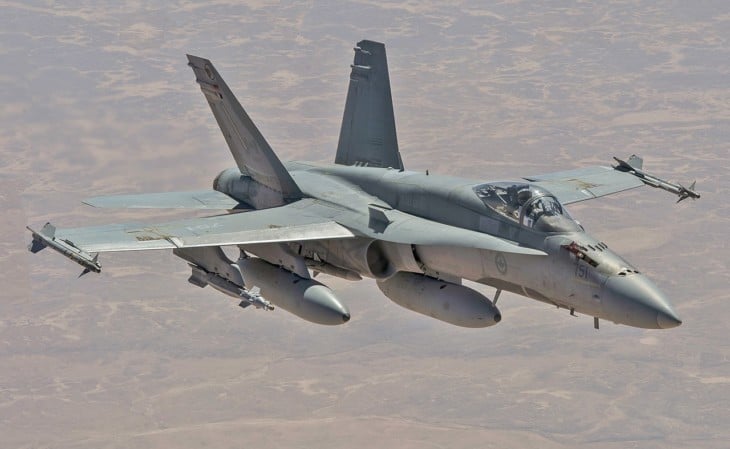
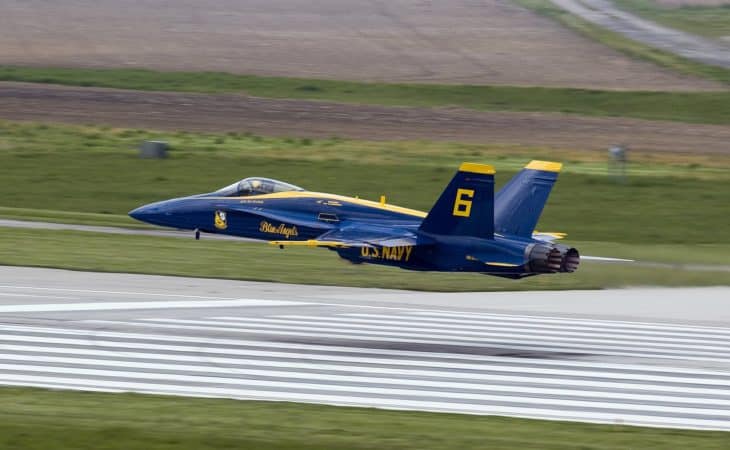
The F/A-18 Hornet is a twin-engine, all-weather, supersonic, carrier-capable, multi-role combat aircraft. Designed by McDonnell Douglas and Northrop in the 1970s, the F/A-18 was derived from the YF-17 for use by the United States Navy and Marine Corps. The F/A-18 has also been used by the air forces of several other nations and the U.S. Navy’s Flight Demonstration Squadron, the Blue Angels.
The Hornet can perform multiple roles, including fighter, attack, and reconnaissance. It can fly at supersonic speeds of Mach 1.7 and has a maximum range of over 2,000 miles. The aircraft has state-of-the-art avionics and weapons systems, making it a versatile and powerful war machine.
Since its introduction in 1983, the F/A-18 has seen action in numerous conflicts worldwide. It has proven to be a reliable and effective platform for air-to-air and air-to-ground missions. The Hornet will continue to serve as an important part of the U.S. military’s airborne capabilities for years to come.
Why Was the F/A-18 Developed and Built?
The F18 was designed and built for a specific purpose: to give the United States military an edge in air-to-air combat. The F18 is a highly maneuverable fighter jet capable of flying at very high speeds. It is also armed with various air-to-air weapons, including heat-seeking missiles.
In addition, the F18 has a state-of-the-art avionics system that allows it to detect and track enemy aircraft. The F18 was developed in response to the success of Soviet fighter jets during the Vietnam War. American pilots were often outmaneuvered and outgunned by their Soviet counterparts, and the F18 was designed to give them the upper hand in future conflicts.
Since its inception, the F18 has been involved in several military operations, including the first Gulf War and the war in Afghanistan.
It has proven to be an invaluable asset to the United States military, and its development has helped to ensure American dominance in the skies.
What Purpose Does/Did the F-18 Serve
F18 served several purposes:
- As a fighter bomber, it was used to destroy enemy ground targets and provide air support for friendly troops
- As a carrier-based aircraft, it was used to protect naval vessels from enemy attack and contribute to the maritime efforts of the US military
- As a reconnaissance platform, it was used to gather information about enemy territory and movements
- As a platform for electronic warfare, it was used to jam enemy radar and communications, disrupt their operations and gather intelligence
- Lastly, it served as a testbed for new technologies later incorporated into other aircraft models. The F18 was thus an important part of the US military’s operations for many years and continues to be used in various roles today.
About the Sukhoi SU-57 Felon

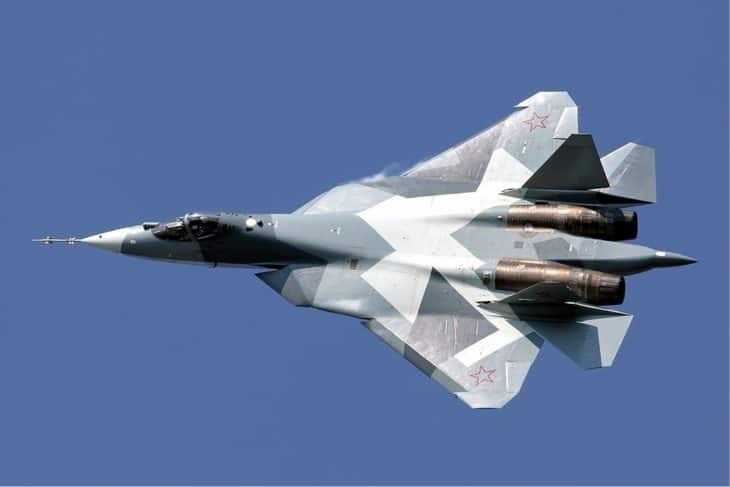
The Sukhoi Su-57 is a cutting-edge, twin-engined fighter aircraft designed for stealth multirole functionality. The Sukhoi Su-57 is a next-generation fighter aircraft designed as a more affordable option to the existing Sukhoi Su-27. The prototype made its maiden flight in 2010, and the aircraft entered service with the Russian Aerospace Forces in 2020.
The Su-57 is designed to perform a variety of roles, including air superiority, ground attack, and electronic warfare. It is armed with a 30mm cannon and can carry a variety of missiles and bombs. The aircraft also has sophisticated sensors and avionics, including an Active Electronically, Scanned Array (AESA) radar.
The Su-57 is powered by two Saturn AL-41F1 engines, which provide a maximum speed of Mach 1.92. The aircraft has a maximum range of 3,500 kilometers and can operate at altitudes up to 20,000 meters.
The Su-57 is an important part of the Russian military’s modernization efforts and represents a significant step forward in the nation’s military capability. The aircraft will play a vital role in protecting Russia’s interests at home and abroad.
Why was the Sukhoi SU-57 Felon Developed and Built?
The Sukhoi Su-57 is a stealth multirole fighter developed by Sukhoi, a Russian aircraft manufacturer. The aircraft was designed to perform a variety of roles, including air superiority, ground support, and electronic warfare.
The Su 57 is the Russian aircraft that first utilized stealth technology. In addition, it was designed to be able to travel at high speeds and maneuver quickly, as well as having advanced avionics so that it could avoid attacks from other fighter jets and ground or naval defenses.
Also Read: The 9 Best Sukhoi Fighter Jets
The aircraft is still developing and expected to enter service with the Russian Aerospace Forces in 2019. Despite its many advanced features, the Su-57 has been dogged by criticism, with some accusing Sukhoi of attempting to create an “air show” rather than a combat-worthy aircraft.
Nevertheless, the Su-57 represents a significant step forward for Russian military aviation and will likely play a key role in the country’s defense capabilities for years to come.
What purpose does/did the SU-57 Felon Serve?
- First and foremost, the SU 57 is designed to be an air superiority fighter, meaning it is meant to engage and defeat enemy aircraft in combat. The SU 57 is equipped with several advanced features to fulfill this role.
- Perhaps most notably, the SU 57 is outfitted with what is known as “stealth” skin. This skin helps to deflect radar waves, making the SU 57 harder to detect on radar screens.
- In addition, the SU 57 is equipped with advanced sensors and avionics, allowing it to track and target enemy aircraft precisely.
- Finally, the SU-57 is armed with various air-to-air missiles, giving it the firepower necessary to take down enemy aircraft. These features make the SU 57 a formidable opponent in the skies.
How are the F-18 and SU-57 Different?
There are a few key ways in which the F18 and SU 57 differ. First, the F18 is a carrier-based aircraft, while the SU 57 is not. The F18 is designed to take off and land on an aircraft carrier, while the SU 57 is not.
Second, the F18 is a multi-role aircraft, while the SU 57 is a fighter aircraft. This means that the F18 can perform a variety of roles, such as air-to-air combat, ground attack, and electronic warfare. The SU 57, on the other hand, is primarily designed for air-to-air combat.
Third, the F18 is powered by two F414 engines, while the SU 57 is powered by two Saturn AL-41F1 engines. This gives the F18 a higher top speed and more power than the SU 57.
How are the F-18 and SU-57 Similar?
Despite these differences, there are also a few key ways in which the F18 and SU 57 are similar. First, both aircraft are designed to be stealthy. This means they are equipped with features that help them avoid radar detection.
Second, both aircraft are equipped with advanced sensors and avionics. This allows them to track and target enemy aircraft precisely.
Finally, both aircraft are armed with air-to-air missiles, giving them the firepower necessary to take down enemy aircraft. These similarities make the F18 and SU 57 two of the most advanced fighter aircraft in the world.
What’s Better About the F-18?
There are several things about F18 that makes it better. These include:
Engine
The F18 uses the General Electric F414-GE-400 engine, an upgrade from the previous F404 engine. This engine provides more thrust and is more fuel efficient.
Avionics
The avionics on the F18 has been significantly upgraded from previous models. The new avionics suite includes a glass cockpit, advanced sensors, and a new mission computer.
Weaponry
The F18 is armed with various weapons, including the AIM-9X Sidewinder missile, the AGM-154 Joint Standoff Weapon, and the Mk 82 bomb.
What’s Better About the SU-57?
SU 57 has other features that make it also the best such as:
Wireless Connectivity
The jet is equipped with full spectrum “digital connectivity” that will allow it to share data with other platforms and receive real-time updates. This gives the jet an edge in situational awareness and allows for better targeting.
Advanced Propulsion System
The jet is powered by a Next-Generation Engine Technology (NGET) that gives it increased thrust and fuel efficiency.
Superior Avionics
The jet features an Active Electronically Scanned Array (AESA) radar, an Infrared Search and Track (IRST) system, and a Helmet Mounted Display System (HMDS).
Conclusion
After looking at the features of the F18 and SU 57, each has its advantages. The F18 has better engine power and fuel efficiency, while the SU 57 has superior avionics and wireless connectivity. Both jets are equipped with advanced weaponry, making them both formidable opponents in combat. Ultimately, it is up to the individual to decide which jet is the best.