



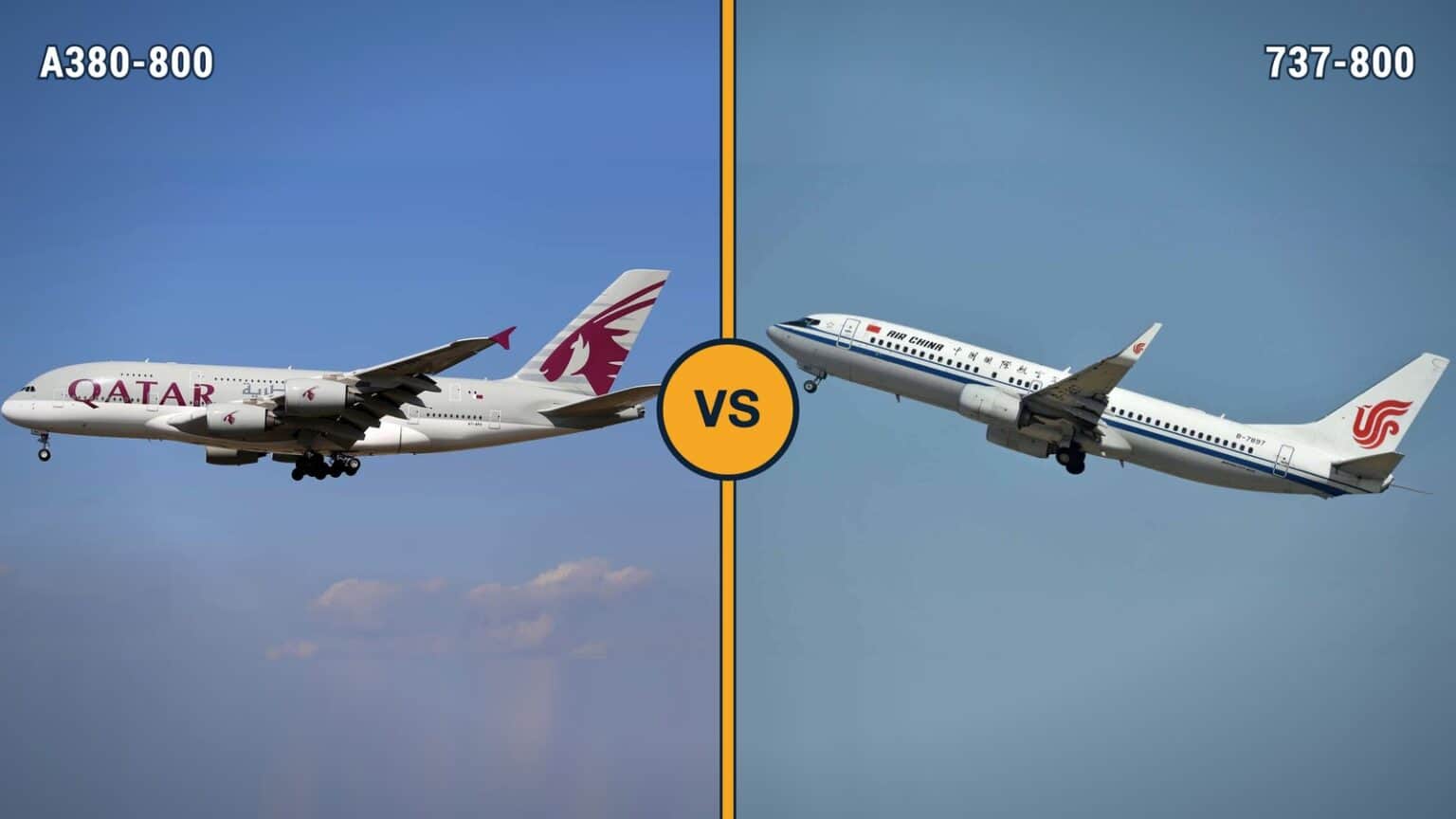
Table of Contents
| Measure | A380-800 | 777-300ER |
|---|---|---|
| Layout | Double-deck, four engines | Single-deck, two engines |
| First flight | April 27, 2005 | February 24, 2003 |
| Entered service | October 2007, with Singapore Airlines | April 2004, with Air France |
| Built | 251 delivered; the last went to Emirates in December 2021 | More than 800 delivered |
| Launch role | Airbus’s flagship for the busiest hub-to-hub routes | Boeing’s long-range 777 stretch, the most common 777 |
A380 vs 777-300ER: two ways to build a long-haul giant
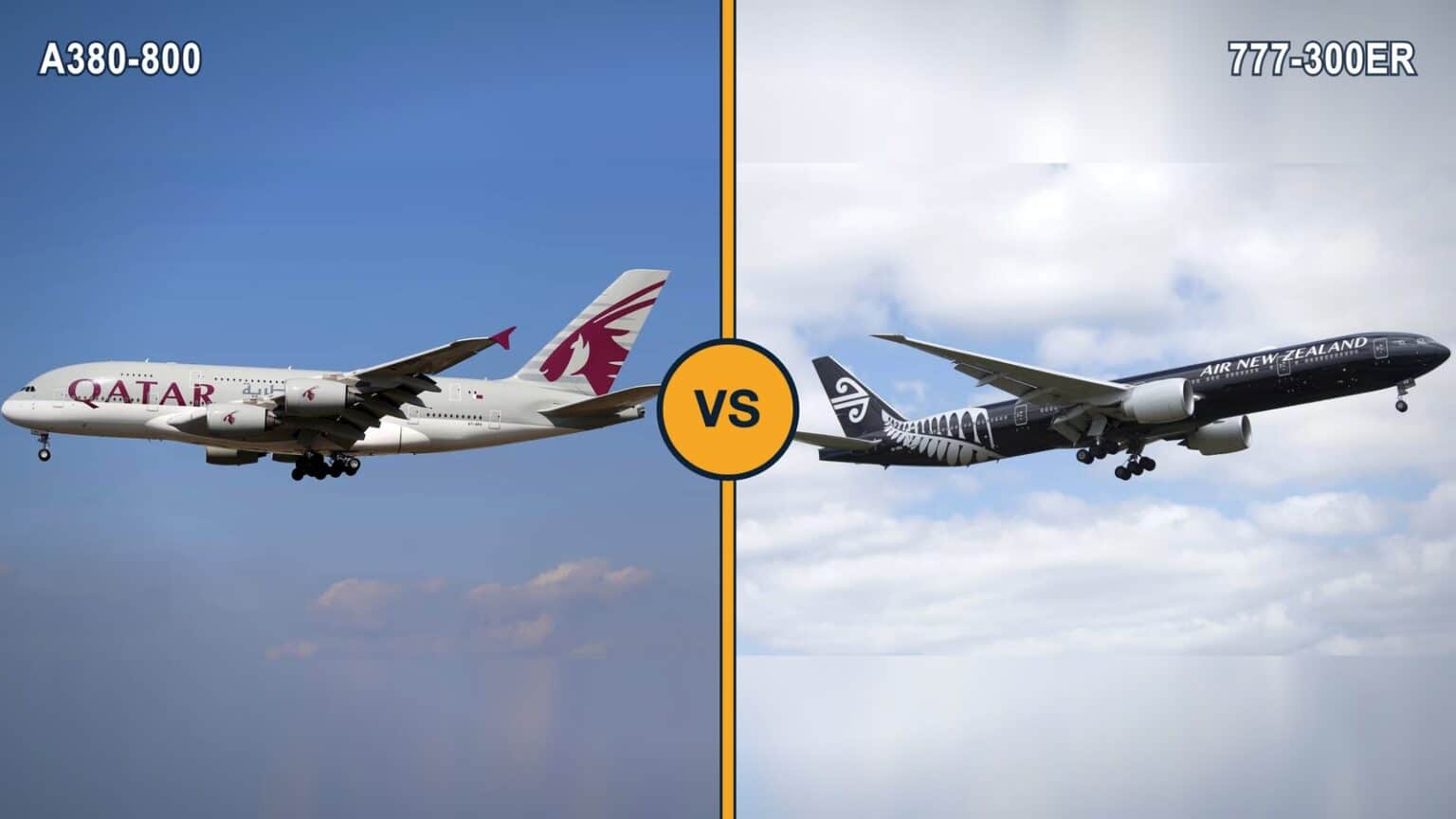
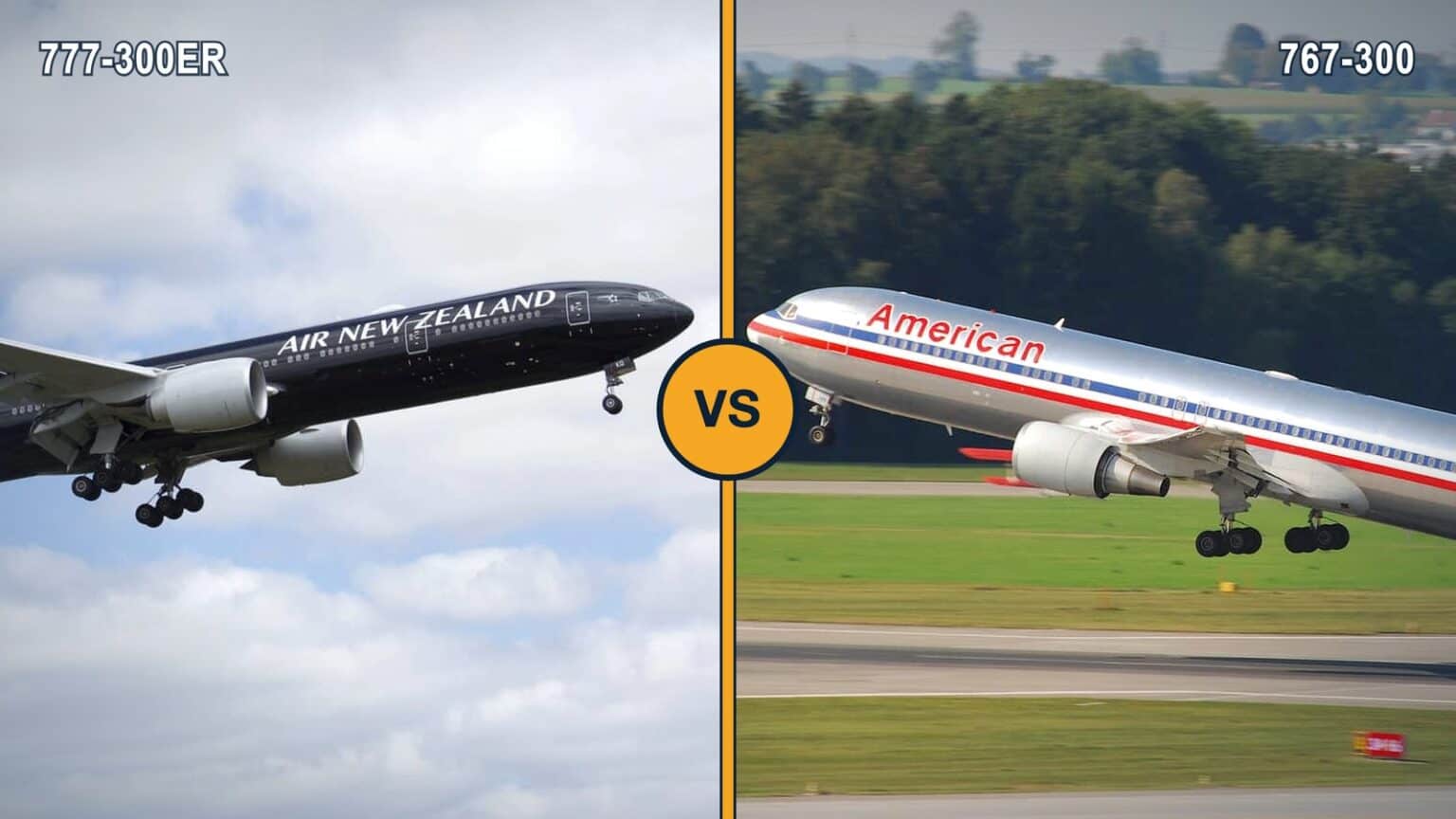
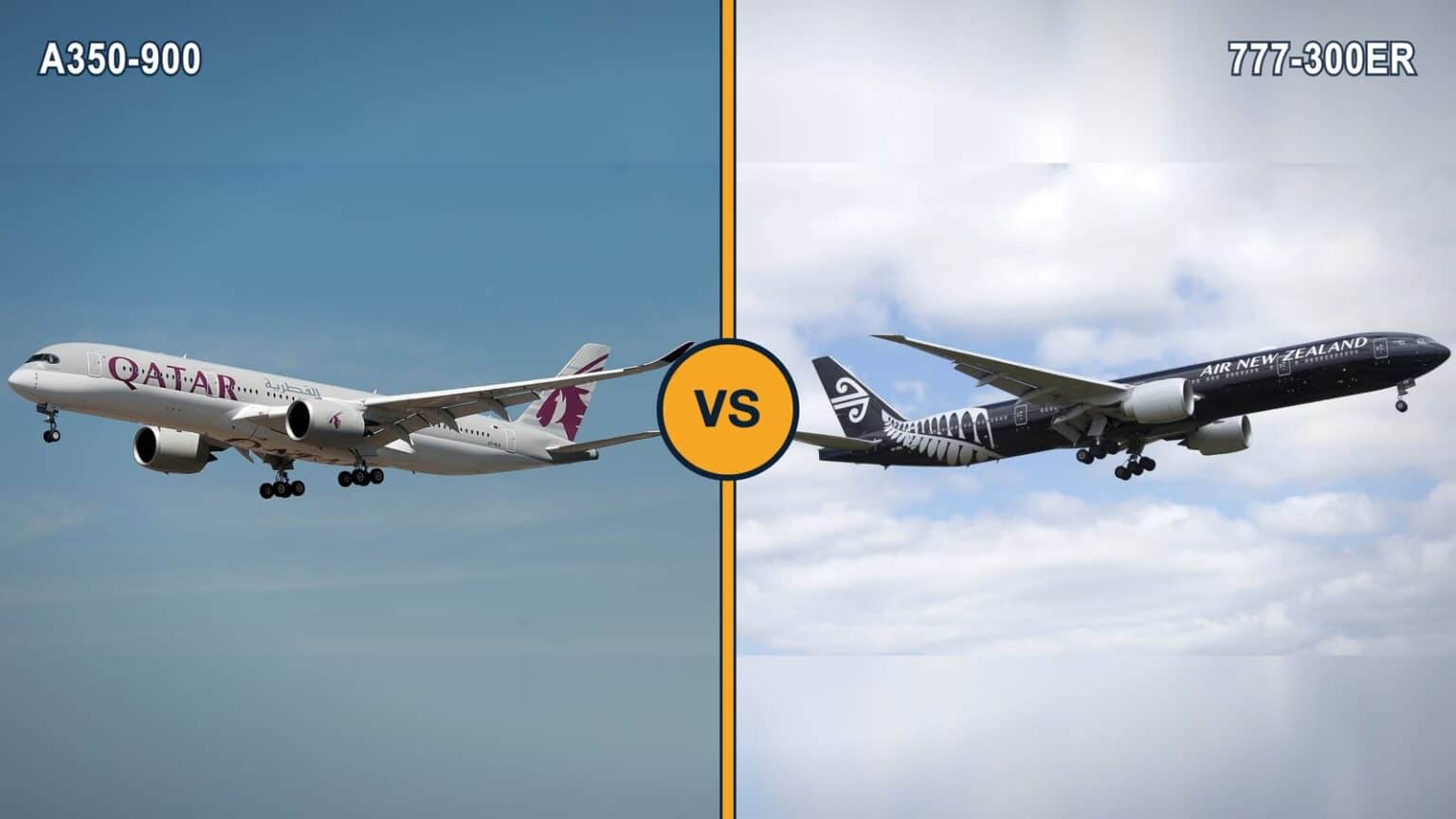
The Airbus A380-800 and the Boeing 777-300ER are the two biggest passenger jets most travelers will ever fly on, and they are built on opposite ideas. Airbus stacked a second full deck on the fuselage and gave it four engines. Boeing stretched the 777 into one long tube with two of the most powerful engines ever fitted to an airliner.
The comparison here is the A380-800 against the 777-300ER, the most common 777 on long routes. Other 777 versions, such as the 777-200LR and the new 777-9, are different airplanes.
Both cruise at the same speed. The database lists 488 kt (562 mph, 904 km/h) for each, so the difference is not how fast you get there. It is how much airplane is doing the work.
The short version
The A380 is bigger, heavier and flies farther, with a wide cabin and a second deck. The 777-300ER is lighter, carries less fuel, and stayed in production three years longer. Airlines bought more than three times as many 777-300ERs.
Where the A380 wins
Size and cabin space
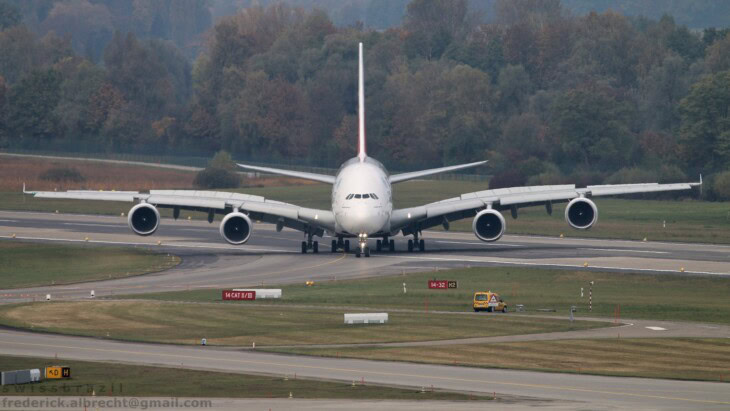
The A380 is the larger airplane in every direction except length. Its wing span is 261 ft 8 in (79.75 m) against 212 ft 7 in (64.80 m) for the 777-300ER, a gap of nearly 50 feet.
The tail stands 79 ft 0 in (24.09 m) tall, against 60 ft 8 in (18.49 m). The fuselage diameter is 23 ft 5 in (7.14 m) against 20 ft 4 in (6.20 m).
Inside, the A380 cabin is 21 ft 7 in (6.58 m) wide and 9 ft 10 in (3.00 m) high. The 777-300ER cabin is 19 ft 3 in (5.86 m) wide and 7 ft 3 in (2.20 m) high.
Passengers and range
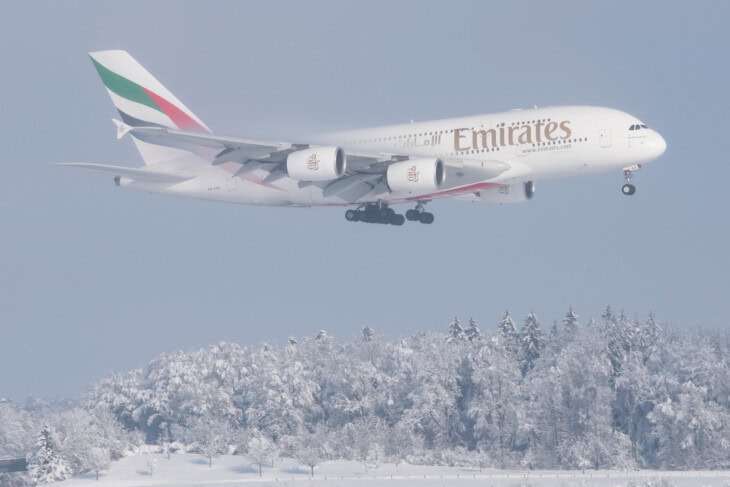
The A380 is certified for up to 853 passengers in an all-economy layout. The 777-300ER tops out at 550 in the same all-economy arrangement.
The A380 also flies farther. The panel shows 9,210 miles (14,820 km) for the A380 against 8,630 miles (13,890 km) for the 777-300ER.
It carries the fuel for that, with 85,500 gal (323,500 L) in its tanks against 47,900 gal (181,300 L).
Gentler on the approach
The A380 comes in more slowly. Its approach speed is 135 kt (155 mph, 250 km/h) against 149 kt (171 mph, 276 km/h) for the 777-300ER.
Its maximum landing weight is 869,000 lb (394,000 kg), against 575,000 lb (261,000 kg) for the 777-300ER.
Where the 777-300ER wins
Weight and engines
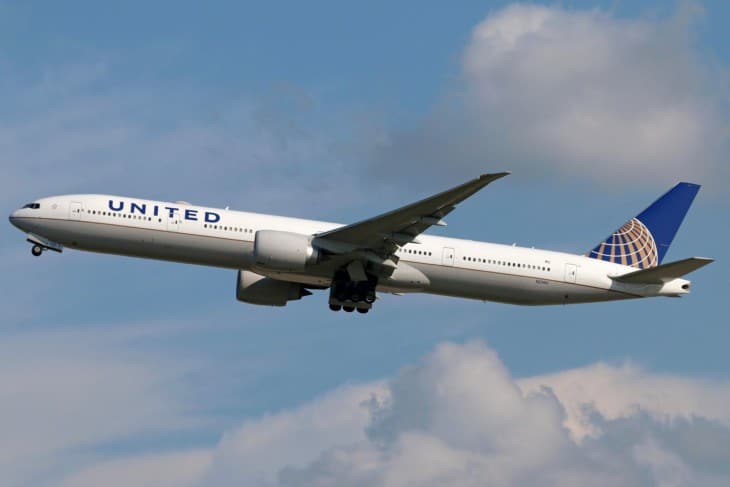
The 777-300ER is far lighter. Its maximum takeoff weight is 775,000 lb (351,500 kg), against 1,268,000 lb (575,000 kg) for the A380.
Empty weight shows the same gap, at 370,000 lb (167,829 kg) against 628,317 lb (285,000 kg). Carrying less airplane is the 777-300ER’s main advantage.
It does the job with two engines, each rated at 115,300 lbf (513 kN) of thrust. The A380 uses four, each rated at 76,752 lbf (341 kN).
Cargo and flexibility
The 777-300ER has more baggage and cargo volume, at 7,550 ft³ (213.8 m³) against 6,187 ft³ (175.2 m³). It also has a cabin 194 ft 4 in (59.24 m) long, against 163 ft 9 in (49.90 m).
It is also the longer airplane by a small margin, at 242 ft 4 in (73.86 m) against 238 ft 7 in (72.73 m). That length goes into a single deck instead of height.
A lighter, twin-engine airplane can fly thinner routes that an A380 could not fill. That is why the 777-300ER flew with so many more airlines.
Runway and climb
The A380 needs a little less runway to take off. The panel shows 9,850 ft (3,000 m) for the A380 against 10,500 ft (3,220 m) for the 777-300ER, both at their listed limits.
The 777-300ER lists a landing distance of 5,850 ft (1,780 m). The database has no landing distance for the A380.
Both reach a service ceiling of 43,100 ft (13,100 m). The 777-300ER lists the stronger climb, at 3,000 ft/min (15 m/s) against 1,500 ft/min (8 m/s) for the A380.
Twin engines with 115,300 lbf of thrust each give the 777-300ER its punch. The A380 spreads its thrust over four engines and climbs more gently.
Price and production
The panel lists $375.5 million (2019) for the 777-300ER and $445.6 million (2018) for the A380. List prices are not what airlines pay, but the gap shows how much more airplane the A380 is.
The A380 was built from 2003 to 2021. The 777-300ER was built from 2004 to 2024, three years longer.

Which one should you fly?
If you pick by seat, the A380 offers the wider, taller cabin and a calmer approach. If you pick by availability, the 777-300ER flies on many more routes with many more airlines.
Check the aircraft type when you book. Emirates, Singapore Airlines and a handful of other airlines still fly the A380, while the 777-300ER is far easier to find.
What happened to the A380
Airbus delivered 251 A380s, and Emirates took 123 of them, including the last one in December 2021. The jet was built for crowded hub-to-hub routes, and only a small group of airlines ordered it.
The 777-300ER sold in the hundreds because it suited both busy and thin routes. Airlines bought it in far greater numbers.
For passengers, the A380 has the wider, taller cabin. For airlines, the 777-300ER was the easier airplane to fill.
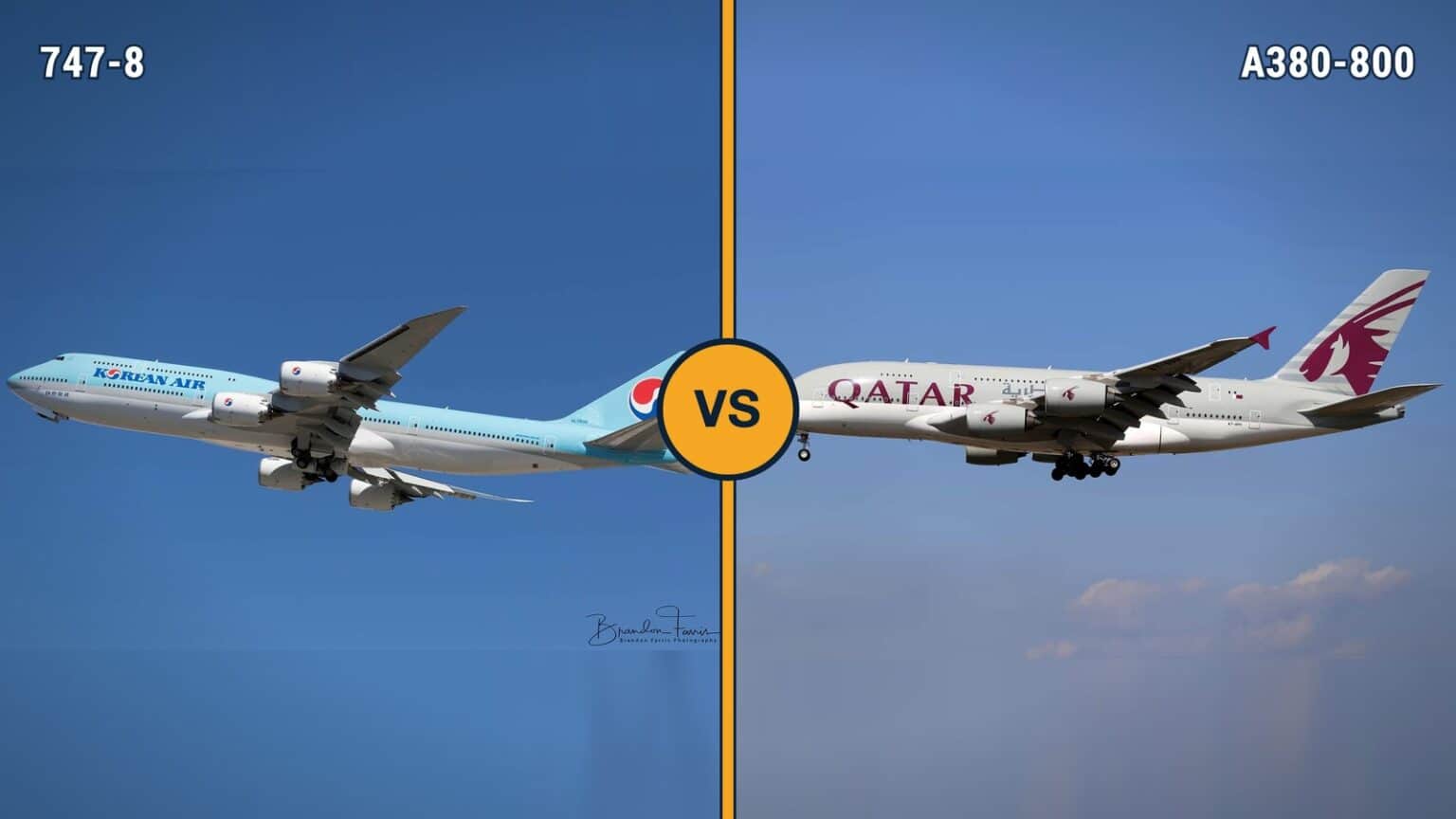
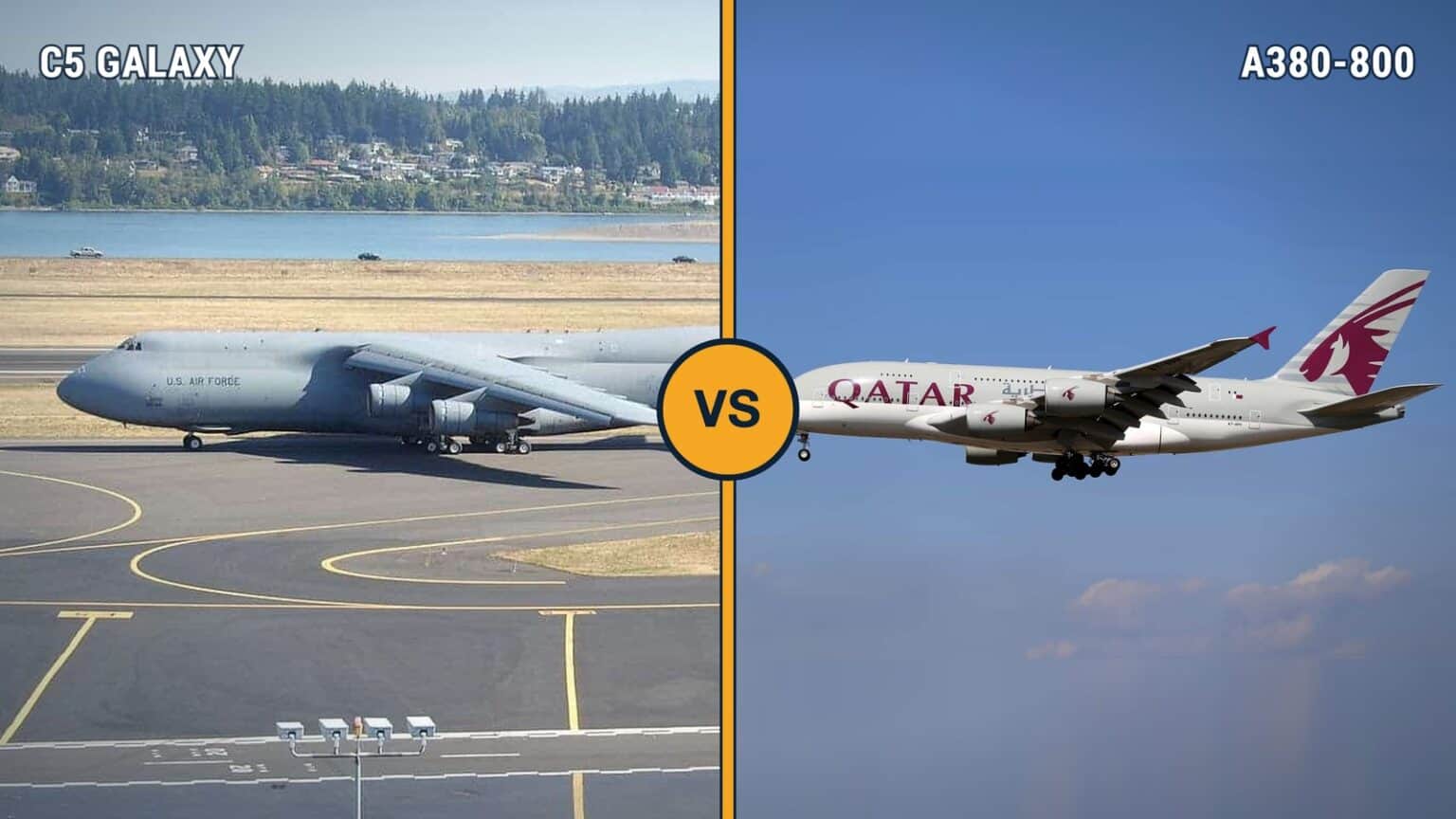
Compare it with other giants in Boeing 747-8 vs Airbus A380-800 and C-5 Galaxy vs A380.
FAQ
Sources and references used for research and fact-checking.
- FlightGlobal, Airbus completes A380 deliveries as last jet is handed to Emirates
- Boeing, Boeing 777-300ER Newest 777 Airplane Completes First Flight
- Boeing, First Boeing 777-300 Extended Range Jetliner Delivers to Air France, ILFC
- The War Zone, Airbus just delivered the last A380 super jumbo jet
- AeroCorner, Airbus A380-800 specifications
- AeroCorner, Boeing 777-300ER specifications
About the Author

Tim is the owner and lead editor of AeroCorner since 2019, overseeing aviation content covering aircraft, airlines, airports, and the broader aviation industry. Through years of researching, writing, editing, and publishing aviation-focused content, he has developed extensive practical knowledge of commercial aviation and air travel. Based in Asia and a frequent traveler himself, Tim also brings firsthand passenger experience to AeroCorner’s coverage. Outside of publishing, he has also explored aviation firsthand through hands-on flight training in New Zealand.