

Table of Contents
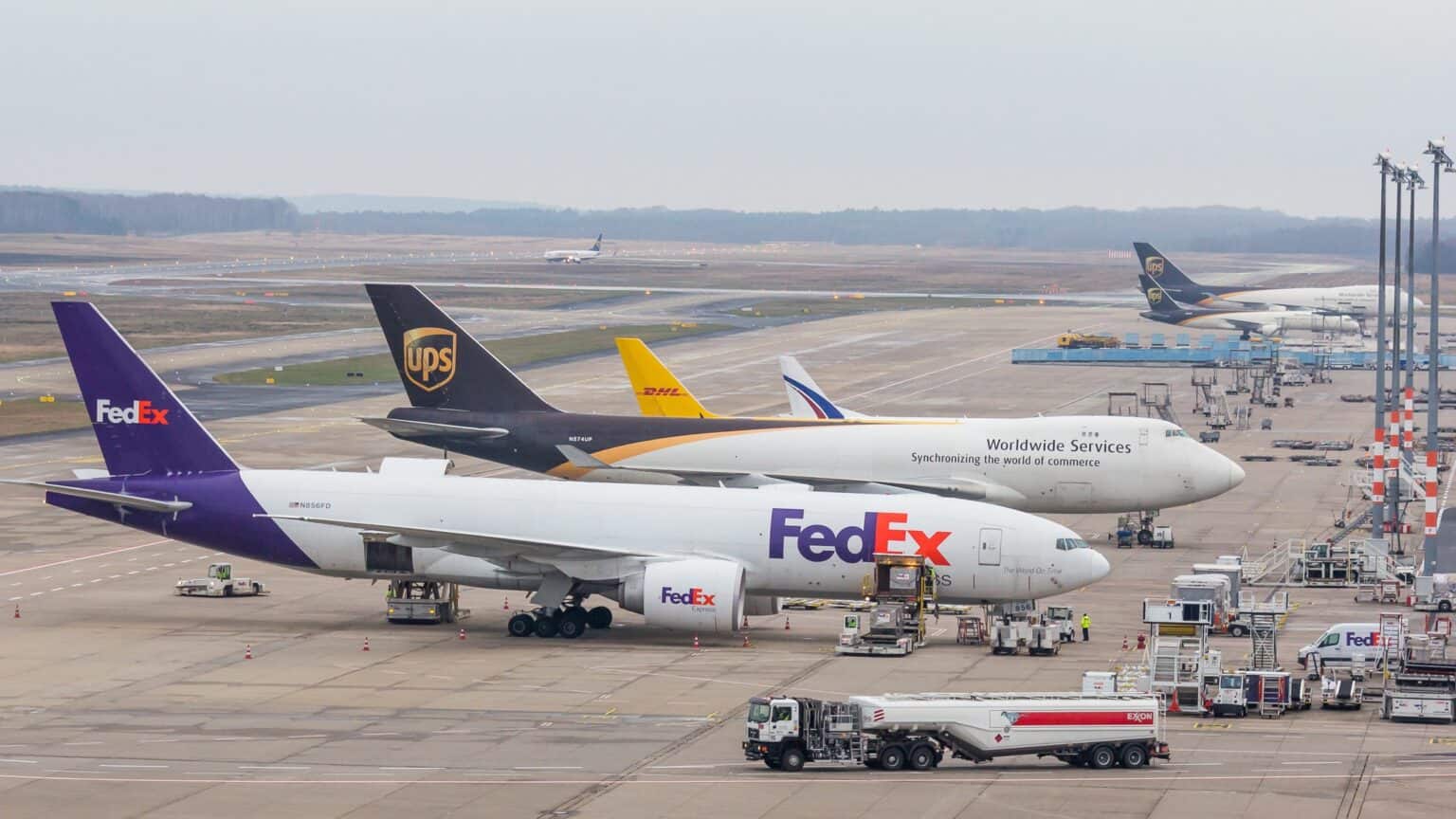
FedEx runs the bigger airline, and it is not close. It has 700 aircraft to UPS’s 274, and 383 jets to UPS’s 274, which works out to about 40% more lifting capacity, nearly 5,000 pilots to UPS’s 3,400, and a faster main hub.
UPS wins in two places. It flies the biggest freighters in either fleet, 43 Boeing 747s that FedEx has no answer to, and it moves more packages a day overall, 20.8 million to FedEx’s 17.6 million. That is because most UPS parcels never leave the ground.
This matchup uses the two companies’ own SEC filings, as of November 2026: FedEx’s annual report for the year ended May 31, 2026, and UPS’s 2025 annual report and 2026 quarterly reports. For the type-by-type history of each fleet, see how many planes FedEx has and how many planes UPS has.
| Measure | UPS | FedEx | Edge |
|---|---|---|---|
| Aircraft in own fleet | 274 (June 30, 2026) | 700 (May 31, 2026) | FedEx |
| Jets in own fleet | 274 | 383 | FedEx |
| Combined jet payload rating (our math) | 35.8 million lb | 50.2 million lb | FedEx |
| Biggest freighter | Boeing 747-8F: 30 jets, 292,500 lb each | Boeing 777F: 59 jets, 233,300 lb each | UPS |
| Aircraft on order | 18 Boeing 767-300Fs (Dec. 31, 2025) | 36: 10 777Fs, 15 ATR 72-600Fs, 11 SkyCouriers (May 31, 2026) | FedEx |
| Main hub sort rate | Louisville Worldport: about 400,000 an hour | Memphis: 484,000 an hour | FedEx |
| Pilots | About 3,400 (IPA) | Just under 5,000 (ALPA) | FedEx |
| US air packages a day (our math) | 2.39 million (2025) | 2.81 million (FY2026) | FedEx |
| All packages a day | 20.8 million (2025) | 17.6 million (FY2026) | UPS |
| Revenue | $88.7 billion (2025) | $94.7 billion (FY2026, including FedEx Freight) | Even |
How we compared
Fleet counts are each company’s own aircraft from its SEC filings: FedEx at May 31, 2026, and UPS at December 31, 2025 plus the five Boeing 767s its June 2026 quarterly report says were delivered in the first half of 2026. Aircraft flown for UPS by other airlines (221 at the end of 2025) are left out. Combined payload multiplies each type’s count by FedEx’s published maximum structural payload: 767F 127,100 lb, A300-600 106,600 lb, 757-200 63,000 lb, 777F 233,300 lb, MD-11 192,600 lb. The 747-8F (292,500 lb) and 747-400F (271,000 lb) use our aircraft database, because FedEx flies neither. Ten of UPS’s 767s are converted passenger jets that lift a little less than a factory 767F, so the UPS total is slightly generous. US air packages are the overnight and deferred lines of each company’s US domestic volume: UPS 1.499 million Next Day Air plus 0.892 million Deferred; FedEx 1.678 million priority plus 1.136 million deferred.
Fleet size: 700 against 274
FedEx’s annual report counts 700 aircraft at May 31, 2026, and calls it the world’s largest all-cargo air fleet. UPS flies 274 of its own: 269 at the end of 2025, plus five new 767s delivered by June 30, 2026.
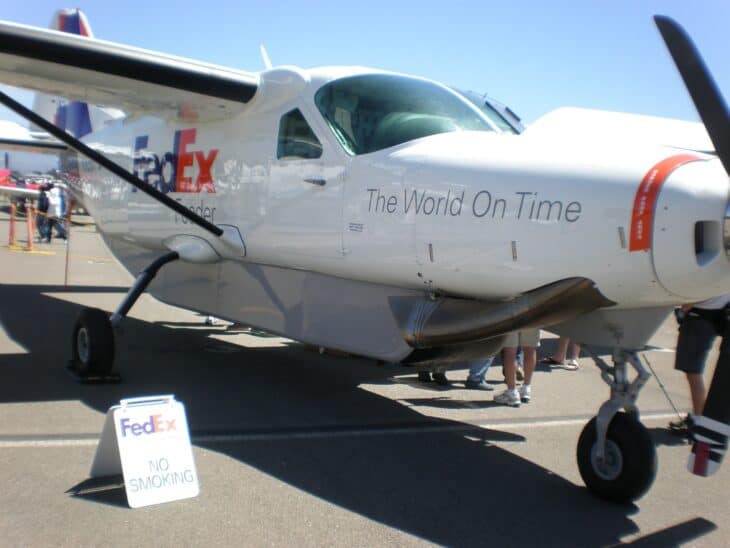
The raw gap overstates things. 317 of FedEx’s planes are small feeder aircraft, led by 216 single-engine Cessna 208B Caravans, that contractors fly to towns a jet cannot serve. UPS lists no feeder fleet under its own name.

Count jets only and it is 383 for FedEx and 274 for UPS. UPS narrows the gap another way: at the end of 2025 it had 221 more aircraft flying for it under charters and leases, run by other airlines.
Edge: FedEx. Even jets only, it flies 109 more than UPS.
Payload: how much each fleet can lift
A count treats a Caravan and a 777F as equals, so we weighed the fleets instead. FedEx’s 10-K publishes a maximum structural payload for every type it flies, and we applied those ratings to both jet fleets.
FedEx’s 383 jets add up to about 50.2 million pounds (22,750 tonnes) of rated payload. UPS’s 274 jets come to about 35.8 million pounds (16,230 tonnes), so FedEx can lift roughly 40% more in one wave.
The surprise is the average. Divide each total by its jet count and both come out at about 131,000 pounds a jet: UPS’s 747s balance FedEx’s 777Fs almost exactly. The gap between them is the number of jets, not their size.
The same average jet
Weighted by rated payload, the average FedEx jet and the average UPS jet both lift about 131,000 pounds. FedEx’s 59 777Fs and UPS’s 43 747s cancel out, so FedEx’s 40% edge in total lift comes almost entirely from having 40% more jets.
FedEx’s feeder fleet barely moves the total. Its 317 small planes add about 1.9 million pounds, under 4% of the fleet’s combined rating.
Edge: FedEx. About 50.2 million pounds of jet payload to UPS’s 35.8 million.
The biggest jets: UPS’s 747-8F against FedEx’s 777F
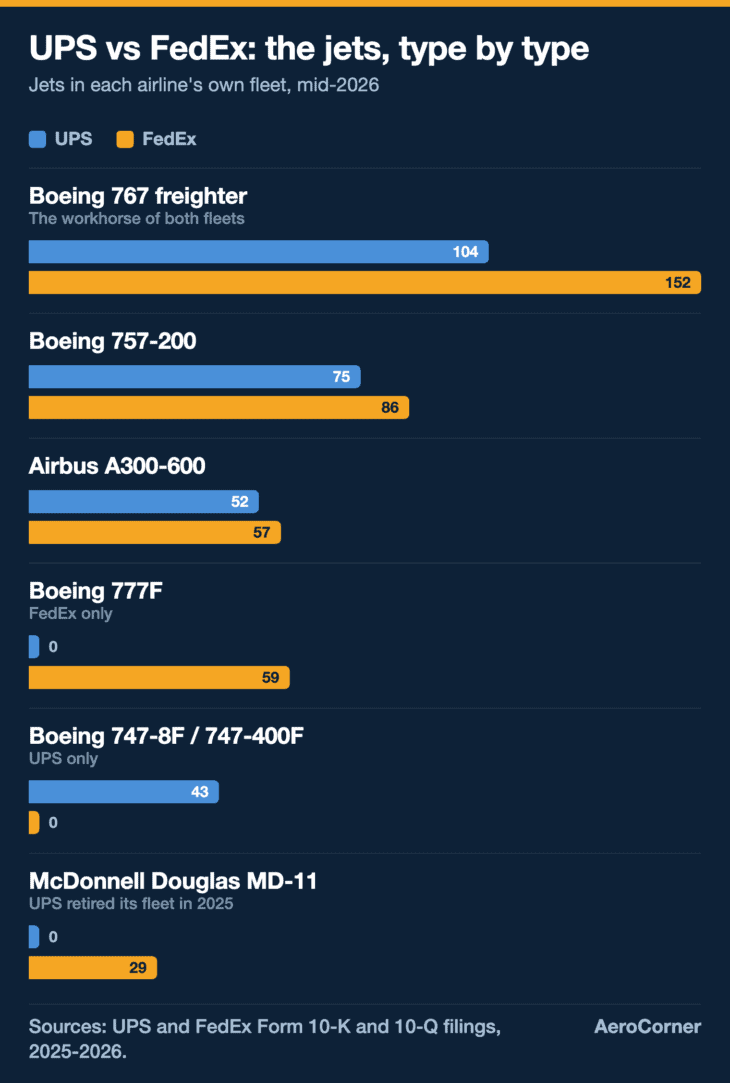
UPS is the only one of the two that flies the 747. It has 30 Boeing 747-8Fs, each rated at 292,500 pounds (132,500 kg) of payload in our database, plus 13 older 747-400 freighters.
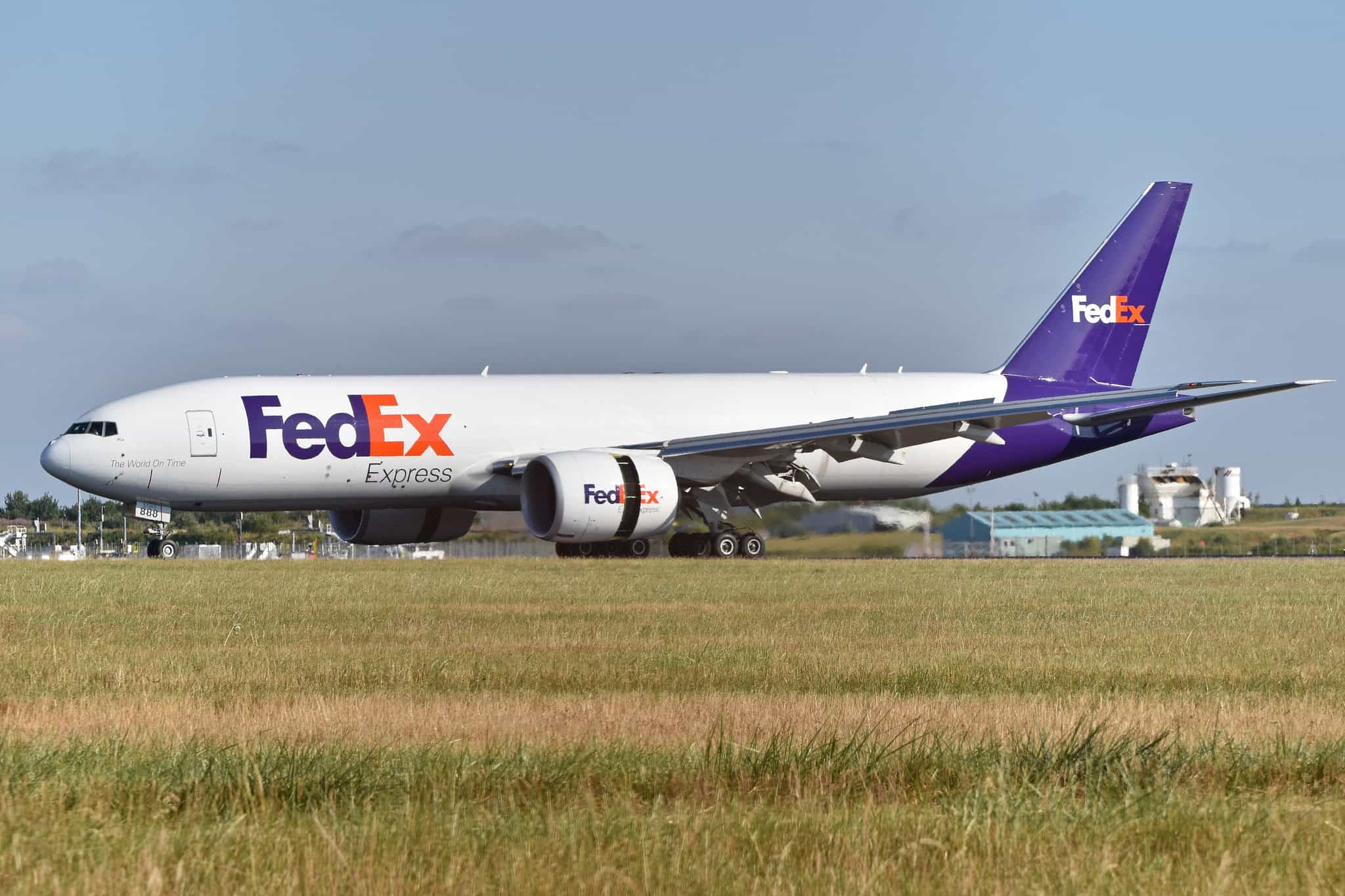
FedEx’s flagship is the Boeing 777F: 59 of them, rated at 233,300 pounds each. It does the job on two engines to the 747’s four, and FedEx has 10 more on order. UPS flies no 777s at all.
Below the flagships the fleets look alike. Both are built on the Boeing 767 freighter (152 at FedEx, 104 at UPS), the 757-200 and the Airbus A300-600.
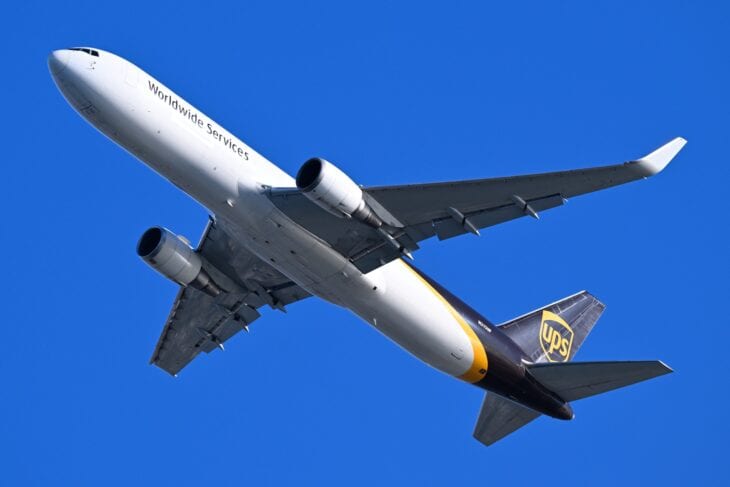


Edge: UPS. Its 747-8F out-lifts anything FedEx flies by about 59,000 pounds a trip.
Fleet changes: the MD-11 split and what is on order
On November 4, 2025, UPS Flight 2976, an MD-11 freighter, lost its left engine on takeoff from Louisville and crashed. The FAA grounded every MD-11 four days later, and both airlines parked their fleets.
The two then went different ways. UPS retired all 26 of its remaining MD-11s in the fourth quarter of 2025 and ordered 18 new Boeing 767-300Fs to replace them. FedEx began returning its MD-11s to service in May 2026, still lists 29, and plans to retire the type by the end of 2032.
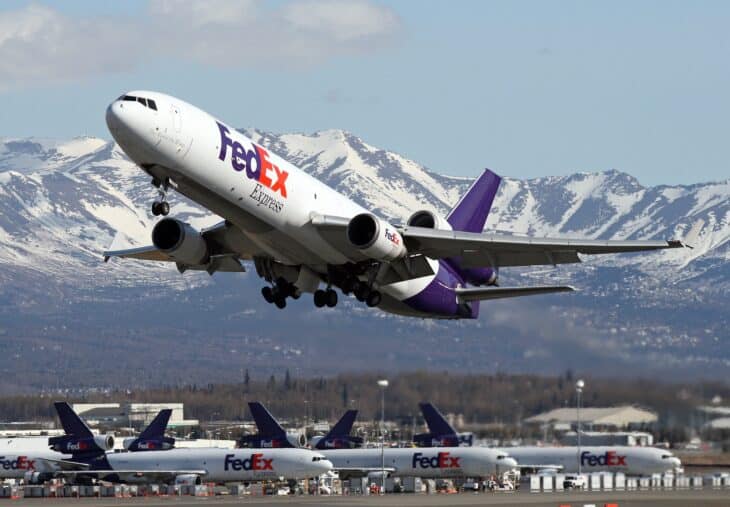
FedEx also has the longer order book: 36 aircraft at May 31, 2026, made up of 10 777Fs, 15 ATR 72-600F turboprops and 11 Cessna 408 SkyCouriers. The SkyCourier is slowly replacing the Caravan in its feeder fleet.
Edge: FedEx. Twice as many aircraft on order, including the biggest jets either company is buying.
Hubs: Memphis against Louisville
Both airlines run on one giant overnight hub, and they sit about 320 miles (515 km) apart. FedEx’s Memphis hub covers 967 acres and 5.1 million square feet, and its 10-K rates it at 484,000 documents and packages an hour.
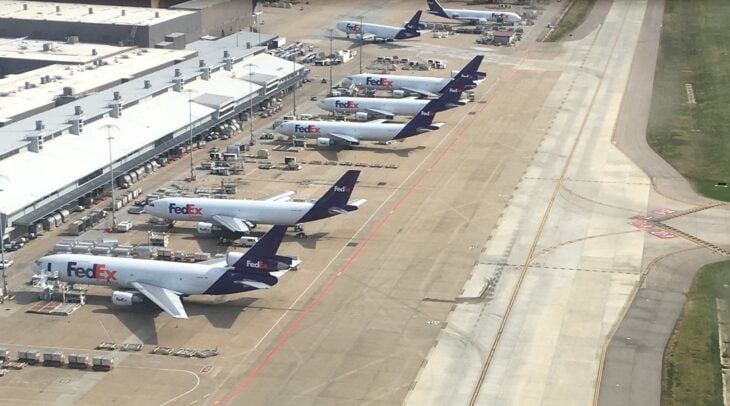
UPS’s Worldport in Louisville is 5.2 million square feet and sorts about 400,000 packages an hour, according to AirlineGeeks’ 2024 tour. UPS backs it with international air hubs in Germany, China, Hong Kong, Canada and Florida.
FedEx adds a second national air hub in Indianapolis, rated at 164,000 an hour, plus regional hubs at Fort Worth, Newark and Oakland. Memphis and Louisville both sit near the top of our list of the busiest cargo airports in the US.
Edge: FedEx. Memphis out-sorts Worldport, and Indianapolis gives FedEx a second national hub.
Pilots: about 5,000 against 3,400
FedEx has just under 5,000 pilots, represented by the Air Line Pilots Association. In June 2026 they ratified a new contract after five years of talks, with an 83% yes vote, and it took effect on June 29.
“Our focus now turns toward implementation and enforcement of the agreement,” said Capt. Jose Nieves, who chairs the union’s FedEx pilot council, as quoted by FreightWaves.
UPS’s 10-K counts about 3,400 pilots represented by the Independent Pilots Association. Their contract became amendable on September 1, 2025, so UPS is now the one with talks still to come.
Edge: FedEx. About 1,600 more pilots, and a contract settled until 2030.
Packages: who moves more by air
UPS delivers more packages overall: 20.8 million a day in 2025, against 17.6 million a day for FedEx in its year to May 2026. But most of those UPS parcels go by truck, with 15.1 million a day in its US ground service alone.
Count only the US air products, overnight and deferred, and the order flips. FedEx moved about 2.81 million air packages a day, 19% of its US volume. UPS moved about 2.39 million, 14% of its US volume.
UPS’s volume is also shrinking on purpose. It cut the parcels it carries for its largest customer by more than half from 2024 levels, a reduction its October 2026 results say was finished in the second quarter.
Edge: UPS overall, FedEx by air. UPS is the bigger parcel company; FedEx is the bigger air shipper.
Revenue and reach
FedEx reported $94.7 billion of revenue for its year to May 31, 2026, against UPS’s $88.7 billion for 2025. The FedEx figure includes $8.8 billion from FedEx Freight, which it spun off on June 1, 2026, so the two companies are now roughly the same size.
Both claim worldwide reach: FedEx serves more than 220 countries and territories, UPS more than 200. Both also employ around half a million people, about 530,000 permanent staff at FedEx and 460,000 at UPS.
Edge: Even. With Freight gone, neither company is clearly larger by revenue.
So who actually wins?
As an airline, FedEx takes seven of the ten scorecard rows: fleet, jets, payload, orders, hub capacity, pilots and US air packages. That makes sense, because FedEx began as an air express company, founded by Fred Smith around a Memphis hub.
UPS wins the jumbo matchup with its 747s and moves more packages in total, because it is a ground company that also flies. Revenue is a draw.
| If the question is… | Winner | Because |
|---|---|---|
| Who runs the bigger airline? | FedEx | 383 jets to 274, and about 40% more payload |
| Who flies the biggest planes? | UPS | 43 Boeing 747s; FedEx has none |
| Who moves more packages? | UPS | 20.8 million a day, mostly by truck |
| Who moves more packages by air in the US? | FedEx | 2.81 million a day to 2.39 million |
| Who has more pilots? | FedEx | Just under 5,000 to about 3,400 |
Myth: FedEx flies 700 jets
FedEx does have 700 aircraft, but only 383 are jets. The other 317 are turboprops and single-engine Cessnas flown by contractors, and together they carry under 4% of the fleet’s rated payload. Jet for jet, FedEx is about 40% bigger than UPS, not two and a half times bigger.
FAQ
Sources and references used for research and fact-checking.
- FedEx Corporation (SEC), FedEx Corporation Form 10-K for the year ended May 31, 2026
- United Parcel Service (SEC), United Parcel Service Form 10-K for the year ended December 31, 2025
- United Parcel Service (SEC), United Parcel Service Form 10-Q for the quarter ended June 30, 2026
- United Parcel Service (SEC), UPS Releases 3Q 2026 Earnings
- FedEx Corporation (SEC), FedEx Corporation Form 10-K for the year ended May 31, 2025
- FreightWaves, FedEx pilots approve new contract, ending protracted bargaining
- AirlineGeeks, An Inside Look at UPS' Louisville Hub
- NTSB, DCA26MA024: UPS Airlines Flight 2976
Get the Newsletter
The latest aviation news and stories sent to your inbox.
About the Author

Tim is the owner and lead editor of AeroCorner since 2019, overseeing aviation content covering aircraft, airlines, airports, and the broader aviation industry. Through years of researching, writing, editing, and publishing aviation-focused content, he has developed extensive practical knowledge of commercial aviation and air travel. Based in Asia and a frequent traveler himself, Tim also brings firsthand passenger experience to AeroCorner’s coverage. Outside of publishing, he has also explored aviation firsthand through hands-on flight training in New Zealand.