

Table of Contents
The airline that built its whole business on one narrowbody jet is weighing a twin-aisle fleet for flights to Europe and beyond. Nothing is ordered yet, but the choice itself would end a 55-year habit.
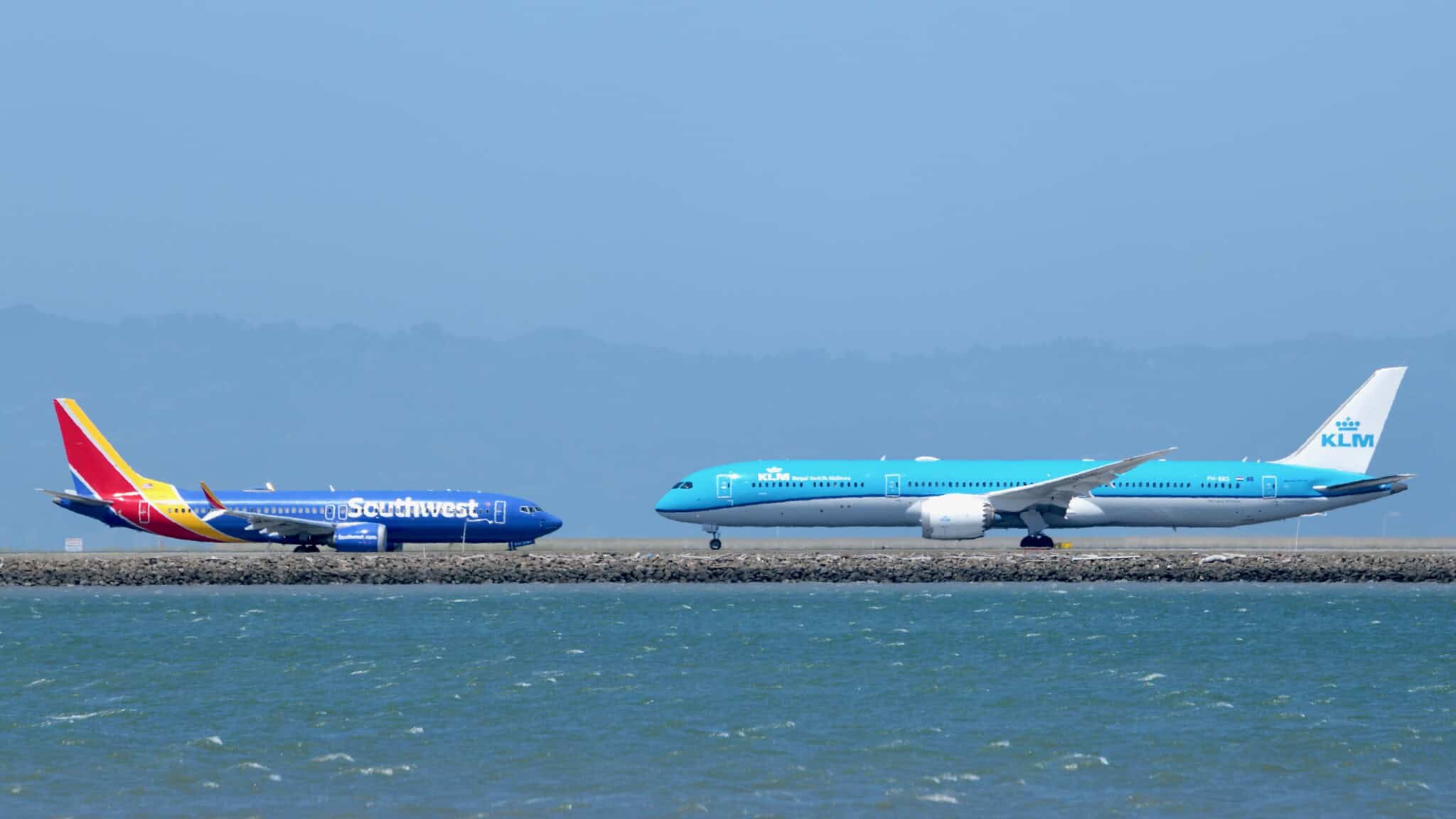
Southwest Airlines is leaning toward the Boeing 787 Dreamliner as its first widebody jet, Reuters reported on October 8, 2026, citing three people familiar with its fleet planning. One of them said Southwest has contemplated a fleet of dozens of 787s.
There is no order. The people cautioned that no final decision has been made, and Southwest told Reuters only that “we do not have any news forthcoming related to our fleet plans.”
The contrast is the story. Southwest ended June 2026 with 803 aircraft, every one of them a Boeing 737, and has never operated a widebody in its history.
Not quite 55 years of nothing but 737s
Southwest started flying on June 18, 1971, with three Boeing 737s, and the 737 has been its only type for four decades. But it did briefly fly a bigger jet: a handful of leased Boeing 727-200s between the late 1970s and 1985, the first one leased from Braniff after a lawsuit, the rest from other operators including People Express. All went back by 1985. What Southwest has never flown is a widebody.
Why a 737-Only Airline Is Shopping for a Twin-Aisle Jet
The 787 talk is the latest step in a two-year rebuild of what Southwest sells. After a 2024 campaign by the activist investor Elliott Investment Management, the airline began charging for checked bags in May 2025 and finished switching to assigned seats in January 2026.
That ended more than five decades of open boarding, a change we cover in how Southwest boarding works now. In September 2026 it began building its first four airport lounges, in Austin, Baltimore, Honolulu and Nashville, tied to a premium Chase credit card due in 2027.
Long-haul flying fits the same plan. Reuters says Southwest sees it as a way to give customers fewer reasons to book with competitors while strengthening Rapid Rewards and its co-branded credit card business.
The logic is simple. A loyal Southwest flyer who wants Rome or Tokyo today has to earn miles somewhere else, often with the carriers Southwest competes against at home.
So far it has plugged that gap with partners. Since February 2025, Southwest has signed or announced partnerships with nine carriers, including Icelandair, China Airlines, EVA Air, Singapore Airlines and Air Premia, according to its latest quarterly filing.
CEO Bob Jordan has said the airline does not need a long-haul network like those of Delta, United or American. In May 2026 he said 8 to 12 long-haul destinations could cover much of where Southwest customers want to go.
803 Jets, a 784-Mile Average Flight and a 3,550-Nautical-Mile Ceiling
Southwest’s fleet was built for short hops. Its average aircraft trip in the second quarter of 2026 was 784 miles (1,262 km), and its 803 jets put it behind NetJets, the fractional private jet operator that now flies more aircraft than Southwest.
The longest-legged jet it flies is the Boeing 737 MAX 8, with a book range of 3,550 nautical miles. Southwest already stretches it: its new Burbank to Honolulu nonstop, launched on August 8, 2026, covers 2,225 nautical miles each way with up to 5 hours 40 minutes of block time.
Europe is a different problem. By our great-circle math, Baltimore to Reykjavik is about 2,395 nautical miles, roughly a Hawaii flight, while Baltimore to London is about 3,150 nautical miles.
Baltimore to Rome is about 3,870 nautical miles, and Denver to London is about 4,050. Both sit beyond the MAX 8’s book range before winter headwinds and the reserve fuel every flight must carry come into it.
That is why the choice matters. A narrowbody like the Airbus A321XLR could reach the East Coast’s closer European cities, while a 787 more than doubles the 737 MAX 8’s range and opens Asia from the West Coast.
A year ago the smaller option looked likelier. In September 2025, Jordan told investors, “Don’t be surprised if we go a more risk-tolerant route at first and choose a narrowbody.”
A Second Aircraft Type Breaks the Model Southwest Was Built On
Southwest’s own annual report spells out why one type mattered. Using only the 737, it says, “allows for simplified scheduling, maintenance, flight operations, safety management, and training activities.”
The airline has walked away from a second type before. It returned its leased 727s by 1985 and went back to buying 737s, because one fleet saved money on parts, maintenance, insurance and pilot training.
A 787 would undo all of that. Southwest has said a new aircraft type could require new maintenance and training programs, regulatory approvals and union negotiations over pay and work rules.
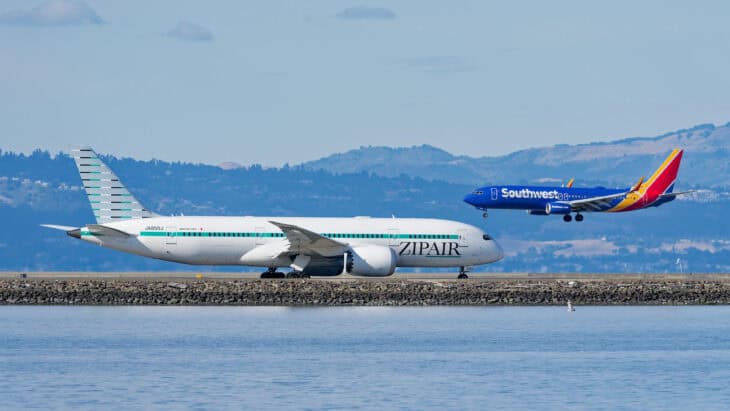
The pilots already know something is coming. Jody Reven, president of the Southwest Airlines Pilots Association, said on a union podcast that the company had discussed both a “large aircraft” and a “narrow-body long-haul aircraft.”
A widebody would also change who Southwest competes with. At home Southwest already goes head to head with Delta, as our Southwest vs Delta comparison lays out. Across the Atlantic it would also face foreign carriers whose long-haul cabins rank among the best business class airlines in the world.
Southwest has never sold a seat like that. Whatever it puts at the front of a 787 would be its first attempt at a product the big three have been refining for decades.
No Order, a Sold-Out 787 and a Three-Year Clock
Even if Southwest picks the 787, getting one is the hard part. Boeing has said the 787 is sold out through the end of the decade.
According to Reuters, Southwest has looked at leasing some Dreamliners or buying used ones to start sooner. The long-haul plan has been discussed on a roughly three-year timetable, and Reuters could not determine which 787 variant is under study.
Airbus has not given up. It has pitched the A321XLR and the A330neo for long-haul flying and the smaller A220 for the rest of the network, though Reuters’ sources said the 787 appeared to hold the stronger position.
The final call belongs to Southwest’s board, which formed a Fleet Oversight Committee in 2025 to oversee aircraft purchases. Meanwhile the 737 pipeline keeps flowing: the airline expects 64 new 737-8s in 2026 and is still waiting on FAA certification of the 737-7, for which it is the launch customer.
For 55 years, Southwest’s answer to almost every fleet question was another 737. The jet now leading its shortlist has two aisles and more than twice the range.
Sources and references used for research and fact-checking.
- Reuters (via The Lufkin Daily News), Exclusive: Southwest Airlines weighs Boeing 787 for long-haul international push, sources say
- One Mile at a Time, Southwest Airlines Considers Boeing 787 Order, Plans Long Haul Flights
- U.S. Securities and Exchange Commission, Southwest Airlines Co. Form 10-K for fiscal year 2025
- U.S. Securities and Exchange Commission, Southwest Airlines second quarter 2026 earnings release
- U.S. Securities and Exchange Commission, Southwest Airlines Co. Form 10-Q for the quarter ended June 30, 2026
- The Points Guy, Southwest Airlines is thinking about long-haul international flights
- Airport Spotting, What Happened to Southwest Airlines Boeing 727s?
- AvGeekery, Rare Footage of Southwest 727-200 Operations at Dallas Love
- MIGFLUG, Southwest Turns Burbank Into a Hawaii Gateway
Get the Newsletter
The latest aviation news and stories sent to your inbox.
About the Author

Tim is the owner and lead editor of AeroCorner since 2019, overseeing aviation content covering aircraft, airlines, airports, and the broader aviation industry. Through years of researching, writing, editing, and publishing aviation-focused content, he has developed extensive practical knowledge of commercial aviation and air travel. Based in Asia and a frequent traveler himself, Tim also brings firsthand passenger experience to AeroCorner’s coverage. Outside of publishing, he has also explored aviation firsthand through hands-on flight training in New Zealand.