

Table of Contents
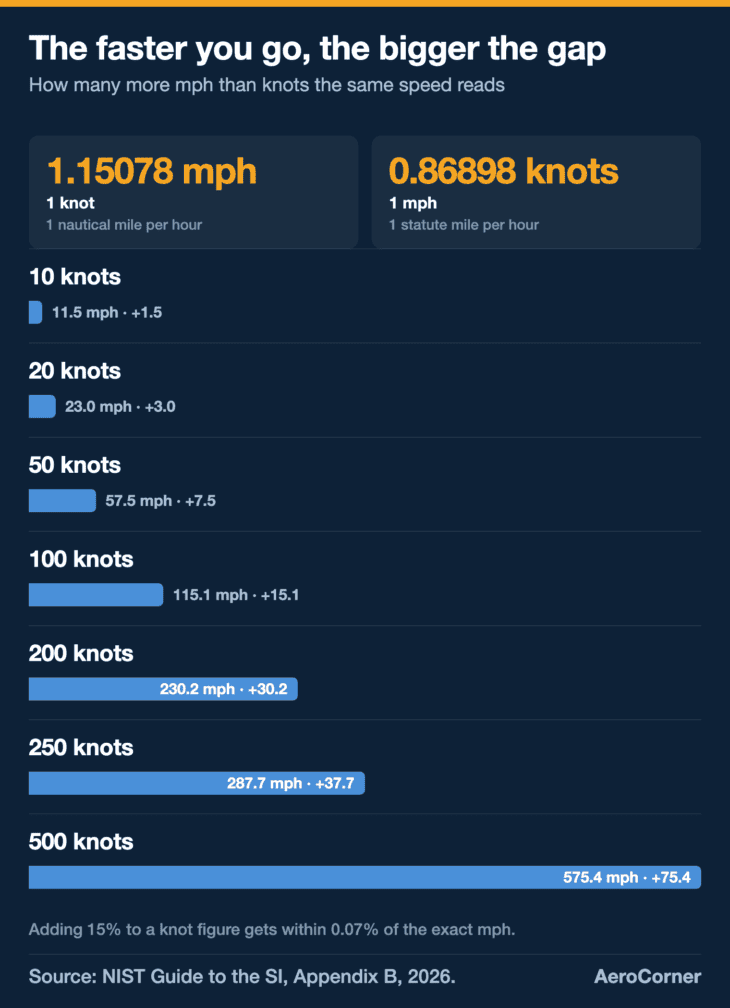
A knot is one nautical mile per hour, and mph is one ordinary (statute) mile per hour. A nautical mile is about 15% longer than a statute mile, so the same speed always reads about 15% higher in mph: 1 knot equals 1.15078 mph.
Neither unit is faster or more accurate. Pilots and sailors use knots because a nautical mile is tied to latitude, and that makes chart math easy. Drivers and most US weather forecasts use mph.
We compared the two as of October 2026 using NIST’s exact unit definitions, NOAA, the FAA’s speed rules, ICAO’s units annex and the National Hurricane Center’s wind scale.
| Criterion | Knots | MPH |
|---|---|---|
| Unit of | One nautical mile per hour | One statute mile per hour |
| The mile behind it | About 6,076 feet (1,852 m exactly) | 5,280 feet (1,609.344 m exactly) |
| Convert one | 1 knot = 1.15078 mph | 1 mph = 0.86898 knots |
| In km/h | 1.852 km/h exactly | 1.609344 km/h exactly |
| Tied to the globe | Yes: a nautical mile is based on one minute of latitude | No |
| Length fixed | 1929 international agreement; US since July 1, 1954 | 1959, when the foot became exactly 0.3048 m |
| Main users | Pilots, air traffic control, ships, aviation weather reports | US roads, National Weather Service public forecasts |
| FAA speed limit below 10,000 feet | 250 knots | 288 mph (the rule prints both) |
| Category 1 hurricane begins at | 64 knots | 74 mph |
How we compared
Both units are fixed in metric. NIST lists the nautical mile as 1,852 m exactly and the international mile as 1,609.344 m exactly, so 1 knot = 1,852 / 1,609.344 = 1.15078 mph, and 1 mph = 0.86898 knots. Every mph figure on this page is our own math from those two numbers, rounded to one decimal place. Speed limits are quoted from 14 CFR 91.117, hurricane thresholds from the National Hurricane Center, and the Cessna 172S limit from its UK CAA type certificate data sheet. The missing weather-report mph values assume whole-knot wind readings converted and rounded to the nearest whole mph.
How big the difference is: knots to mph
Multiply knots by 1.15078 to get mph. Multiply mph by 0.86898 to get knots. Because the factor never changes, the gap grows with speed: 1.5 mph at 10 knots, but 75.4 mph at 500 knots.
For mental math, add 15% to the knot figure. That shortcut is off by less than 0.07%, so 200 knots becomes 230 mph against an exact 230.2.
| Knots | MPH | km/h | Where you meet it |
|---|---|---|---|
| 1 | 1.15 | 1.85 | The definition |
| 10 | 11.5 | 18.5 | A 10-knot wind, coded 10KT in a METAR |
| 20 | 23.0 | 37.0 | A 20-knot wind |
| 30 | 34.5 | 55.6 | A 30-knot wind |
| 40 | 46.0 | 74.1 | A 40-knot wind |
| 50 | 57.5 | 92.6 | A 50-knot wind |
| 64 | 73.6 | 118.5 | Category 1 hurricane threshold (NHC lists 74 mph) |
| 100 | 115.1 | 185.2 | A round number for quick math |
| 163 | 187.6 | 301.9 | Cessna 172S never-exceed speed, indicated |
| 200 | 230.2 | 370.4 | FAA limit near busy airports (the rule prints 230 mph) |
| 250 | 287.7 | 463.0 | FAA limit below 10,000 feet (the rule prints 288 mph) |
| 500 | 575.4 | 926.0 | A round number for quick math |
So 20 knots is not the same as 20 mph. It is 23 mph, and a boat or airplane doing 20 knots is moving 3 mph faster than a car doing 20 mph.
The other direction works the same way. A car doing 60 mph on the highway is doing 52.1 knots, and a 100 mph wind is 86.9 knots.
The aviation numbers show why the gap matters. A Cessna 172 Skyhawk in its 172S version must never exceed 163 knots indicated, which is 187.6 mph.
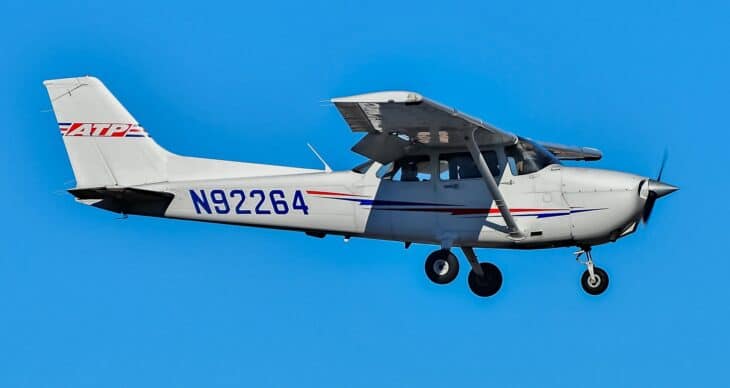
Read that limit as 163 mph and you stop 24.6 mph short of the real line. The risky mistake is the reverse: an mph limit flown as knots is overshot by about 15%.
Our guide to how fast airplanes go gives typical speeds for each type of aircraft.
Takeaway: one knot is 1.15078 mph, so add 15% to go from knots to mph and expect the gap to grow with speed.
Why a nautical mile is longer than a mile
The two miles come from different jobs. NOAA describes the nautical mile as “one minute of latitude,” which makes it “slightly longer than a mile on land, equaling 1.1508 land-measured (or statute) miles.”
The statute mile is a land measure of 5,280 feet with no link to the shape of the Earth. Since 1959 the foot has been exactly 0.3048 m, which fixes the mile at 1,609.344 m.
The nautical mile is now fixed at exactly 1,852 m, or about 6,076 feet. It is a set length, but it still matches one minute of latitude closely enough for navigation.
Before 1929, countries did not even agree on its length. The US used 1,853.248 m (6,080.2 feet) until 1954, and Britain’s Admiralty mile was 6,080 feet until 1970, both about 4 feet longer than today’s international mile.
Our page on statute miles vs nautical miles covers the distance side of the same split.
Here is the geometry in one number. A degree of latitude has 60 minutes, so it spans 60 nautical miles, or 69 statute miles. An aircraft flying due north at 60 knots covers about one degree of latitude every hour.
Takeaway: a nautical mile is longer because it was built from the Earth’s own grid, one minute of latitude, while the statute mile is a land measure.
Where the knot comes from
The name is literal. NOAA says the term dates from the 17th century, when sailors measured speed with a “common log”: a piece of wood on a rope “with knots at regular intervals,” let out behind the ship “for a specific amount of time.”
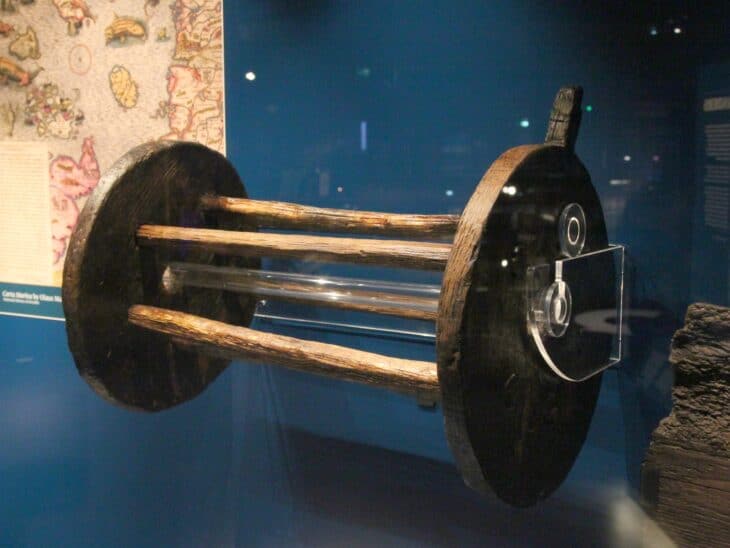

The spacing was chosen to make the count read straight in nautical miles per hour. With knots 47 feet 3 inches apart and a 28-second sand glass, each knot that ran out works out to 0.9998 knots in today’s unit, within 0.02% of the modern definition.
1600s
The common log. Sailors count knots on a rope paid out behind the ship against a timer, and the count becomes the speed.
1929
One nautical mile for everyone. The International Hydrographic Bureau gets a large number of countries to agree on 1,852 m.
1954
The US signs on. From July 1, 1954 the US nautical mile is 1,852 m, replacing the old 1,853.248 m (6,080.2 feet) value.
1959
The foot is pinned to the meter. One foot becomes exactly 0.3048 m, so the statute mile becomes exactly 1,609.344 m.
1970
The UK follows. It drops the Admiralty nautical mile of 6,080 feet for the international one.
1975
Light-aircraft handbooks pick knots. GAMA Specification No. 1, issued February 15, 1975, uses knots throughout.
1979
ICAO keeps the knot, for now. It lists the knot as permitted for temporary use in aviation. No end date has been set.
Takeaway: the knot started as a count of knots on a rope and has been an exact metric unit since 1929, adopted by the US in 1954.
Why pilots and sailors use knots instead of mph
Navigation charts are drawn on latitude and longitude. Because one nautical mile is one minute of latitude, a navigator can measure a distance straight off the latitude scale on the side of the chart, then divide by the speed in knots to get the time. In mph, every leg would need a conversion first.
A 300-nautical-mile leg flown at 150 knots takes exactly two hours. Written in statute units, it is 345.2 miles at 172.6 mph: the same two hours, after two extra conversions.
Wind uses the same unit. A METAR, the routine airport weather report, gives wind speed “in whole knots,” always followed by KT, as in 21016G24KT for wind from 210 degrees at 16 knots gusting 24. With airspeed and wind both in knots, working out a headwind or tailwind is simple subtraction.
US rules are written in knots first. The FAA’s speed rule, 14 CFR 91.117, says no one may fly below 10,000 feet “at an indicated airspeed of more than 250 knots (288 m.p.h.).” The limit near busy airports is “200 knots (230 mph).”
Those are indicated speeds, the knots shown on the airspeed indicator, not speed over the ground. Our explainer on KIAS and the other kinds of airspeed covers why indicated and true airspeed drift apart as an airplane climbs.
On paper, aviation's standard airspeed unit is km/h
ICAO’s units annex lists the kilometer per hour as the primary unit for airspeed and ground speed, with the knot as a non-SI alternative. It keeps the knot and the nautical mile temporarily because of their widespread use and to avoid safety problems from uncoordinated change, and states that no termination date has yet been established.
Ships use knots for the same chart reason. NOAA notes that knots “are used to measure speed” at sea, where the nautical mile began.
Takeaway: knots fit the latitude grid on every chart and match the wind reports, so they save a conversion on every calculation.
Where mph still shows up
The weather on your phone is converted. The National Weather Service measures wind in knots “in accordance with international practice,” then converts to mph for the public, WGN-TV’s weather team explained in 2019.
That conversion leaves holes. If every reading starts as a whole number of knots and is rounded to whole mph, some mph values can never come out: 9 knots is 10 mph, but 10 knots is already 12 mph.
The wind speeds that cannot exist
Convert whole-knot wind readings into whole mph and eight values below 60 mph can never appear: 4, 11, 19, 27, 34, 42, 50 and 57 mph. A reported 11 mph wind would need a 9.6-knot reading, and METARs only report whole knots.
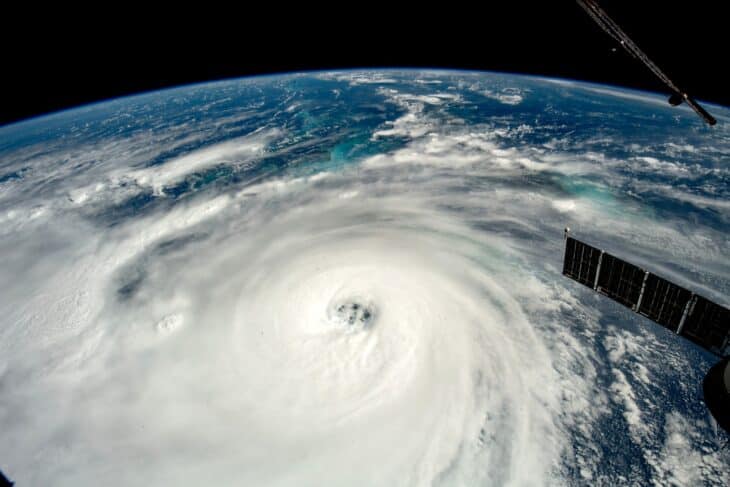
Hurricane warnings use both units. The National Hurricane Center publishes the Saffir-Simpson scale in mph, knots and km/h side by side: Category 1 starts at 74 mph (64 knots) and Category 5 at 157 mph (137 knots).

Older light-aircraft paperwork is the other holdout. The General Aviation Manufacturers Association’s handbook standard, GAMA Specification No. 1, was first issued on February 15, 1975, and says “KNOTS are used throughout to avoid the confusion between knots (KTS) and miles per hour (MPH) in performance charts and tables.”
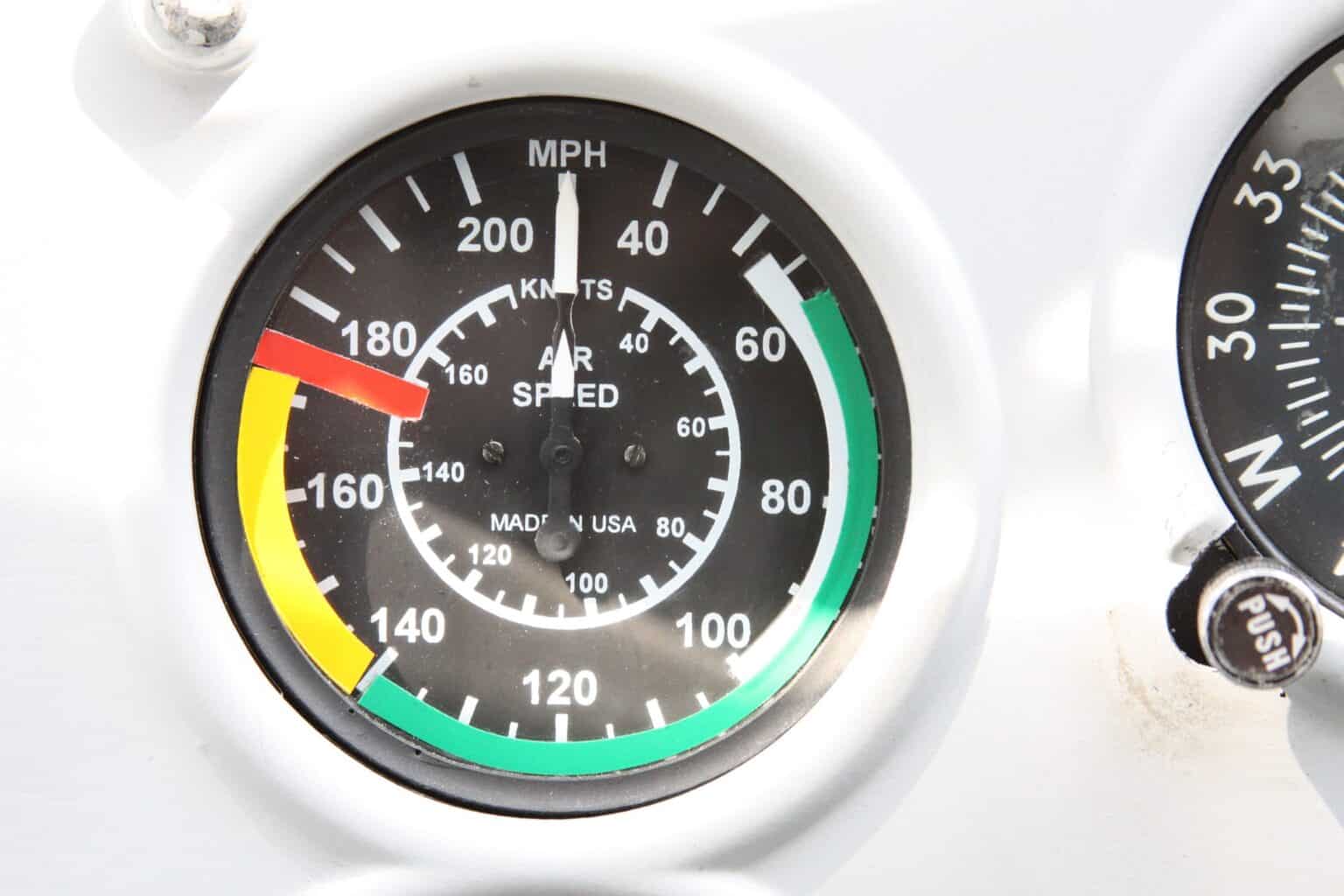
That standard covers handbooks written to it, so an airplane’s book and airspeed indicator can still read in mph on older types. Pilots check which unit the dial shows before using any speed from the book.
Takeaway: mph survives where the audience is the public, on roads and in forecasts, and in some older aircraft paperwork, while the measurement underneath is usually in knots.
The difference in one sentence
A knot is one nautical mile per hour and mph is one statute mile per hour, so because a nautical mile (about 6,076 feet) is longer than a statute mile (5,280 feet), 1 knot equals 1.15078 mph and the same speed always reads about 15% higher in mph.
There is no such thing as knots per hour
A knot already means one nautical mile per hour, so the hour is built in. Saying a ship does 20 knots per hour literally means its speed rises by 20 knots every hour, which is an acceleration, not a speed. Say 20 knots, or 20 nautical miles per hour.
FAQ
Sources and references used for research and fact-checking.
- National Institute of Standards and Technology, NIST Guide to the SI, Appendix B.9: Factors for units listed by kind of quantity or field of science
- National Institute of Standards and Technology, U.S. Survey Foot
- NOAA Ocean Service, What is the difference between a nautical mile and a knot?
- US Metric Association, Adoption of International Nautical Mile
- Wikipedia, Knot (unit)
- Legal Information Institute, Cornell Law School, 14 CFR 91.117 Aircraft speed
- Civil Aviation Authority of the Philippines, CAR-ANS Part 5: Units of Measurement to be Used in Air and Ground Operations
- National Hurricane Center (NOAA), Saffir-Simpson Hurricane Wind Scale
- National Weather Service, METAR/TAF List of Abbreviations and Acronyms and decoding key
- WGN-TV, Why you will never hear of a wind speed of 11 mph in a weather report
- General Aviation Manufacturers Association, via AvioConsult, GAMA Specification No. 1 for Pilot's Operating Handbook (reproduced in a limited review)
- UK Civil Aviation Authority, Type-Certificate Data Sheet UK.TC.A.00061, Cessna 172 Series (172R, 172S), Issue 2
Get the Newsletter
The latest aviation news and stories sent to your inbox.
About the Author

Tim is the owner and lead editor of AeroCorner since 2019, overseeing aviation content covering aircraft, airlines, airports, and the broader aviation industry. Through years of researching, writing, editing, and publishing aviation-focused content, he has developed extensive practical knowledge of commercial aviation and air travel. Based in Asia and a frequent traveler himself, Tim also brings firsthand passenger experience to AeroCorner’s coverage. Outside of publishing, he has also explored aviation firsthand through hands-on flight training in New Zealand.