

Table of Contents
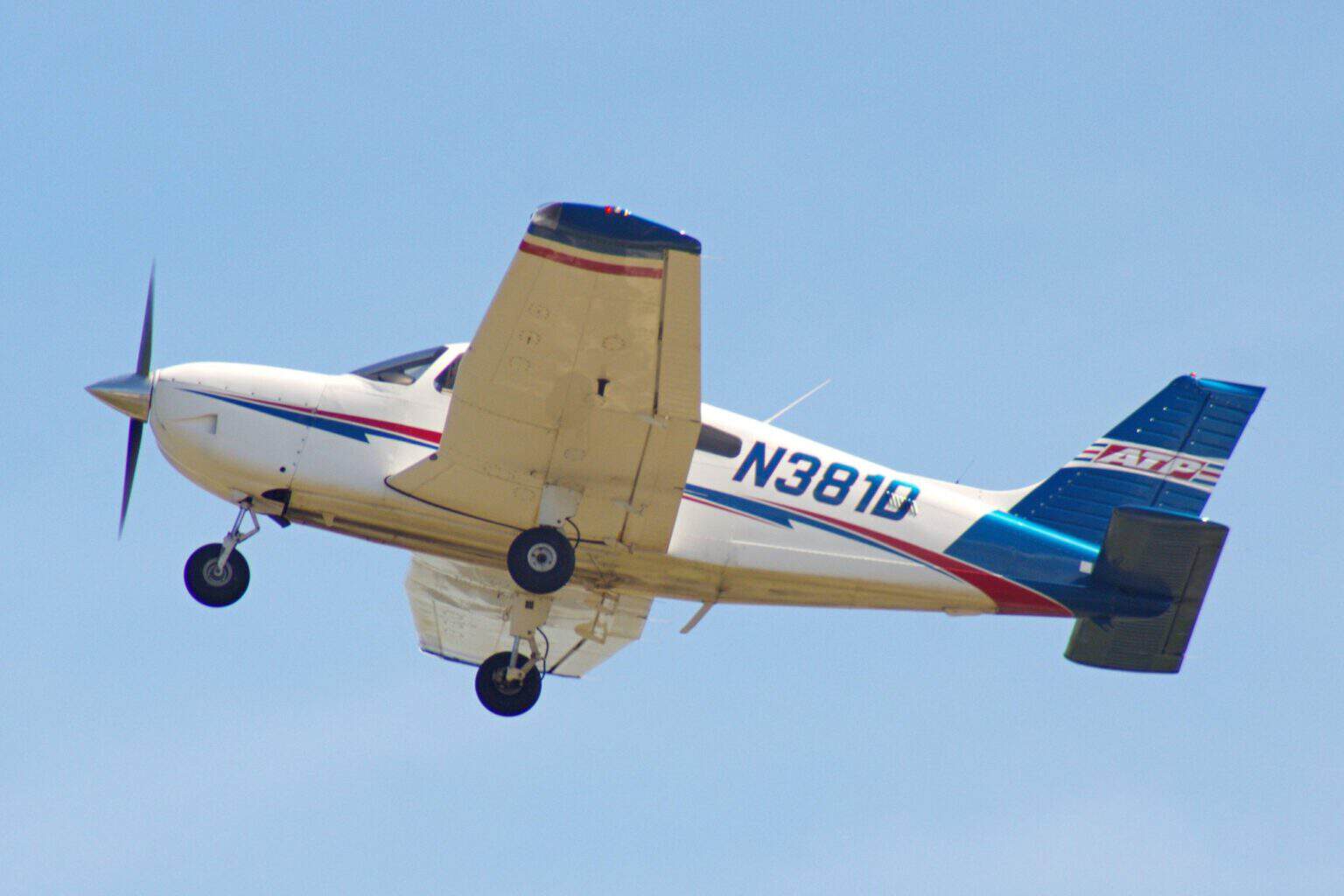
The best flight school in the US for someone who wants to fly for an airline is ATP Flight School. No other school comes close on scale: 87 training centers, a fleet of 658 aircraft, a fixed published price and structured career tracks into American, Delta and United.
Epic Flight Academy is the strongest alternative, especially for international students who need a Part 141 school. Airline-owned academies are the wild card: Republic’s LIFT Academy earns its place, while United Aviate Academy drops to tenth after losing its accreditation.
This list ranks the career academies that take a student from zero experience to flight instructor without a college degree, as of September 2026. If you want a degree as well, see our separate ranking of the best aviation colleges in the US.
| Rank | School | Home base | Published zero-time price | Standout |
|---|---|---|---|---|
| 1 | ATP Flight School | 87 centers nationwide | $123,995 | 658 aircraft, tracks to American, Delta and United |
| 2 | Epic Flight Academy | New Smyrna Beach, FL | $118,467 (full pathway) | Part 141, 12 flight school locations |
| 3 | US Aviation Academy | Denton, TX | Mid-$90,000s | United, Southwest and Envoy pathways |
| 4 | LIFT Academy | Indianapolis, IN | $120,000 | Owned by Republic Airways |
| 5 | AeroGuard Flight Training Center | Phoenix, AZ | Custom quote only | Guaranteed SkyWest interview |
| 6 | Thrust Flight | Addison, TX | $120,000 | AOPA Distinguished Flight School 2026 |
| 7 | Phoenix East Aviation | Daytona Beach, FL | About $86,600 to $90,700 | F-1 and M-1 student visas |
| 8 | CAE Phoenix Aviation Academy | Mesa, AZ | Up to $125,000 (Southwest cadet) | American and Southwest cadet partner |
| 9 | Coast Flight Training | San Diego, CA | Not published | 300+ graduates at American Airlines |
| 10 | United Aviate Academy | Goodyear, AZ | $142,880 (total cost of attendance) | Owned by United Airlines |
How this ranking works
Scope: US flight schools that train a student from zero time through the flight instructor certificate on a career track, without a college degree. Schools are judged on four tests, in order of weight: airline pathway access (published cadet and pathway partner lists from American, Delta, United, Southwest, JetBlue and Alaska), training capacity (fleet, locations and students as each school publishes them), price transparency (a fixed published price and what it includes), and track record, including accreditation problems and litigation. University programs are ranked separately, and small local schools are covered through AOPA’s 2026 award winners below the main list.
What a flight school can and cannot shorten
An airline first officer needs an airline transport pilot certificate, which takes at least 1,500 hours of total flight time under 14 CFR 61.159. Every school on this list ends its program far short of that, typically at about 300 hours or fewer, with the student working as a flight instructor to build the rest.
The choice between the FAA’s two training rules matters more for pace than for the final number.
A Part 141 private pilot course requires 35 hours of training against 40 hours under Part 61, and a Part 141 commercial course requires 120 hours of training where Part 61 asks for 250 hours of total flight time. Our guide to Part 61 vs Part 141 covers the trade-offs.
The FAA itself plays the private pilot gap down: it says most people need 60 to 75 hours, so the five-hour difference “may be insignificant.” Any school can be checked against the FAA’s own Find a Facility dashboard, which lists every certificated Part 141 pilot school.
Does a career academy get you to the airlines at 1,000 hours?
No. The restricted ATP at 1,000 hours requires a bachelor’s degree with an aviation major from an FAA-authorized institution, and the 1,250-hour version requires an associate degree. Military pilots qualify at 750 hours. A Part 141 academy with no degree attached leaves you at the standard 1,500 hours, whatever its marketing implies.
1. ATP Flight School
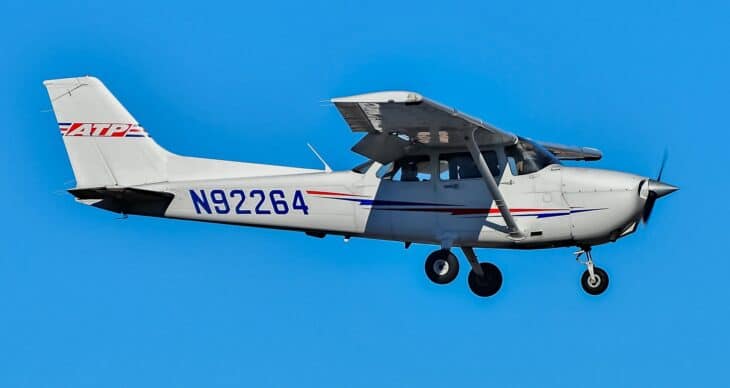
Founded in 1984, ATP runs 87 flight training centers and the largest training fleet in the country: 326 Cessna 172 Skyhawks, 230 Piper Archer TXs and 102 Piper Seminole twins, 658 aircraft in all. Another 80 Skyhawks are on order for delivery through 2027.
Its Airline Career Pilot Program costs $123,995 from zero time, $100,995 with credit for solo and $90,995 with a private pilot certificate. The zero-time track takes nine months and logs 282 hours, including 25 hours of multi-engine time and 53 hours of simulator time, through the private, instrument, commercial and flight instructor certificates.
That price is not the whole bill. ATP adds a training center premium of up to $5,000 at some locations, and its own cost page lists roughly $12,000 to $12,500 in examiner and knowledge test fees, one reason quotes run short, as our breakdown of what a pilot license really costs explains.
What sets ATP apart is the exit. It offers 38 Career Tracks and says it is the only flight school with tracks to all three of American, Delta and United, and it appears on both American’s Cadet Academy and Delta’s Propel partner lists.
One in four regional hires
ATP says 983 of its graduates were placed at airlines in 2025, and that one out of every four new hires at the regional airlines graduated from ATP.
The trade-off is intensity. ATP hires its graduates as instructors nationwide, but says a job at your own training center is not assured, and quotes instructor pay of about $3,200 to $4,000 a month while you build hours.
2. Epic Flight Academy
_(7-20-2025).jpg)
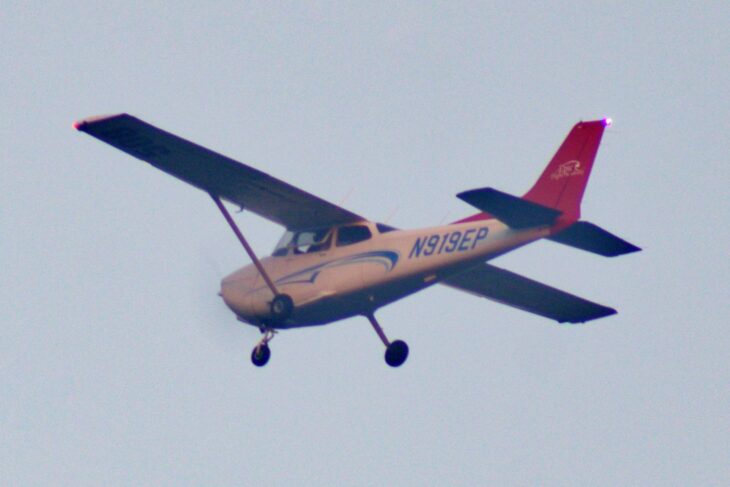
Epic has trained pilots at New Smyrna Beach, Florida, since 1999 and bills itself as the largest Part 141 flight school in the US. Its locations page now lists 12 flight schools, from Jacksonville and Tallahassee to Provo, Utah, and Tucson, Arizona, up from the nine campuses FLYING reported in April 2025.
Tecnam, which sold Epic two P2006T twins in September 2026, put its enrollment at about 600 active flight students. The core fleet is factory-new Cessna 172s and Piper Seminoles, maintained on site.
Epic publishes two prices, and both are honest about different things. Its full “zero experience to airline pilot” pathway totals $118,466.51 with the instrument instructor and multi-engine instructor ratings included, while its cost page, effective April 1, 2026, estimates $89,235.01 in tuition for a shorter sequence ending at flight instructor.
It ranks second because it combines scale with Part 141 structure, which matters for anyone who needs a student visa. Epic issues the I-20 for M-1 student visas, hires graduates as instructors, and puts its average time from zero to airline pilot at 24 months.
3. US Aviation Academy
US Aviation Academy, founded in 2006 in Denton, Texas, has grown into one of the widest networks outside ATP. An August 2026 company update counts more than 160 aircraft across 11 flight campuses and five maintenance campuses, after it opened a Fort Pierce, Florida, campus in May 2026 at the site of the closed Aviator College.
Its pathway record is one of the deepest of any independent school. It says it was the first school to partner with American Eagle, now Envoy, in 2013, then joined Southwest’s Destination 225° program in 2019 and United’s Aviate program in 2020, and won the US Air Force Initial Pilot Training contract at Denton in 2024.
The school says most students choose a fixed-price program in the mid-$90,000s. Southwest lists the US Aviation version of its cadet program at up to $115,000, the lowest of its three partner schools.
4. LIFT Academy (Republic Airways)
LIFT is owned by Republic Airways Holdings and launched at Indianapolis International Airport in 2018, picking its first class from more than 600 applications. It now trains in Indianapolis, Columbus and Plymouth in Indiana, plus Myrtle Beach, South Carolina, Galveston, Texas, and Tuskegee, Alabama, on an all-Diamond fleet of DA20s, DA40s and DA42s.
The program costs $120,000 from zero experience for 255 flight hours, $89,125 with a private pilot certificate and $64,945 with private and instrument. LIFT pays its instructors at least $30 an hour, plus $350 a month for 18 months toward student loans.
The pipeline is what you are paying for. Republic merged with Mesa in November 2025 to form a fleet of 310 E-Jets, and LIFT says every first officer candidate in Republic’s June 2026 new-hire classes had a LIFT connection.
Read the service commitment before signing. In early 2023, Republic sued 12 former LIFT students, seeking a combined $406,550, for failing to honor five-year employment commitments.
5. AeroGuard Flight Training Center
AeroGuard trains at Phoenix Deer Valley and Chandler in Arizona and near Austin, Texas, with more than 125 standardized Piper Archers and Seminoles and more than 250 instructors. It says it has graduated more than 8,000 pilot cadets over 25 years.
Its pilot pathway covers seven FAA certificates and ratings, through the multi-engine instructor rating, in about 12 to 18 months. Graduates get a guaranteed first officer interview with SkyWest, whose eligible captains in turn get guaranteed interviews with United, Delta and Alaska.
The reason AeroGuard sits fifth rather than higher is price. It publishes no tuition at all, only custom quotes, which makes it one of the hardest schools on this list to compare.
6. Thrust Flight
Thrust Flight is headquartered at Addison, north of Dallas, and trains at Denison, Fort Worth, Conroe and Mesa, Arizona. It is smaller than the schools above it, with about 42 aircraft, but it was named an AOPA Distinguished Flight School in 2026.
The zero-time program costs $120,000, made up of a $115,000 program fee and a $5,000 refundable allowance, and averages 12 months as a full-time Part 141 course. The fleet includes a GameBird GB1 and a Super Decathlon, and Thrust says it is the only US professional pilot program that includes aerobatic training.
Airline partners include Envoy’s cadet program, SkyWest, Avelo, Republic and Air Wisconsin. In March 2026 its Mesa campus became a United Aviate participating school.
7. Phoenix East Aviation
_(7-26-2025).jpg)
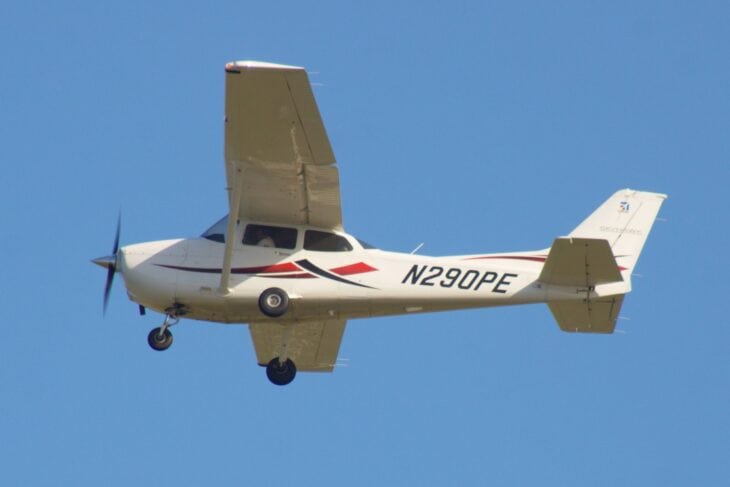
Phoenix East Aviation has trained pilots in Daytona Beach for more than 50 years and now runs three Florida locations with more than 65 aircraft. It is a United Aviate participating school, with SkyWest, Piedmont, Republic, Envoy and Mesa among its partners.
Its strongest card is for international students. The school says it is one of only four US flight schools to offer both F-1 and M-1 visas, and it holds self-examining authority, so it can run some of its own end-of-course tests.
A May 2026 cost breakdown puts the private pilot certificate at $17,786 and a zero-time start through Professional Program I at about $86,621. The Program I page now shows $72,897 rather than $68,835, which would lift that total to about $90,700.
8. CAE Phoenix Aviation Academy
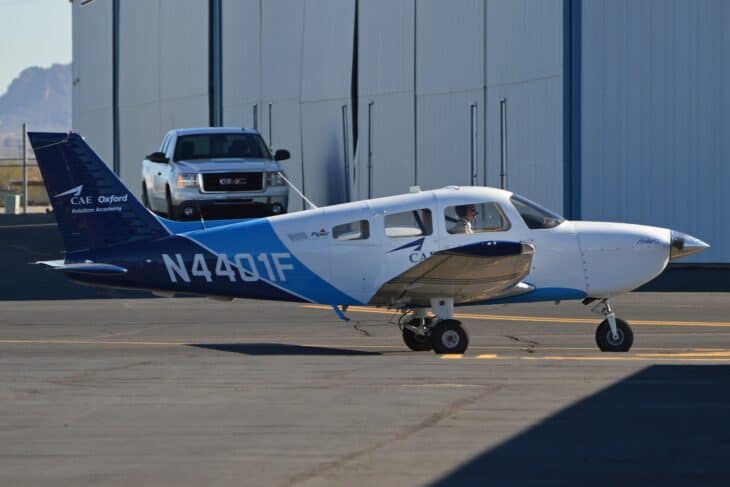
CAE, the Canadian simulator and training group, runs its US academy at Falcon Field in Mesa, Arizona. Its fleet is 48 Piper Archer TXs, eight Piper Seminoles, eight Cirrus SR20s and two Diamond DA20s.
CAE is a partner school in both American’s Cadet Academy and Southwest’s Destination 225° program, which lists the CAE option at up to $125,000. That is the highest of Southwest’s three partners.
It ranks eighth because the airline programs now define it. CAE’s own Airline Pilot Pathway link for Phoenix now redirects to a general program directory, so the school publishes no stand-alone price.
9. Coast Flight Training
Coast began as a boutique flight school more than a decade ago and now trains in San Diego, California, and at San Marcos and Dallas in Texas, with more than 60 aircraft. Its 12-month academy runs from private pilot through the instrument instructor rating and includes unlimited simulator time.
Coast is a partner in American’s Cadet Academy and says more than 300 of its graduates now fly at American Airlines. It publishes no program price, which keeps it out of the top eight.
10. United Aviate Academy
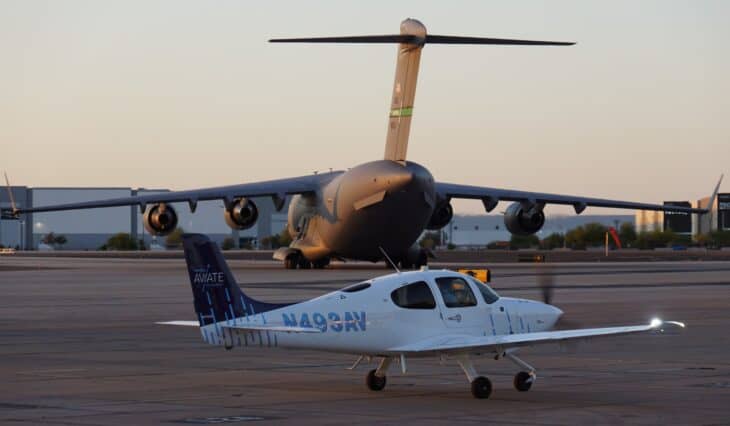
United Aviate Academy is a wholly owned United Airlines subsidiary at Phoenix Goodyear Airport in Arizona. It opened in December 2021 on a 340,000-square-foot campus with three dormitories and trains on the Cirrus SR20, Diamond DA42 and Piper Seminole.
Its 2026 catalog lists tuition of $89,000 for six certificates, but a minimum proof of funds of $111,700 and a total cost of attendance of $142,880. The schedule runs to training month 11, and the catalog says completion within any set time frame is not guaranteed.
Graduates can join United’s Aviate program and may transition to United as first officers once they meet its requirements. For a student set on United, that direct line is real.
Why an airline-owned academy ranks last
United Aviate Academy exceeded its 325-student enrollment cap, was put on probation by its accreditor in August 2024 and voluntarily withdrew its accreditation effective January 15, 2025. In April 2025, AOPA reported that 24 former students had sued, seeking class action status over a program promoted as taking one year. No ruling or settlement had been reported as of September 2026.
The airline cadet programs, and which schools run them
Most airline “academies” are not schools. They are pathway programs that send cadets to partner flight schools, so the same school can appear under several airlines.
| Program | Airline | Partner flight schools | Published cost |
|---|---|---|---|
| Cadet Academy | American | ATP, CAE, Coast, Infinity Flight Group, OBAP Luke Weathers, Spartan College | Loans up to $136,000 to $148,000 by school |
| Propel (flight school affiliates) | Delta | ATP, Academy of Aviation, Superior Flight School, OBAP Luke Weathers | Not published |
| Aviate | United | United Aviate Academy plus participating schools, including Phoenix East, Thrust Flight and US Aviation | $89,000 tuition at United Aviate Academy |
| Destination 225° Cadet | Southwest | CAE, SkyWarrior, US Aviation | Up to $115,000 to $125,000 |
| Gateway Select | JetBlue | SkyWarrior | About $120,000 |
| Ascend Pilot Academy | Alaska | Hillsboro Aero Academy | Stipend up to $27,000 with Horizon |
American’s loans come from the American Airlines Federal Credit Union, with terms up to 25 years at fixed rates of 5.99% to 10.24%. Southwest is blunt about its program: a job at the airline is not guaranteed.
The best small flight schools: AOPA’s 2026 winners
A large academy is not the only good answer, especially for a private pilot training part-time. The AOPA Flight Training Experience Awards, drawn from more than 4,200 reviews by students and pilots in 2026, are the best independent guide to small local schools.
The 2026 national Best Flight School was Nova Pilots of Leesburg, Virginia. The 2025 national winner, In The Pattern of Denton, Texas, had also won in 2021, 2022 and 2023.
| AOPA region | 2026 Best Flight School | Location |
|---|---|---|
| Eastern (national winner) | Nova Pilots | Leesburg, VA |
| Central Southern | Neu Aviation | Benton, LA |
| Great Lakes | Moore Aviation | Beaver Falls, PA |
| Pacific | Mike Smith Aviation International | Napa, CA |
| Southern | Centennial Aviation Academy | Atlanta, GA |
| Western | Sierra Charlie Aviation | Scottsdale, AZ |
For a school near you, our checklist on how to pick the right flight school covers what to ask on a first visit.
Strong schools that just missed the top 10
Acron Aviation Academy, the Orlando school that began as the Delta Connection Academy, lists its professional pilot program from $93,500 with more than 85 aircraft. It is changing hands again: FlightSafety agreed in August 2026 to buy it, with the deal expected to close in the fourth quarter.
Hillsboro Aero Academy in Redmond, Oregon, trains Alaska’s Ascend cadets on a fleet of 95 aircraft. SkyWarrior Flight Training in Pensacola, Florida, is a partner in both Southwest’s and JetBlue’s cadet programs.
Do 80% of student pilots really quit?
Not quite. The figure traces to a 2010 AOPA survey, which found that about 60 percent of people who earn a student pilot certificate never earn a higher one. AOPA estimated the overall dropout rate at 70 to 80 percent only by counting people who quit before they even got a student certificate. The same survey found lapsed students rated scheduling, value and test preparation markedly lower than pilots who finished, which is exactly what a good school fixes.
Our look at the reasons pilots fail at flight training covers the patterns behind those numbers.
FAQ
Sources and references used for research and fact-checking.
- ATP Flight School, ATP Story
- ATP Flight School, ATP Fleet
- ATP Flight School, Airline Career Pilot Program
- ATP Flight School, Pilot Training Cost
- ATP Flight School, CFI Employment
- PR Newswire, ATP Flight School Shares State of Airline Pilot Hiring and 2026 Outlook
- PR Newswire, ATP Flight School Accelerates Airline Career Pilot Program Timelines by 25%
- Epic Flight Academy, Epic Flight Academy
- Epic Flight Academy, Professional Pilot Pathway
- Epic Flight Academy, How Much Does Flight School Cost
- Epic Flight Academy, Locations
- FLYING, Epic Flight Academy Expands to Become Largest Part 141 School in U.S.
- Tecnam, Epic Flight Academy Adds Tecnam Aircraft to Fleet
- US Aviation Academy, American Airlines Cadet Academy Locations
- US Aviation Academy, About
- US Aviation Academy, Flight Training Cost
- PR Newswire, US Aviation Academy Makes Major Florida Move
- LIFT Academy, About Us
- LIFT Academy, Where Is LIFT Located
- LIFT Academy, Financing
- LIFT Academy, LIFT Academy Pilots at Republic Airways
- AeroGuard, AeroGuard Flight Training Center
- AeroGuard, Pilot Pathway Tuition
- Thrust Flight, Thrust Flight
- Thrust Flight, Zero Time to Airline Program Pricing
- Thrust Flight, Zero Time to Airline
- Thrust Flight, Fleet
- Yahoo Finance, Thrust Flight Named United Aviate Participating School
- Phoenix East Aviation, Phoenix East Aviation
- Phoenix East Aviation, Partners
- Phoenix East Aviation, International Students
- Phoenix East Aviation, How Much Does Flight School Cost: A Complete Breakdown
- Phoenix East Aviation, Professional Program I
- CAE, CAE Phoenix Aviation Academy
- Coast Flight Training, About Coast
- Coast Flight Training, Airline Career Training Program
- Coast Flight Training, AA Cadet Training at Coast
- United Aviate Academy, United Aviate Academy
- United Aviate Academy, UAA Student Catalog 2026
- United Aviate Academy, Location
- AOPA, Former Students Sue United Aviate Academy
- American Airlines, Cadet Academy Flight School Partners
- American Airlines Federal Credit Union, Cadet Academy Loans
- Delta Air Lines, Delta Propel
- Southwest Airlines, Destination 225° Cadet
- JetBlue, Gateway Select
- Alaska Airlines, Pilot Training
- Republic Airways, Republic Airways and Mesa Air Group Complete Merger
- PR Newswire, Republic Airways Addresses Pilot Shortage and Welcomes First Aviation Training Academy Class
- Aero Crew News, Republic Airways Is Suing 12 Pilots, Seeking a Combined Total of $406,550
- Epic Flight Academy, International Flight Students
- Wikipedia, Acron Aviation
- Acron Aviation Academy, Acron Aviation Academy USA
- FlightSafety International, FlightSafety International Reaches Agreement to Acquire Acron Technologies Commercial Training Solutions
- SkyWarrior, Skywarrior Flight Training
- AOPA, AOPA Foundation Announces National Winners of Top Flight School, Instructor Awards
- AOPA, 2026 Flight Training Experience Awards Winners
- AOPA, Best Training in the Nation
- AOPA, The Flight Training Experience: A Survey of Students, Pilots, and Instructors
- eCFR, 14 CFR 61.159 Aeronautical Experience: Airplane Category Rating
- eCFR, 14 CFR 61.160 Aeronautical Experience: Restricted Privileges
- eCFR, 14 CFR 61.109 Aeronautical Experience
- eCFR, 14 CFR 61.129 Aeronautical Experience
- eCFR, Appendix B to Part 141: Private Pilot Certification Course
- eCFR, Appendix D to Part 141: Commercial Pilot Certification Course
- FAA, Pilot Schools Information
- FAA, Part 141 Pilot Schools
- US Bureau of Labor Statistics, Airline and Commercial Pilots
- Air Line Pilots Association, Delta Pilot Working Agreement
- eCFR, 49 CFR 1552.7 Flight Training Security Program
- US Immigration and Customs Enforcement, SEVP Broadcast Message 2509-03
Get the Newsletter
The latest aviation news and stories sent to your inbox.
About the Author

Tim is the owner and lead editor of AeroCorner since 2019, overseeing aviation content covering aircraft, airlines, airports, and the broader aviation industry. Through years of researching, writing, editing, and publishing aviation-focused content, he has developed extensive practical knowledge of commercial aviation and air travel. Based in Asia and a frequent traveler himself, Tim also brings firsthand passenger experience to AeroCorner’s coverage. Outside of publishing, he has also explored aviation firsthand through hands-on flight training in New Zealand.