


Table of Contents
Yes, if they fly for themselves. A private pilot can legally listen to music in most flying, as long as it does not make the flight careless. An airline pilot cannot use an iPod, phone or tablet for music at the controls at any point from first taxi to the gate.
That second answer comes from the FAA itself. When it wrote its 2014 flight deck device rule, commenters asked whether the ban reached iPods used to listen to music, and the agency put “iPods and MP3 players” on its list of covered devices.
So the real question is what the pilot is flying, and under which part of the federal rules. Here is how it breaks down as of November 2026.
| Type of flying | Rule that matters | Personal music player |
|---|---|---|
| Private flight, visual rules (VFR) | 14 CFR 91.13, careless or reckless operation | Allowed, the pilot’s call |
| Private flight, instrument rules (IFR) | 14 CFR 91.21, portable electronic devices | Allowed once the pilot in command decides it will not interfere with navigation or radios |
| Charter and air taxi (Part 135) | 14 CFR 135.100 and 91.21 | No distracting activity in critical phases; the operator decides which devices may run |
| Airline (Part 121) | 14 CFR 121.542(b) and (d) | Not for personal use at a crew duty station, all flight time |
| Military | Service flight manuals, not these civil device rules | We could not confirm a published rule that names music; see the fighter section below |
No FAA rule here names music
You may read that the FAA sets rules on the volume and type of music pilots can play. None of the civil rules in the table above mentions music, volume or genre. They regulate devices, distraction and careless flying, and that is why the answer changes with the type of flight.
Can You Listen to Music While Flying a Private Plane?
Yes. On a private VFR flight, the portable electronics rule does not apply, because 14 CFR 91.21 covers air carrier and operating certificate holders, plus other civil aircraft flying under IFR.
Under IFR, the rule applies, but it has an exception for any device the pilot in command determines will not interfere with navigation or communication systems. In a private airplane, that decision falls to the pilot or other operator.
The limit that always remains is 14 CFR 91.13, which bars operating an aircraft in a careless or reckless manner that endangers others. Missing a call from air traffic control because the volume was too high could be hard to defend under it.
How the music gets into the headset
Manufacturers build for this openly. Garmin’s GMA 345 audio panel, announced in 2017, lets a pilot stream audio entertainment from a paired phone or tablet over Bluetooth, and it has separate volume knobs for music and intercom.
The clever part is muting. Garmin’s pilot’s guide for its experimental-aircraft AXIS system describes a “Radio Mutes Music” setting, which soft mutes the music whenever a selected radio receives a transmission, and a matching setting for the intercom.
PS Engineering’s PMA450 panels can also mute music, or not, during radio and intercom chatter. On the headset side, Bluetooth versions of the Bose A30 let intercom transmissions mute the audio temporarily, one of the features to compare in our guide to the best aviation headsets.
Some pilots go lower tech. In a 2008 Vertical Reference forum thread, offshore and utility helicopter pilots describe wiring an audio input into the headset, using built-in XM radio, or tuning stations on the automatic direction finder.
Can Airline Pilots Listen to Music?
Not on a phone, tablet, laptop or similar wireless device, whoever owns it. Under 14 CFR 121.542(d), a flight crewmember on a Part 121 airline may not use a personal wireless communications device or laptop at a duty station during flight time, and the captain may not permit it.
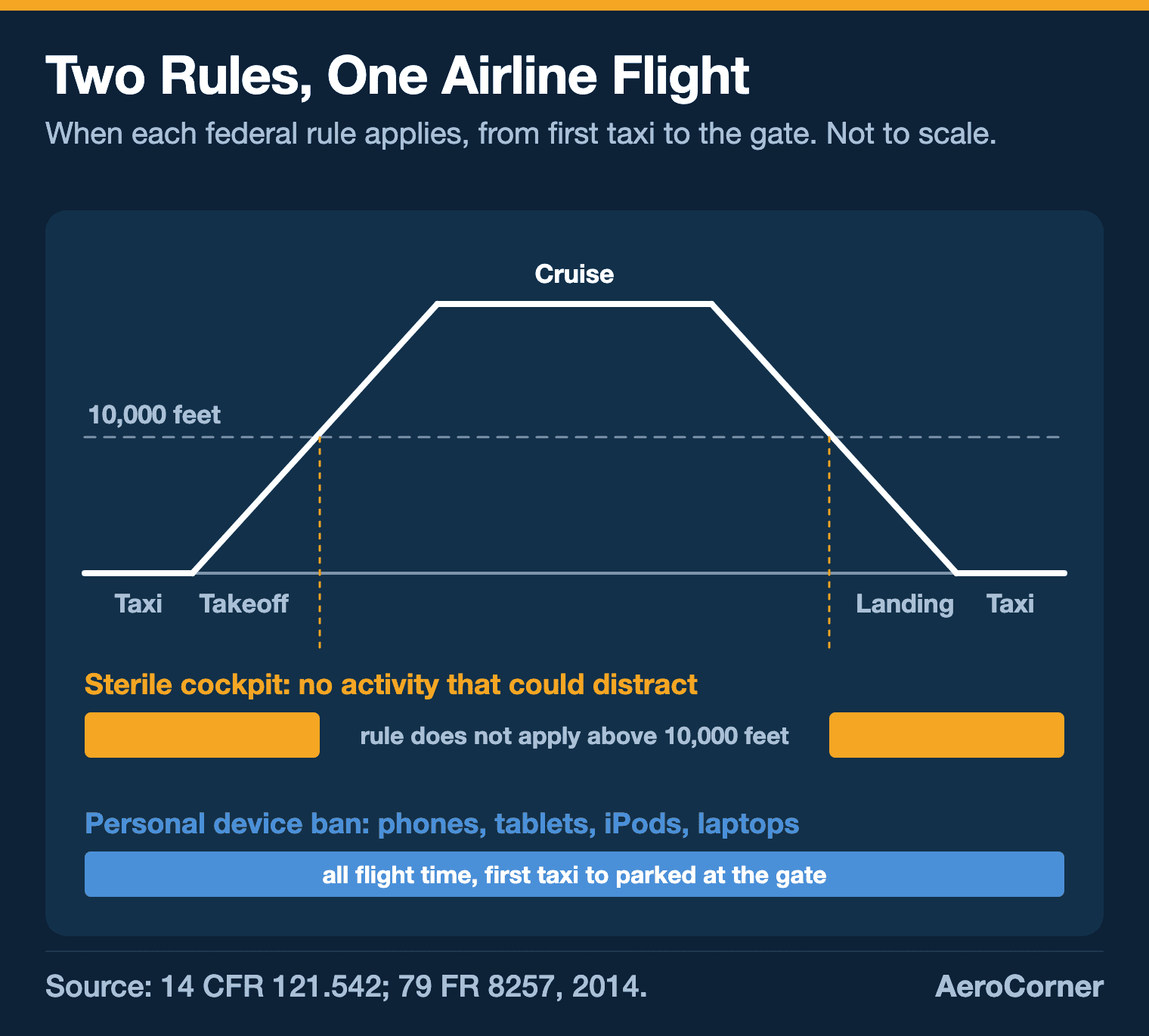
Congress ordered the ban in the FAA Modernization and Reform Act of 2012, and the FAA’s rule took effect on April 14, 2014. The rule extends what had applied only in critical phases to the whole flight, starting at taxi and ending when the aircraft is parked at the gate.
“This broad category includes, but is not limited to, devices such as cell phones, smartphones, personal digital assistants, tablets, e-readers, some (but not all) gaming systems, iPods and MP3 players, as well as netbooks and notebook computers.”
FAA final rule, 79 FR 8257, answering commenters who asked about iPods used to listen to music
The FAA did not name the flight, but its description of two pilots using laptops in cruise while discussing scheduling software, then flying 150 miles past their destination, matches Northwest Airlines Flight 188.
That flight overshot Minneapolis on October 21, 2009, after roughly 75 minutes out of radio contact, and the FAA revoked both pilots’ certificates six days later. It is the case to keep in mind when someone says cruise is the safe time to tune out.
There are limits to what the rule says. The ban has no ownership test: it covers personal use, including what the FAA calls leisure activities, and uses tied to operating the aircraft, or to safety and employment communications under approved procedures, are excepted.
The FAA also says devices outside the wireless definition are not prohibited, which leaves a narrow gray area for a player with no radio in it, even with MP3 players on its list.
Even then, 14 CFR 91.21 makes the airline, not the pilot, decide which portable devices may run. Airline operations manuals are generally not public, so we cannot tell you what each carrier permits beyond the federal floor.
The crossword survives, the e-reader does not
Pilots told the FAA that newspapers, books and crosswords keep crews alert on long flights, and that e-readers and tablets had replaced them. The FAA agreed that mental engagement in cruise has a benefit, but kept e-readers and tablets on its covered list. The federal bar on unrelated reading applies only in critical phases, so as we read the rules, a paper crossword at cruise altitude is not covered and a tablet is.
The Sterile Cockpit Rule Below 10,000 Feet
The older rule sits on top of the device ban. Since 1981, airline and charter crews have been barred during critical phases of flight from any activity that could distract them from their duties, under what pilots call the sterile cockpit rule.
Critical phases mean taxi, takeoff and landing, plus all other operations below 10,000 feet except cruise flight. The regulation’s examples are meals, nonessential conversation and unrelated reading. Music is not named, but “any activity” is broad enough that it is hard to see how it would pass.
The rule followed accidents such as Eastern Air Lines Flight 212, which crashed short of the runway at Charlotte in 1974 after crew chatter on the approach. It is still in the news: in April 2026 the FAA said it was investigating two pilots heard meowing and barking on the radio at Reagan National, and pointed to the ban on nonessential conversation below 10,000 feet.
Can Fighter Pilots Listen to Music?
There is no clear public answer. The FAA’s device rules do not reach military jets, because 14 CFR 91.21 covers civil aircraft and Part 121 covers airlines. Service flight manuals are where a rule would sit, and we could not confirm one that names music.
The flat claim that fighter pilots are banned from it appears on aviation sites, including in the intro to the story below, but none we read cites a regulation.
What exists is anecdote, and the most vivid one involves an A-10 Warthog. Former USAF life support technician Pat Markwell recalled finding a non-standard cord taped to a lieutenant’s comm line in 1983, leading to a Sony Walkman in a G-suit pocket.
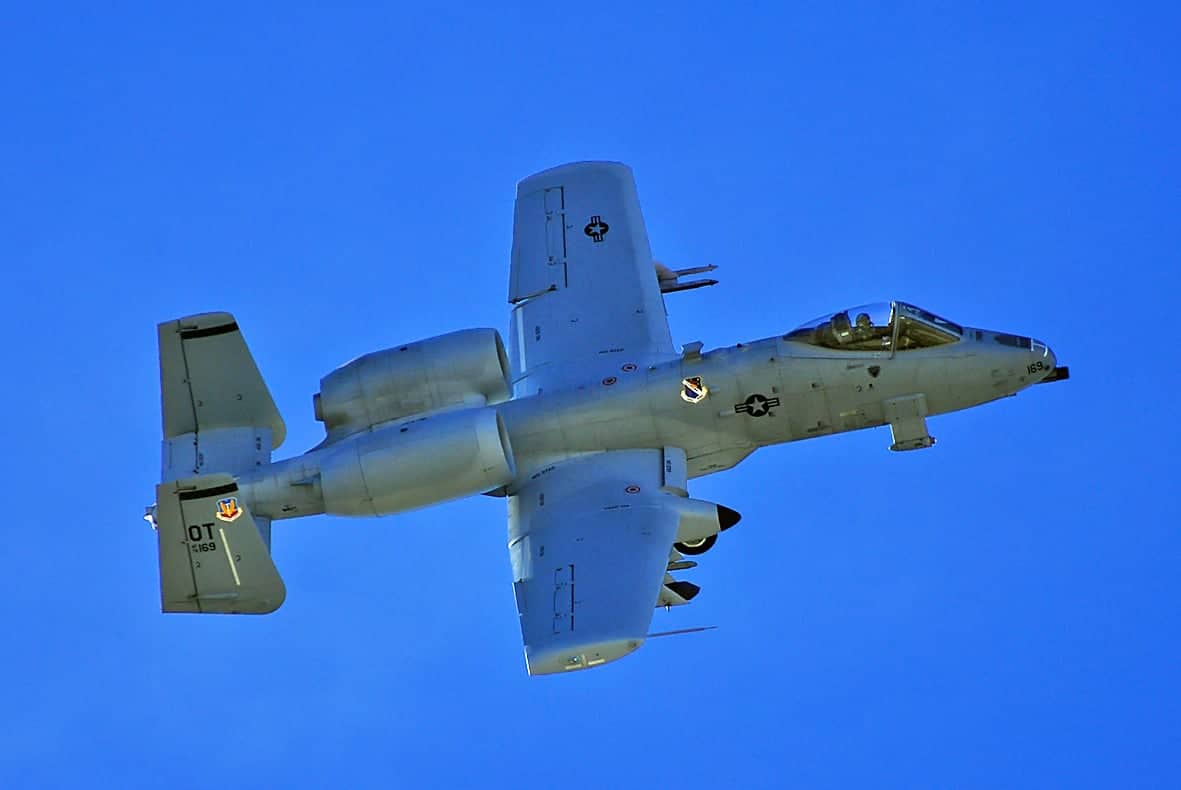
Markwell objected, citing “comm loss and post ejection flailing.” The lieutenant’s reply, as Markwell tells it: “I just like to listen to The Doors when I strafe.”
Treat that as one retold recollection, not proof of common practice. It does show what a life support technician worried about: a lost radio and an added cord in an ejection.
Can Pilots Listen to Podcasts?
The same rules apply, because none of them separates a song from a podcast. A private pilot may legally play either. An airline pilot may not play either on a phone, tablet or laptop at the controls.
Speech may distract more than you would expect, though no study we found tests podcasts directly. Researchers at Cardiff University and partner labs found that meaningful background speech disrupted lab tasks more than reversed speech or quiet.
In their simulator study of eight pilots, background radio chatter meant more self-reported distraction and workload, a longer descent checklist, and slightly more air traffic control calls missed or queried, though those counts were too small to test statistically. That tested radio chatter, not podcasts, so read it as a pointer.
Music has thin evidence in either direction. A 2013 Purdue graduate student paper on music tempos during flight maneuvers found no statistically significant effect of tempo on performance. That result is about tempo, so it does not settle whether music is harmless next to silence.
Why Some Pilots Leave It Off Anyway
In the same Vertical Reference thread, one offshore pilot said missing a single radio call because of music would be one too many and that it does not look professional, while allowing that a long solo flight with the volume low was no big deal.
Another said lots of friends at their operator listened, since much of the flying was solo.
Radio work is the first reason. Anyone who has asked for a radio check knows how much rides on hearing a call clearly, and music competes for the same ears.
The aircraft itself is the second. The FAA’s hearing brochure notes that all pilots know the sounds of a normal aircraft, and that unexpected sounds, or the lack of them, can warn of a malfunction. One forum pilot gave that exact reason for leaving music off: wanting to hear the aircraft.
Hearing is the third. The same brochure, an FAA aeromedical guide, puts a small single’s cockpit at 70 to 90 dB and a single-rotor helicopter’s at 80 to 102 dB, and cites OSHA limits of 8 hours a day at 90 dB and 2 hours at 100 dB.
It advises hearing protection, including headsets, at 90 dBA, and says the damage can go unnoticed at first. A headset protects a pilot’s ears from the cockpit. Music turned up to beat the noise works against it.
FAQ
Sources and references used for research and fact-checking.
- Cornell Legal Information Institute, 14 CFR 121.542, Flight crewmember duties
- Federal Register, Prohibition on Personal Use of Electronic Devices on the Flight Deck, final rule, 79 FR 8257 (Feb. 12, 2014)
- Cornell Legal Information Institute, 49 U.S.C. 44732, Prohibition on personal use of certain devices on flight deck
- Cornell Legal Information Institute, 14 CFR 91.21, Portable electronic devices
- Cornell Legal Information Institute, 14 CFR 91.13, Careless or reckless operation
- Cornell Legal Information Institute, 14 CFR 135.100, Flight crewmember duties
- FAA Civil Aerospace Medical Institute, Hearing and Noise in Aviation, Medical Facts for Pilots, AM-400-98/3
- NBC Boston, FAA investigating after pilots heard meowing, barking over radio at DCA
- Wikipedia, Northwest Airlines Flight 188
- Wikipedia, Sterile flight deck rule
- Garmin, AXIS Pilot's Guide, Advanced Music Settings
- Garmin, Garmin brings home theater sound quality to the cockpit with the GMA 345/342
- KITPLANES, Slide-and-Fly Audio Panels
- Aircraft Spruce, Bose A30 aviation headset product page
- The Aviation Geek Club, Former USAF life support technician tells the story of the A-10 Warthog pilot who loved to listen to The Doors during strafing runs
- Vertical Reference, Music, helicopter pilot forum thread
- Purdue University, Effects of Music Tempos on Flight Performance (2013)
- Hodgetts et al., The effects of party line communication on flight task performance
Get the Newsletter
The latest aviation news and stories sent to your inbox.
About the Author

Tim is the owner and lead editor of AeroCorner since 2019, overseeing aviation content covering aircraft, airlines, airports, and the broader aviation industry. Through years of researching, writing, editing, and publishing aviation-focused content, he has developed extensive practical knowledge of commercial aviation and air travel. Based in Asia and a frequent traveler himself, Tim also brings firsthand passenger experience to AeroCorner’s coverage. Outside of publishing, he has also explored aviation firsthand through hands-on flight training in New Zealand.