

Table of Contents
In the early-morning darkness of June 26, 1984, a battered C-123 cargo plane landed at Homestead Air Force Base near Miami. On board were about 1,500 pounds of cocaine, loaded the day before at an airstrip outside Managua, Nicaragua.
The pilot was Barry Seal, a former TWA captain who had spent eight years smuggling drugs into the United States. This time he was working for the Drug Enforcement Administration, and a camera hidden in the plane had photographed the men who loaded it, Pablo Escobar among them.
Seal is remembered now mostly through Tom Cruise’s movie. The real story is stranger, and it turns on flying skill, a handful of aircraft, and one photograph that a president used for more than it could prove.
Who Was Barry Seal?
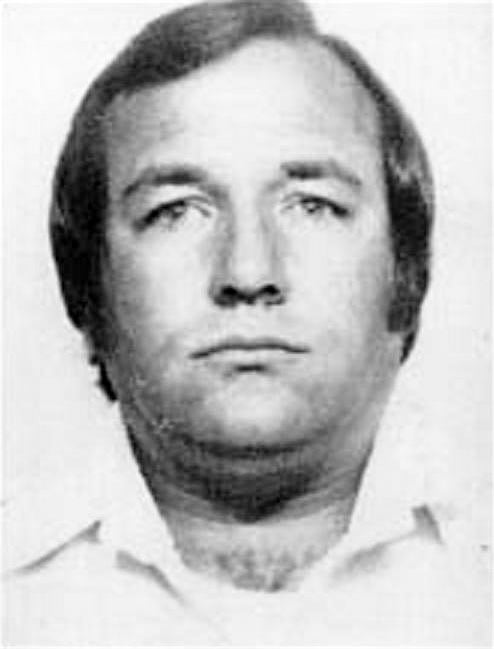
Adler Berriman “Barry” Seal (July 16, 1939 to February 19, 1986) was an airline pilot from Baton Rouge, Louisiana, who became one of the biggest drug smugglers working for the Medellín cartel. After a 1984 conviction he turned DEA informant, flew a sting into Nicaragua and testified in several major drug trials.
The cartel had him shot dead outside a Baton Rouge halfway house in February 1986. Three Colombian men were convicted of the murder.
1939
Born in Baton Rouge. Student pilot certificate at 16, private pilot certificate at 17.
1964
Joins TWA. Starts as a flight engineer and rises to captain on the Boeing 707.
1972
Arrested over plastic explosives. The case collapses, but TWA fires him for taking false medical leave.
1976
Starts smuggling. Small marijuana loads first, cocaine by 1978.
1981
Flies for the Medellín cartel. Low-level airdrops into rural Louisiana.
1982
Moves his fleet to Mena, Arkansas. The planes are maintained and modified there.
March 1984
Becomes a DEA informant. Facing a 10-year sentence in Florida.
June 1984
The C-123 sting. Hidden cameras photograph cocaine being loaded in Nicaragua.
Feb. 19, 1986
Murdered in Baton Rouge. Three weeks into his probation.
March 16, 1986
Reagan shows the photo on national TV. In a speech asking Congress for Contra aid.
A Gifted Pilot in TWA’s Left Seat
Seal learned to fly as a teenager, and his instructor called him a natural. In 1962 he enlisted in the Louisiana Army National Guard, went through airborne training and served with the 20th Special Forces Group, though his military occupation code was radio telephone operator, not pilot.
In 1964 he joined TWA as a flight engineer. He moved up to first officer and then captain on the Boeing 707, flying regular routes to Western Europe, and his biographer, former FBI agent Del Hahn, records him as one of the youngest 707 captains in the TWA fleet.
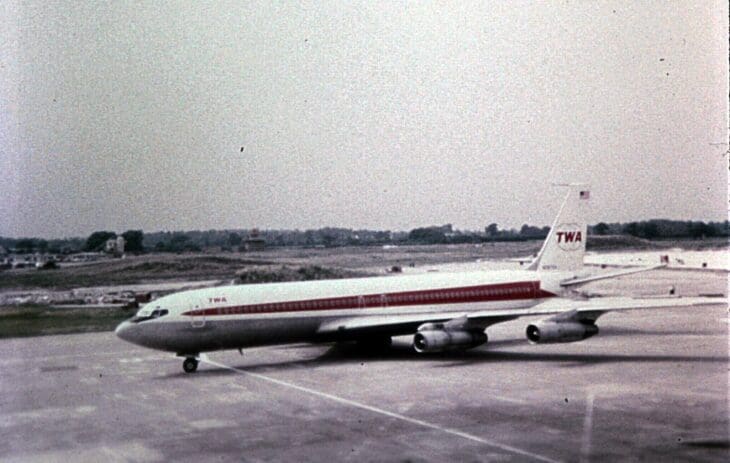
The airline career ended in July 1972. Seal was arrested in a plot to fly a load of plastic explosives to Mexico in a Douglas DC-4, reportedly bound for anti-Castro Cubans. The charges were eventually thrown out for prosecutorial misconduct, but TWA fired him anyway: he had claimed medical leave to take part.
How Seal Moved Cocaine by Air
Seal admitted he began smuggling small amounts of marijuana by air in early 1976. By 1978 he was flying cocaine, which was worth far more pound for pound. A drug run to Ecuador ended with an arrest in Honduras, where Slate reports he was caught with 40 kilograms of cocaine and spent nine months in jail.
Prison gave him contacts. Through them he reached the Medellín cartel, and from 1981 he was flying cocaine from Colombia for the Ochoa family and Escobar.
His method was simple and hard to stop. His planes flew in low and airdropped packages onto remote ground in Louisiana, where a ground crew picked them up and drove them to the cartel’s distributors in Florida. Seal mostly planned and ran the operation, while pilots such as his former brother-in-law William Bottoms flew the loads.
That many flights drew attention from the Louisiana State Police, so in 1982 Seal moved his aircraft to the small airport at Mena, Arkansas. A modification shop there fitted his planes with drop doors and extra fuel bladders, according to the Arkansas Times.
The money nobody can pin down
Seal testified in federal court that he earned more than $50 million smuggling drugs. Arkansas State Police investigators put the figure as high as $5 billion. The gap between the two is a factor of 100.
The Florida net closed first. A DEA undercover agent, posing as a buyer, negotiated with Seal to fly in 1,200 pounds of counterfeit methaqualone tablets, and in 1984 a jury convicted him. He was looking at 10 years in prison.
The C-123 Sting in Nicaragua
In March 1984 Seal flew his Learjet to Washington and offered himself to the vice president’s South Florida drug task force. The DEA signed him up as an informant on March 28, and within weeks he was in Medellín meeting Escobar and the Ochoa brothers under a false name.
The first attempt went badly. An overloaded plane crashed on takeoff in Colombia, and the replacement was shot at by Nicaraguan troops after a refueling stop and had to land at Managua’s main airport.
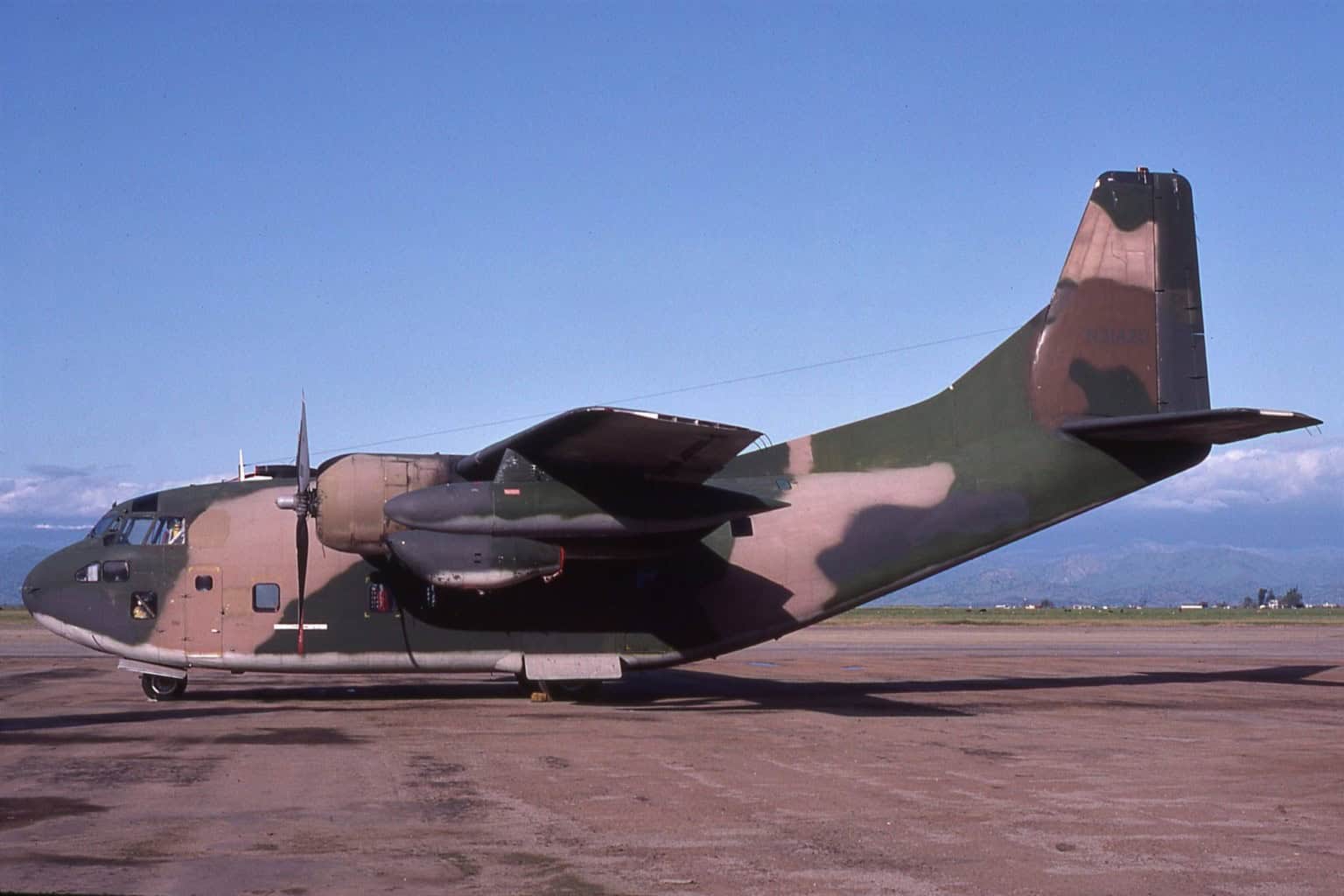
Escobar wanted a bigger aircraft, so Seal bought a Fairchild C-123K Provider, a former military assault transport with two piston radial engines and a small jet engine under each wing, built to haul heavy loads off short dirt strips. Before it went south, the DEA had CIA technicians hide cameras inside it.

On June 25, 1984, Seal landed at Los Brasiles, an airstrip near Managua. The cameras caught the cocaine being loaded, with Escobar, the cartel’s José Gonzalo Rodríguez Gacha and a Nicaraguan named Federico Vaughan in the frame. The plane landed at Homestead the next morning, and the drugs were handed over in a camper to keep Seal’s cover.
The cover lasted three weeks. A July 17, 1984, front page in the Washington Times laid out the Nicaragua operation, and the DEA had to arrest the cartel’s Miami distributors at once. The evidence still produced the first US drug-trafficking indictment against Escobar and the Ochoas.
The Murder, and the Speech That Followed
Seal spent 1985 testifying. He was the main witness in three trials, against the Miami distributors, against the crew behind a Bolivia-to-Las Vegas cocaine flight and against the chief minister of the Turks and Caicos Islands, and all three ended in convictions.
His cooperation won him probation instead of prison. In January 1986 a Louisiana federal judge ordered him to spend every night at the Salvation Army’s community treatment center in Baton Rouge and barred him from carrying a gun or hiring armed guards. Seal told friends the judge had made him a clay pigeon.
On the evening of February 19, 1986, a gunman shot Seal dead in his white Cadillac in the center’s parking lot. Three Colombians were convicted of capital murder and sentenced to life without parole, and federal prosecutors charged Escobar, Fabio Ochoa and Rafael Cardona with conspiring in the killing.
Twenty-five days later, on March 16, 1986, President Ronald Reagan went on national television to ask Congress for aid to the Contra rebels fighting Nicaragua’s Sandinista government. He held up one of Seal’s photos.
“This picture, secretly taken at a military airfield outside Managua, shows Federico Vaughn, a top aide to one of the nine commandantes who rule Nicaragua, loading an aircraft with illegal narcotics, bound for the United States,” Reagan said.
What the Photo Could Not Prove
Myth: Seal's photo proved the Sandinista government ran drugs
The airfield Reagan called military was, the State Department later conceded, a civilian strip used mainly by crop dusters. The DEA said the cocaine on Seal’s C-123 was the only drug shipment through Nicaragua it knew of, and Seal had flown it there himself.
That is the correction that matters most. A Wall Street Journal investigation in April 1987 found that the federal prosecutor who supervised Seal’s work could find nothing beyond Seal’s own word tying any Nicaraguan official to the shipment.
Federico Vaughan was the weak link. Reagan called him a top aide to a commandante, but prosecutors and drug officials told the Journal they were no longer sure who he was, and a 1988 House subcommittee raised further doubts about his ties.
The C-123 did not stay out of politics either. Seal’s plane was sold on, and on October 5, 1986, a C-123K flying weapons to the Contras was shot down over southern Nicaragua by a shoulder-fired missile. Cargo handler Eugene Hasenfus parachuted out, was captured, and his story began to unravel the Iran-Contra affair.
Reporting at the time identified that aircraft as Seal’s old C-123, and the Arkansas Times noted in 1992 that Oliver North’s own book said the plane had been bought after the smuggler’s death.
Why Barry Seal’s Numbers Never Agree
Almost every figure in Seal’s story comes in two versions, because the sources are a smuggler’s own testimony, police estimates and decades of retelling. These are the main splits.
| Claim | Lower or documented figure | Higher or repeated figure |
|---|---|---|
| Total smuggling earnings | More than $50 million (Seal’s court testimony) | Up to $5 billion (Arkansas State Police estimate) |
| Size of his fleet | At least four planes (Wall Street Journal, 1987) | More than a dozen by 1982 (Hahn biography) |
| His TWA aircraft | Boeing 707 captain (Hahn biography) | “Youngest 747 pilot in the country” (Arkansas Times, 1992) |
| When TWA let him go | Career ended with the July 1972 arrest | Fired in 1974 (Slate, 2017) |
The 747 line is the one to treat with most care. It turns up in later profiles, but the 2016 biography by former FBI agent Del Hahn puts him in command of 707s, and that is the claim this article uses.
The CIA question is murkier still. Writers such as Alexander Cockburn have suggested Seal’s agency links went back to the 1960s, and Seal told associates and testified in court that he sometimes did work for CIA operations. The CIA denied employing him, and Seal at other times denied ever being an asset. The one documented CIA role is the cameras its technicians fitted to the C-123 at the DEA’s request.
What American Made Got Wrong
Seal has been played by Dennis Hopper in the 1991 HBO film Doublecrossed and by Tom Cruise in American Made (2017). The Cruise film is the version most people know, and it is loosely based on his life at best.
In the film, a bored Seal quits TWA in 1978 to take reconnaissance photos for a CIA handler, and the agency sets him up with a house and an airfield in Mena. In reality TWA fired him over the explosives case, and he moved to Mena on his own in 1982. Many of the film’s set pieces were invented, including the killing of his brother-in-law.
Cruise is a working pilot off screen too, and the aircraft he owns are covered in our look at Tom Cruise’s private jets.
The film’s ending, Seal shot in his car in Baton Rouge, is the part it got right. The rest of the true story, a 707 captain who smuggled with low-level airdrops, photographed the cartel for the DEA and saw his evidence used for more than it could carry, did not need much invention.
Sources and references used for research and fact-checking.
- Wikipedia, Barry Seal
- The Wall Street Journal (CIA reading room copy), Dope Story: Doubts Rise on Report Reagan Cited in Tying Sandinistas to Cocaine
- Ronald Reagan Presidential Library, Address to the Nation on the Situation in Nicaragua
- Slate, What's Fact and What's Fiction in American Made
- Arkansas Times, Bad company
- Wikipedia, Corporate Air Services HPF821
Get the Newsletter
The latest aviation news and stories sent to your inbox.
About the Author

Tim is the owner and lead editor of AeroCorner since 2019, overseeing aviation content covering aircraft, airlines, airports, and the broader aviation industry. Through years of researching, writing, editing, and publishing aviation-focused content, he has developed extensive practical knowledge of commercial aviation and air travel. Based in Asia and a frequent traveler himself, Tim also brings firsthand passenger experience to AeroCorner’s coverage. Outside of publishing, he has also explored aviation firsthand through hands-on flight training in New Zealand.