

Table of Contents
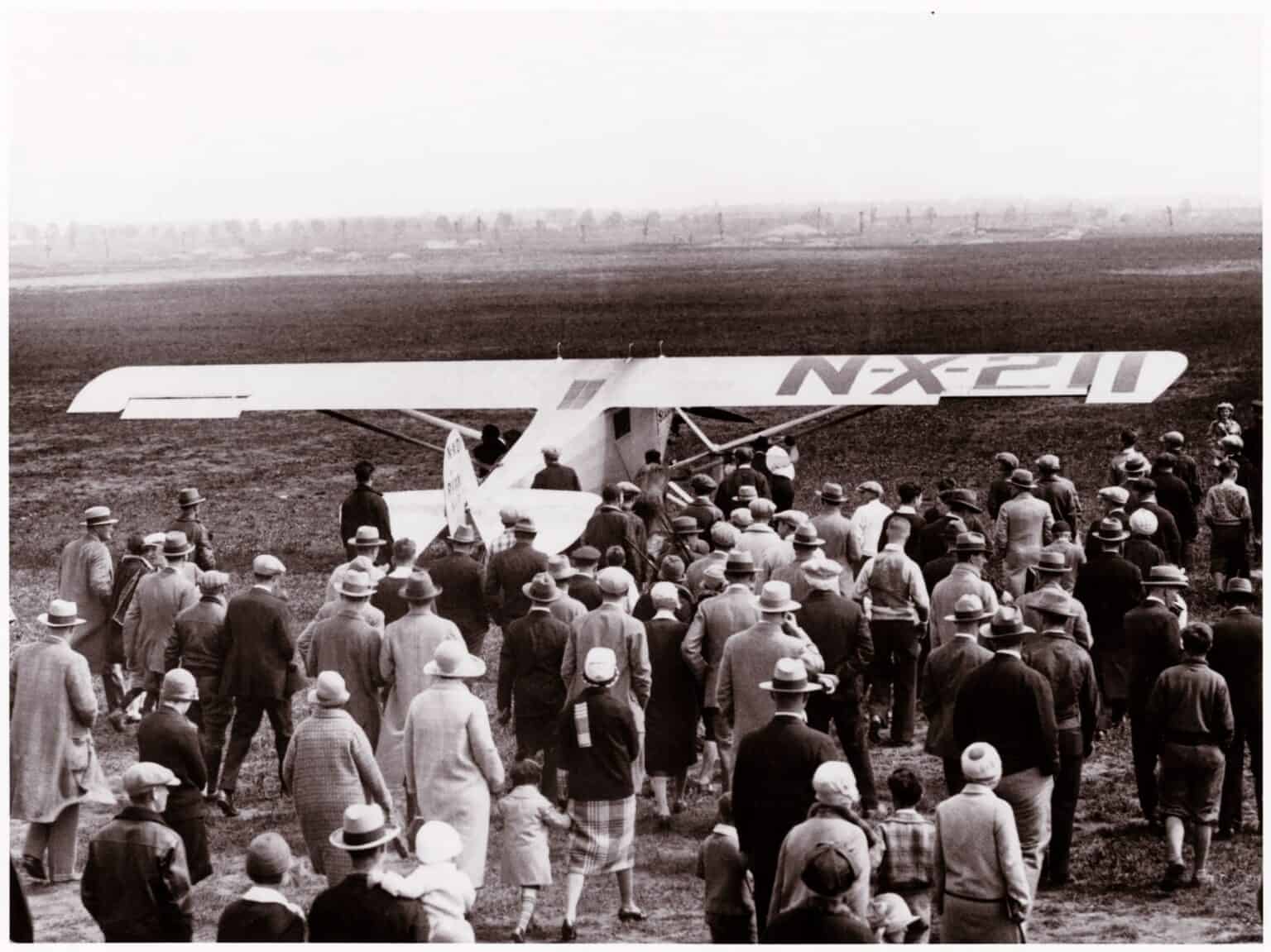
At 10:22 on the night of May 21, 1927, a small single-engine monoplane landed at Le Bourget, outside Paris. The pilot had found the airfield by the headlights of the cars jamming every road toward it.
A crowd the Smithsonian puts at 150,000 broke through onto the field, pulled him out of the cockpit and carried him above their heads. He had flown 3,610 miles (5,810 km) from New York on his own, and he had not slept in about 60 hours.
Charles Lindbergh was 25. This is the flying life behind the most famous name in early aviation: the airmail crashes, a plane he could not see out of, the flight itself, and what the record books often get wrong about it.
Who Was Charles Lindbergh?
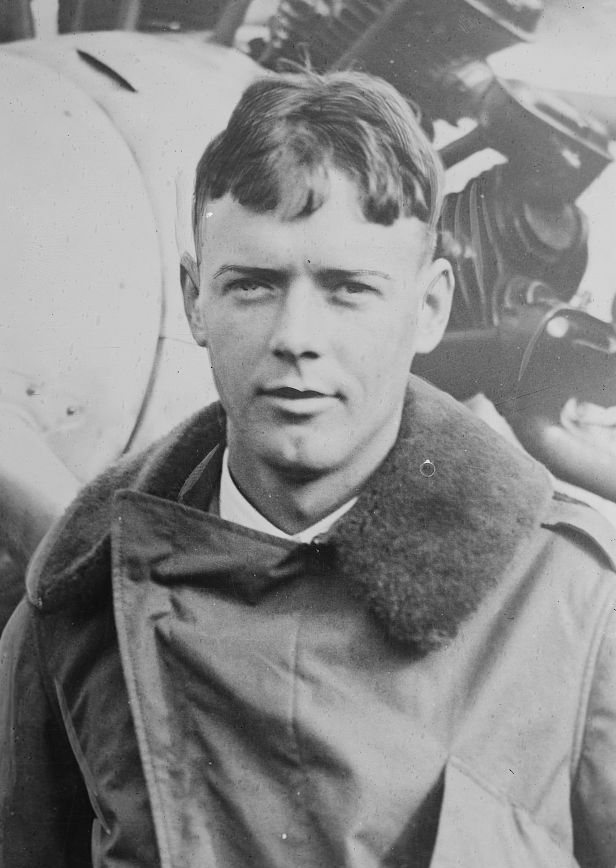
Charles Augustus Lindbergh (1902 to 1974) was an American aviator, Army reserve officer and author. On May 20 and 21, 1927, he made the first solo nonstop flight across the Atlantic, and the first nonstop flight between New York and Paris, in the Spirit of St. Louis.
The flight won him the $25,000 Orteig Prize and the Medal of Honor, and he still ranks among the most famous pilots in history. His later life took in a kidnapping, a bitter political fall, 50 combat missions and a Pulitzer Prize.
1902
Born in Detroit on February 4, the son of a future congressman.
1925
Army pilot’s wings. Graduates first in his class at Kelly Field, Texas.
1926
Flies the mail between St. Louis and Chicago as chief pilot for Robertson Aircraft.
1927
New York to Paris, solo. 33 hours and 30 minutes in the Spirit of St. Louis, May 20 to 21.
1929
Marries Anne Morrow, who becomes his radio operator, navigator and co-pilot.
1931
North to the Orient. The couple fly a Lockheed Sirius from Long Island to China by way of Alaska.
1932
Their son is kidnapped from the family home in New Jersey on March 1.
1941
The Des Moines speech for America First, on September 11.
1944
50 combat missions in the Pacific, as a civilian.
1954
Brigadier general and Pulitzer Prize, the prize for his book The Spirit of St. Louis.
1974
Dies on Maui on August 26, aged 72.
From Barnstormer to Airmail Pilot
Lindbergh started out in 1922 as a barnstormer’s wing walker and parachutist, touring Nebraska, Kansas, Colorado, Wyoming and Montana before he could afford to fly solo. In March 1924 he reported to Brooks Field in Texas for a year of Army flight training.
It was a hard course: only 18 of the 104 cadets who started were left at the end, and Lindbergh graduated first. Eight days before graduation, a midair collision during combat maneuvers forced him to bail out of his S.E.5.
The Army had no full-time job for him, so in October 1925 Robertson Aircraft hired him as chief pilot of Contract Air Mail Route 2, a 278-mile (447 km) run between St. Louis and Chicago. He flew it in war-surplus de Havilland DH-4s, often at night.
Twice, bad weather, equipment failure and empty tanks forced him to bail out near Chicago at night. He walked away both times, and by late 1926 he judged a nonstop flight to Paris less dangerous than another winter of carrying the mail.
The Spirit of St. Louis: A Plane He Could Not See Out Of
In 1919, New York hotelier Raymond Orteig offered $25,000 to the first pilot to fly nonstop between New York and Paris. By 1927 the prize had killed several of the men trying for it, including two of René Fonck’s crew when his overloaded Sikorsky S-35 crashed on takeoff from Roosevelt Field in September 1926.
Most rival teams favored big three-engine planes with crews. Lindbergh, backed by St. Louis businessmen, wanted one engine, one seat and as much fuel as possible.
The big makers would only sell him a plane if they could pick the pilot, so he went to Ryan Airlines, a small San Diego company. Ryan built it for $10,580 in 60 days, with designer Donald Hall working beside Lindbergh, who put in $2,000 of his airmail savings.
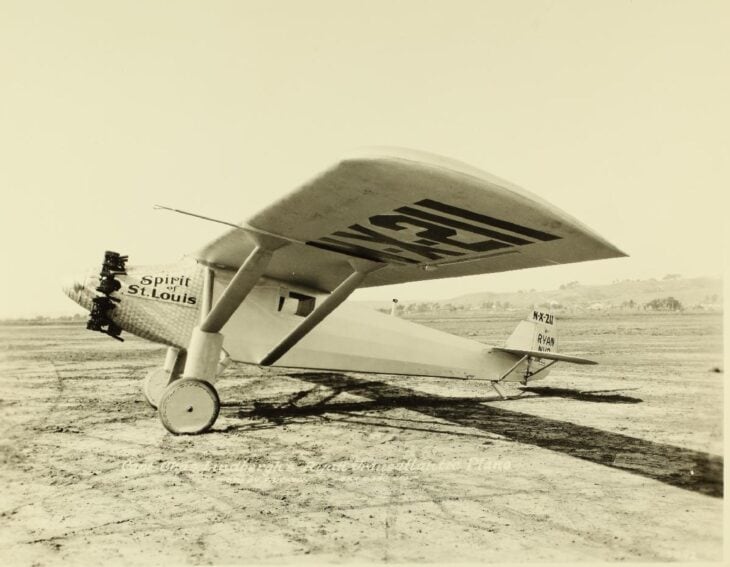
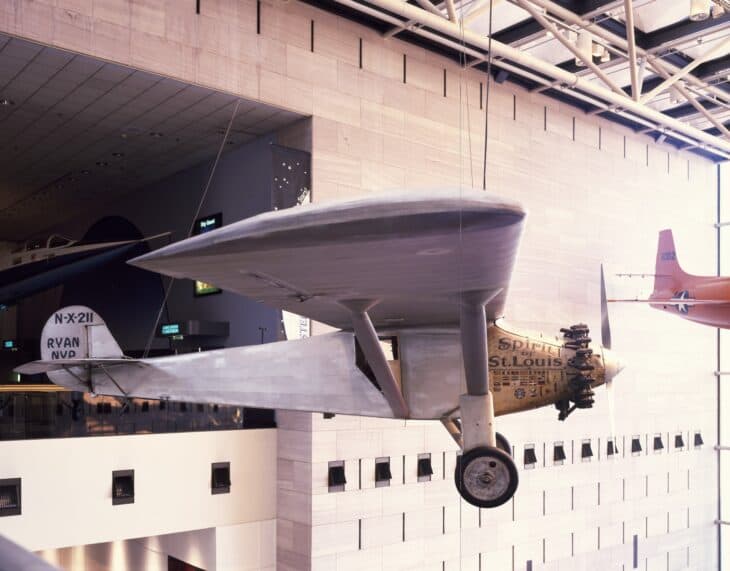
The Ryan NYP was a stretched Ryan M-2 with a 223 hp Wright J-5C Whirlwind engine and room for 450 US gallons (1,700 L) of gasoline. At Lindbergh’s request the biggest tanks went ahead of the cockpit, so a crash could not crush him between tank and engine.
No windshield, so he used a periscope
With the fuel tanks in front of him, the Spirit of St. Louis had no forward window at all. Lindbergh could see ahead only through a periscope on the left side, or by turning the plane to look out of a side window. He sat in a cockpit about 36 inches wide, 32 inches long and 52 inches high (91 x 81 x 132 cm), too small to stretch his legs.
He flew the finished plane from San Diego to New York on May 10 to 12, 1927, stopping only at St. Louis, in 21 hours and 40 minutes. That alone was a new transcontinental record.
33 Hours and 30 Minutes to Paris
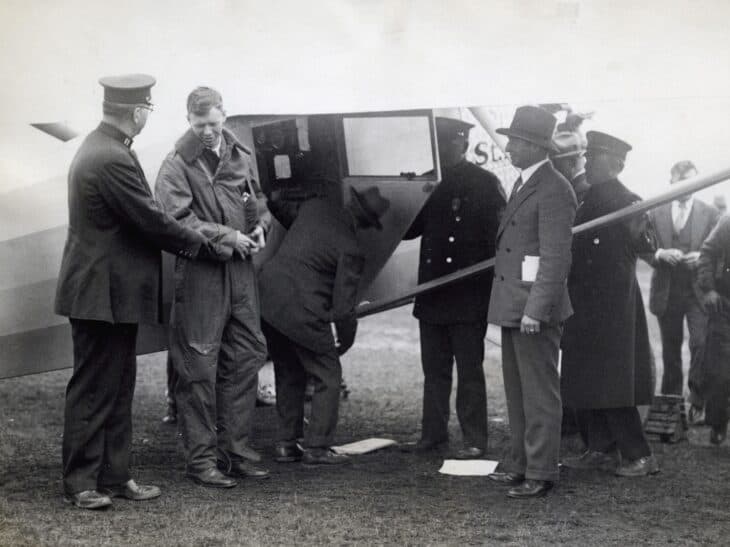
Lindbergh took off from a muddy Roosevelt Field on Long Island at 7:52 a.m. on May 20, 1927. Weighing about 5,200 pounds (2,400 kg), a thousand pounds more than it had lifted in testing, the Spirit cleared the telephone wires at the end of the field by about 20 feet (6 m).
,_Amerikaans_luchtvaartpionier_die_als_eerste_piloot_solo_en_non-stop,_SFA002004482.jpg)
Off Cape Cod he was already fighting sleep, so he dropped to 10 feet (3 m) above the sea to keep his mind clear. After dark he climbed to 10,000 feet over fog, flew into a thunderhead and turned back when ice began to form on the plane.
He had left the radio behind as too heavy and unreliable, and navigated by dead reckoning. By the second morning he was hallucinating and nodding off for seconds at a time. Luckily the winds largely canceled out, unlike the jet stream that now pushes transatlantic flights onto a different route each way.
Less than three miles off course
About 27 hours after takeoff, Lindbergh saw fishing boats, then the coast of southwest Ireland at Dingle Bay. He was 2.5 hours ahead of schedule and less than 3 miles (5 km) off course, almost exactly where he had marked his chart, navigating by dead reckoning alone.
He crossed the French coast at Cherbourg at sunset, circled the Eiffel Tower and landed at Le Bourget at 10:22 p.m. on May 21. The Smithsonian gives the flight as 3,610 miles (5,810 km) in 33 hours and 30 minutes, certified from a sealed barograph in the plane.
Was Lindbergh the First to Fly Across the Atlantic?
The myth: Lindbergh made the first transatlantic flight
He did not. Dozens of people had already crossed the Atlantic by air, nonstop and otherwise, the first of them eight years earlier. What Lindbergh did first was cross it alone, and fly nonstop between New York and Paris.
The first airplane crossing was the U.S. Navy’s Curtiss NC-4 flying boat, which flew from New York to Plymouth, England, in stages in May 1919. Then, on June 14 and 15, 1919, the British pilots John Alcock and Arthur Brown flew a Vickers Vimy nonstop from St. John’s, Newfoundland, to Clifden, Ireland, in 16 hours and 12 minutes.
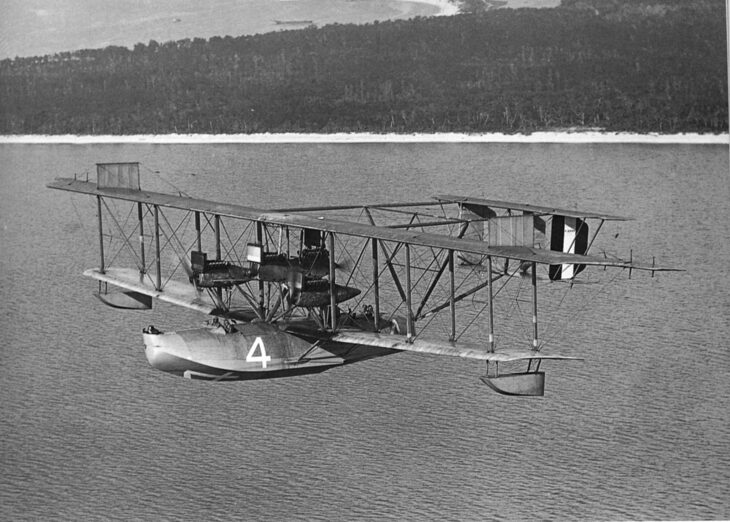

Airships crossed too. The British R34 flew from Scotland to Long Island in July 1919 and back again, and the German-built LZ 126 flew from Germany to New Jersey in 1924, each with a large crew aboard.
In a 1927 Believe It or Not cartoon, Robert Ripley counted everyone aboard those nonstop flights and made Lindbergh the 67th person to fly the Atlantic without stopping. Counts that include the staged crossings run higher, to around 80.
His real firsts were the solo crossing and the New York to Paris route, which was the one the Orteig Prize paid for. Those are not small: no other crossing had one person flying, navigating and staying awake for a day and a half.
| Figure | One source says | Another says |
|---|---|---|
| Crowd at Le Bourget | 150,000 (Smithsonian, Lindbergh story page) | About 100,000 (Smithsonian, Spirit of St. Louis object record) |
| Distance flown | 3,610 miles (Smithsonian) | About 3,600 miles (5,800 km) (Wikipedia, rounded) |
| Countries on the 1927 to 1928 Latin America tour | 15 (Smithsonian) | 16 (Wikipedia, listing each stop) |
| People who flew the Atlantic before him | 66 nonstop, making him the 67th (Ripley, 1927) | Around 80, staged crossings included (Plane & Pilot) |
The Most Famous Man in the World
New York gave him a ticker-tape parade on June 13, 1927, and about 4 million people saw him that day. President Calvin Coolidge presented him the first Distinguished Flying Cross, and Congress awarded him the Medal of Honor by special act, a medal almost always reserved for combat.
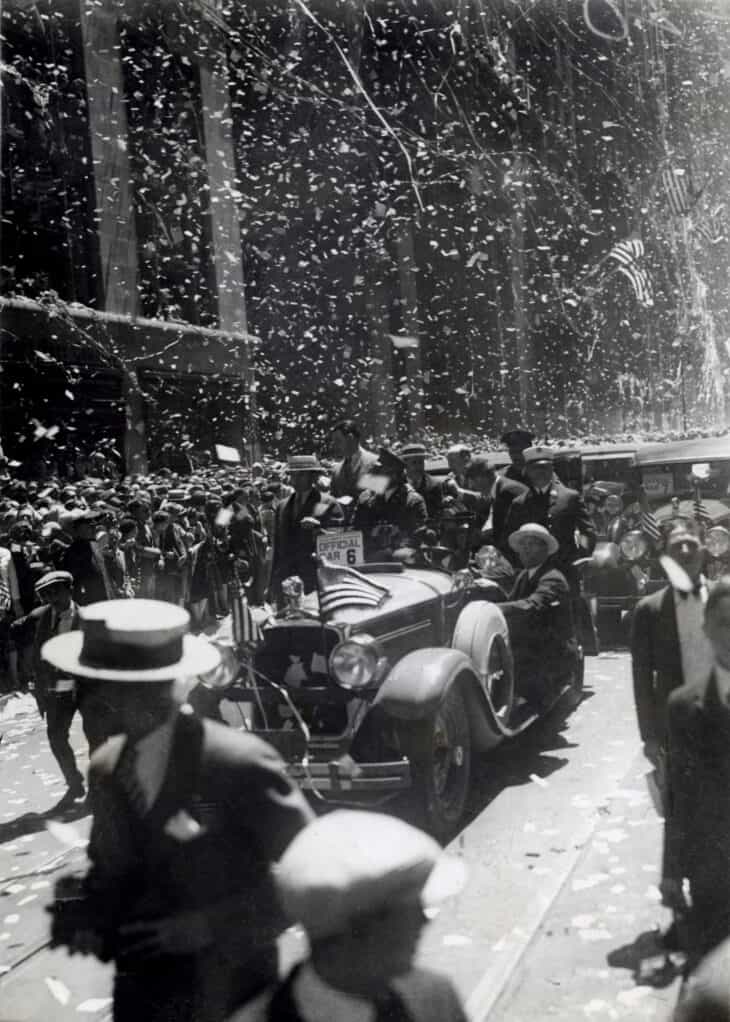
,_Amerikaans_luchtvaartpionier_die_als_eerste_piloot_solo_en_non-stop,_SFA002004478.jpg)
He became Time magazine’s first Man of the Year, its youngest until Greta Thunberg in 2019. On a 95-day tour that began July 20, 1927, he took the Spirit to 82 cities in all 48 states, and about 30 million people came to see him.
The effect on aviation was immediate. Interest in flight training, airmail and commercial flying surged in what became known as the Lindbergh Boom, and Wall Street money that had ignored 1920s air travel came looking for airplanes to invest in.
San Diego, where the Spirit was built, named its new airport Lindbergh Field in 1928. Now San Diego International (SAN), it averaged 416 flights a day to 117 destinations in October 2026.
Lindbergh flew the Spirit for the last time on April 30, 1928, from St. Louis to Washington, D.C., and gave it to the Smithsonian. It is still in the National Air and Space Museum’s collection.
Pan Am and the Survey Flights With Anne
On a goodwill tour of Latin America that began in Mexico City in December 1927, Lindbergh met Anne Morrow, daughter of the US ambassador to Mexico, Dwight Morrow. They married in 1929. She learned to fly, earned glider, pilot and radio operator’s licenses, and served as his radio operator, navigator and co-pilot.
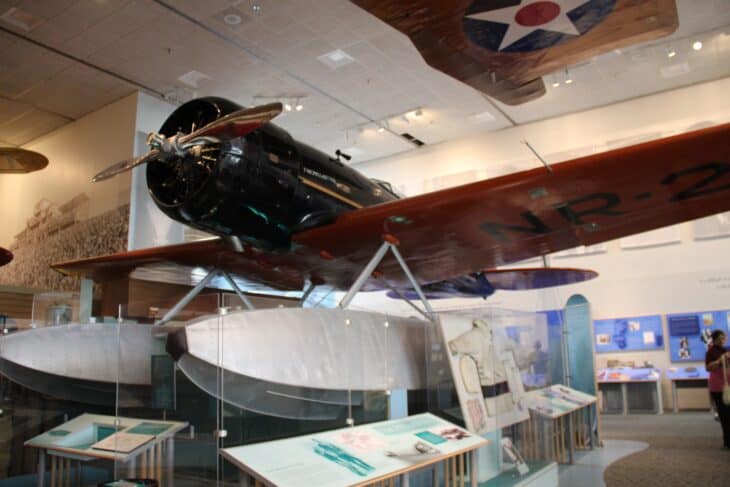
Lindbergh laid out early Latin American routes as a consultant to Pan American Airways. In 1931, with backing from Pan Am’s Juan Trippe, he and Anne flew a Lockheed Sirius named Tingmissartoq from Long Island to Nome, Alaska, then on to Siberia, Japan and China.
.jpg)
The route was too far for the airliners of the day, and it did not open to passengers until after World War II. Anne told the story of the trip in her book North to the Orient.
What Happened to Charles Lindbergh’s Baby?
On the evening of March 1, 1932, their 20-month-old son, Charles Jr., was taken from his crib at the family home in East Amwell, New Jersey. The kidnapper left a homemade ladder and a ransom note.
A $50,000 ransom was handed over in a Bronx cemetery on April 2, partly in gold certificates that were about to be withdrawn and would stand out when spent. On May 12, a truck driver found the child’s body beside a road about 4.5 miles (7.2 km) from the house.
In September 1934 a gas station attendant wrote down the license plate of a man who paid with a gold certificate, and it led to Bruno Richard Hauptmann, a German-born carpenter. He was convicted in 1935 and executed on April 3, 1936, still saying he was innocent.
Congress responded with the Federal Kidnapping Act, known as the Lindbergh Law, which made taking a victim across state lines a federal crime. Worn down by the press and fearing for their second son, the Lindberghs sailed for England in December 1935 and did not return until 1939.
Why Is Charles Lindbergh Controversial?
From Europe, at the invitation of the US air attaché in Berlin, Lindbergh inspected Germany’s growing air force, and in October 1938 he accepted the Order of the German Eagle, presented by Hermann Göring. Back home, he became the best-known spokesman for America First, the movement against entering World War II.
After President Franklin Roosevelt publicly rebuked him, he resigned his Army Air Corps commission in April 1941. Then, at an America First rally in Des Moines on September 11, 1941, he named “the British, the Jewish, and the Roosevelt Administration” as the groups pushing the country toward war.
The backlash was immediate and lasting. The Smithsonian’s own assessment is blunt: he was not a Nazi and he condemned Nazism, but he was antisemitic and interested in eugenics.
50 Combat Missions as a Civilian
After Pearl Harbor, Roosevelt refused to give him back his commission, so Lindbergh went to war as a civilian technical adviser. In six months in the Pacific in 1944 he flew 50 combat missions, including fighter missions with Army squadrons flying the twin-engine Lockheed P-38 Lightning.
His lasting contribution there was fuel. He taught P-38 pilots to lean their engines and cruise at 1,400 rpm and 30 inches of manifold pressure. One pilot recalled it saving 50 to 100 gallons a mission, which stretched the fighter’s range.
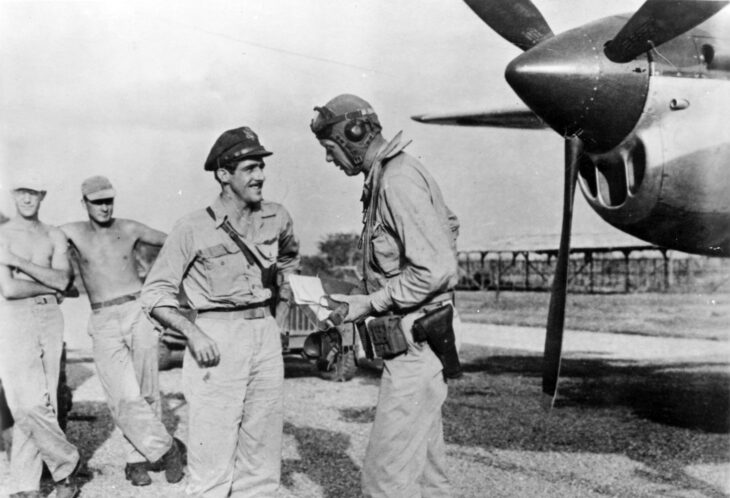

On July 28, 1944, escorting bombers near Ceram, he shot down a Japanese Ki-51 observation plane. In 1954 President Eisenhower made him a brigadier general in the Air Force Reserve, and the same year his book The Spirit of St. Louis won the Pulitzer Prize for biography.
He spent his last decades as a Pan Am consultant and conservationist, and led a hidden second life: from 1957 he had seven children by three women in Germany and Switzerland, born between 1958 and 1967, while still married to Anne. DNA tests confirmed three of them in 2003.
Lindbergh died of lymphoma on August 26, 1974, at his home in Kipahulu on Maui, aged 72. He had helped design his own grave there.
Almost a century on, the flight is still the part that holds up. One man with no radio and no forward view crossed the open Atlantic, hit Ireland within 3 miles of his mark, and found Paris by the light of the crowd waiting for him.
Sources and references used for research and fact-checking.
- Smithsonian National Air and Space Museum, Charles Lindbergh
- Smithsonian National Air and Space Museum, Ryan NYP "Spirit of St. Louis", Charles Lindbergh
- Wikipedia, Charles Lindbergh
- Wikipedia, Spirit of St. Louis
- Wikipedia, Orteig Prize
- Wikipedia, Transatlantic flight
- Wikipedia, Lindbergh kidnapping
- Ripley's Believe It or Not!, Did Charles Lindbergh Make the First Transatlantic Trip in an Airplane?
- Plane & Pilot, Second To Cross The Atlantic
- San Diego County Regional Airport Authority, Airport history
- AeroCorner, San Diego International Airport (SAN)
Get the Newsletter
The latest aviation news and stories sent to your inbox.
About the Author

Tim is the owner and lead editor of AeroCorner since 2019, overseeing aviation content covering aircraft, airlines, airports, and the broader aviation industry. Through years of researching, writing, editing, and publishing aviation-focused content, he has developed extensive practical knowledge of commercial aviation and air travel. Based in Asia and a frequent traveler himself, Tim also brings firsthand passenger experience to AeroCorner’s coverage. Outside of publishing, he has also explored aviation firsthand through hands-on flight training in New Zealand.