


Table of Contents
At 2:34 in the afternoon on July 14, 1938, a twin-engine Lockheed touched down at Floyd Bennett Field in New York. About 25,000 people were waiting for it.
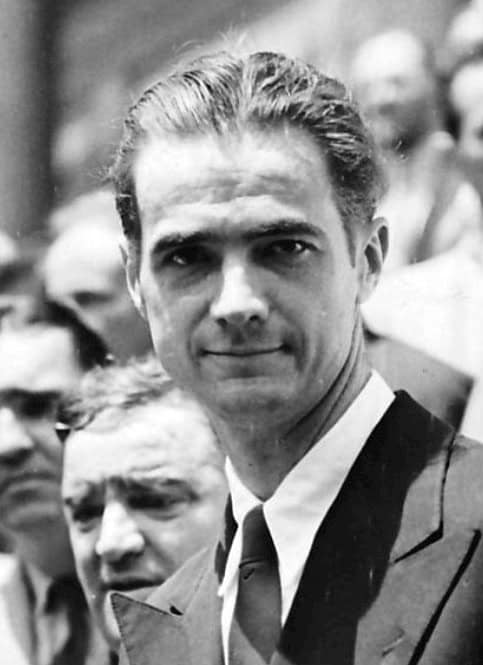
The man at the controls had just flown around the world in a little over 91 hours, nearly four days faster than anyone before him. He was Howard Hughes, and until that week he had been better known for dating Katharine Hepburn.
Most people now know Hughes as the billionaire recluse, or as the man behind the Spruce Goose. This is the flying life behind the name: the records, the crashes, the airline, and the numbers that the record books still do not agree on.
Who Was Howard Hughes?
Howard Robard Hughes Jr. (1905 to 1976) was an American pilot, aircraft builder, film producer and airline owner from Texas. In the 1930s he set the world landplane speed record, two transcontinental records and the round-the-world record, and he won the Harmon Trophy twice and the Collier Trophy once.
He founded Hughes Aircraft, controlled Trans World Airlines for more than two decades, and built the Hughes H-4 Hercules, the giant wooden flying boat critics called the Spruce Goose. He survived four crashes, one of which nearly killed him.
1905
Born in Texas. A 1941 affidavit gives December 24 in Harris County, home to Houston.
1930
Hell’s Angels premieres. Hughes learned to fly while making it, and crashed during filming.
1932
Founds Hughes Aircraft. Its first job is to build the H-1 racer.
1935
World landplane speed record. The H-1 averages 352 mph near Santa Ana, California, on September 13.
1937
Coast to coast in under 7.5 hours. The H-1 flies Los Angeles to Newark nonstop in January.
1938
Around the world in 91 hours. A Lockheed 14 and a crew of five beat the record by almost four days.
1939
Starts buying TWA. He also orders the airliner that becomes the Lockheed Constellation.
1946
The XF-11 crash. His reconnaissance prototype comes down in Beverly Hills on July 7.
1947
The Spruce Goose flies. The H-4 Hercules lifts off once, on November 2, and never flies again.
1966
Forced to sell TWA. His shares bring him $546,549,771.
1976
Dies on April 5, aged 70. He was aboard a Learjet flying him from Acapulco to Houston.
Hell’s Angels: How a Film Producer Became a Pilot
Hughes inherited 75% of his family’s fortune when his father died in 1924, and at 19 he took full control of it. He learned to fly at Rogers Airport in Los Angeles, taught by pioneer aviators including Moye Stephens and J.B. Alexander.
His flying and his films came together in Hell’s Angels (1930), a World War I air epic that took three years to make. The film killed three pilots during production, according to the U.S. Centennial of Flight Commission, and Hughes himself crashed a Thomas-Morse Scout while filming it.

It earned an Academy Award nomination for cinematography, and it still turns up on lists of the best movies about airplanes. In January 1934 he won his first aviation prize, at the All-American Air Meet in Miami, averaging 185 mph (298 km/h) around a 20-mile (32 km) course.
The H-1: The Fastest Landplane in the World
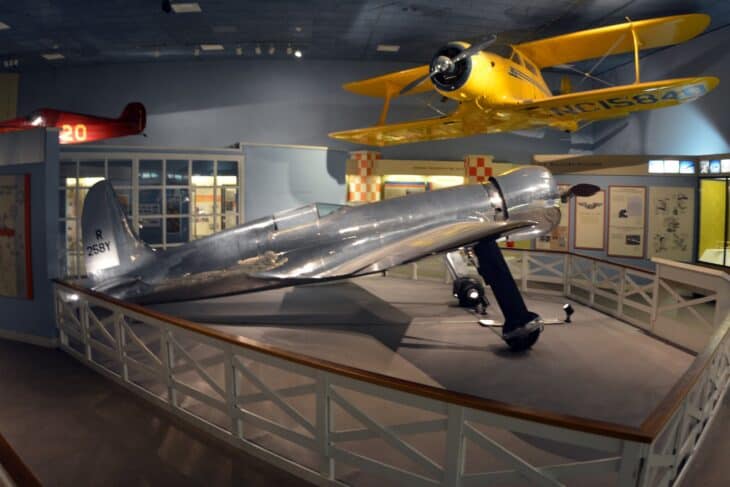
In 1932 Hughes founded the Hughes Aircraft Company to build one airplane: a racer that would be the fastest landplane in the world. The H-1 was designed by Hughes and Richard Palmer and built by Glenn Odekirk, and a model of it was tested in Caltech’s wind tunnel.
It was unusually clean for its day, with flush rivets, a tight bell-shaped cowling around its Pratt & Whitney Twin Wasp Junior radial engine, smooth fillets where the wing met the fuselage, and landing gear that folded away so neatly the doors are hard to spot.
On September 13, 1935, Hughes flew it over an instrumented course near Santa Ana, California, at 352.322 mph (567 km/h), the Smithsonian’s figure. The landplane record he broke stood at 314.32 mph (506 km/h), set by Raymond Delmotte in a Caudron C.460.

Hughes was not supposed to keep going after his first passes, because the H-1 carried very little fuel. It ran dry, and he belly-landed in a beet field south of Santa Ana. “We can fix her; she’ll go faster,” he told the crew who reached him.
He fitted the H-1 with longer wings, 31 feet 9 inches (9.7 m) instead of 25 feet (7.6 m), and turned it on the cross-country record. That record was already his: in January 1936 he had flown a Northrop Gamma from Burbank to Newark in 9 hours, 27 minutes and 10 seconds.
On January 19, 1937, he left Los Angeles before dawn and landed at Newark 7 hours, 28 minutes and 25 seconds later. He had covered 2,490 miles (4,000 km) nonstop at an average of 332 mph (535 km/h), about two hours faster than his own record.
The Spruce Goose bought the H-1 its museum spot
The H-1 stayed in the Hughes factory at Culver City until 1975. That year the Smithsonian settled the government’s claim on the H-4 Hercules: Hughes’s company took ownership of the flying boat, and in return gave the museum $700,000 and the H-1. The racer now belongs to the National Air and Space Museum.
Around the World in 91 Hours
The record Hughes wanted next belonged to Wiley Post, who had flown solo around the world in 1933 in a single-engine Lockheed Vega. Post had needed almost eight days.
Hughes chose a Lockheed 14 Super Electra, registered NX18973, packed with the latest radio and navigation equipment. He flew it with four men: co-pilot Harry Connor, navigator Thomas Thurlow, engineer Richard Stoddart and mechanic Ed Lund.
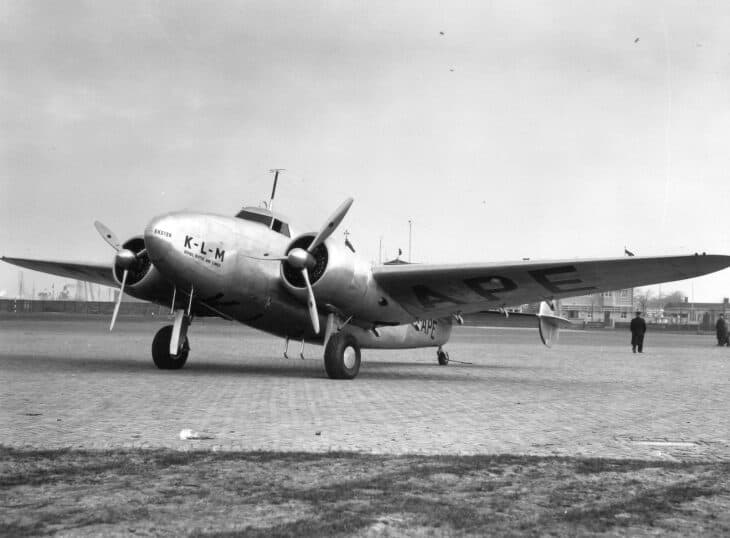

They left Floyd Bennett Field on July 10, 1938, and reached Paris in 16 hours and 38 minutes. From there they flew on to Moscow, Omsk, Yakutsk, Fairbanks and Minneapolis before landing back in New York on July 14.
The trip covered about 14,800 miles (23,800 km), by Longines’s figure, in 3 days and 19 hours, roughly 91 hours.
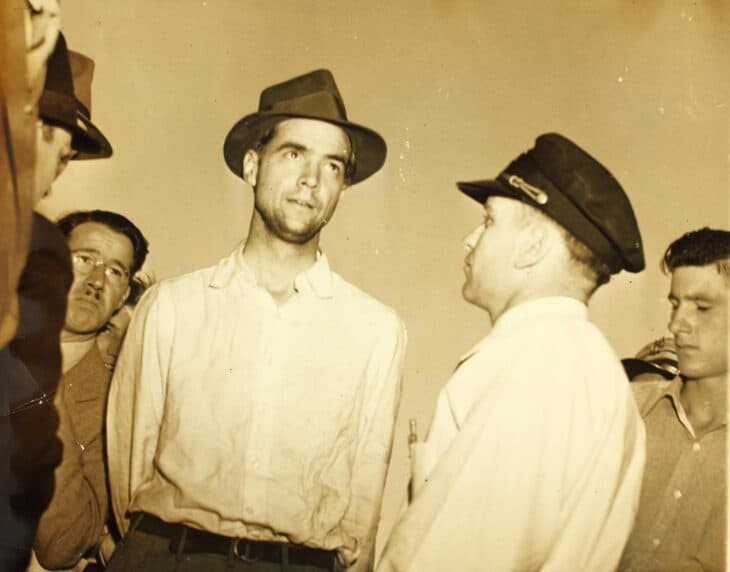
New York gave him a ticker-tape parade, and he won the 1938 Collier Trophy and a second Harmon Trophy. Congress voted him a gold medal in 1939, but he declined to go to the White House to collect it. President Harry S. Truman finally presented it after Hughes’s 1946 crash.
Houston, his hometown, renamed its municipal airport after him in 1938, then changed it back after a public outcry over naming an airport after a living person. That airport is now William P. Hobby Airport, Houston Hobby (HOU), which averaged 228 flights a day in October 2026.
TWA, the Constellation and an Aerospace Empire
From 1939, at the urging of its president Jack Frye, Hughes quietly bought shares in Transcontinental & Western Airlines, the forerunner of TWA, and eventually owned 78% of it. He ran it like his own, often issuing orders directly to airline staff.
He is commonly credited as the driving force behind the Lockheed Constellation. Hughes and Frye ordered it in 1939, and Hughes personally financed 40 of them for $18 million, the largest aircraft order in history up to that time.
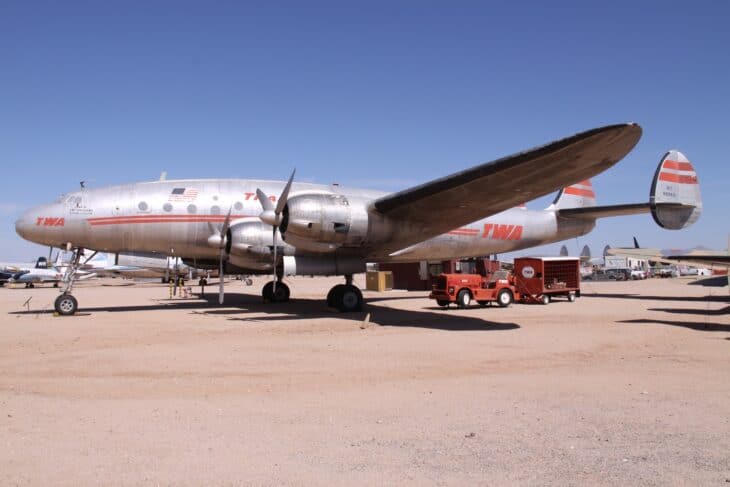

His lenders forced him out of TWA’s management in 1960, and in 1966 he was forced to sell his shares, for $546,549,771. The story of what came next is in what happened to TWA.
Hughes Aircraft, meanwhile, grew from a one-airplane shop into a major defense contractor, building radar, missiles, spacecraft and the first working laser. A helicopter division started in 1947, and it later built the Hughes OH-6 Cayuse.
Four Crashes, One Nearly Fatal
Hughes flew his own prototypes and survived four crashes: the Thomas-Morse Scout during Hell’s Angels, the H-1 in the beet field, a Sikorsky S-43 amphibian at Lake Mead, and the XF-11.
The Lake Mead crash, on May 17, 1943, came during qualifying tests in the S-43. It killed a Civil Aeronautics Authority inspector, Ceco Cline, and a Hughes employee, Richard Felt, and Hughes suffered a severe gash to his head.
The worst came on July 7, 1946, on the first flight of the XF-11, a twin-boom photo-reconnaissance aircraft he had built for the Army Air Forces. Hughes kept it up well beyond the agreed 45 minutes, then an oil leak sent one of its contra-rotating propellers into reverse pitch.
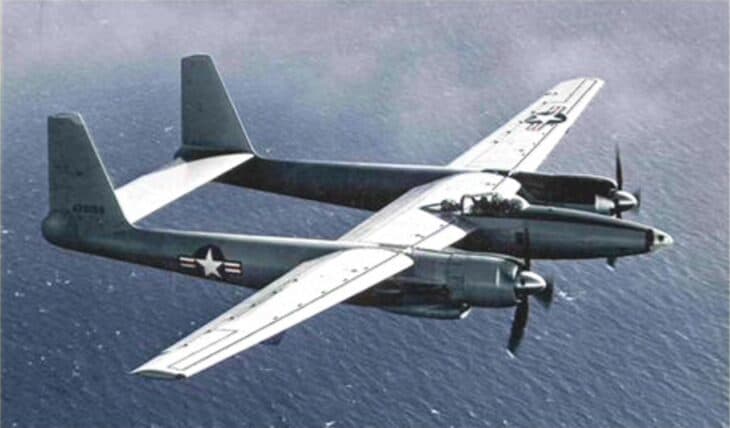
The aircraft yawed hard and sank. Hughes tried to reach the Los Angeles Country Club golf course, but a wing hit a pole and the XF-11 crashed into a house on Whittier Drive in Beverly Hills.
A Marine on leave, Sgt. William Durkin, pulled the injured pilot from the wreck without knowing who he was. Hughes had a crushed chest, broken ribs, a broken collarbone, a collapsed lung and severe burns, and he spent weeks in the hospital.
The Spruce Goose and the Senate
The H-4 was not originally his idea. In 1942 shipbuilder Henry J. Kaiser proposed a giant flying cargo ship for the war effort, and teamed with Hughes to build it as the HK-1, for Hughes and Kaiser.
Wartime limits on aluminum meant it was built of wood, using a laminated plywood and resin process called Duramold. Critics named it the Spruce Goose, a name Hughes disliked, though it was made almost entirely of birch.

Kaiser withdrew, the war ended, and the aircraft was still unfinished. In August 1947 the Senate War Investigating Committee called Hughes to explain the H-4 and the XF-11. “If it’s a failure, I’ll probably leave this country and never come back. And I mean it,” he told the senators.
During a break in the hearings, on November 2, 1947, Hughes took the H-4 out for taxi tests in Long Beach Harbor with 36 people aboard. On the last run it lifted off, by the most quoted figures, for 26 seconds at about 70 feet (21 m) and 135 mph (217 km/h).

It never flew again. The program cost $23 million, and the H-4 held the record for the largest wingspan of any aircraft to fly until Stratolaunch first flew in 2019, which is why it still features among the biggest aircraft in the world.
Since 1993 the Hughes H-4 Hercules has lived in McMinnville, Oregon, at the museum renamed the North American Aerospace Museum in 2026. The museum’s own account of that flight is lower than the famous figures, a dispute laid out in our full story of the Spruce Goose.
Why Hughes’s Numbers Never Agree
Hughes set his records in front of timekeepers, yet the published figures still drift from source to source.
| Figure | One version | Another version |
|---|---|---|
| Round-the-world time, 1938 | 3 days, 19 hours, 17 minutes (ICAO, Wikipedia) | 3 days, 19 hours, 14 minutes (Longines) |
| H-1 speed record, 1935 | 352.322 mph (Smithsonian) | 352.39 mph (Wikipedia) |
| H-1 coast-to-coast average, 1937 | 332 mph (Smithsonian) | 322 mph (Wikipedia) |
| H-1 coast-to-coast date | January 19, 1937 (Smithsonian) | January 18, 1937 (Centennial of Flight) |
| Hell’s Angels budget | $3.5 million (Wikipedia) | $3.8 million (Centennial of Flight) |
| Where Hughes Aircraft began, 1932 | A rented Lockheed hangar in Burbank (Wikipedia) | Glendale (Centennial of Flight) |
| Date of birth | December 24, 1905 (1941 affidavit) | September 24, 1905 (baptism record) |
Some of these are simple slips. At 2,490 miles in 7 hours, 28 minutes and 25 seconds, the 1937 flight works out to about 333 mph, so the Smithsonian’s 332 mph fits and 322 mph looks like two swapped digits.
The round-the-world time is harder. The Centennial of Flight Commission manages to give two versions on one page: 3 days, 19 hours and 14 minutes in a photo caption, and 3 days, 9 hours and 17 minutes, a full 10 hours short, in its text.
The birth date is a genuine puzzle. Hughes’s own 1941 affidavit says December 24, 1905, while his baptism record gives September 24, 1905, with no place of birth at all.
Myth: Japan copied the H-1 to build the Zero
Hughes claimed after the war that the Zero had been copied from his racer. Its designer, Jiro Horikoshi, strongly denied it, and the Zero grew out of Mitsubishi’s own A5M fighter. The Smithsonian calls the H-1 a milestone on the road to radial-engine fighters like the Zero, the Fw 190 and the P-47, because it proved a radial-engine aircraft could compete with sleeker inline-engine designs. That is influence on a whole generation, not a copy.
The resemblance is real: compare the H-1 with the Mitsubishi A6M Zero and the Focke-Wulf Fw 190 and you can see why the story spread. But a direct influence that has never been reliably confirmed is a long way from a copy.
Hughes spent his last years out of public sight, and on April 5, 1976, he is reported to have died aboard a Learjet 24B carrying him from Acapulco to a Houston hospital. It was a quiet end in an airplane for the man who had once landed in front of 25,000 people, and it is why he still sits among the most famous pilots in history.
Sources and references used for research and fact-checking.
- Wikipedia, Howard Hughes
- U.S. Centennial of Flight Commission, Howard Hughes
- Smithsonian National Air and Space Museum, Hughes H-1 Racer
- Wikipedia, Hughes H-1 Racer
- Wikipedia, Hughes H-4 Hercules
- ICAO (Postal History of ICAO), Aerial circumnavigation
- Longines, Howard Hughes
- Defense Media Network, XF-11 Was Howard Hughes' Might-Have-Been Reconnaissance Aircraft
- HistoryNet, Did Howard Hughes Design Japan's Zero Fighter?
- Flying, Spruce Goose home rebrands as North American Aerospace Museum
Get the Newsletter
The latest aviation news and stories sent to your inbox.
About the Author

Tim is the owner and lead editor of AeroCorner since 2019, overseeing aviation content covering aircraft, airlines, airports, and the broader aviation industry. Through years of researching, writing, editing, and publishing aviation-focused content, he has developed extensive practical knowledge of commercial aviation and air travel. Based in Asia and a frequent traveler himself, Tim also brings firsthand passenger experience to AeroCorner’s coverage. Outside of publishing, he has also explored aviation firsthand through hands-on flight training in New Zealand.