Military Propellor Planes
Focke-Wulf Ta 152
ICAO: TA152
The Focke-Wulf Fw 190 Würger was a single-seat German fighter designed by Kurt Tank, and with more than 20,000 built it was the second most produced German fighter of World War II.
Updated: by Tim de Vries
The latest aviation news and stories sent to your inbox.
The Focke-Wulf Fw 190 was designed by Kurt Tank and manufactured by Focke Wulf as a single-seat fighter aircraft powered by a single-engine. It was developed during the late 1930s and extensively used throughout the Second World War. The aircraft first flew in June 1939 and was introduced in 1941. It was produced from 1941 to 1945 with a total number of over 20,000 aircraft built.
Live Fleet Activity (FW190)
Fetching live data…
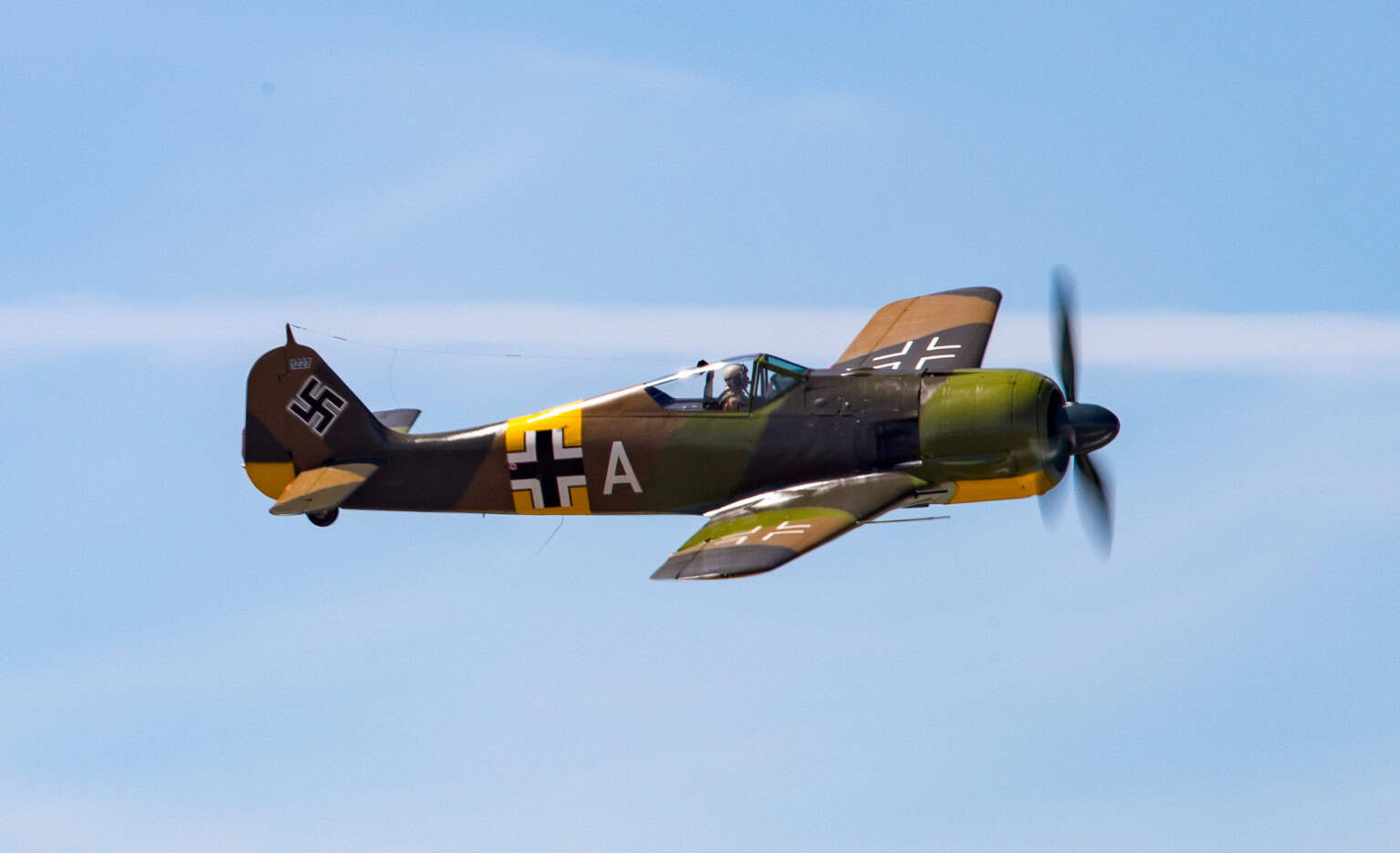


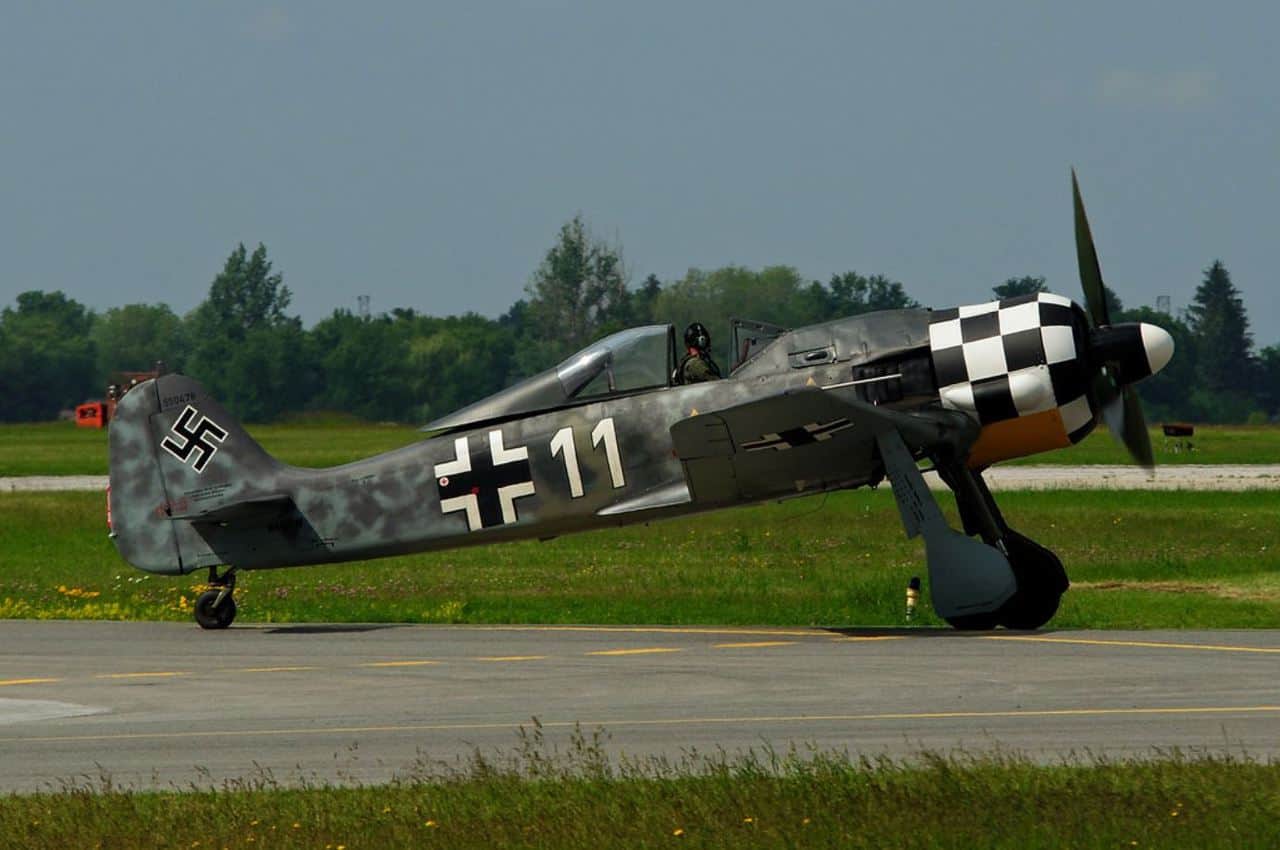

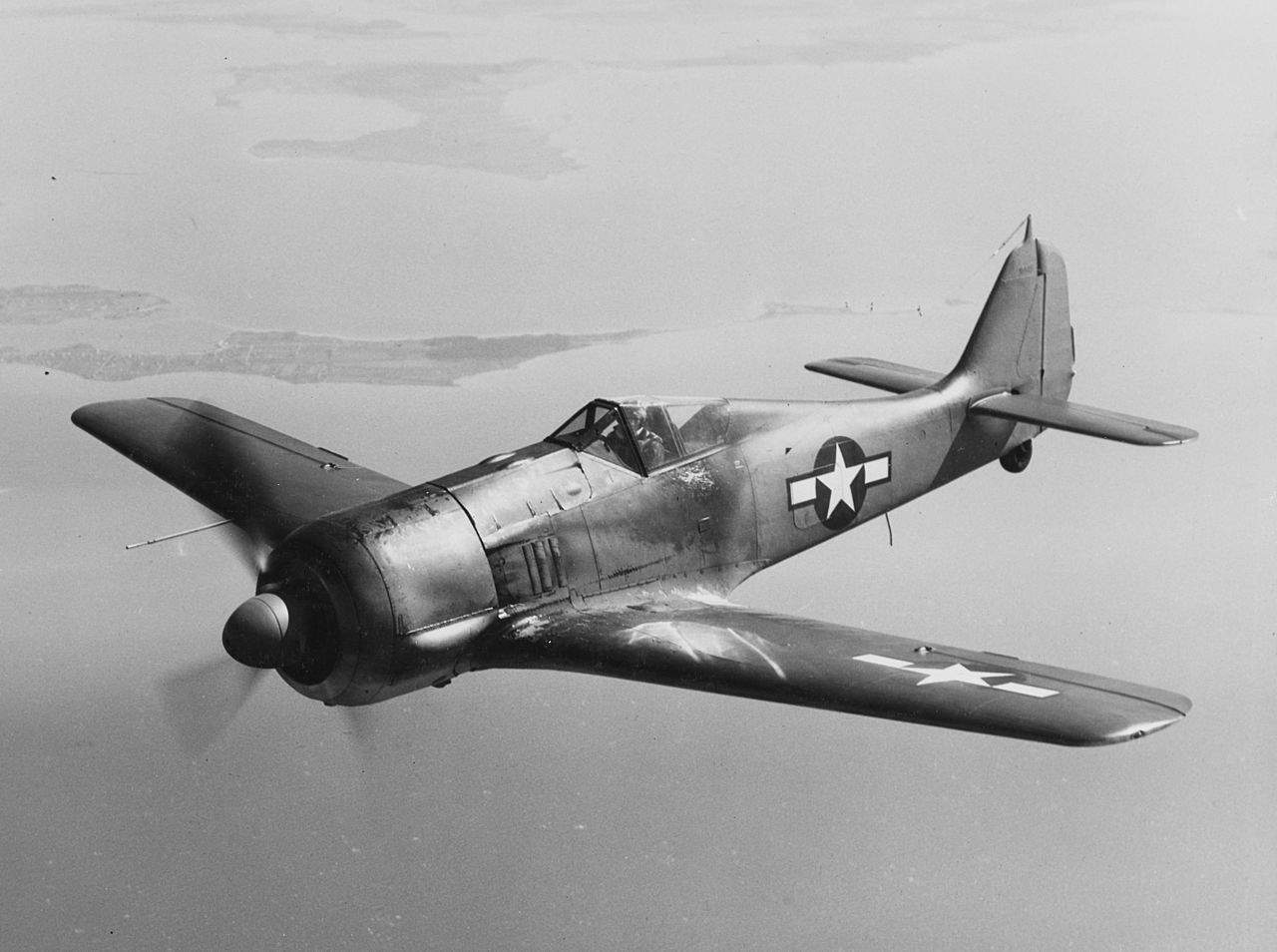
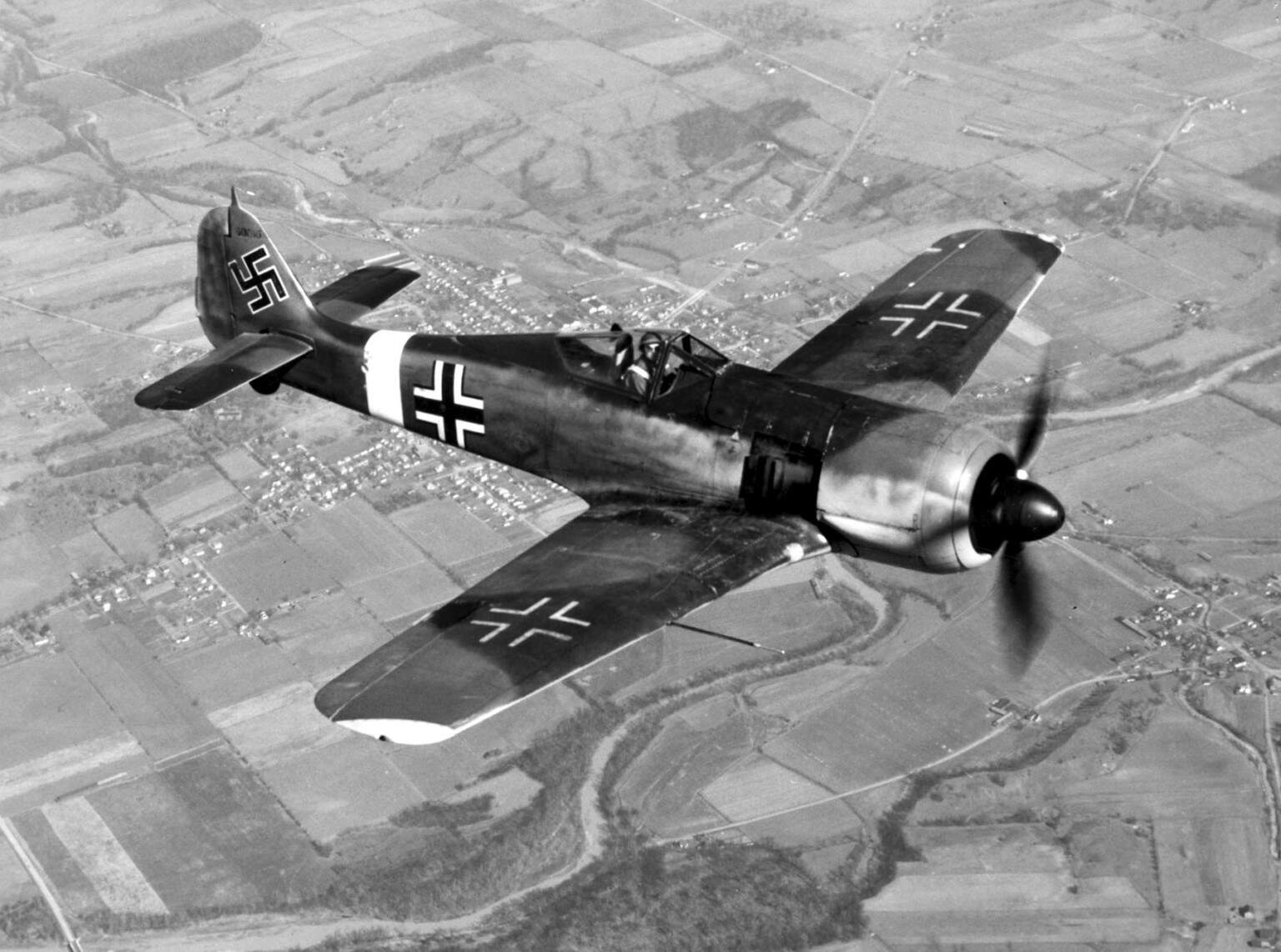

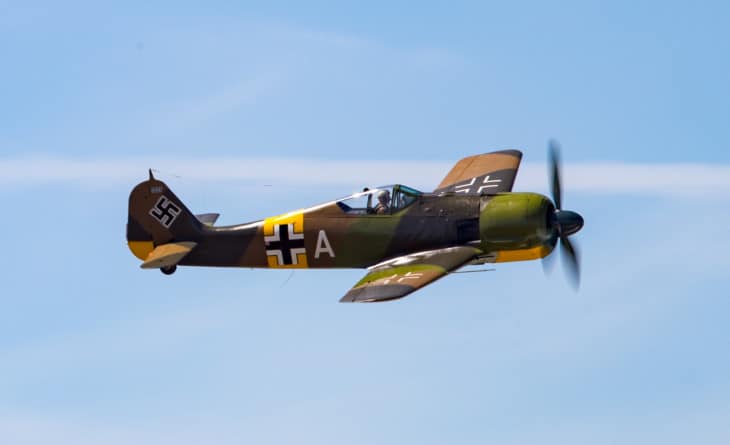
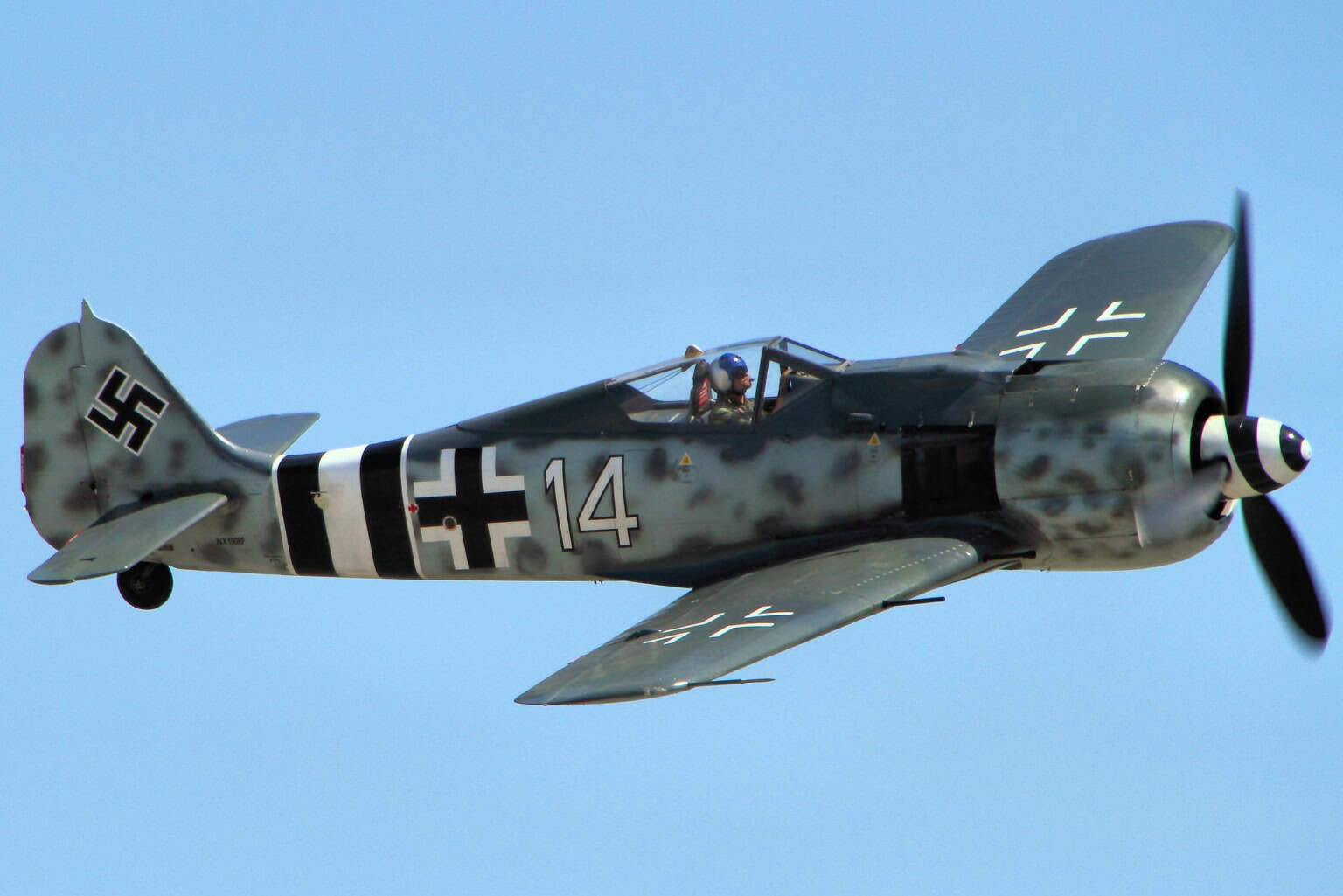
The Focke-Wulf Fw 190 Würger (“Shrike”) was a single-seat, single-engine German fighter designed by Kurt Tank. The prototype made its first flight on June 1, 1939, and the type reached operational units over France in August 1941.
Production ran from 1941 to 1945. The infobox figure is “over 20,000,” and Wikipedia’s production table adds up to 23,823 aircraft across all variants.
The full specification table for the aircraft is on this page, so this article covers the story behind the numbers.
Tank did not want a racehorse. He described the Fw 190 as a Dienstpferd, a cavalry horse: a fighter that could operate from rough front-line fields, be flown and maintained by men with short training, and take battle damage and still come home.
The choice of an air-cooled radial engine was partly practical. A radial did not compete with the Messerschmitt Bf 109 for scarce Daimler-Benz inline engines, and Tank believed a well-streamlined installation would offset the drag radials usually bring.
The result was the BMW 801, a 14-cylinder two-row radial. It drove the production fighter and set the Fw 190 apart as the only German single-seat fighter of the war powered by a radial, according to the National Air and Space Museum.

The Fw 190A proved superior to the Spitfire Mk. V in everything except turn radius, including roll rate, speed, acceleration and dive performance.
That edge held until the Spitfire Mk. IX arrived, which sources place in late 1942 and early 1943. In June 1942, a JG 2 pilot landed an Fw 190 A-3 at a British airfield by mistake, which gave the Allies a chance to study the fighter closely.

German pilots who flew both considered the Fw 190 more maneuverable at low to medium altitude, and it carried heavier firepower. Its wide-track landing gear also caused far fewer ground accidents than the Bf 109’s narrow gear.
The trade-off was altitude. Pilot Willy Unger summed it up as strong at low altitude and inferior to the Bf 109 at height.
The A series was the fighter workhorse, with 13,291 built including prototypes and pre-production aircraft. The A-8 was built from February 1944 to February 1945, with 6,655 aircraft.
The A-8 used the standard BMW 801 D-2. Its rated power was 1,700 PS (1,677 hp), and an emergency boost raised it for ten minutes.
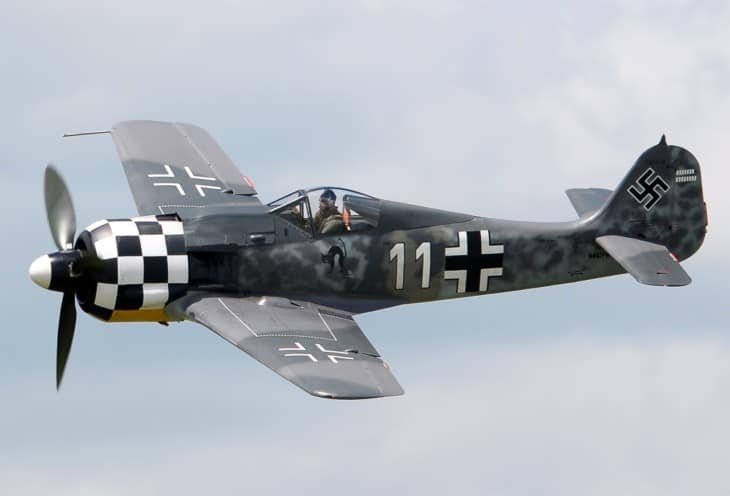
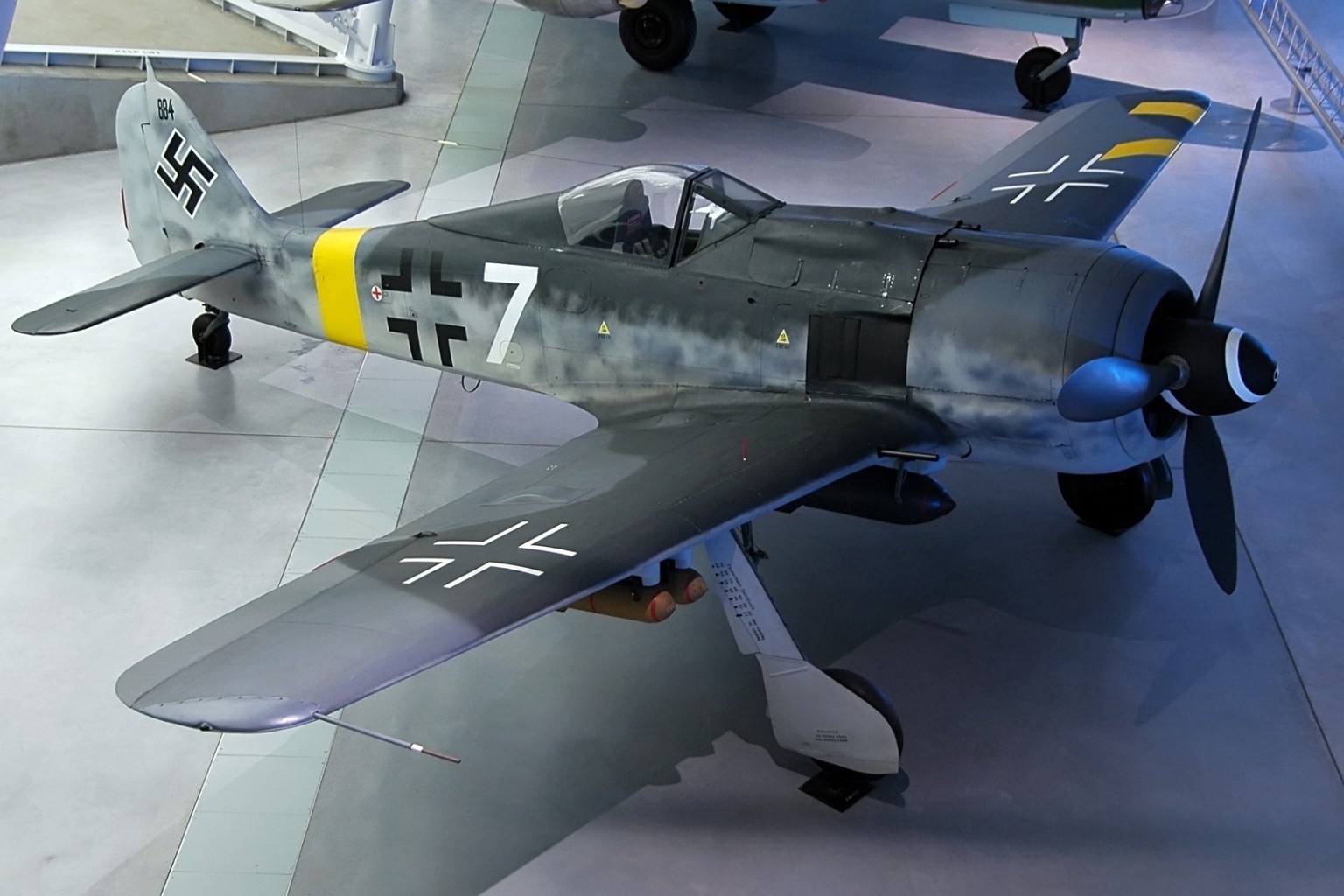
Ground attack grew out of the same airframe. The A-3/U3 was the first fighter-bomber, carrying up to 1,100 lb (500 kg) of bombs on a centerline rack, and the F series (7,279 built) was a dedicated ground-attack version. The G series added range for long-distance bombing missions.
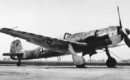
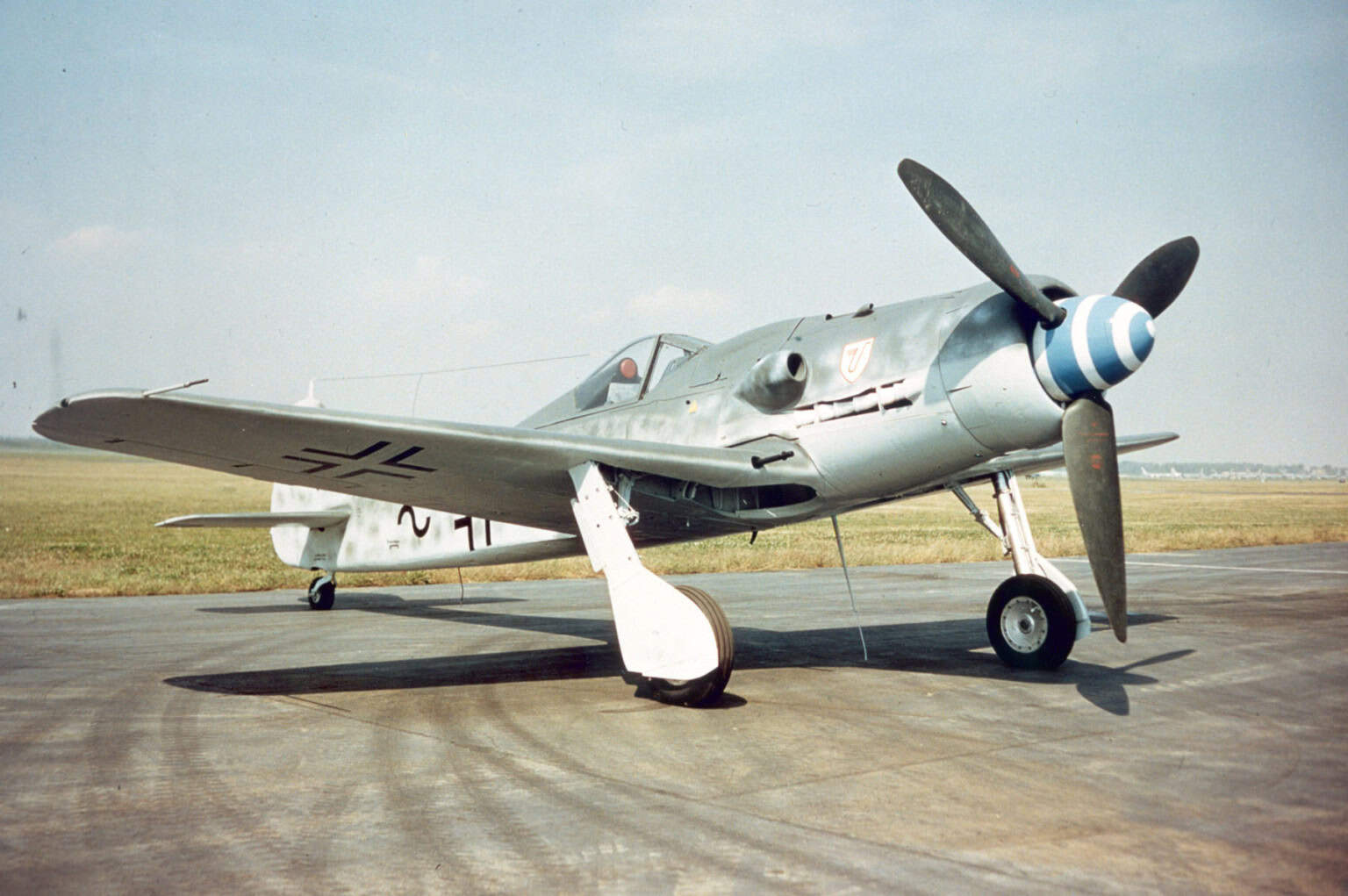
High-altitude versions with turbochargers ran into trouble, so only the D model reached service, in September 1944. The Fw 190D-9 “Dora” was built from August 1944 to April 1945, with 1,805 produced.

The D-9 became the basis of the Ta 152, of which only 69 were built. Its quoted top speed of 469 mph (755 km/h) at 44,300 ft is the highest of any version.
The A-8 reached its top speed at 19,420 feet, the altitude where the supercharged BMW 801 produced its best power. The panel lists the figure beside this article.
That speed is a high-altitude number, which matters for the Bf 109 comparison above. Below it, the Fw 190 held its advantage in maneuverability and roll rate.
At least 23 original Fw 190s exist in museums, collections and storage worldwide. Only one is listed as airworthy with its original BMW 801 engine: A-5 Werknummer 151227 at the Flying Heritage and Combat Armor Museum in Everett, Washington. It first flew after restoration on December 1 or 2, 2010.
Several more originals are under restoration to fly, including an A-2, an A-6 and an F-8, with no completion dates published.
Replicas fill the gap. Wikipedia’s list, last edited in July 2026, counts 11 airworthy Flug Werk-built aircraft, most of them A-8s, flying in the United States, New Zealand, Australia, Germany, Sweden and Turkey.
The National Air and Space Museum displays an original F-8/R1 at the Udvar-Hazy Center in Chantilly, Virginia. It was rebuilt from a damaged A-7 and flew ground-attack missions with SG 2 in late 1944.
There is no clean verdict. The two fighters were built for different jobs and met mostly in different conditions, and the sources checked for this page do not compare them directly. What is documented is that the Fw 190 was strongest at low and medium altitude and weaker than the Bf 109 at height.
It depends on the mark. The Fw 190A outperformed the Spitfire Mk. V in all but turn radius, and held that lead until the Spitfire Mk. IX appeared in late 1942 and early 1943.
Tank built it to be rugged and easy to fly and maintain, then paired it with a powerful radial engine. It outperformed the Spitfire Mk. V in roll rate and dive performance, carried heavier firepower than the Bf 109, and its wide landing gear made it safer on the ground than the Bf 109.
One original is listed as airworthy with its original BMW 801 engine, the A-5 at the Flying Heritage and Combat Armor Museum. Another 11 Flug Werk replicas were listed as airworthy as of July 2026.
Production totaled over 20,000 by the infobox figure, and 23,823 across all variants by Wikipedia’s production table. The A-8 alone accounts for 6,655.
Sources and references used for research and fact-checking.