

Military Propellor Planes
Focke-Wulf Ta 152
ICAO: TA152
Developed as airliner for Lufthansa, ended up taking on many roles in WWII
The latest aviation news and stories sent to your inbox.
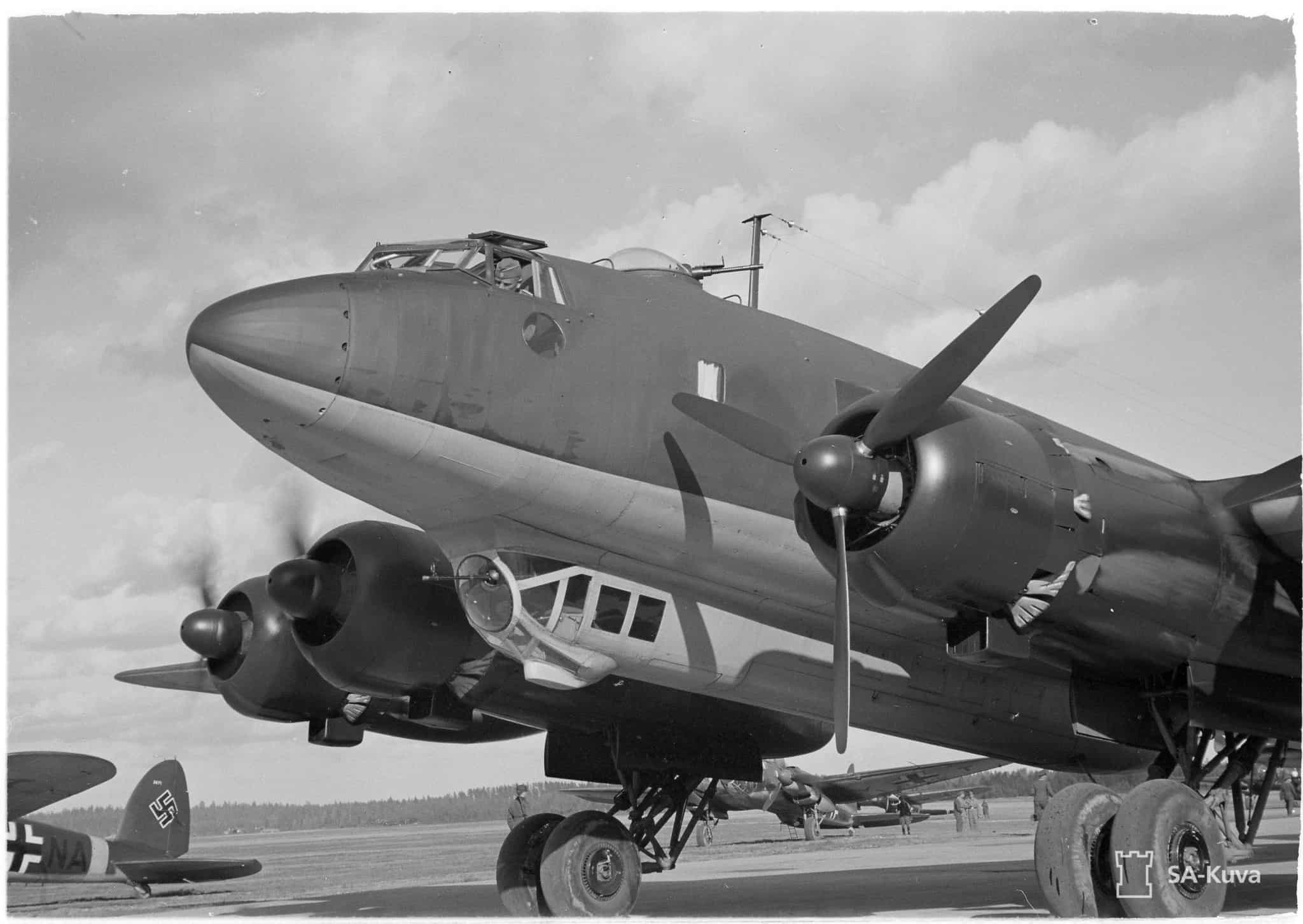
The Focke-Wulf Fw 200 Condor was initially designed by the German manufacturer Focke-Wulf as a long-range airliner. It was an all-metal monoplane powered by four engines. It first flew in July 1937 and was produced until 1944. A total number of 276 aircraft were built.
Live Fleet Activity (FW200)
Fetching live data…

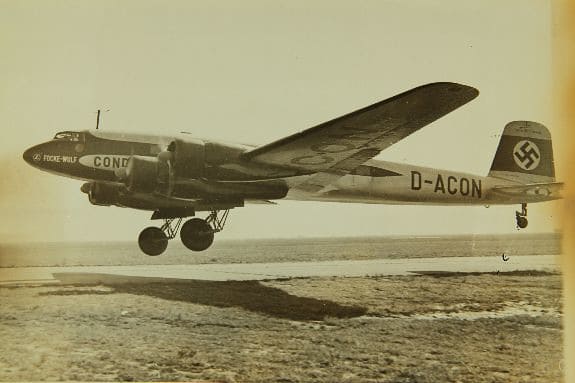


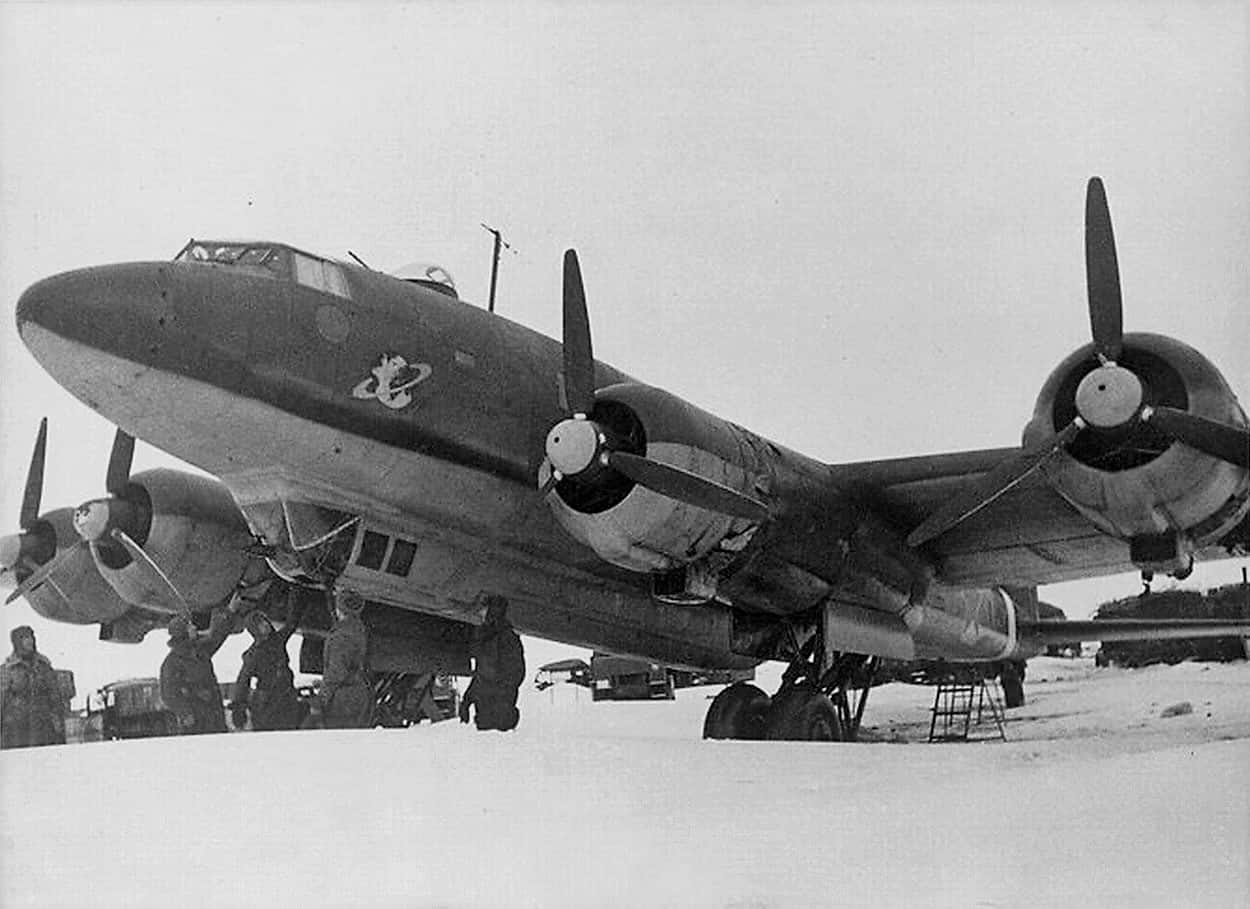


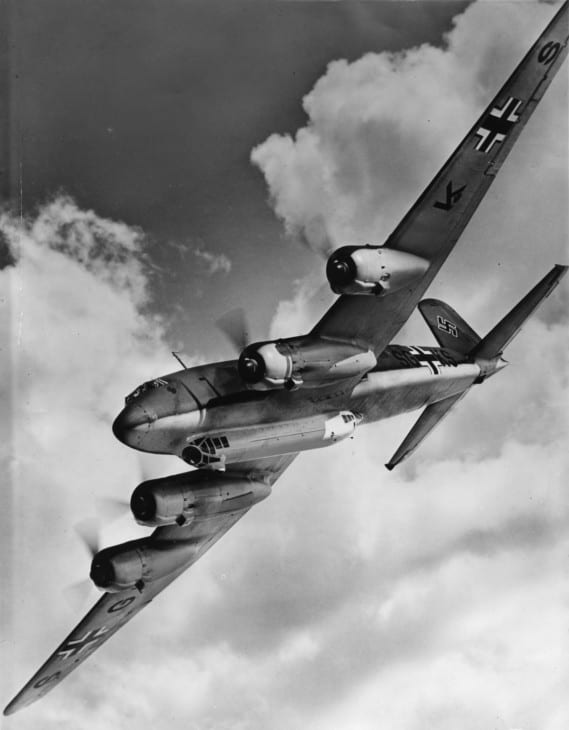
The Fw 200 was a result of a proposal from the chief designer of Focke-Wulfe, Kurt Tank to Rudolf Stuessel of Deutsche Lufthansa to build a landplane that can fly transatlantic to the United States. On July 27, 1937, the first prototype designated as Fw 200 V1 took to the air for the first time, piloted by Kurt Tank. There were three versions of the Fw 200 such as the Fw 200A, Fw 200B, and Fw 200C. Version A was entirely for civilian use while the B and C versions were for bombing, reconnaissance, and transport.
Related post: German Bombers of WWII
The Fw 200 C-3/U-4 version can carry five crew members and thirty fully armed troops in transport configuration. It has an external length of 23.45 meters, an external height of 4.3 meters, and a fuselage diameter of 2.3 meters. It has a tail height of 6.3 meters and a wheelbase of 14.8 meters. The wingspan is 32.85 meters and the wing area is 119.85 square meters. It has an empty weight of 17,005 kg, a maximum takeoff weight of 22,714 kg, and a maximum payload of 5,400 kg.
The aircraft is powered by four Bramo 323R-2 engines. It is a nine-cylinder supercharged air-cooled radial piston engine with a single exhaust and inlet overhead valves driven by pushrods and rockers, a gear-driven supercharger, a fuel injection system, and an air cooling system. Each engine produces a maximum takeoff thrust of 1,200 hp and drives three-bladed variable-pitch propellers. The aircraft has a maximum speed of 210 knots at 15,700 feet and a maximum cruise speed of 181 knots at 13,000 feet. It has a travel range of 1,920 nautical miles and an endurance of 14 hours. It can fly up to 20,000 feet and can climb at a rate of 1,378 feet per minute.
The aircraft could also be loaded with various guns such as MG 15 and MG 131 machine guns and MG 151 cannon, and up to 1,000 kg of bombs internally or up to 5,400 kg externally.
Sources and references used for research and fact-checking.

.jpg)