Military Propellor Planes
Focke-Wulf Fw 200 Condor
ICAO: FW200
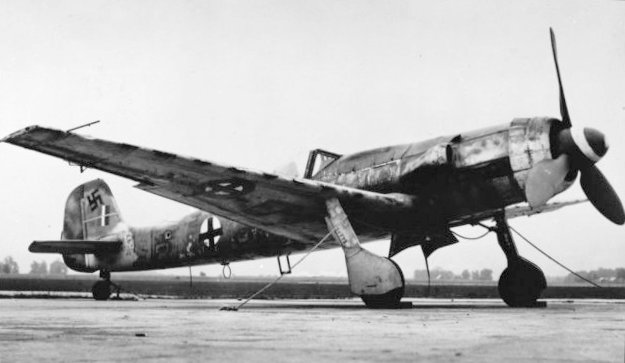
The Focke-Wulf Ta 152H was Germany's last great piston-engine fighter, a high-altitude interceptor built to catch American bombers and Mustang escorts that arrived too late and in too few numbers to change the war.
Updated: by Tim de Vries
The latest aviation news and stories sent to your inbox.
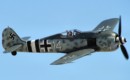
The Focke-Wulf Ta 152 was a German high-altitude fighter and interceptor designed by Kurt Tank and built by Focke-Wulf. It grew out of the Fw 190 and was planned in three families: the Ta 152H for high altitude, the Ta 152C for medium altitude and ground attack, and the Ta 152E for reconnaissance. Only the H version reached series production, and only one example survives today.
Live Fleet Activity (TA152)
Fetching live data…

The Focke-Wulf Ta 152 was a German high-altitude fighter and interceptor designed by Kurt Tank. It was a direct development of the Fw 190, reworked to fight where the Fw 190 struggled.
The Fw 190’s BMW 801 engine had a simple single-stage supercharger and lost power at altitude. That became a serious problem in early 1944, when long-range P-51 Mustang escorts began arriving over Germany in numbers.
Rumors of the B-29 Superfortress, which would cruise at altitudes German fighters could barely reach, added to the pressure. The German Air Ministry (RLM) asked Focke-Wulf for a dedicated high-altitude design.
In 1944 the RLM ruled that new fighters should carry the name of their chief designer. Kurt Tank’s aircraft therefore took the prefix “Ta” instead of “Fw”.
The Ta 152 was a new design in name, but it began as Fw 190 prototypes. The V20, V21 and V30 test airframes all grew from the Fw 190D-9.
Focke-Wulf planned three main versions. The Ta 152H was the high-altitude fighter, the Ta 152C was a medium-altitude fighter and ground attacker, and the Ta 152E was a reconnaissance model.
The H model was the only version definitely built in series. The Ta 152H-1 was the production standard, with an engine-mounted 30 mm MK 108 cannon and two 20 mm MG 151/20 cannons in the wing roots, plus extra fuel tanks in the wings.
The C models used the Daimler-Benz DB 603 engine and a shorter wing. The Ta 152C could carry two extra 20 mm cannons above the engine, but the added weight cost it speed and turn rate. Historians still debate whether any C or E aircraft reached limited production.
The Ta 152H used the Junkers Jumo 213E, a supercharged, liquid-cooled V-12 with a two-stage supercharger and an aftercooler. Its altitude performance was far better than the Fw 190’s radial engine.
Two power boosts extended that further. MW 50, a water-methanol injection, was used mainly for altitudes up to about 33,000 feet (10,000 m). GM-1 nitrous oxide injection took over higher up, and both could be used together.
The wing did the rest. The Fw 190D-9 wing spanned 34 ft 6 in (10.51 m), but the H model stretched it to 47 ft 5 in (14.44 m). That gave far better control in thin air, at the cost of speed at low level.
The Ta 152H also had a pressurized cockpit. A sealed canopy and a compressor kept cabin pressure above ambient at altitude, and a double-glazed windscreen with silica gel capsules stopped it fogging.
The full specification table for the aircraft is on this page. A few numbers need context.
The speed figures depend on the boost system. The Ta 152H-1 reached 580 km/h at sea level using MW 50, but its headline 410 kt · 472 mph · 759 km/h came at 12,500 m using GM-1. The panel’s maximum speed row shows that high-altitude figure.
The 49,500-foot ceiling also assumes GM-1 boost. The climb rate applies at the maximum takeoff weight, and a lighter aircraft climbed faster.
The Ta 152H-1 carried one 30 mm MK 108 cannon firing through the propeller hub, with 85 rounds. It also had two 20 mm MG 151/20 cannons in the wing roots, each with 350 rounds.
The Ta 152C added two more 20 mm guns above the engine for even heavier firepower.
By October 1944 the RLM was pushing Focke-Wulf to get the Ta 152 into production quickly. Several prototypes crashed early in the test program.
Testers found leaking pressurized cockpits, superchargers that gave trouble, unreliable engine cooling and landing gear that sometimes failed to retract. Test pilots reportedly flew only about 31 hours before full production began.
III./Jagdgeschwader 301 began converting to the type in January 1945. The Ta 152s ended up in a special staff flight, the Stabstaffel JG 301, which never had more than 15 aircraft.
On 14 April 1945, Oberfeldwebel Willi Reschke and two other Ta 152 pilots caught two Hawker Tempests near Ludwigslust. Reschke shot down the Tempest flown by New Zealander Owen Mitchell in a low-level turning fight, while a second Ta 152 pilot, Sepp Sattler, crashed during the opening seconds of the fight.
The type’s final tally is uncertain. The best estimate is about seven aerial victories against four losses, with Josef Keil credited with four and Willi Reschke with at least three.
Nobody knows exactly. Wikipedia lists 69 built, which matches Peter Rodeike’s count of 44 Ta 152 H-0/V and 25 H-1 aircraft.
Chris McNab, by contrast, wrote that about 150 had been delivered to the Luftwaffe. The gap shows how poor the wartime records are.
Japan also bought the license and drawings in April 1945, but no Japanese-built aircraft are believed to have been completed.
The Ta 152H-1 reached 410 kt · 472 mph · 759 km/h at 12,500 m with GM-1 boost, according to the figures in Wikipedia’s specification block. At sea level with MW 50 boost it managed 580 km/h.
Only one is believed to survive, a Ta 152H-0 held at the Smithsonian’s Paul E. Garber Preservation, Restoration, and Storage Facility in Suitland, Maryland. It is thought to be Werknummer 150020, flown by III./JG 301.
On paper it was among the fastest piston-engine fighters of the war and handled well at altitude. In practice it came too late and in too few numbers, with unreliable systems, to affect the outcome.
Wikipedia gives 69, though the exact total is unknown and some sources claim more. Only the Ta 152H was definitely produced in series.
At high altitude, yes. The longer wing and Jumo 213E engine gave it much better performance above about 25,000 feet, where Allied bombers and escorts operated.
Sources and references used for research and fact-checking.