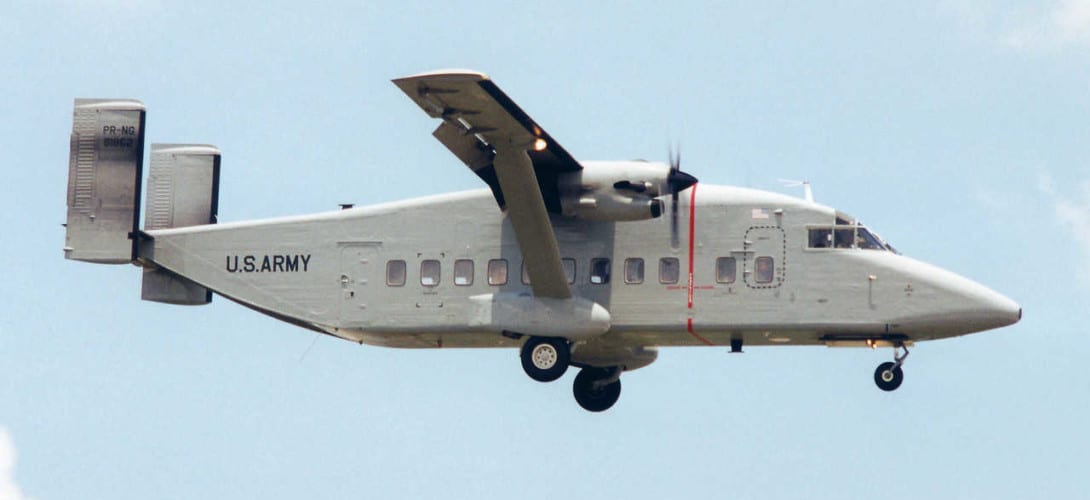
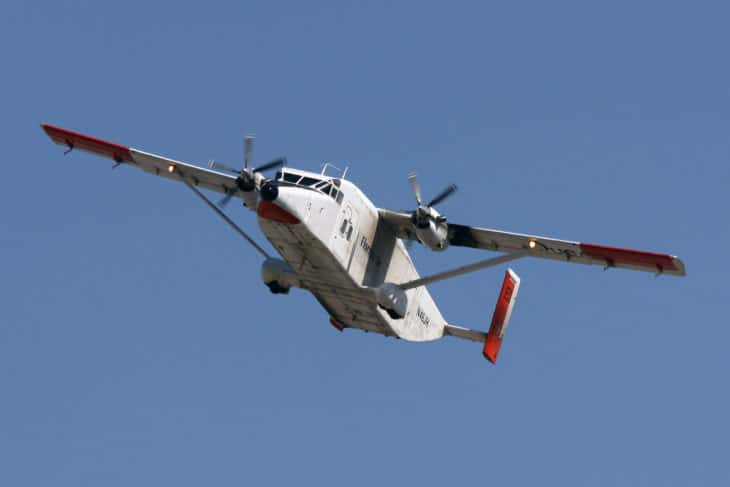
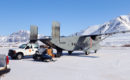
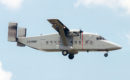
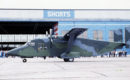
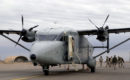
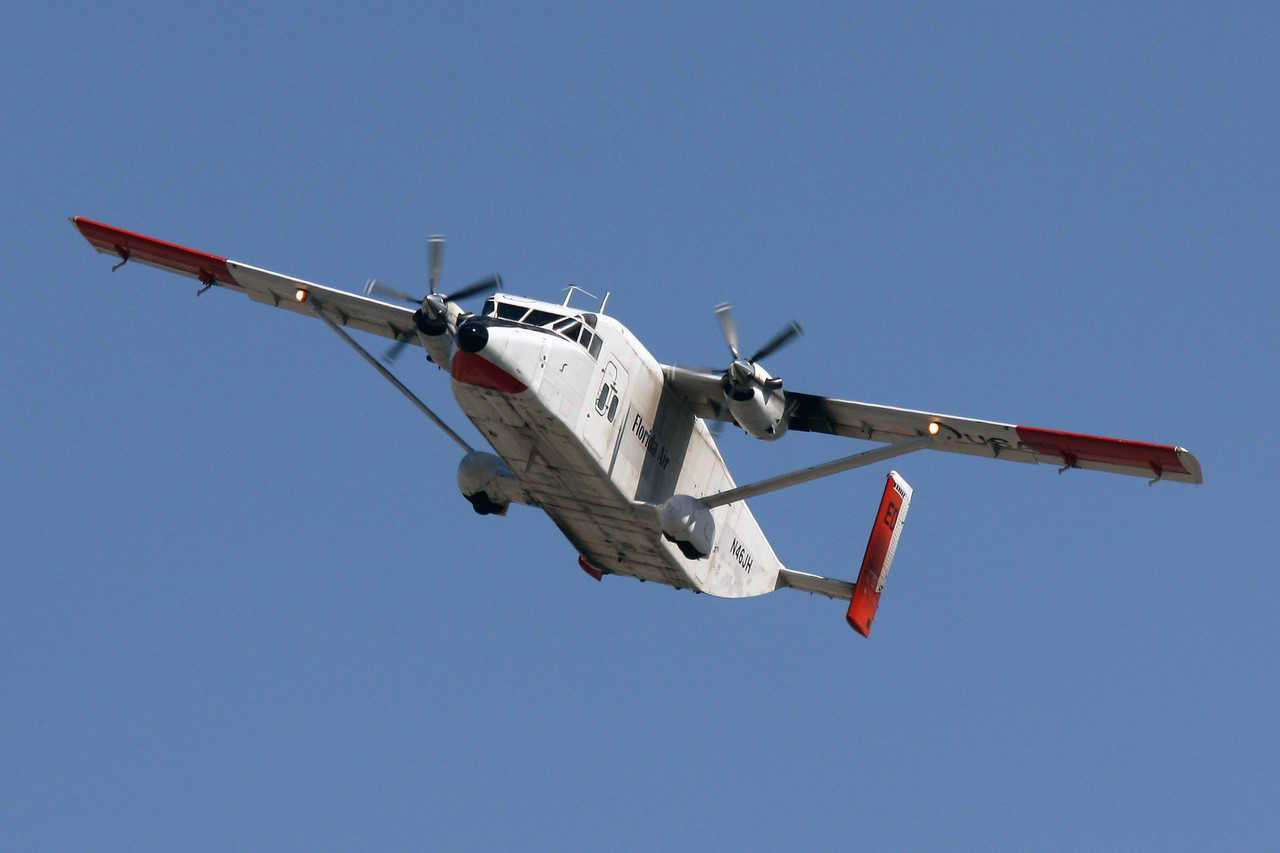
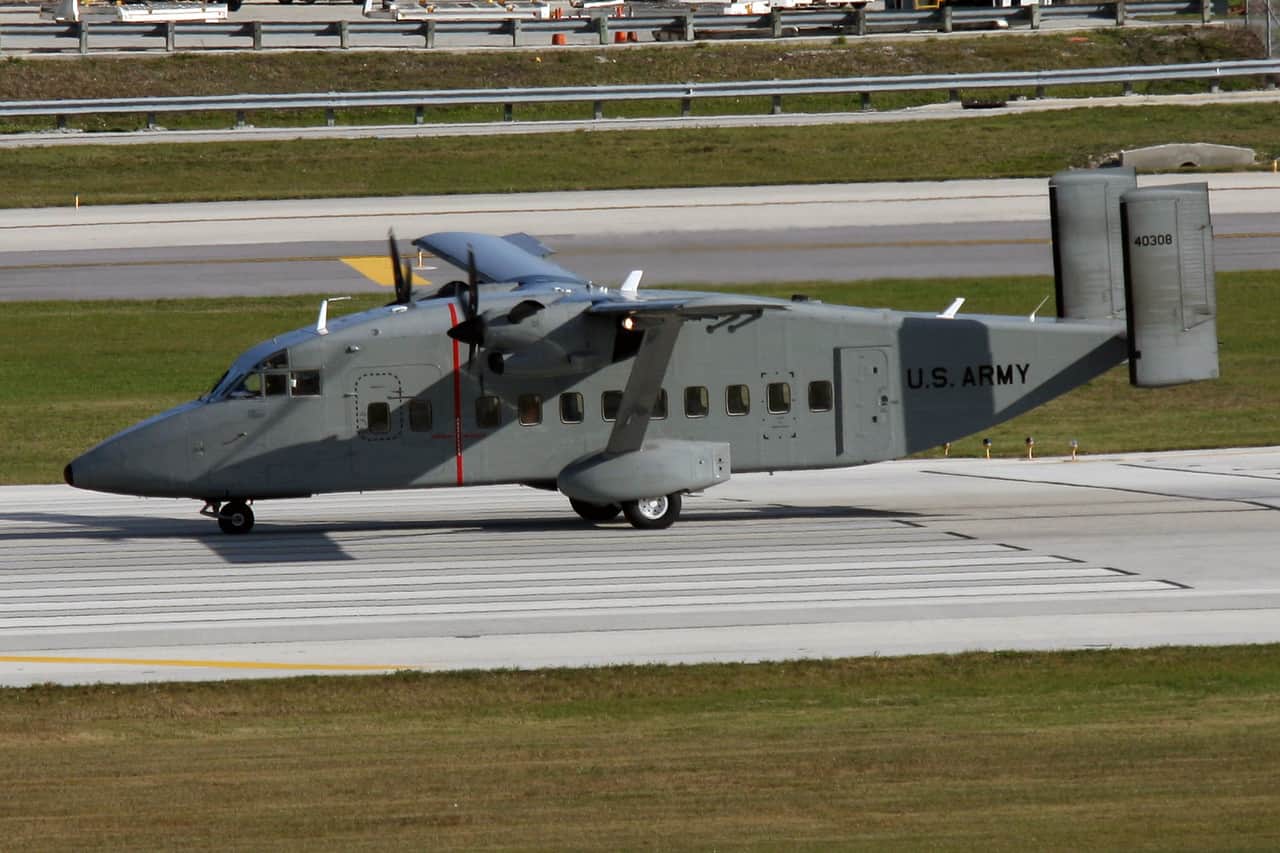
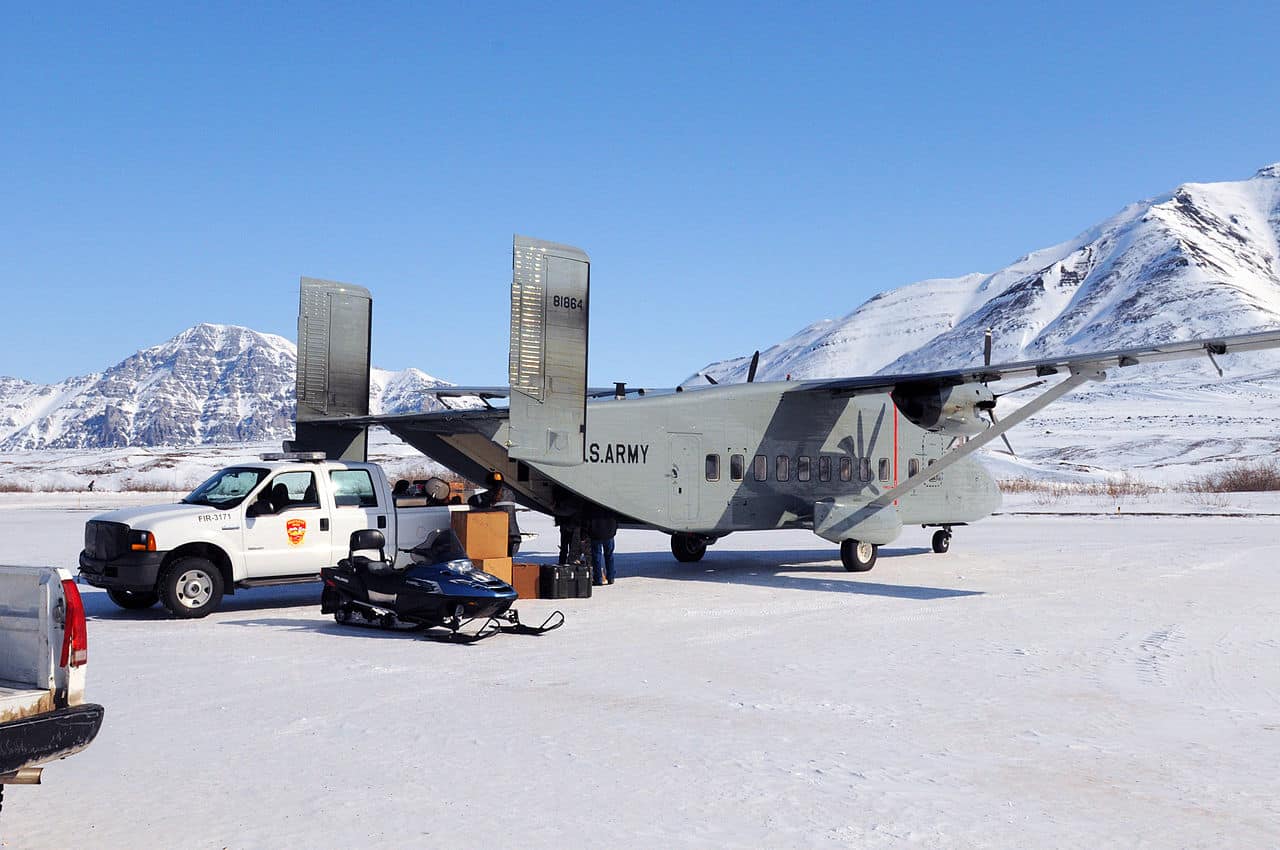
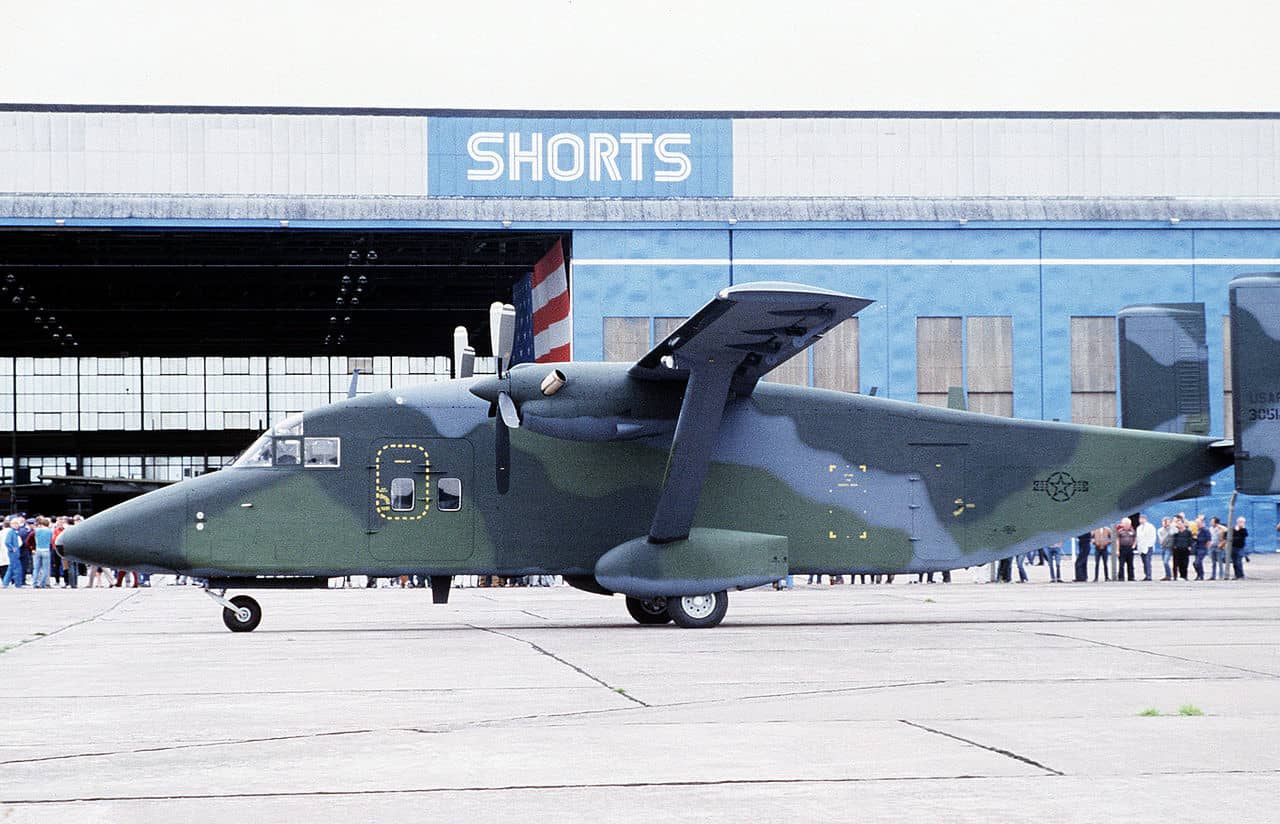
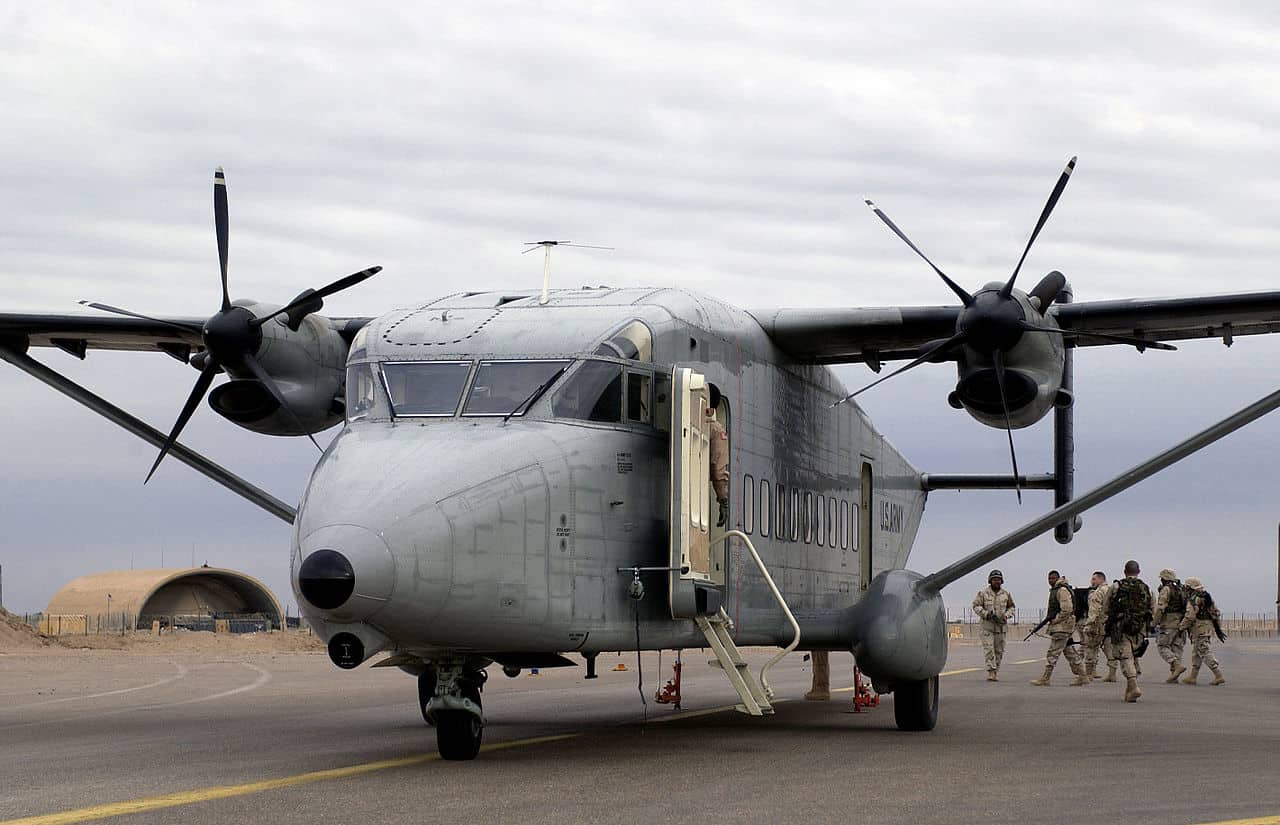
The Short C-23 Sherpa is a twin-engine utility transport aircraft designed and manufactured by Short Brothers, an aerospace company in Belfast, Northern Ireland. It was specifically crafted to operate from unpaved runways thus has a short runway requirement both for take-off and landing.
In 1981, the Short Brothers decided to make some major modification in the Short 330 passenger aircraft. The Short 330 has done a lot of work for regional airlines all over the world and the extensive modification was initiated to bring a tough, flexible, and low-cost aircraft in the market.
In 1982, the aircraft took its maiden flight.
In 1985, the C-23 Sherpa entered into service with the United States Air Force in Europe. It continued service in the European Distribution System Aircraft (EDSA) until November 1990. All the aircraft went back to the United States, three of them were moved to the United States Air Force Test Pilot School, eight were transferred to the United States Army and the rest of the aircraft went to the United States Forest Service.
In 1987, the aircraft from the United States Air Force Test Pilot School have retired.
C-23 Sherpa Design
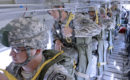
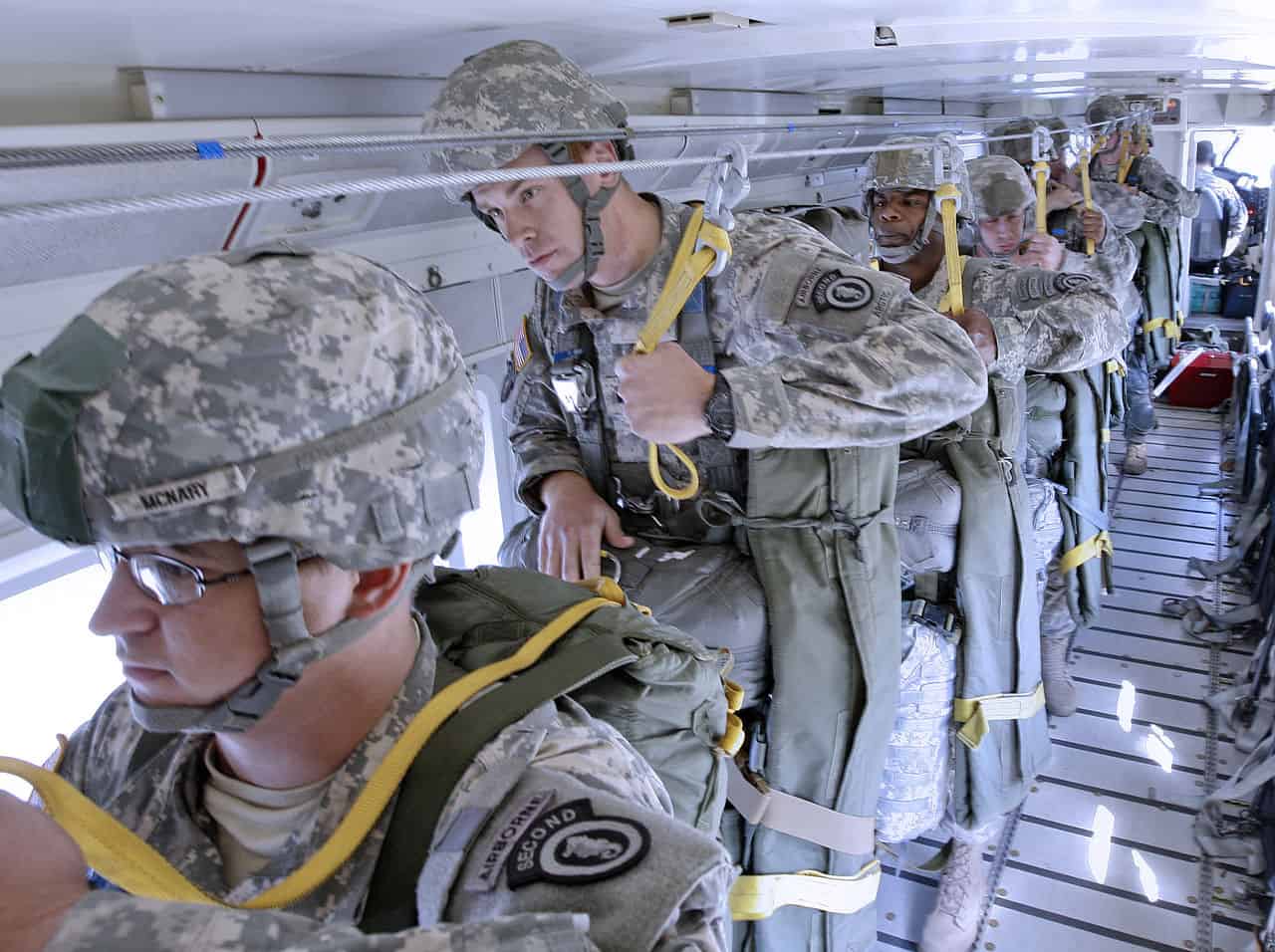
The C-23 Sherpa has been used in war missions and as an aid to natural disasters. It was also greatly used as an aircraft supporting parachute-drop training missions for the fundamentals of the Army and of the special operations.
The C-23 Sherpa is a military configured version of the Short 330. The aircraft is considered the Army National Guard’s key to missions that require a capable aircraft that is faster than the usual, can fly on a higher altitude and longer range. It features a low operation cost because of its straightforward and tough construction in comparison to other aircraft in its category.
Developed from the Short SC.7 Skyvan utility transport, the C-23 Sherpa has an exterior length of 17.69 meters, height of 4.95 meters and fuselage diameter of 2.2 meters. It has a longer wingspan of 22.78 meters and a wing area of about 42 square meters. Its fuselage and wings are longer than the Skyvan but of the same fuselage cross section. The aircraft has a wheelbase of 4.26 meters.
The C-23 Sherpa is designed with wings mounted on the upper fuselage, deep slab-sided fuselage, and notably elevated empennage. It has a short retractable undercarriage letting the hold to be reachable from the back without too much difference in height.
C-23 Sherpa Cabin
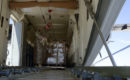
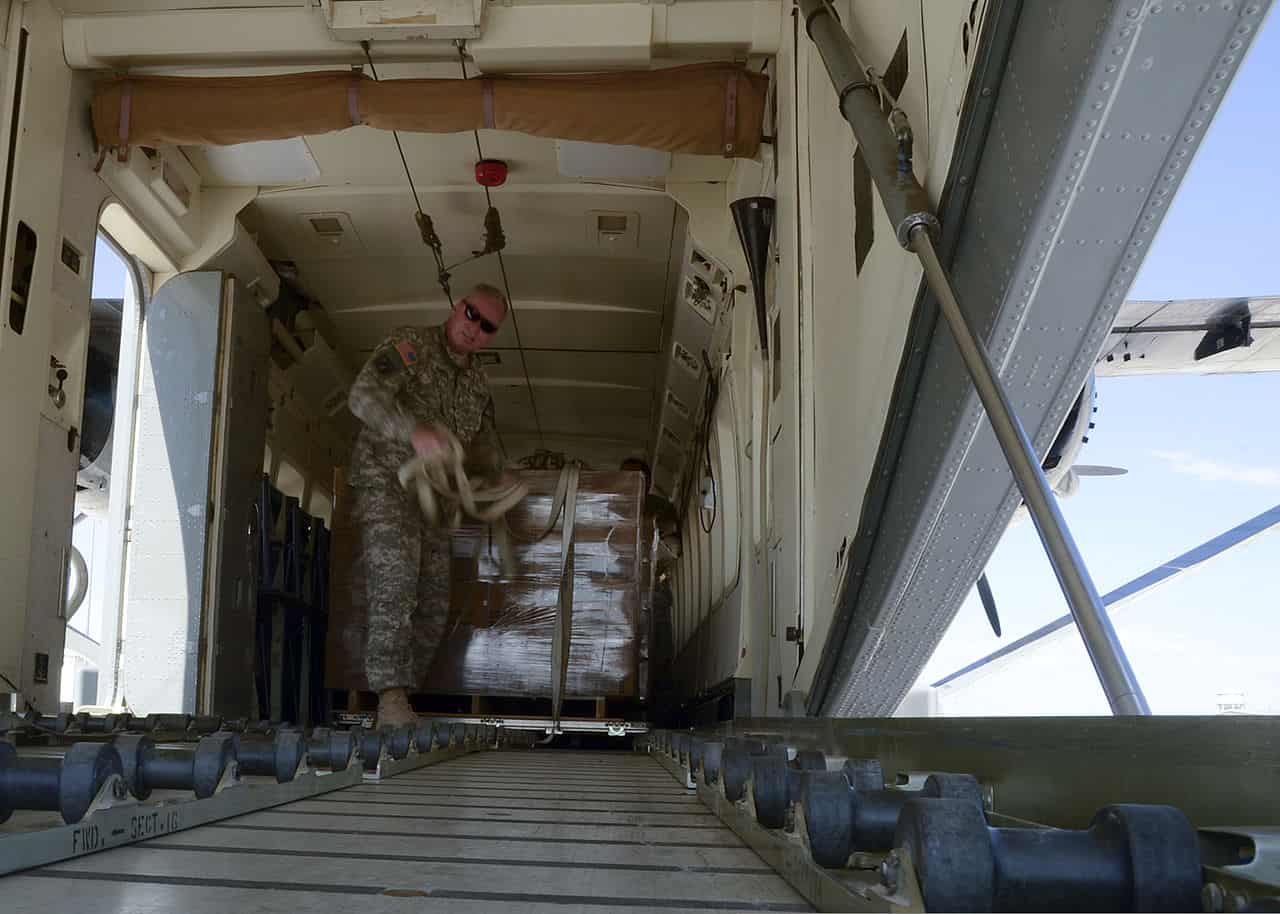
The C23-Sherpa’s cabin has a length of 9.09 meters, width of 1.95 meters and height of 1.95 meters. It has a cargo volume of 34.83 cubic meters and a cargo capacity of 3,629 kg.
The C-23 Sherpa can accommodate up to a maximum of 30 passengers while maintaining satisfactory short field characteristics.
C-23 Sherpa Engine and Performance
The aircraft is powered by two PT6A turboprop engines supplied by Pratt and Whitney. The engines compose of two sections, a gas generator that has an accessory gearbox and a free power turbine that has a reduction gearbox. It has a maximum power of 1,198 horsepower each.
The C-23 Sherpa can fly up to 27,000 feet. It has a travel range of 670 nautical miles, climb rate of 1,180 feet per minute and a maximum cruise speed of 221 knots. It has a take-off distance of 1,036 meters and a landing distance of 1,225 meters.
The aircraft has a maximum take-off and landing weight of 11,612 kg and 11,385 kg respectively. It is designed to carry a maximum payload of 3,302 kg and has a fuel tank capacity of 538 US Gal.
C-23 Sherpa Variants
There are several variants of the C-23 Sherpa, namely, the C-23A Sherpa, C-23B Sherpa, C-23B+ Super Sherpa, C-23C, and C-23D.
The C-23A is a twin-engine transport type used by the United States Air Force. 18 of this type were built.
The C-23B was used by the United States Army National Guard. 16 aircraft of this type were built.
The C-23B+ Super Sherpa was acquired as second hand by the United States Army and reformed by the West Virginia Air Center. 28 of this type were modified.
The C-23C is a combination of C-23B and C-23B+ with the known Avionics System Cockpit Upgrade program. 43 of this type were modified.
The C-23D is equipped with the Safety Avionics Modification program. Only four of this type were modified.
Want More of This?
We'll send you our latest and best content straight to your inbox