Cargo Airplanes
Short Belfast
ICAO: BELF
The boxy utility aircraft built for rugged reliability, nicknamed "The Flying Shoebox".
The latest aviation news and stories sent to your inbox.
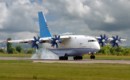
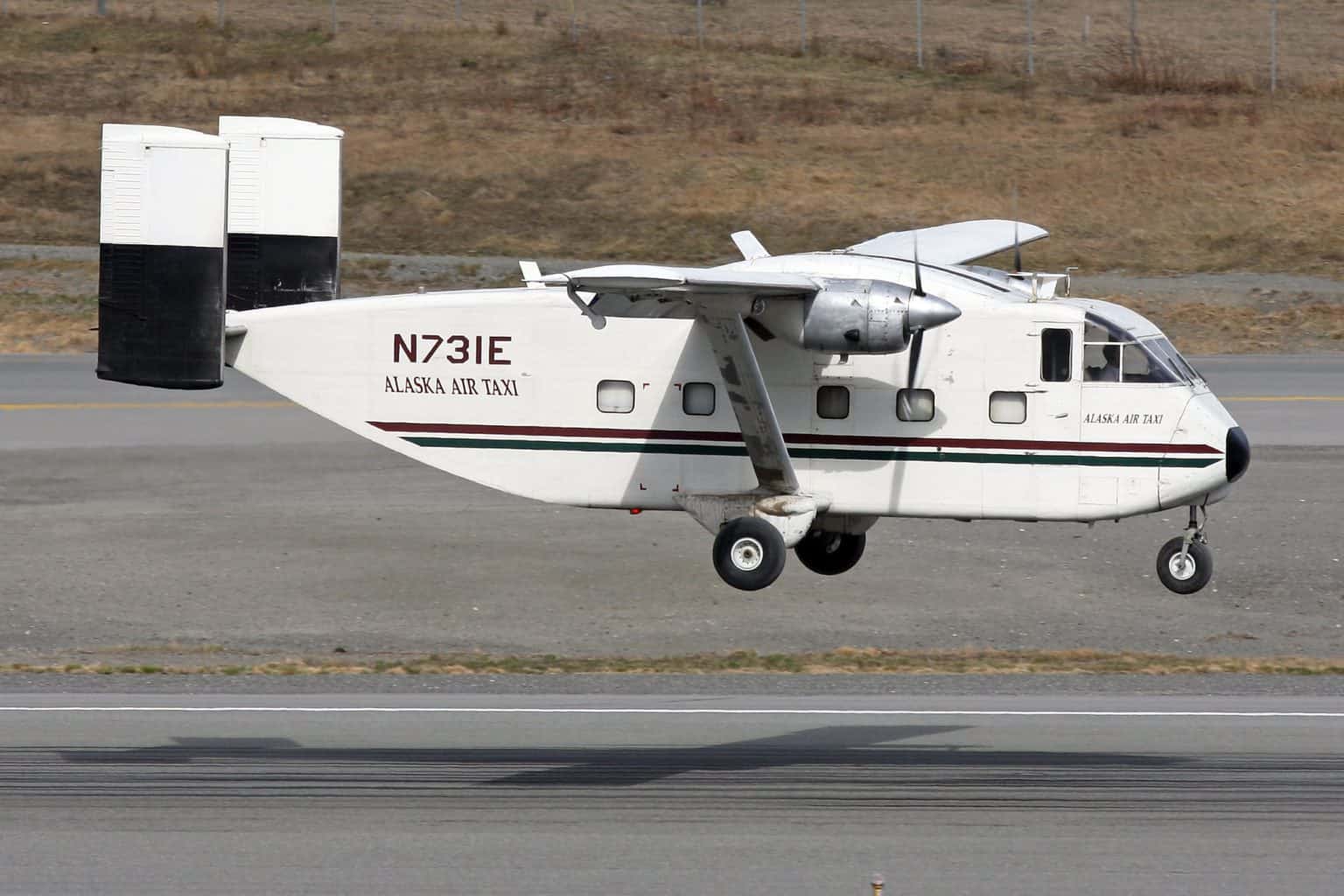
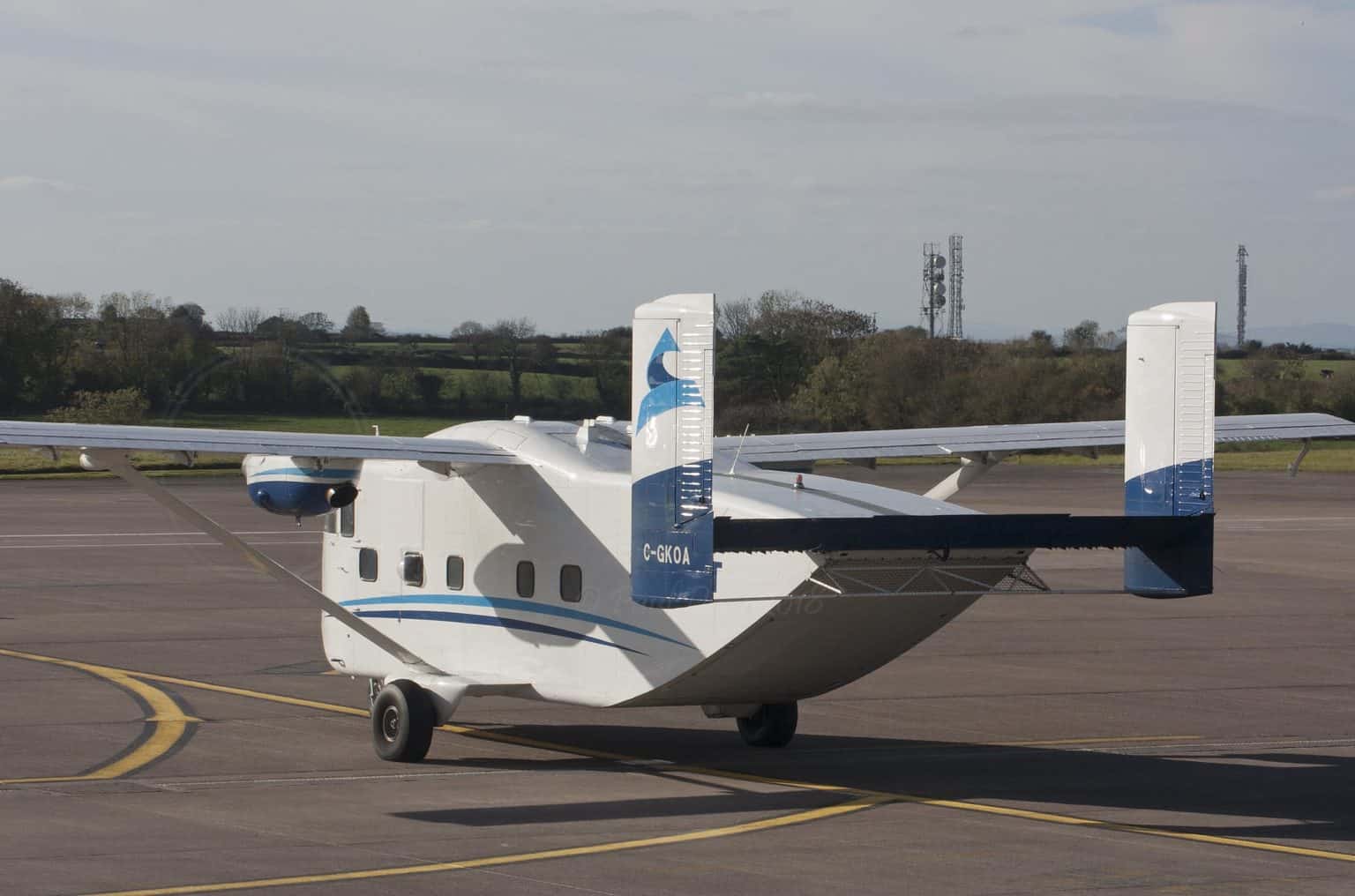
The Short SC.7 Skyvan is instantly recognizable for its square fuselage and twin tail fins. Designed in the 1960s as a short takeoff and landing utility aircraft, it prioritized function over form and became known for its ability to operate from remote airstrips in demanding conditions.
Live Fleet Activity (SC7)
Fetching live data…

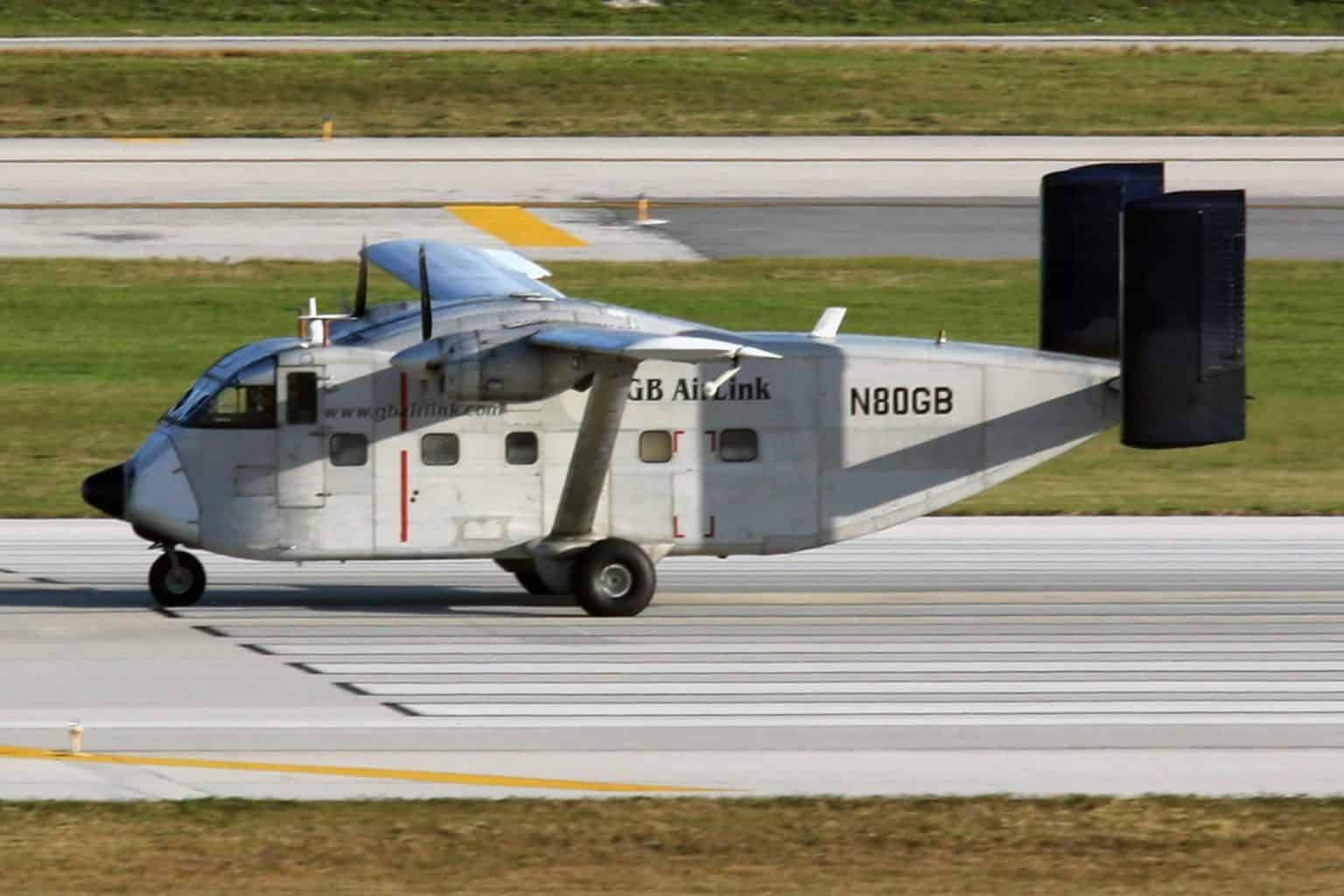




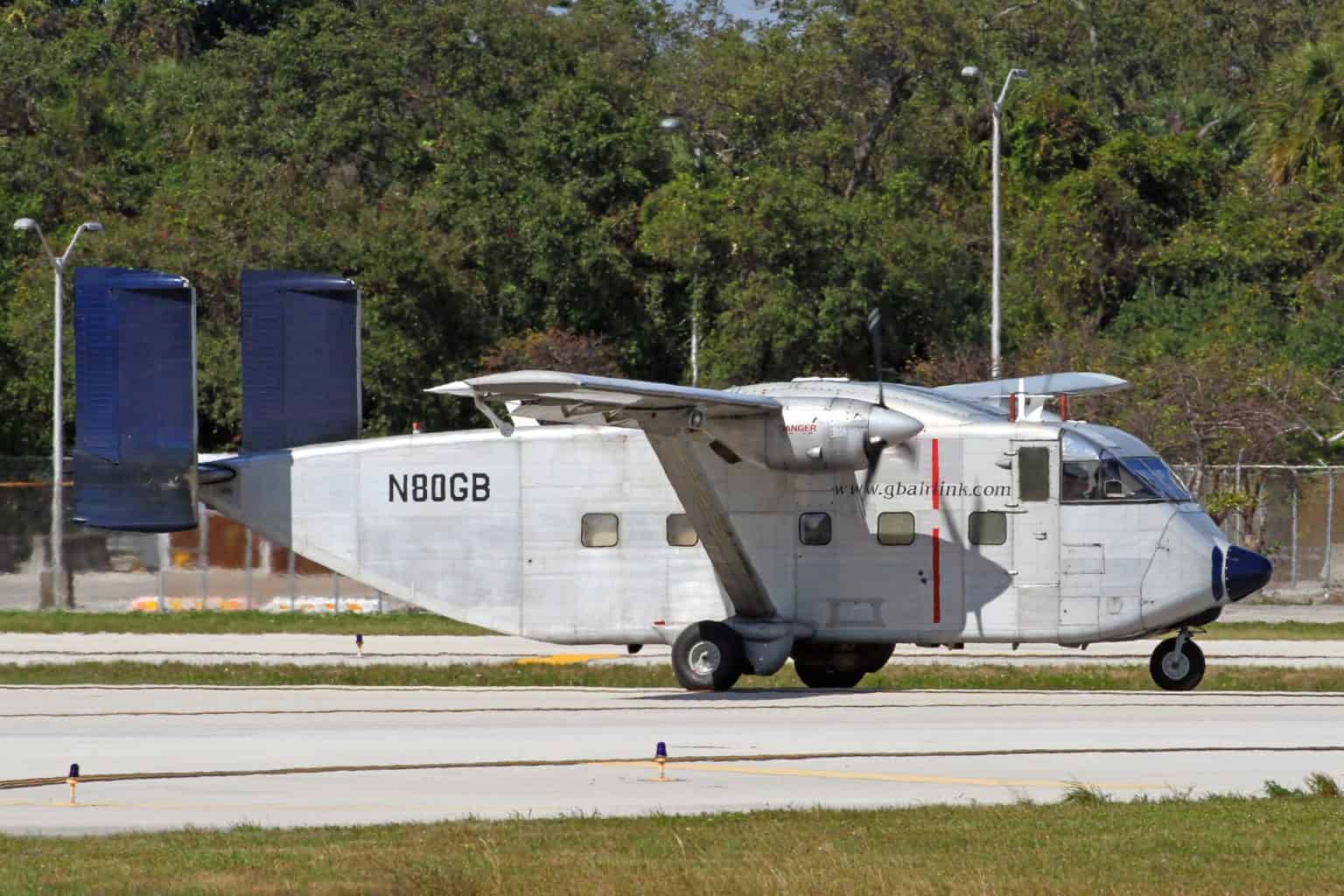

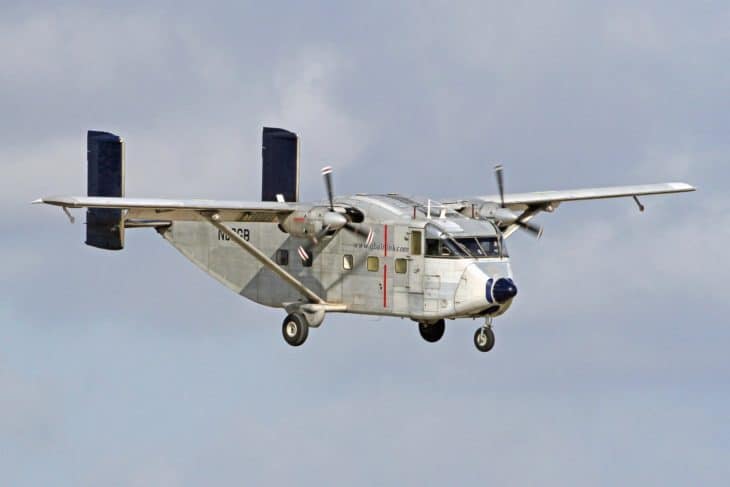
The Short SC.7 Skyvan was developed by Short Brothers in Northern Ireland as a compact twin-engine transport aircraft optimized for short-field performance and cargo versatility. First flown in 1963 and entering service in 1966, the Skyvan was built around a simple concept: maximize internal volume while maintaining reliable operation from rough and unprepared runways.
Its distinctive box-shaped fuselage provided a large, unobstructed cargo hold with a rear loading door, making it well suited for freight, troop transport, and parachute operations. The aircraft was powered by two turboprop engines, which delivered dependable performance and strong lift at low speeds. Its high-mounted wing and fixed landing gear further enhanced its short takeoff and landing capability.
Although modest in cruising speed, the Skyvan excelled in environments where runway length and infrastructure were limited. It served with both civilian operators and military forces around the world, often flying into remote regions across Africa, Asia, and South America. The aircraft also gained a following in skydiving operations due to its large cabin and stable flight characteristics.
Production of the Skyvan ended in the early 1980s after nearly 150 aircraft were built. Despite its unconventional appearance, the Skyvan earned respect as a durable and practical aircraft that delivered reliable service in some of the world’s most challenging operating conditions.
In 1958, F.G Miles Ltd was seeking backing to produce a development of design of the Hurel Dubois Miles HDM.106 Caravan that has a high aspect ratio identical with the Hurel Dubois HD.31. F.G Miles approached Short Brothers regarding the project.
Short obtained the design and information from the Miles Aerovan testing. After careful evaluation on the proposal, the manufacturing company rejected the Caravan. Instead, they began to develop an original design for a utility all-metal aircraft designated as the Short SC7 Skyvan. In 1960, construction of the SC.7 Skyvan began at Sydenham Airport.
On January 17 1963, the first prototype driven by two Continental piston engines conducted its maiden flight. Later that year, the prototype was equipped with new engines Turbomeca Astazou II turboprop with a thrust rate of 520 equivalent shaft horsepower.
The second model was originally equipped with Turbomeca Astazou X with 660 equivalent shaft horsepower but eventually the initial production type was installed with Turbomeca Astazou XII with 690 equivalent shaft horsepower.
In 1967, it was discovered that the Astazou XII was temperature restricted during high altitudes. In 1968, aircraft production changed to the Skyvan Series 3 aircraft which took over the existing Astazou turboprop with Garret AiResearch TPE331 engine. It has a thrust rate of 715 equivalent shaft horsepower.
The Short SC7 Skyvan was produced from 1963 to 1986 with a total of one hundred forty-nine units built.
The SC7 Skyvan is an all-metal aircraft that has an external length of 12.21 meters and height of 3.35 meters. Its unpressurized square section fuselage bears a resemblance to the shape of a railroad boxcar and has a width of 1.7 meters.
Its high wing has a wingspan of 19.79 meters and a wing area of 35.12 square meters. The aircraft is also designed with two vertical stabilizers and rudders. It was known with freight operators than other aircraft of its type because of the huge door at the rear part intended for loading and unloading freight. It has a wheelbase of 4.27 meters.
The cabin of the aircraft is 8.9-meter long, 1.8-meter high and 1.5-meter wide.
The SC.7 Skyvan is powered by two Garrett AiResearch TPE-331-201 single-shaft turboprop engines. Each engine delivers a maximum thrust of 715 shaft horsepower. It has a length of 1.2 meters and a diameter of 530 millimeters. It has a two-stage centrifugal compressor, reverse annular combustors and a three-stage axial turbine.
The aircraft has a service ceiling of 22,500 feet, travel range of 602 nautical miles and a rate of climb of 1,640 feet per minute. The maximum speed is 175 knots and the cruise speed is 150 knots. The take off distance to 15 meters is 482 meters while the landing distance from 15 meters is 567 meters.
The maximum take off and landing weight is 5,670 kg. The SC7 Skyvan has a maximum payload of 2,339 kg and a fuel tank capacity of 293 US gal.
The Short SC.7 Skyvan was in service for both military and civilian operations. It continued to serve in 2009 with several civilian operators and also in military operations in Guyana and Oman.
In 1977, the aircraft were utilized during the well-known abominable death flights at the depths of Dirty War in Argentina wherein approximately 4,400 detainees were hurled to their deaths on to the freezing water of Rio de la Plata.
In 1982, two Skyvans of the Argentine Naval Prefecture took part in the Falklands War. The two aircraft were transported to Port Stanley in April 1982. The first aircraft was greatly damaged by British naval gunfire that caused it to stop from flying.
In June 1982, it was eventually destructed by shellfire during British bombings. The other aircraft was utilized in Pebble Island, Falkland Islands before it was destructed by a British raid on May 15 1982.
The aircraft remained in service in few numbers for air to air photography and skydiving operations. In 1970, Questor Surveys, a Canadian company that provides advanced geotechnical and engineering survey applications transformed one of the Skyvan 3s for aerial geological survey purposes.
Sources and references used for research and fact-checking.