

Table of Contents
LeBron James is worth over $1 billion. He is the first active NBA player to reach that milestone. He earns tens of millions a year from his Nike lifetime deal alone, holds stakes in Liverpool FC, the Boston Red Sox, and the Pittsburgh Penguins, and runs one of sport’s most successful business empires. He does not own a private jet. In 2025, when a viral Instagram post placed him on a list of NBA players who fly their own aircraft, he corrected the record in his story within hours: “Take me off this list. Lies!!! I DO NOT own a private plane.”
The story of LeBron’s private aviation life is more interesting than a standard fleet tour. He is one of the rare celebrity billionaires who has looked at the true cost of jet ownership, run the numbers, and concluded that charter makes more financial sense. He said so to Larry King as far back as 2010, confirming a NetJets relationship and explaining that outright ownership was simply “too, too expensive.” Fifteen years later, with his net worth multiplied many times over, his position has not changed. It is a stance that cuts against the billionaire playbook, and LeBron has owned it publicly more than once.
This article covers the aircraft LeBron James actually flies, how his private aviation approach works, why the Gulfstream G280 keeps getting linked to his name, the aircraft specs behind that myth, how his travel compares to other NBA stars who do own jets, and the moments his private flights made headlines.
Quick facts about LeBron James’s private jet travel

LeBron James’s Private Aviation Fleet
LeBron James does not own any aircraft outright. He accesses private air travel through two routes: a personal charter relationship with NetJets for off-season and personal trips, and the NBA’s dedicated Delta Air Lines charter fleet for team road games. Here is a breakdown of both.


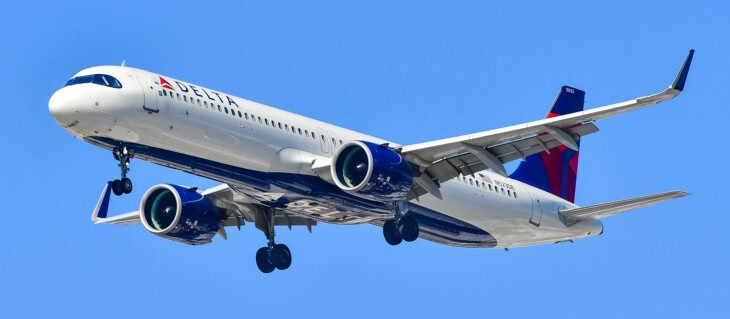
The Lakers, like all 30 NBA teams, fly on Delta Air Lines’ dedicated charter 757-200 fleet for road games. The aircraft are configured with just 72 seats across business and first class, giving players the legroom and cabin space their frames demand. At up to 3,900 NM range, the 757 handles coast-to-coast legs without a fuel stop, though the fleet is now showing its age: every aircraft in it was built in 1991. The NBA has secured Department of Transportation approval to replace all 11 current 757-200s with 13 new Airbus A321neos, to be leased from SMBC Aviation Capital and operated by Delta.
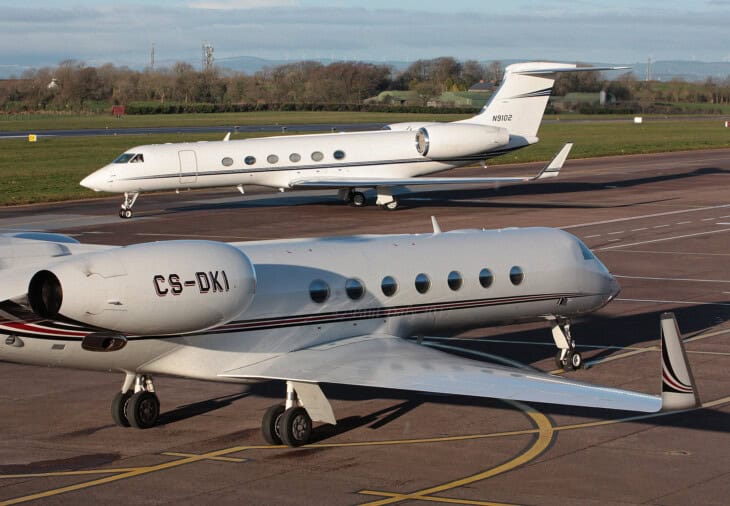
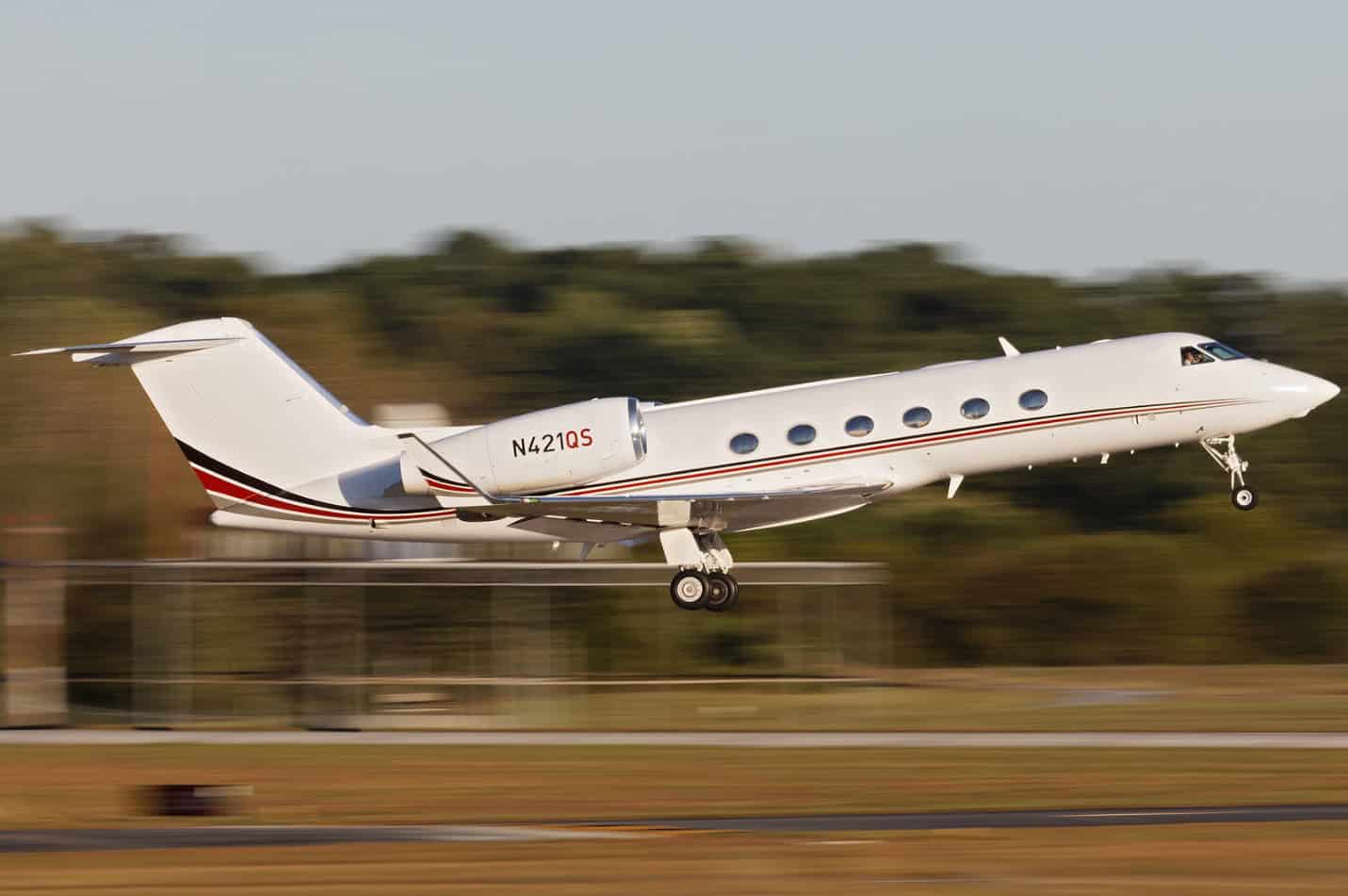
For personal travel, LeBron uses NetJets, the world’s largest private aviation company, founded by Warren Buffett’s Berkshire Hathaway. NetJets offers fractional ownership shares and jet card access to a fleet that includes Gulfstream G450, G550, and G650 aircraft, as well as Citation-class jets for shorter legs. Under this model, LeBron pays for flight hours rather than bearing the fixed costs of ownership: purchase price, hangar fees, crew salaries, maintenance, insurance, and the steep depreciation curve that makes jet ownership economically brutal for anyone flying fewer than 400 hours per year.
What is NetJets?
NetJets is the world’s largest private aviation company, a subsidiary of Berkshire Hathaway. It offers fractional shares (a fraction of a specific aircraft you co-own with others) and jet cards (prepaid flight hours on a managed fleet). Clients pay for the hours they use and share fixed costs across the owner group. For travelers flying under 200-400 hours per year, fractional arrangements are almost always cheaper than sole ownership.
The Origin Story: From NetJets to the G280 Myth
LeBron has been flying private since his early years in the NBA, and his approach to it has been consistent since the beginning. The timeline below traces how his private aviation story developed, and how the internet’s version of that story got so badly distorted.
2003
u003cstrongu003eDrafted #1 overall by the Cleveland Cavaliers.u003c/strongu003e LeBron enters the NBA as an 18-year-old from Akron, Ohio, and begins the on-court career that will eventually make him the league’s first active billionaire.
2007
u003cstrongu003eFirst NBA Finals appearance.u003c/strongu003e As LeBron’s profile and earnings grow, private charter travel becomes a regular part of managing his schedule around games, appearances, and off-court commitments.
2010
u003cstrongu003eConfirms NetJets relationship to Larry King.u003c/strongu003e In a nationally televised interview, King asks LeBron if he is in NetJets. LeBron confirms it, then adds: u0022No. Too, too expensive to own your own plane.u0022 It is the clearest public statement of his aviation philosophy.
2010
u003cstrongu003eu0022The Decisionu0022 and the free agency charter.u003c/strongu003e LeBron’s free agent move to the Miami Heat becomes one of the most tracked events in sports history. Charter jets carrying LeBron and his circle are followed by media across the country as he finalizes his move south.
2016
u003cstrongu003eCleveland Cavaliers NBA Championship.u003c/strongu003e LeBron delivers Cleveland’s first title in 52 years. The team returns home by charter amid unprecedented celebrations.
2018
u003cstrongu003eThe most famous private jet tracking in NBA history.u003c/strongu003e As free agency opens, fans use FlightAware to trace a chartered jet from Cleveland to Miami to Anguilla to Van Nuys Airport in Los Angeles. A local ABC news helicopter captures LeBron stepping off the plane. He signs with the Lakers four years, $153.5 million hours later.
2022
u003cstrongu003eLeBron becomes the NBA’s first active billionaire.u003c/strongu003e His wealth passes $1 billion, driven by Nike, SpringHill Entertainment, and sports franchise stakes. Despite the milestone, his approach to private aviation does not change.
2025
u003cstrongu003ePublicly denies jet ownership via Instagram.u003c/strongu003e After a viral post lists him among NBA private jet owners, LeBron posts to his story: u0022Take me off this list. Lies!!! I DO NOT own a private plane.u0022 It is his most direct and public denial yet.
The Gulfstream G280: What the Internet Gets Wrong
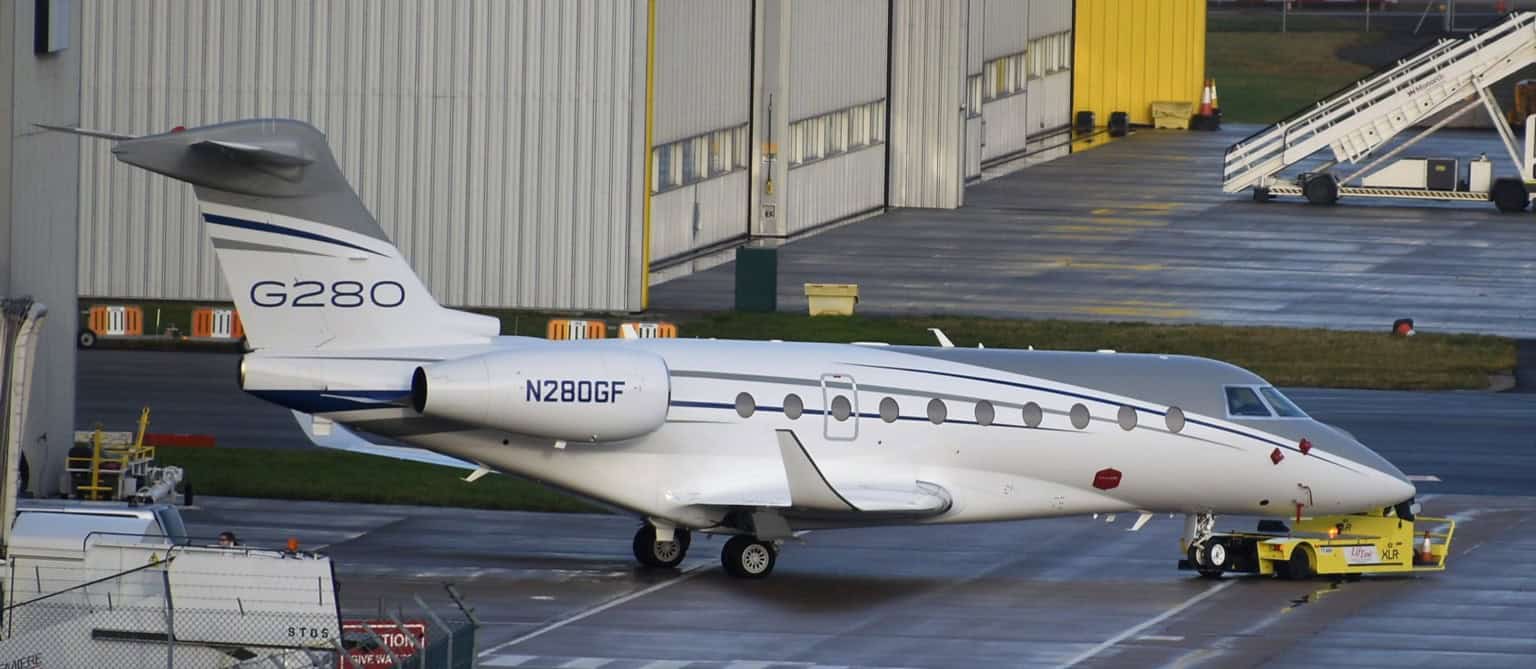
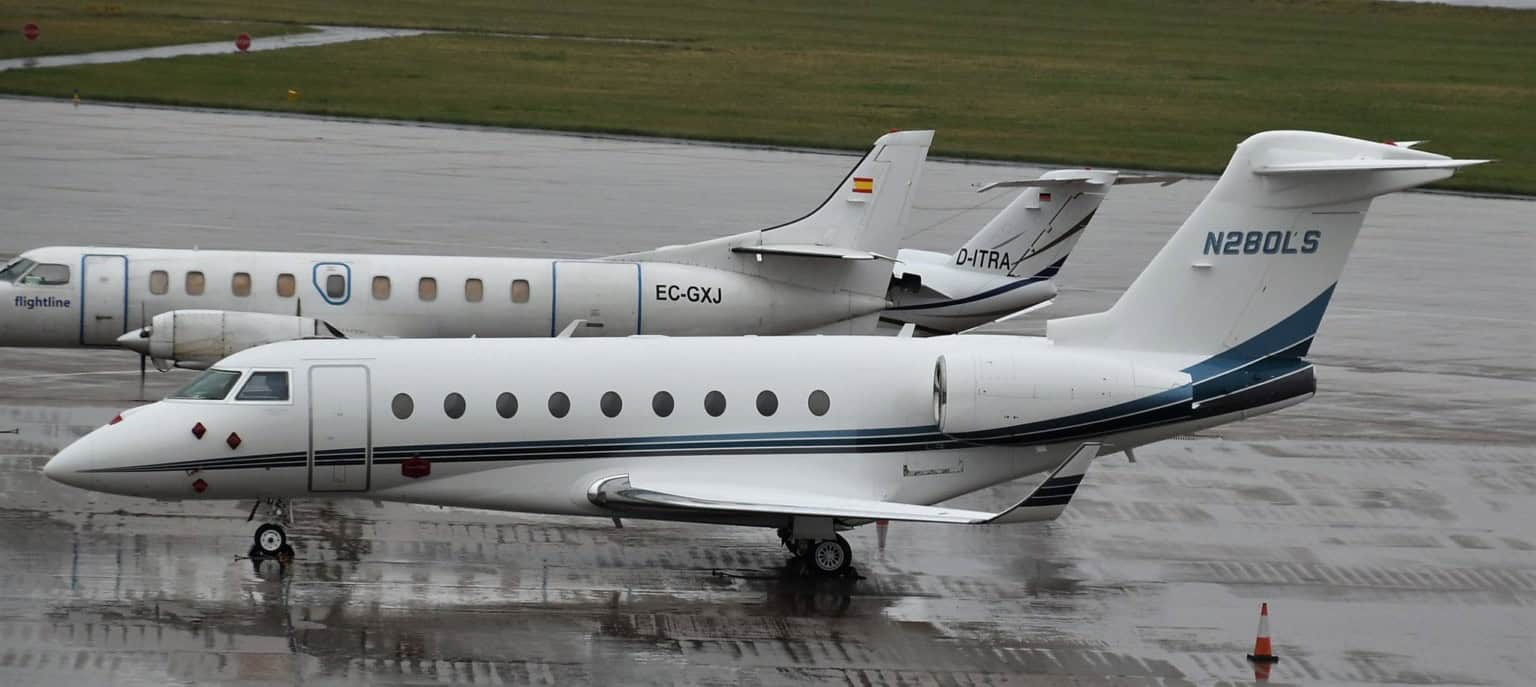
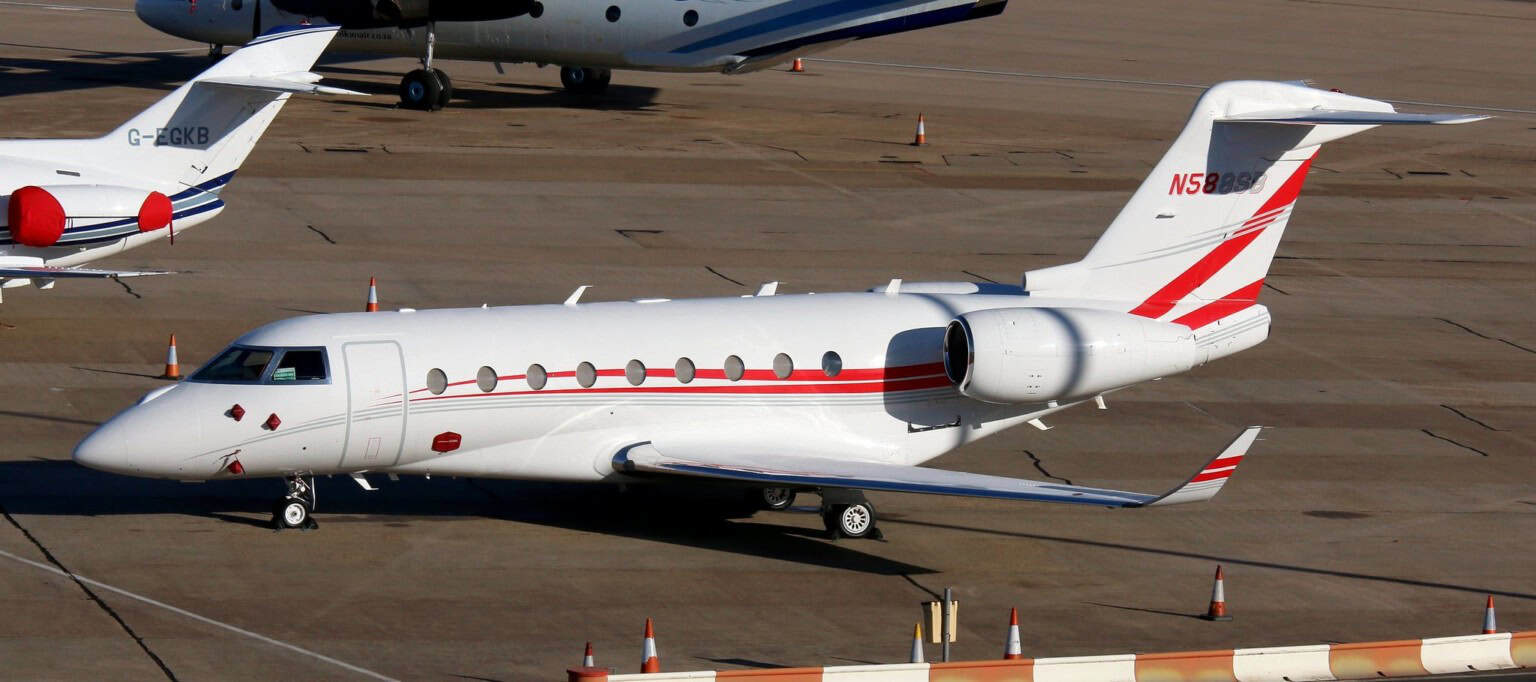
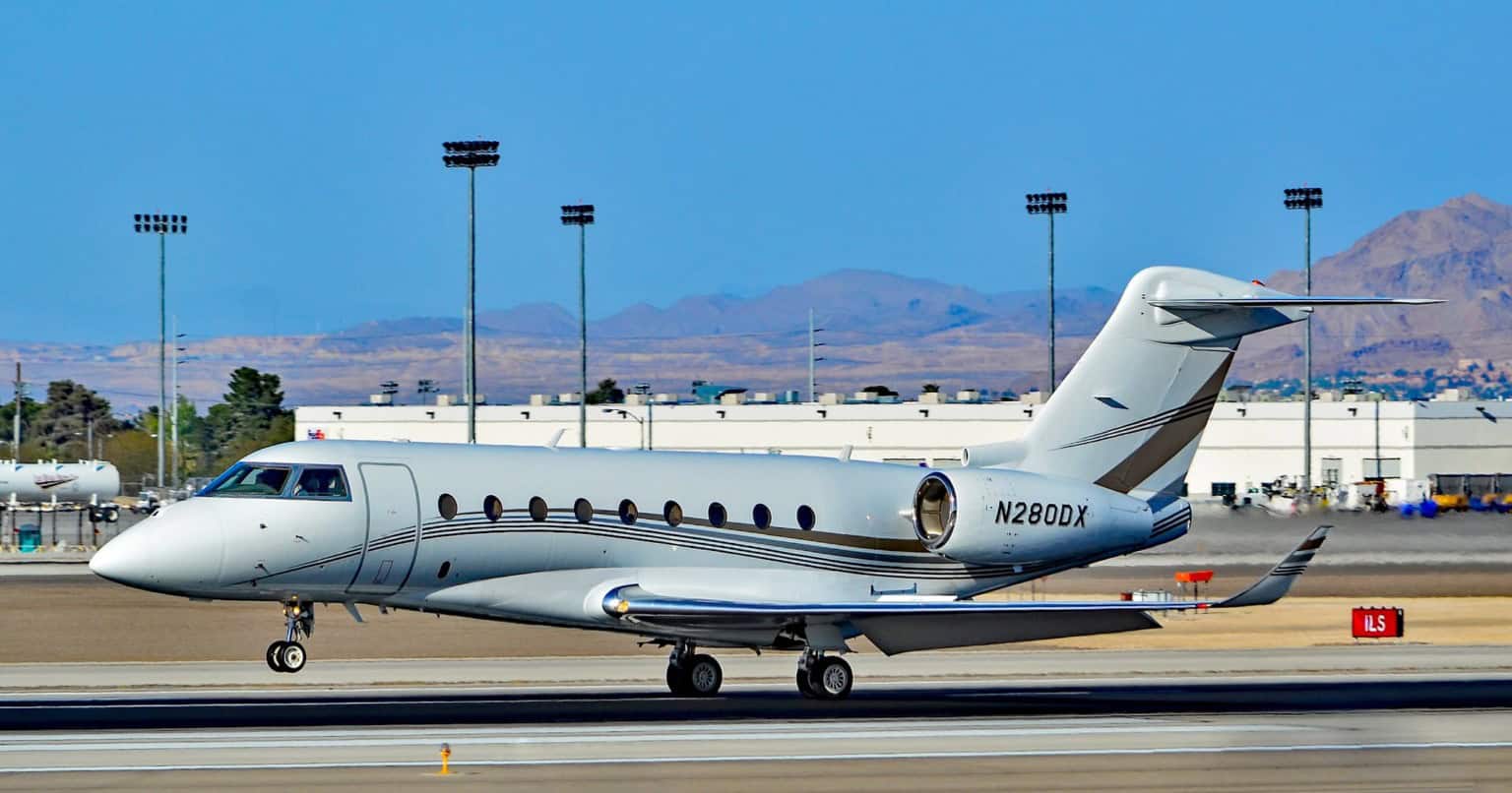
If you search “LeBron James private jet,” the Gulfstream G280 will appear in almost every result. Multiple outlets have reported that he purchased one for $22 million. YouTube videos tour its interior under his name. The problem: LeBron James does not own a Gulfstream G280, has never owned one, and said so directly in 2025. The myth almost certainly grew from the fact that G280s are genuinely popular among NBA players, that LeBron does fly private frequently, and that aviation tracking sites sometimes link charter flights to whoever boards them rather than to the operating company.
That said, the G280 is worth understanding. It is a legitimately excellent aircraft and one of the more sensible choices in its class, which is probably why it has become the default “NBA player jet” in the public imagination. Here are its full specifications.
Performance
Cabin
Avionics
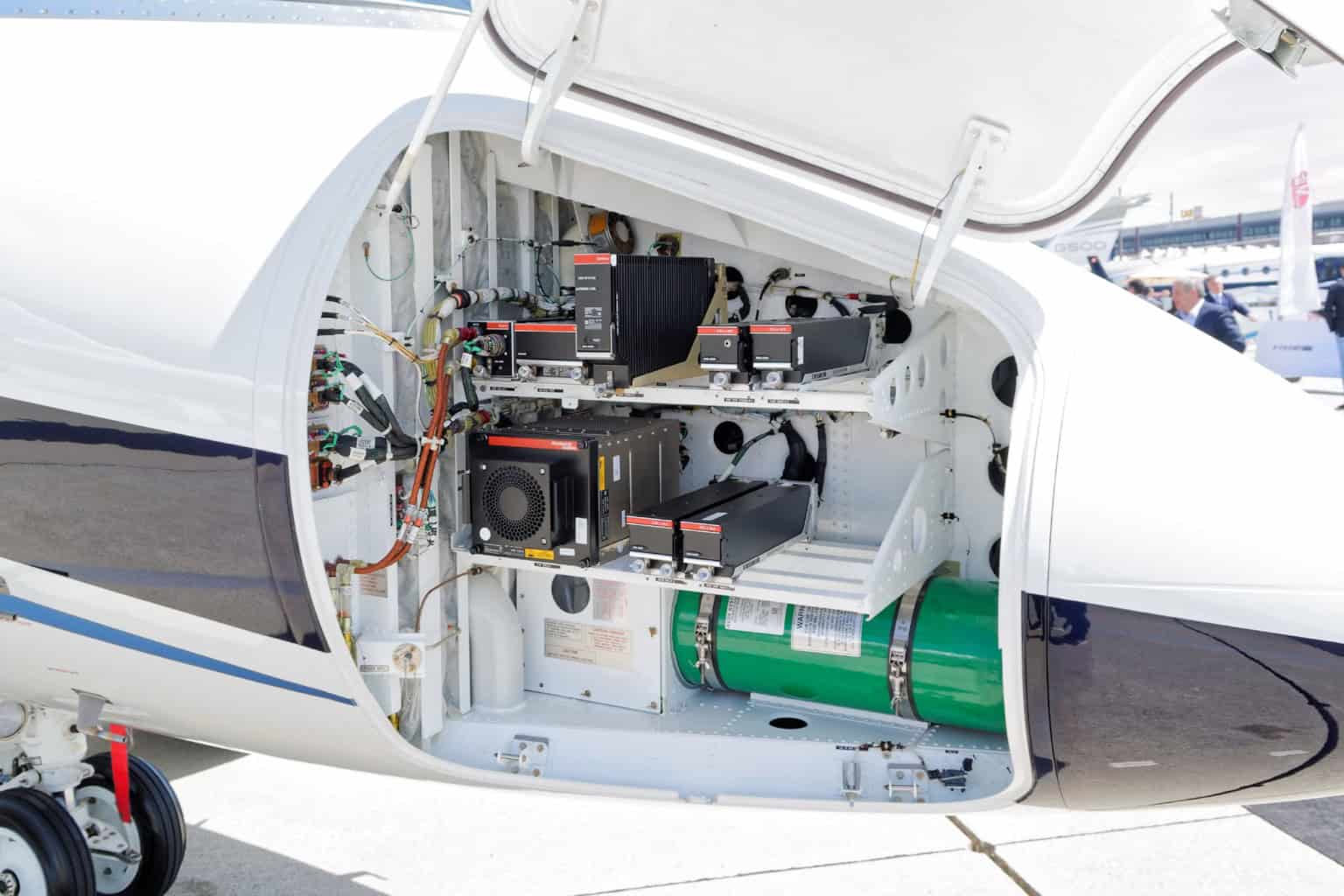
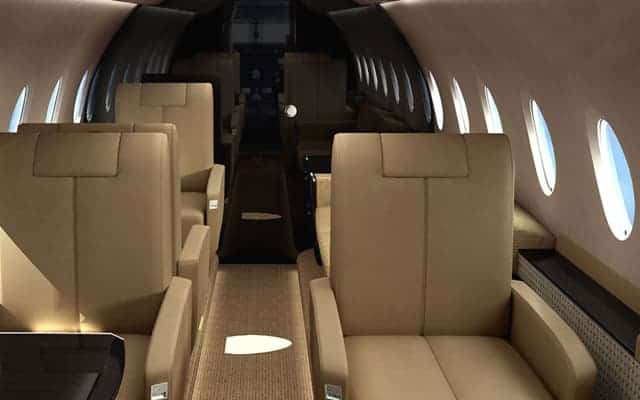
The G280’s range of 3,646 NM comfortably covers LA to New York nonstop (2,450 NM), LA to London with one stop, or Miami to virtually anywhere in the continental United States. Its PlaneView280 flight deck uses Collins Aerospace’s Pro Line Fusion avionics, with auto-throttle, auto-brake, and an enhanced flight vision system for low-visibility approaches. In the cabin, the 19 large oval windows give it a light, open feel, and the seats recline flat for overnight flights. It is a legitimate super-midsize jet, not the largest Gulfstream available, but well-suited to a player managing a schedule between Los Angeles, business travel hubs, and international trips.





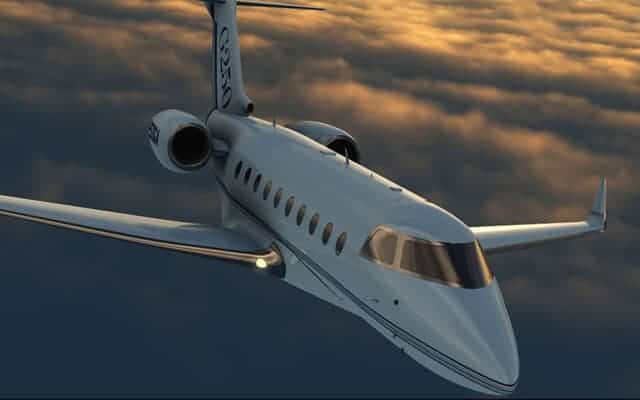

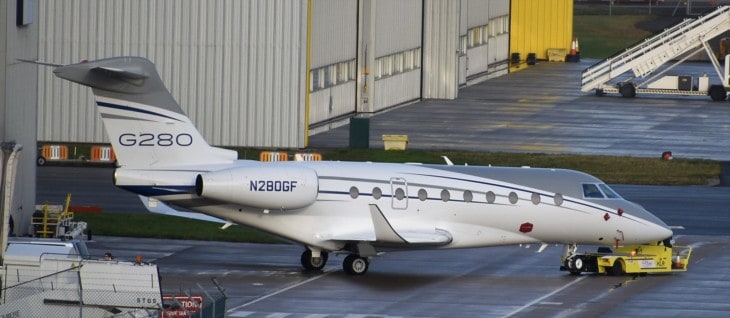
LeBron James does not own a Gulfstream G280
Multiple outlets have published articles stating LeBron James purchased a Gulfstream G280 for $22 million. He has denied this twice: first to Larry King in 2010, and again via Instagram in 2025, where he specifically called out the claim as false. No verified registration records link a Gulfstream G280 to LeBron James or any of his known holding companies.
Why LeBron James Chooses Charter Over Ownership
The economics of private jet ownership are more punishing than they appear from the outside, and LeBron has understood this since at least 2010. A super-midsize jet like a Gulfstream G280 carries a list price of roughly $25 million. That is only the beginning. Fixed annual operating costs, including crew salaries, hangar fees, insurance, scheduled maintenance, and avionics updates, typically run $1 to $2 million per year regardless of how many hours the aircraft flies. Unscheduled maintenance, engine overhauls, and interior refurbishments add more. A large-cabin jet like a Gulfstream G650 pushes those fixed costs higher still.
Under a NetJets fractional arrangement, LeBron pays only for the hours he actually uses, plus a monthly management fee. He avoids the depreciation hit on a $25 million asset, carries no crew payroll, and has access to a managed fleet that is maintained, crewed, and dispatched on his schedule. For a traveler flying 100 to 200 hours a year rather than 400-plus, this is typically far cheaper than ownership. The crossover point where ownership becomes economically rational is around 400 flight hours per year. Very few individual athletes reach it.
The charter math
A Gulfstream G550 charter costs roughly $10,000 to $14,000 per flight hour. At 150 hours per year, that is $1.5M to $2.1M annually with no fixed costs, no depreciation, and no ownership headache. Owning the same aircraft would cost $62M+ to acquire, $1.5M+ in annual fixed costs, and up to $20M in depreciation over 10 years. LeBron’s math is sound.
LeBron James’s Most Famous Private Jet Moments
The 2018 Free Agency Flight That Confirmed the Lakers Move
The most famous private jet moment in LeBron James’s career happened in the summer of 2018, and most of it played out in real time on Twitter and FlightAware. As his contract with the Cleveland Cavaliers was expiring, fans began tracking a chartered aircraft linked to his entourage. The jet flew from Cleveland to Miami, then continued south to Anguilla in the Caribbean, where LeBron vacationed while free agency decisions crystallized. When the plane departed Anguilla on June 30, 2018, heading northwest toward Los Angeles, the tracking reached a fever pitch. Fans on Reddit and social media followed every waypoint. A local ABC affiliate dispatched a news helicopter to Van Nuys Airport. Aerial footage captured LeBron walking down the airstairs onto the tarmac.
He had not yet signed anything. Free agency did not officially open for another few hours. But the flight path had already told the story: he was not going back to Cleveland. Four years, $153.5 million, Los Angeles Lakers. The plane had said it before he did.
The 2010 Free Agency and “The Decision”
Eight years earlier, LeBron’s first free agency generated its own aviation subplot. As he weighed his options between Cleveland, Miami, New York, Chicago, and New Jersey, charter flights carrying his circle were tracked and photographed. His eventual choice, announced in a televised ESPN special that he called “The Decision,” sent him to the Miami Heat. The backlash in Cleveland included burning of his jersey. The charter jets that carried him south became symbols of the departure.
The London Fuel Leak, 2011
Not every private jet moment is cinematic. In November 2011, LeBron and several others boarded a charter flight from Ohio to London and discovered a major fuel leak mid-preparation. The flight was grounded before departure. The incident was a reminder that private aviation, for all its advantages, is not without operational hazards, and that the diligence of a good crew often goes unnoticed precisely when it is working.
Flying to Carmelo Anthony’s Wedding, 2010
In July 2010, LeBron chartered a jet to attend Carmelo Anthony’s wedding in New York. The flight itself was unremarkable, but it captured something important about how NBA superstars of that era used private aviation: not just for games and business, but as a basic tool for maintaining friendships and life relationships across a schedule that would otherwise make both impossible.
LeBron James Compared to Other NBA Private Jet Owners
LeBron James is a notable outlier in the NBA’s top tier. Most of his contemporaries at his income level have chosen ownership over charter. The contrast is striking when you line up the fleet choices of players with comparable net worths.
| Player | Jet approach | Aircraft | Est. value |
|---|---|---|---|
| LeBron James | Charter / NetJets | No ownership | N/A |
| Michael Jordan | Ownership | Gulfstream G650ER | ~$70M |
| Kevin Durant | Ownership | Private jet (confirmed) | ~$20-30M |
| Stephen Curry | Charter | No confirmed ownership | N/A |
Michael Jordan’s Gulfstream G650ER is the most prominent NBA jet in the ownership category. The G650ER is Gulfstream’s flagship ultra-long-range aircraft in Jordan’s fleet, registered N236MJ and delivered new in October 2024, with a 7,500 NM range capable of nonstop New York to Dubai or Chicago to Tokyo. Its list price is approximately $70 million, and Jordan has wrapped his in a custom elephant-print livery referencing the Air Jordan 3 sneaker. It is the alpha aircraft in the NBA ownership conversation, and the contrast with LeBron’s NetJets card is total.
The comparison is not necessarily a statement about who is right. Jordan has owned aircraft for decades and flies more than enough hours to justify the economics. LeBron’s travel patterns may simply be different, or his preference for not tying capital into a depreciating asset may reflect the same financial discipline that made him a billionaire in the first place. He has certainly thought about it more carefully than most.
LeBron James and the NBA's fleet upgrade
The Los Angeles Lakers, like all 30 NBA teams, will transition from the current Delta Air Lines Boeing 757-200 charter fleet to Airbus A321neos in the coming years. The A321neo offers a more modern cabin, better fuel efficiency, and more range than the aging 757s it replaces. LeBron may see this upgrade during his remaining NBA seasons, though his personal travel through NetJets will continue independently of whatever the NBA flies.
FAQ
Get the Newsletter
The latest aviation news and stories sent to your inbox.
About the Author

Tim is the owner and lead editor of AeroCorner since 2019, overseeing aviation content covering aircraft, airlines, airports, and the broader aviation industry. Through years of researching, writing, editing, and publishing aviation-focused content, he has developed extensive practical knowledge of commercial aviation and air travel. Based in Asia and a frequent traveler himself, Tim also brings firsthand passenger experience to AeroCorner’s coverage. Outside of publishing, he has also explored aviation firsthand through hands-on flight training in New Zealand.