


Military Propellor Planes
Consolidated PBY Catalina
ICAO: CAT
The Torpedo Bomber That Arrived Too Late for Battle.
The latest aviation news and stories sent to your inbox.
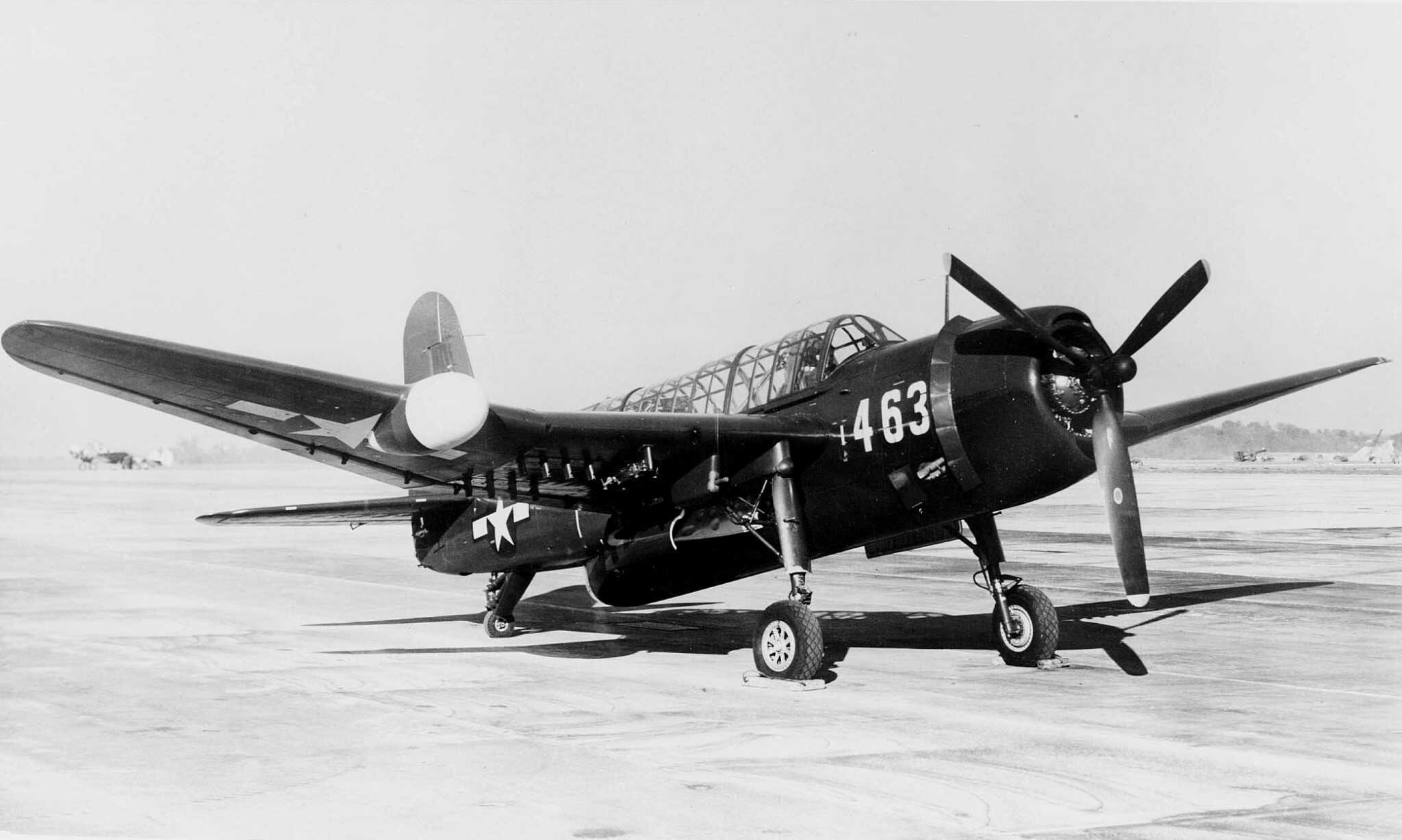
Born from urgent wartime demand, the Consolidated TBY Sea Wolf was designed to hunt enemy ships with speed, range, and deadly precision. Yet by the time it was ready to fight, the war had moved on — leaving this ambitious torpedo bomber as one of aviation history’s forgotten latecomers.


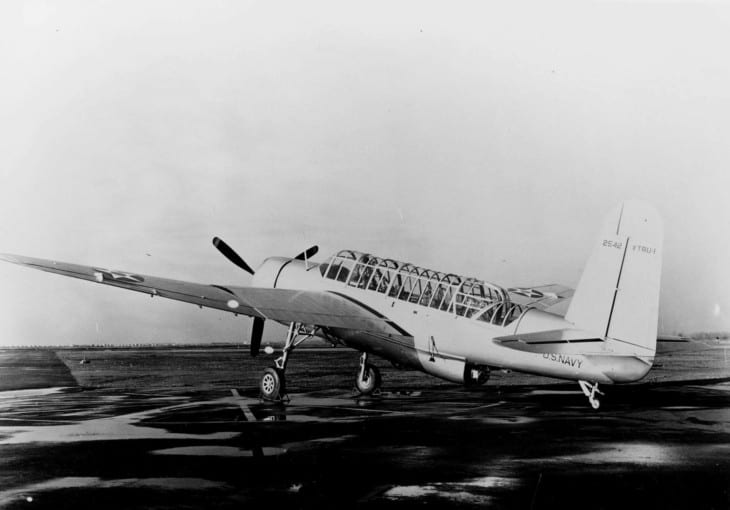
The Consolidated TBY Sea Wolf was a U.S. Navy torpedo bomber developed during World War II as an alternative to Grumman’s TBF Avenger. Originally conceived by Vought-Sikorsky as the XTBU-1, the project was transferred to Consolidated Aircraft in 1943 when Vought’s production lines became overloaded with F4U Corsairs. Consolidated’s plant in Allentown, Pennsylvania, took over manufacturing, and the aircraft was re-designated TBY-2 Sea Wolf.
The Sea Wolf was a single-engine, carrier-capable, low-wing monoplane built mostly of metal, powered by a 2,100 hp Pratt & Whitney R-2800 Double Wasp radial engine — the same powerhouse used in the F4U Corsair and P-47 Thunderbolt. It carried a crew of three: pilot, bombardier/navigator, and rear gunner. The TBY could reach speeds of about 303 mph (488 km/h) and had a range of roughly 1,360 miles (2,190 km). It was armed with two .50 cal machine guns in the wings, a rear turret with twin .30 cal guns, and could carry a 2,000 lb (907 kg) torpedo or equivalent bomb load.
Despite promising performance, the Sea Wolf’s development was delayed by design changes and production bottlenecks. By the time the first aircraft were delivered in late 1944, the proven Grumman TBF/TBM Avenger already dominated carrier decks. Only about 180 TBYs were completed before production ended in mid-1945.
The TBY Sea Wolf never saw combat and was quickly retired after the war, but it remains a fascinating example of the wartime race to innovate — a powerful aircraft overshadowed by timing and circumstance rather than talent or design.
Sources and references used for research and fact-checking.


