


Military Propellor Planes
Consolidated PBY Catalina
ICAO: CAT
The B-29's backup bomber, and a witness to the last air combat of World War II.
Updated: by Tim de Vries
The latest aviation news and stories sent to your inbox.
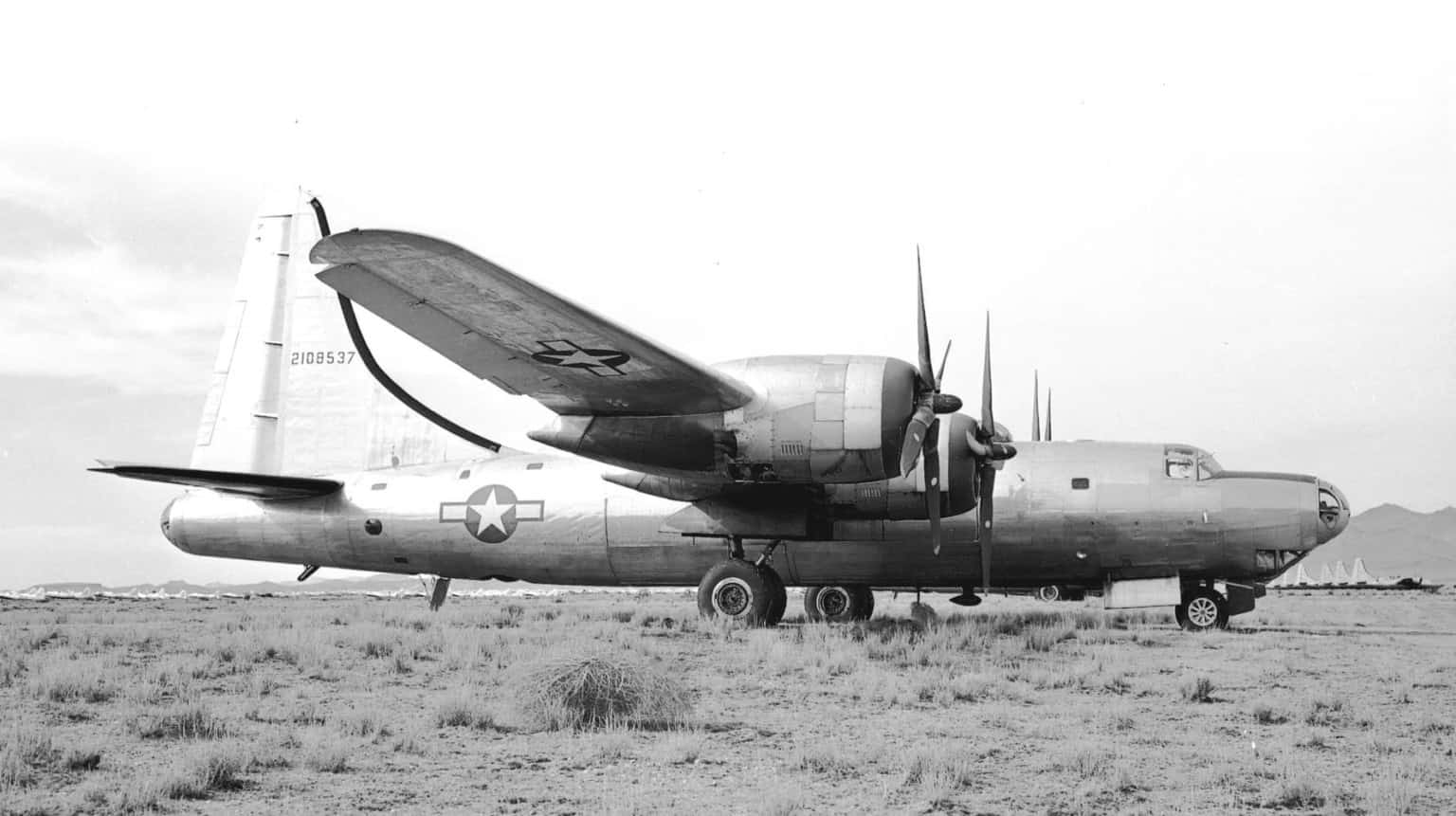
The Consolidated B-32 Dominator was the Army Air Forces’ insurance policy in case the B-29 Superfortress failed. When the B-29 worked, the B-32 became a footnote: 118 were built, and only one squadron flew it in combat. It still earned a place in history during the final days of World War II, when its crews were caught up in the last American air combat of the war.


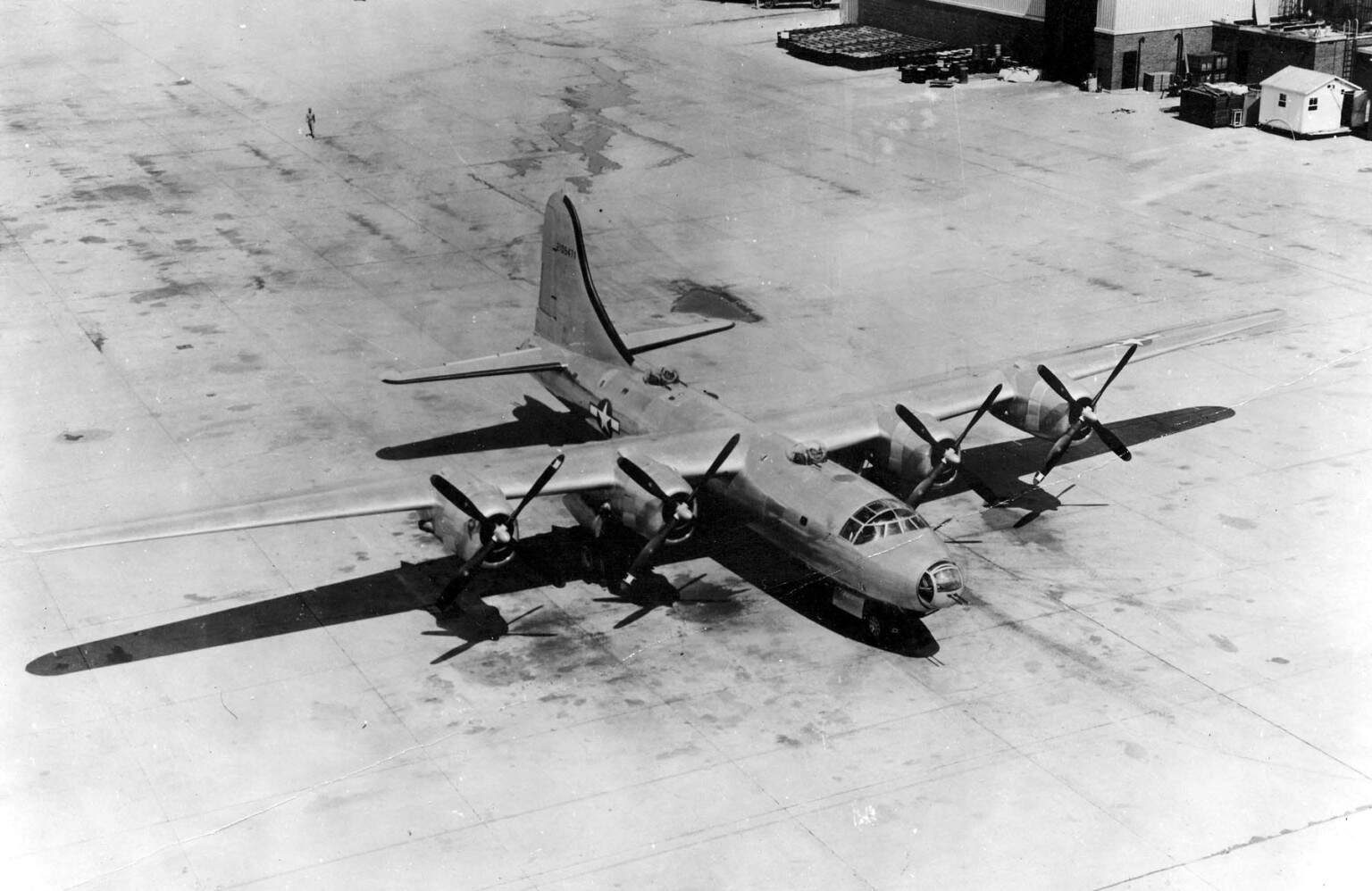

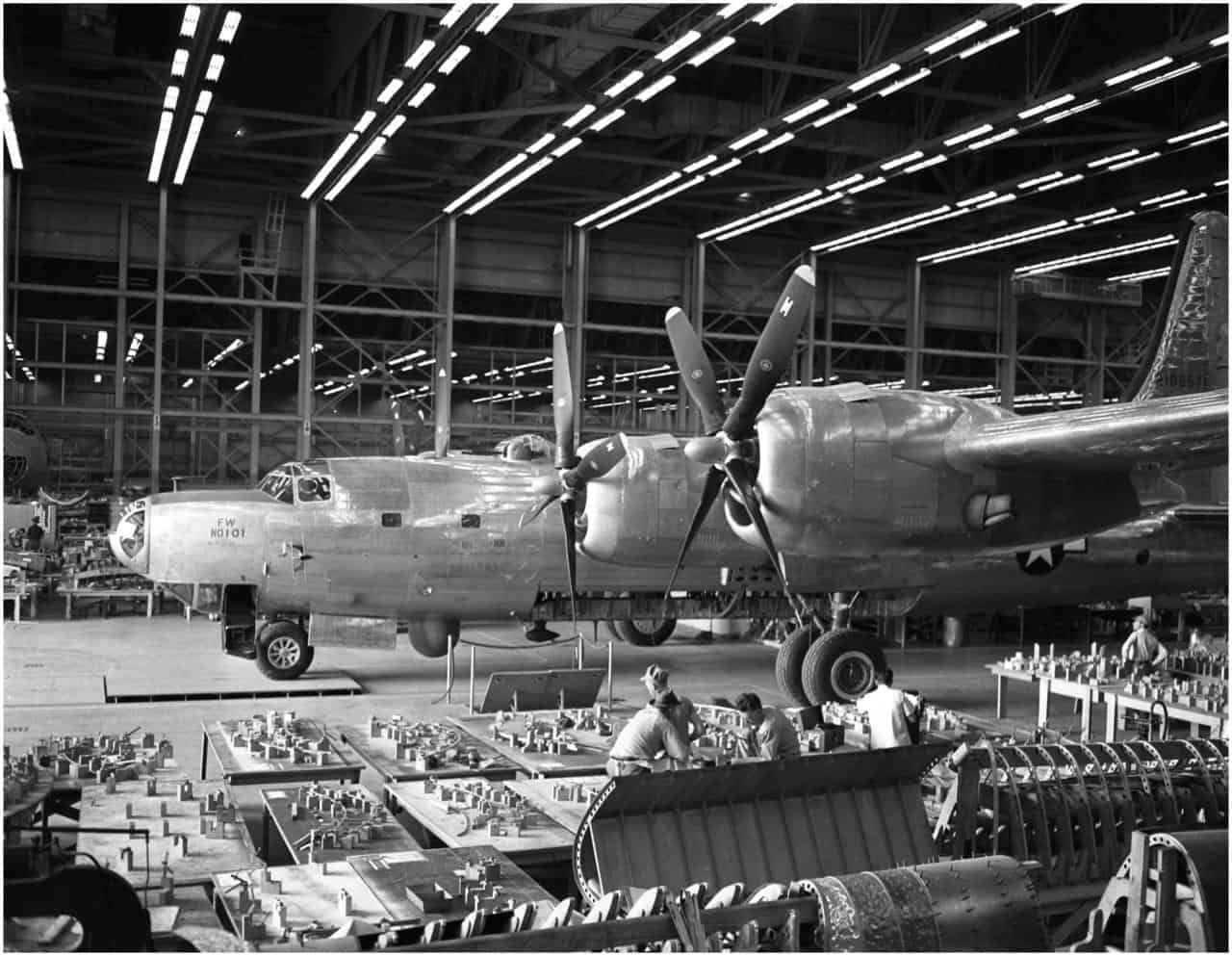
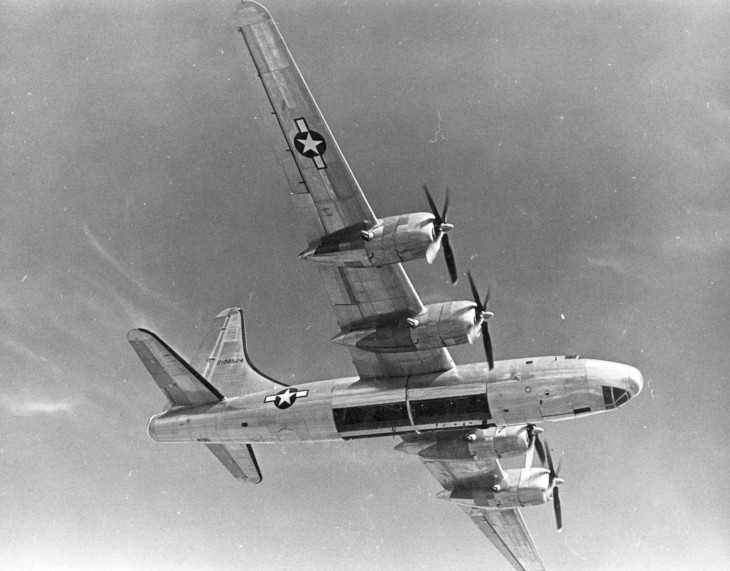
The Consolidated B-32 Dominator was a four-engine heavy bomber built as a fallback in case the Boeing B-29 Superfortress failed. The Army Air Corps asked Consolidated for a similar design in June 1940, and the first contract for two XB-32 prototypes followed on September 6, 1940.
The B-29 worked, so the B-32 became a footnote. Only 118 were built, and just one squadron flew it in combat.
Consolidated based the design on its Model 33, which looked a lot like the company’s own B-24 Liberator. The XB-32 flew for the first time on September 7, 1942, with a Davis wing and a twin tail.
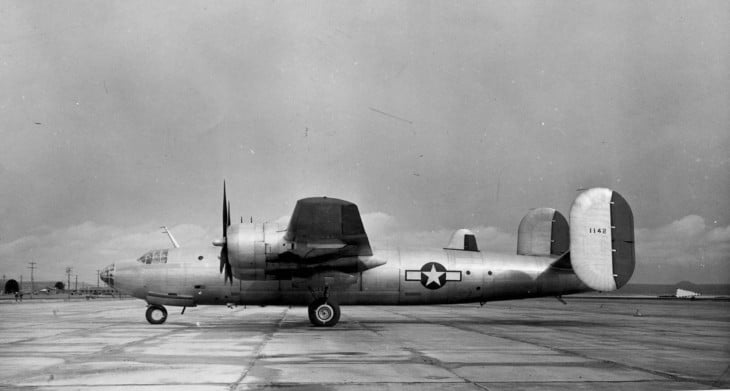
The twin tail did not last. A single, taller fin first flew on the third XB-32 on November 3, 1943, and production aircraft kept that layout.
The design also promised two features that never reached the front line. Remote-controlled gun turrets and a pressurized cabin were both meant to let the bomber operate like the B-29, but neither was ever made to work reliably.
The turret system was never solved, so production aircraft carried ten .50 caliber machine guns in manually operated turrets. The pressurization problems were never solved either, so the bomber’s role changed to low and medium altitude and the pressurization system was dropped.
The National WWII Museum lists the other troubles as faulty landing gear and the same engine problems that plagued the B-29. The first production aircraft, delivered on September 19, 1944, had a nose wheel failure the same day, according to Pacific Wrecks.
Both bombers used Wright’s R-3350 Duplex-Cyclone, an 18-cylinder radial the museum calls powerful but persnickety. Engine fires were a shared flaw, and Wikipedia also describes a noisy cockpit and an overweight airframe.
While Boeing and the Army worked through the B-29’s problems in 1943 and 1944, the B-32 program slowed to a crawl. That decided which bomber the Army would back.
The full specification table for the aircraft is on this page. A few figures need context.
Each of the four Wright R-3350-23A engines made 2,200 hp (1,641 kW), which is the per-engine figure the panel shows beside the engine count. The B-29 used the same engine family, which is why both bombers shared the same reliability headaches.
The B-32 matched the B-29 on paper. The National WWII Museum says both could carry up to 20,000 pounds of bombs and topped out near 357 miles per hour, while the B-32 was slightly smaller, a bit faster at normal cruising speed and could fly farther.
That is why the choice was not about performance alone. The B-29 was the bomber whose problems the Army believed it could finish solving.
By 1944, testing of the three prototypes let the Army place orders for more than 1,500 B-32s. One accounting puts the peak order at 1,966 aircraft.
The real total was 118, counting production aircraft of all types. Over the same period, five plants built nearly 4,000 B-29s.
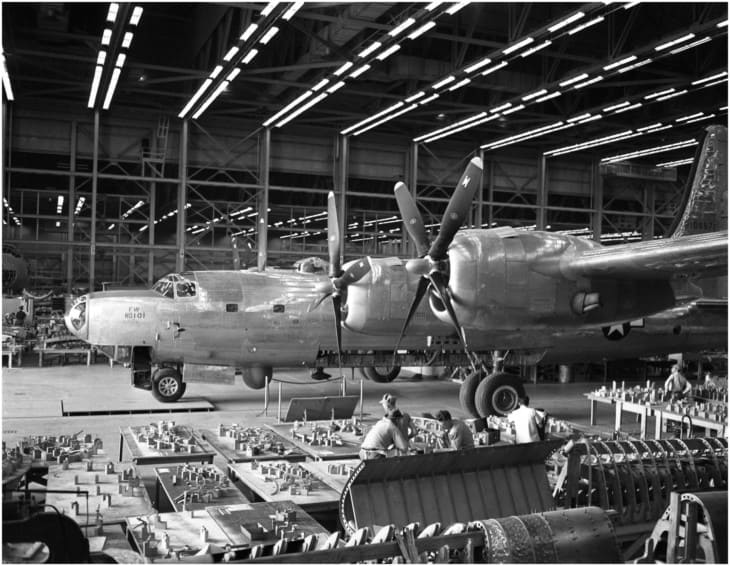
Some of those aircraft never went to war. Forty were TB-32 trainers, built to teach crews to fly the type.
Three test B-32s reached Clark Field on Luzon in the Philippines in mid-May 1945. The first combat mission flew on May 29, 1945, and after the 386th Bombardment Squadron finished converting to the type it flew six more combat missions before the war ended.
The first four missions, flown by the test aircraft between May 29 and June 25, included two raids on Formosa, now Taiwan. On June 15, two B-32s dropped sixteen 2,000-pound bombs on a sugar mill at Taito, and on June 22 a B-32 bombed an alcohol plant at Heito.
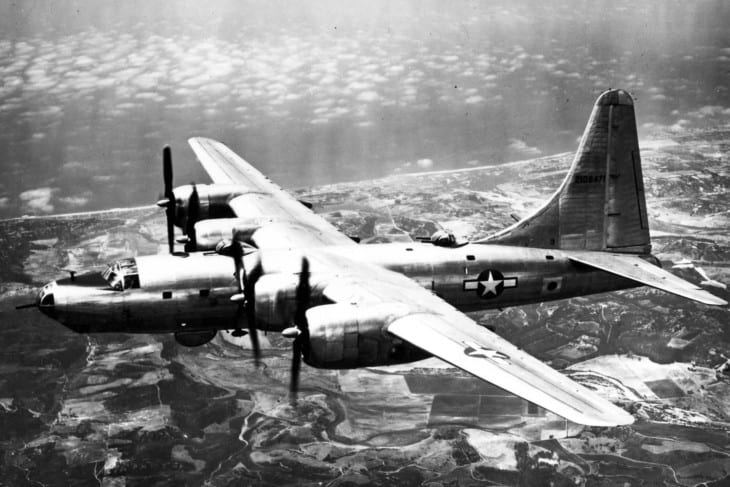
On August 13, 1945, the 386th moved from Luzon to Yontan Airfield on Okinawa. From there the squadron flew photo reconnaissance over the Japanese home islands.
Japan announced its acceptance of surrender terms on August 15, 1945, but the B-32s kept flying. On August 17, Dominators on a photo mission were intercepted by Japanese fighters, and the two-hour fight left only minor damage and no injured crew.
The next day was worse. On August 18, four B-32s were sent to photograph targets covered the day before, but mechanical problems pulled two of them from the flight.
The remaining two were attacked by a formation of 14 A6M Zeros and three N1K2-J Shiden-Kai fighters. Staff Sergeant Joseph Lacharite was wounded in the legs, and Sergeant Anthony Marchione was fatally wounded.
Marchione was 19. The National WWII Museum says he died on the return flight to Okinawa, in what would be the last air combat of World War II, and Wikipedia records him as the last American to die in air combat in the war.
The museum adds that gunners on the B-32 Hobo Queen II reported destroying two enemy fighters in the fight.
The losses did not end there. The last B-32 photo reconnaissance mission was completed on August 28, and two B-32s were destroyed in separate accidents on that day, killing 15 of the 26 crewmen aboard.
The Army canceled the program in September 1945, and production ceased by October 12. Surplus aircraft were flown to Walnut Ridge Army Airfield in Arkansas, where the Texas Railway Equipment Company scrapped them, or to Kingman Army Airfield in Arizona, where Wunderlich Construction did the same.
The scrapping was generally finished by the end of 1948. As of October 2026, no complete B-32 is known to survive.
The XB-32 prototype lasted longest, serving until 1952 as a fire-fighting training airframe at McClellan Air Force Base. A wing panel is displayed near San Diego, and several of the Sperry turrets are in museums and private collections.
On paper the two bombers were close. Both were designed around a pressurized cabin, 20,000 pounds of bombs and a top speed near 357 miles per hour.
In practice the Army and Boeing worked through the B-29’s problems and put it into mass production, while the B-32 stalled. The B-32 reached the Pacific only in mid-1945.
For more on the other American heavy bombers of the war, see our guide to American bombers of WWII.
A total of 118 B-32s were built, counting all types and including 40 TB-32 trainers. The National WWII Museum, Wikipedia and Pacific Wrecks all give 118.
The B-29 solved its early problems and went into mass production, while the B-32 program stalled over pressurization, turret and engine troubles. The Army canceled its orders in September 1945, right after the war ended, and production ceased by October 12.
The remote-controlled turrets and the pressurized cabin never worked, so production aircraft had manual turrets and no pressurization. The museum also cites faulty landing gear and R-3350 engine problems, and Wikipedia mentions engine fires.
Most references, including Wikipedia, list a crew of 10. Pacific Wrecks lists eight, so figures vary by source and by mission.
Not very. It shared the B-29’s engine troubles and had landing gear problems, and Pacific Wrecks says it was rushed into service without extensive flight testing. Its crews also lost two aircraft to separate accidents on August 28, 1945.
There is no official ranking, and the answer depends on how you judge it. The B-32 is often cited as a disappointment because it was late and troubled, but it matched the B-29 on paper and its crews did fly combat missions.
The B-29 Superfortress is generally considered the biggest American bomber of the war, and nearly 4,000 were built. The National WWII Museum describes the B-32 as slightly smaller.
No complete B-32 is known to survive as of October 2026. A wing panel and several turrets are all that remain in museums and private collections.
We could not find a verified per-aircraft cost for the B-32 in the sources we checked, so we do not publish one. Since no complete example survives, there is no aircraft to buy.
Sources and references used for research and fact-checking.


