


Military Propellor Planes
Consolidated PBY Catalina
ICAO: CAT
The Workhorse of the Skies — The Bomber That Won the Distance War.
The latest aviation news and stories sent to your inbox.
At the height of World War II, the roar of the B-24 Liberator echoed across continents. Faster and longer-ranged than the B-17, it became the most-produced American heavy bomber of all time — a tireless workhorse that helped turn the tide of the war from Europe to the Pacific.
Live Fleet Activity (B24)
Fetching live data…



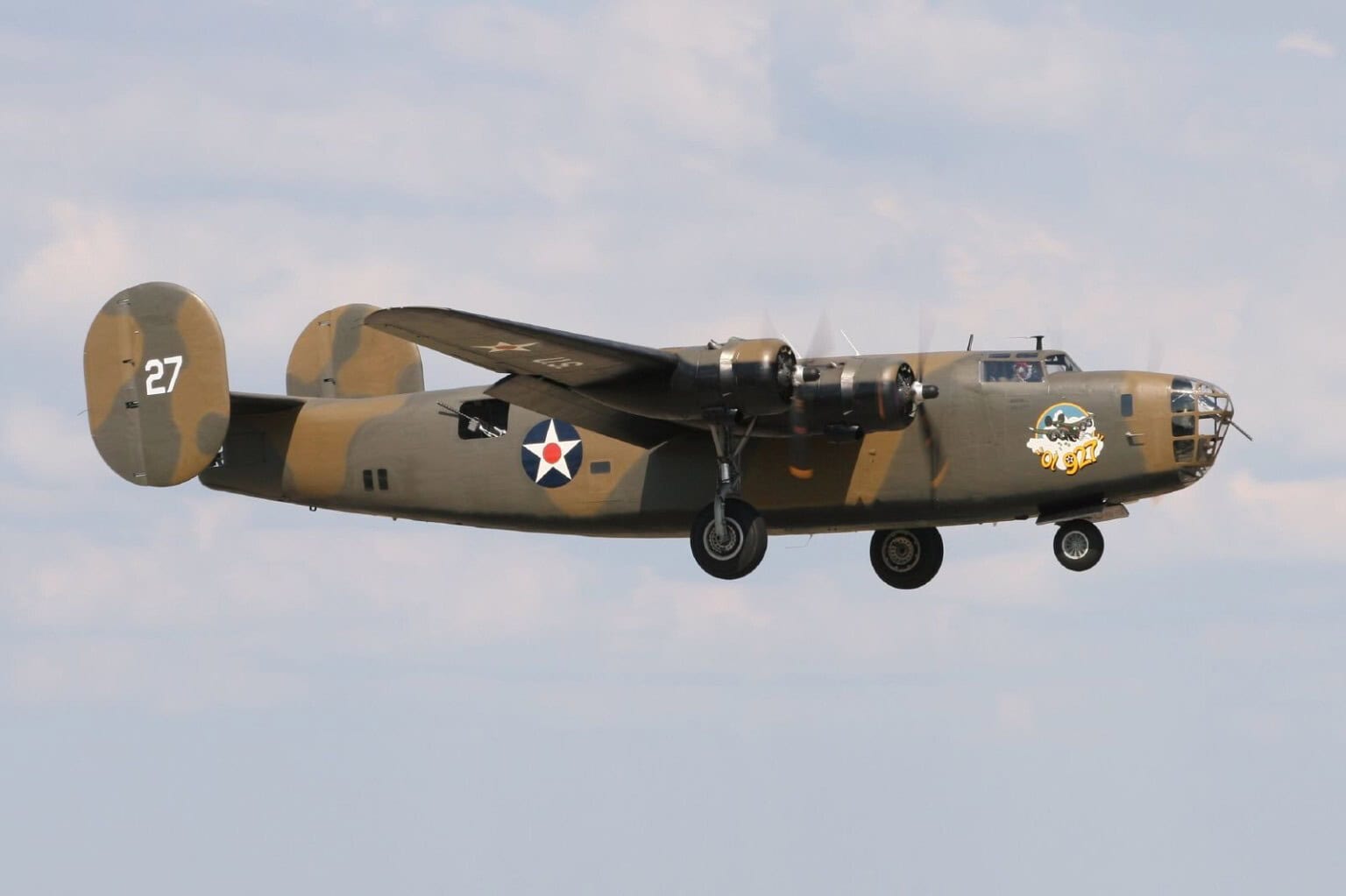
The Consolidated B-24 Liberator was a four-engine heavy bomber built by Consolidated Aircraft of San Diego, California. It first flew in December 1939 after the U.S. Army Air Corps sought a long-range bomber with greater speed, range, and payload than the Boeing B-17. The result was a radically new design featuring the efficient Davis wing, a long, narrow airfoil that gave the aircraft excellent lift and fuel economy.
Powered by four Pratt & Whitney R-1830 Twin Wasp engines, the Liberator could carry up to 8,000 pounds (3,600 kg) of bombs over more than 2,000 miles (3,200 km) — an impressive reach for its time. Its tricycle landing gear and slab-sided fuselage gave it a distinctive, utilitarian appearance that prioritized function over elegance.
Production began in 1941 and quickly scaled to historic levels. At peak output, factories in San Diego, Fort Worth, Tulsa, and Detroit’s Willow Run plant—operated by Ford Motor Company—turned out a new B-24 about every hour. By the end of the war, approximately 18,400 Liberators had been built, more than any other American aircraft model.
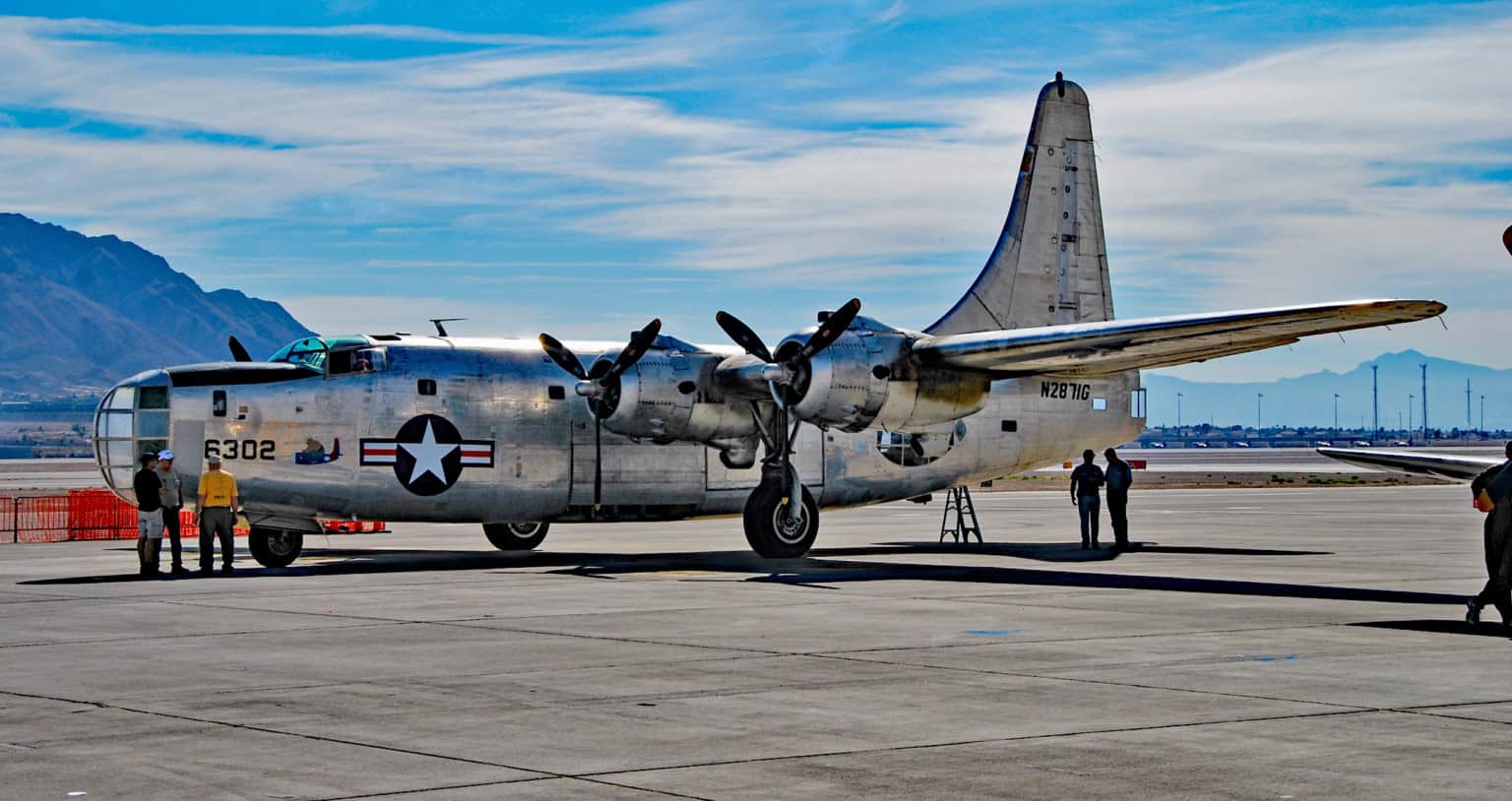
The B-24 served in every major theater. In Europe, it flew with the Eighth and Fifteenth Air Forces, striking targets deep inside Nazi-occupied territory. In the Atlantic, it patrolled vast ocean routes to hunt submarines. Across the Pacific and the China-Burma-India theaters, its range allowed missions few other bombers could attempt. Specialized versions like the C-87 Liberator Express transport and PB4Y-2 Privateer maritime patrol aircraft expanded its versatility.
Though sometimes criticized for its handling, the B-24’s crews respected its endurance and payload. Its sheer numbers and reach made it one of the indispensable machines of the Allied victory.
Sources and references used for research and fact-checking.


