Military Helicopters
Mil Mi-26 “Halo”
ICAO: MI26
The tandem-rotor Phrog that moved Marines from Vietnam to Iraq before the MV-22 Osprey replaced it.
Updated: by Tim de Vries
The latest aviation news and stories sent to your inbox.
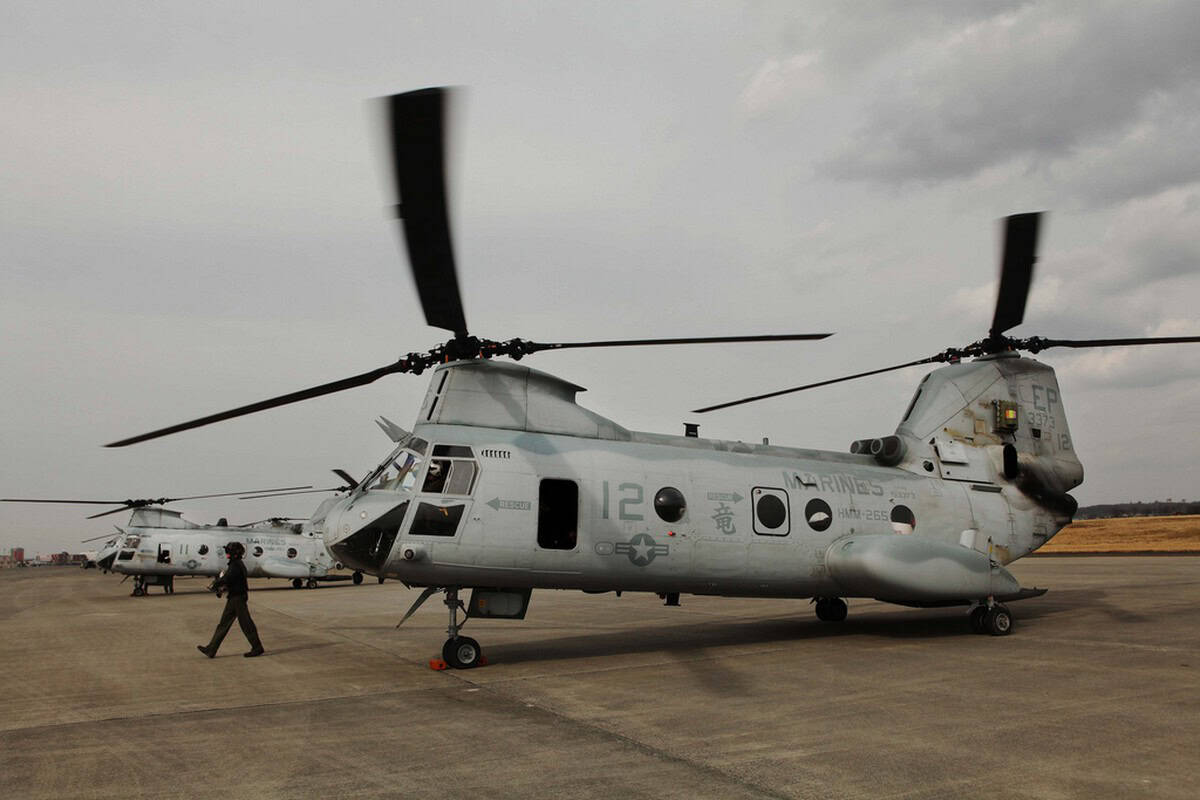
The Boeing Vertol CH-46 Sea Knight is a twin-turbine, tandem-rotor transport helicopter that carried U.S. Marines into combat from the Vietnam War until 2015. Marines called it the Phrog. It also flew vertical replenishment for the U.S. Navy and search and rescue for Canada as the CH-113 Labrador, and its Model 107 civil cousin is still worked on today.
Live Fleet Activity (H46)
Fetching live data…


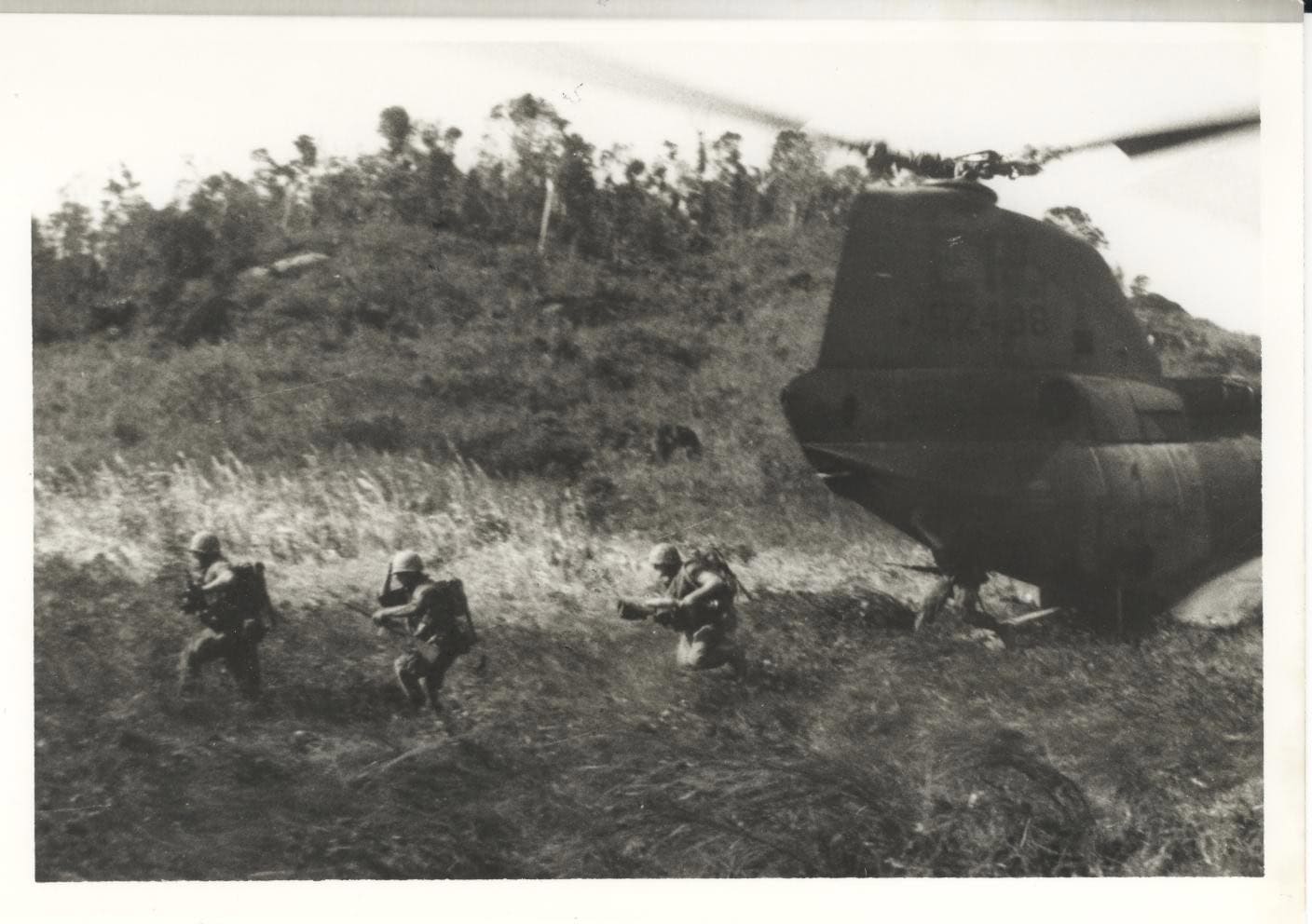


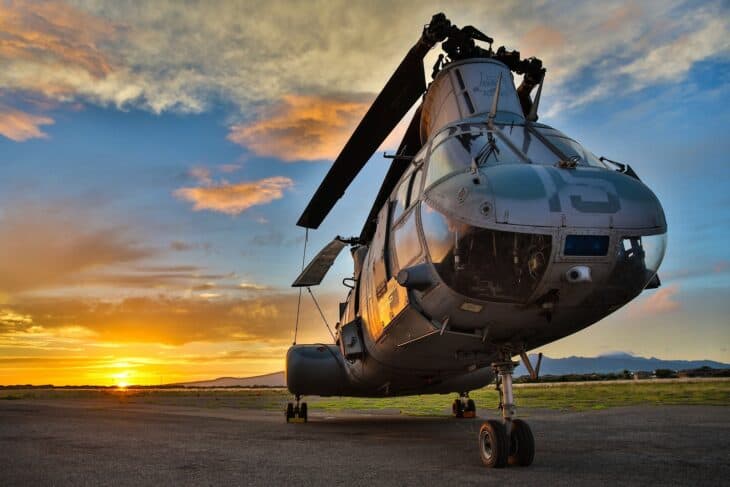
The Boeing Vertol CH-46 Sea Knight is a medium-lift, tandem-rotor transport helicopter with two turboshaft engines. Vertol designed it, and Boeing Vertol built it after Boeing bought the company in 1960.
Marines called it the “Phrog.” It flew with the U.S. Marine Corps from the Vietnam War until the service retired it in 2015.
The full specification table for the aircraft is on this page. The sections below explain where the helicopter came from, what it did and why it was replaced.
Vertol began work on the Model 107 in 1956. It was meant to replace piston-powered tandem helicopters such as the H-21 “Flying Banana” with a turbine design.
The prototype first flew on April 22, 1958. The U.S. Army ordered three YHC-1A evaluation aircraft, but it cut the order to fund the larger V-114, a tandem design that led to the Chinook.
The Marine Corps wanted a twin-turbine assault helicopter to replace its piston types. In early 1961 it picked the Model 107M, designated HRB-1, and the name Sea Knight came with it. The designation became CH-46A after the first flight of the Marine version in August 1962.
Both rotors sit one behind the other, turn in opposite directions and provide lift. There is no tail rotor, so none of the engine power is spent on cancelling torque.
Both engines sit beside the rear rotor pylon and drive the forward rotor through a long shaft. Either engine can turn both rotors if the other fails.
The layout also made the CH-46 forgiving in the wind. Tandem rotors allow rapid direction changes at low speed and flight sideways and backward, which is why the Navy used the type to move cargo between ships.
The first years were rough. Engines ingested debris near the ground and some lasted as little as 85 flight hours. All CH-46s were grounded on July 21, 1966, until better filters were fitted.
Structural failures were worse. Several 1967 crashes traced to the rear pylon and main transmission mounts, and after two more losses on August 31 and September 1, 1967, the CH-46A fleet was restricted to emergency use.
About 80 aircraft were modified at Futenma on Okinawa to reinforce the rear rotor mount. They returned to service between December 1967 and February 1968.
The CH-46 then became a workhorse. The last helicopter to leave the roof of the U.S. embassy in Saigon in April 1975 was a CH-46 of HMM-164. Over a hundred Sea Knights were lost to enemy fire by the end of U.S. operations in Vietnam.
The CH-46A used T58-GE-8B engines. The CH-46D, produced from 1966, used T58-GE-10 engines and could carry more cargo.
The CH-46F followed between 1968 and 1971 with revised avionics and was the last production model. Most Marine aircraft were later upgraded to the CH-46E, with fiberglass rotor blades, airframe reinforcement and uprated T58-GE-16 engines.
The Navy flew UH-46 and HH-46 versions for vertical replenishment and search and rescue. The Navy retired the type on September 24, 2004, in favor of the MH-60S.
Several figures quoted for the CH-46 describe different things. The range on the spec panel is a long-range published figure, while the Navy fact sheet gives a combat radius of 132 nautical miles for a land assault mission.
Length also depends on how you measure. The fuselage alone is shorter than the figure with rotors folded, and with rotors turning the Navy lists the helicopter at 84 feet 4 inches.
Troop capacity varies by source and configuration. Wikipedia lists 24 troops, while the Navy fact sheet gives a maximum of 22 troops plus two aerial gunners.
Crew count shifts with the mission. Four is the Navy’s listing, three was typical, and search and rescue flights carried five.
CH-46s helped carry the 8th Marine Regiment and Army Rangers into Grenada in 1983. They flew in the 2003 invasion of Iraq, including the extraction of Army Private Jessica Lynch from an Iraqi hospital on April 1, 2003.
In Iraq the type was relied on for casualty evacuation. Authors Williamson Murray and Robert Scales described serious reliability and maintenance problems and limited lift.
The Marines also flew relief missions, including Operation Tomodachi in Japan and flood relief in Pakistan.
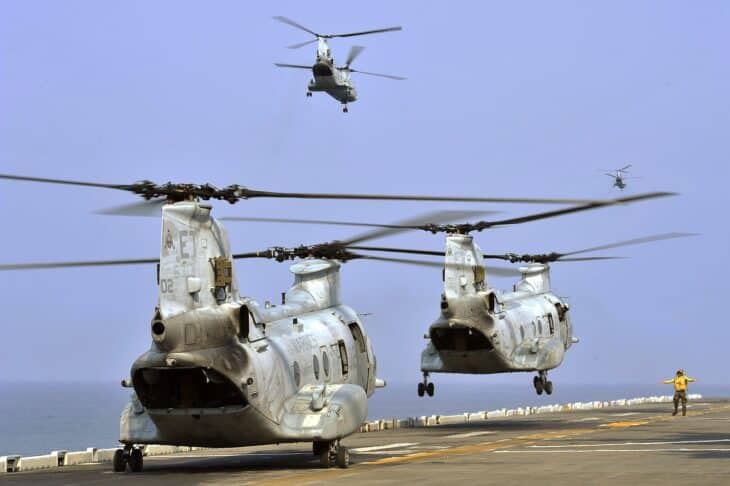
The MV-22 Osprey replaced it. HMM-263 became the first Osprey squadron in March 2006, and the changeover continued through 2014.
The final Marine service flight was at MCAS Miramar on October 5, 2014. The Corps formally retired the type on August 1, 2015, in a ceremony at the Udvar-Hazy Center.
The CH-46 slotted between the smaller UH-1 and the larger CH-53 in the Marine fleet. For the wider picture, see our guide to types of military helicopters.
Canada bought six CH-113 Labrador helicopters for search and rescue and 12 CH-113A Voyageurs for army transport. The Voyageurs were later converted to Labrador standard, giving 15 Labradors, and the type flew rescue missions until 2004.
Japan, Sweden and Saudi Arabia also bought the type. In 1965 Boeing Vertol sold the manufacturing rights to Kawasaki, whose Model 107 aircraft carry the KV-107 designation.
The civil BV 107-II first went to New York Airways. Columbia Helicopters acquired its type certificate in December 2006 and developed the Model 107-III from older airframes.
A number of retired Marine CH-46Es went to the U.S. State Department Air Wing. Seven were abandoned at Kabul airport during the 2021 evacuation after being rendered unusable, and the Department said the type was already being phased out.
No. Both are tandem-rotor helicopters from the same design lineage, but the Chinook is the larger CH-47 flown by the Army. The CH-46 was the medium-lift helicopter of the Marine Corps and Navy.
Phrog is the Marine nickname for the type. It led to sayings such as “phrogs phorever” and “never trust a helicopter under 30.”
Not with the Marine Corps, which retired it in 2015, or the Navy, which retired it in 2004. Wikipedia describes the type as in limited service, and civil Model 107 variants have continued under Columbia Helicopters.
Wikipedia lists 524 H-46 aircraft built between 1962 and 1971. Kawasaki built additional Model 107 aircraft in Japan under license.
The Marine Corps replaced it with the MV-22 Osprey. The Navy replaced its Sea Knights with the MH-60S Knighthawk.
The CH-53 is a larger single-main-rotor Sikorsky helicopter. In the Marine fleet the CH-46 sat between the smaller UH-1 Iroquois and the larger CH-53.
Sources and references used for research and fact-checking.