

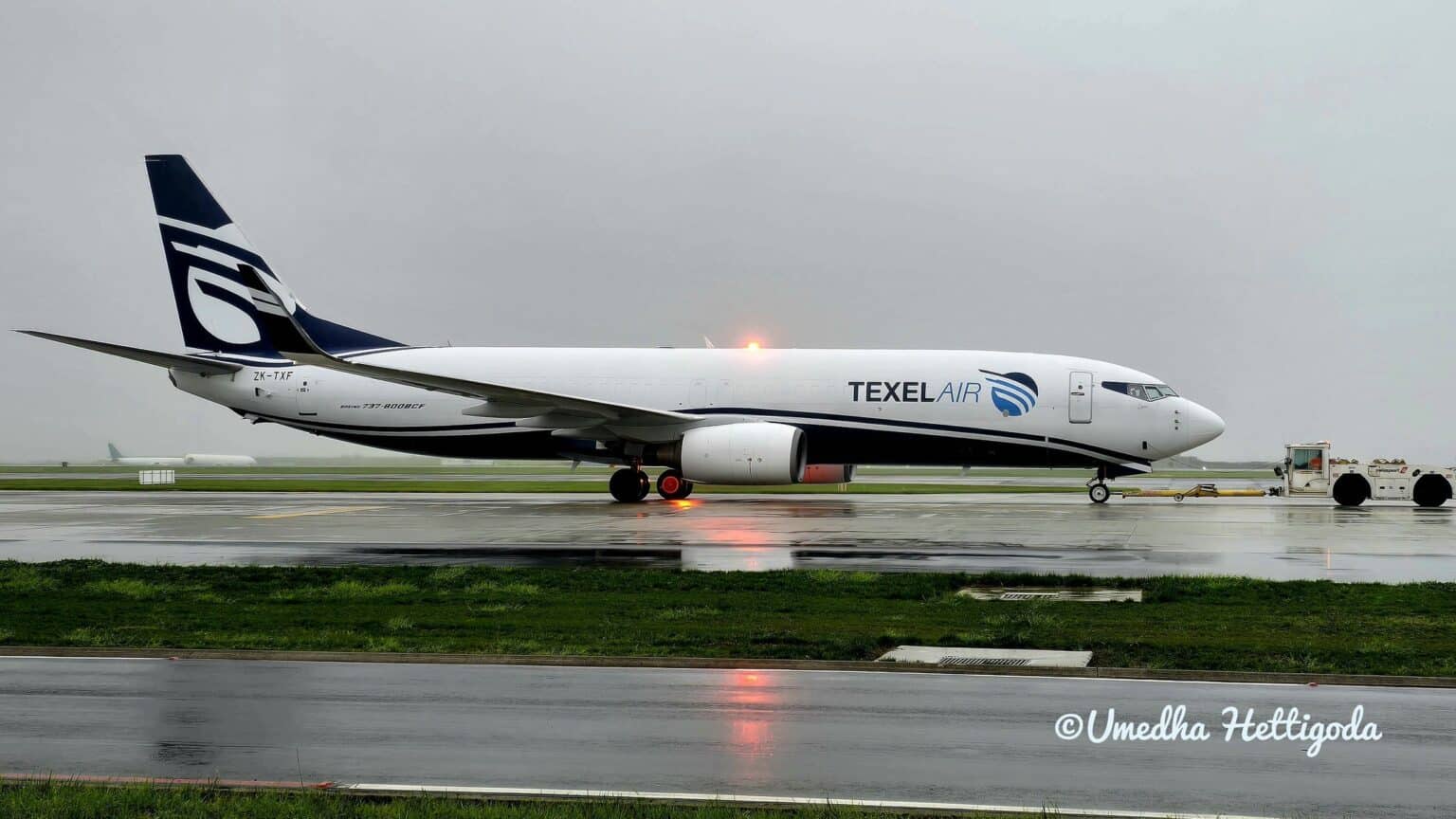
Boeing 737 freighter ZK-TXB was accelerating down runway 34 at Melbourne Airport before dawn on February 17, 2026, when an airport safety car drove onto the runway ahead of it without clearance. The crew rejected the takeoff at 139 knots, and nobody was hurt.
The Australian Transport Safety Bureau (ATSB) released its final report on November 20, 2026. It found the driver had misjudged where they were on a closed runway, because the works lighting at the active runway crossing looked too much like the lighting at the taxiway crossings around it.
What happened on runway 34
The jet, a Boeing 737-800 converted to a freighter in 2024, is registered in New Zealand to Texel Air and was operated by Team Global Express. It was due out at 4:45 a.m. local time on a scheduled cargo flight to Adelaide with two pilots on board.
Melbourne’s crossing runway, 09/27, was closed overnight for a resurfacing project and due to reopen at 6 a.m. Airside safety officers were driving along it to pick up the temporary lights and cones that marked the closures.
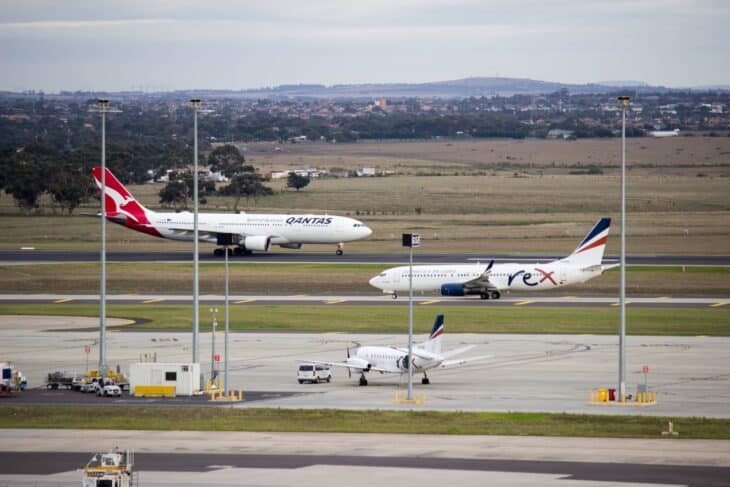
One officer believed they were approaching taxiway V. They were in fact at the intersection with runway 34, the airport’s main runway, and drove onto it while the 737 was rolling toward that point.
The tower’s surface surveillance system raised a runway occupied alert. The controller looked out, saw the car and the departing jet, told the car to vacate and told the crew to “stop immediately.”
4:45:07 a.m.
Takeoff roll begins. The 737 starts its run on runway 34 after a takeoff clearance.
4:45:19 a.m.
Alert sounds in the tower. The surveillance system flags a vehicle on the runway.
4:45:35 a.m.
”Stop immediately.” The controller tells the crew to reject the takeoff, after telling the car to vacate.
4:45:45 a.m.
Car clears the runway. Surveillance data put the 737 about 1,350 feet (412 m) from the intersection at that moment.
The driver accelerated off the runway and reported seeing the aircraft’s lights while crossing. The pilot said they saw the vehicle at the same moment the controller’s call came, and estimated the jet passed through the intersection at 70 to 80 knots as it slowed.
The rejection came 2 knots short of the crew’s calculated decision speed, V1, of 141 knots. Firefighters checked the tires and brakes, which needed about 48 minutes to cool before an inspection cleared the aircraft. The crew flew on to Adelaide at about 6:19 a.m.
Why the driver thought they were somewhere else
Stage 2 of the works plan had begun the night before. It partly closed taxiway A, so the row of red lights that used to sit on the closed runway beside taxiway A was gone.
The driver did not know about that change. The ATSB found that the pre-shift briefing had not covered the revised plan as procedures required, so in the dark the driver believed there was still one crossing to go before the runway.
The airport did mark the runway crossing differently, with extra orange lit markers in front of the usual red unserviceability lights. But orange lights also marked the edges of the work area, and one officer said the extra markers sat so close to the red ones that they were hard to tell apart.
The illuminated red signs that mark the boundary of the active runway were working, the airport later confirmed, but the driver did not notice them. The closed runway also had no centerline lighting, and the officers relied on memory, markings, signs and lights: their vehicles had no electronic navigation or moving-map display.
That is a weak spot built into any runway-to-runway crossing. The holding position markings, stop lights and runway guard lights that can cue a driver elsewhere do not exist where one runway meets another, the ATSB notes.
The driver told investigators they had slept poorly because of neighborhood fireworks. The ATSB judged it unlikely they were fatigued to a degree known to affect performance, though the shift started at about 4 a.m., in the body’s circadian low.
What the ATSB found and what is changing
The report names one safety issue, and it lands on the regulator. The Civil Aviation Safety Authority’s advisory circular on aerodrome works did not call for the entry to a crossing active runway to look distinct enough from a taxiway entry, given how much worse a runway collision would be.
CASA told the ATSB it will amend that circular and a second one on visual aids during works, to stress the risks of setting up and removing work areas, including runway incursions. It expects to finish by the end of 2026, and the ATSB lists the issue as open with safety action pending.
The ATSB also found Melbourne Airport had not risk assessed every stage of the months-long project, even though the closed runway crossed the active one every night. The airport has started buying yellow cones to mark entries to an active runway and has tightened its works procedures, briefings and handovers.
What worked was the last line of defense. The car carried a locator that fed the tower’s surveillance system, and the ATSB credits that alert with giving the controller time to prevent a collision.
Ground conflicts keep coming up in recent investigations, from a Corendon jet that hit an airport fire truck while taxiing at Friedrichshafen to the ATSB’s Sydney finding that a controller was at high fatigue risk when VA1589 taxied across a Qantas 737.
The Melbourne report itself points to the March 22, 2026, collision at LaGuardia between an Air Canada Express CRJ-900 and a firefighting vehicle, in which both pilots were killed.
Sources and references used for research and fact-checking.
Get the Newsletter
The latest aviation news and stories sent to your inbox.
About the Author

AeroCorner News is the aviation news desk of AeroCorner.com. It covers accidents and incidents, safety rulings, airline and airport disruption, and new aircraft. It works from primary sources such as the NTSB, FAA, EASA and the manufacturers' own announcements.