

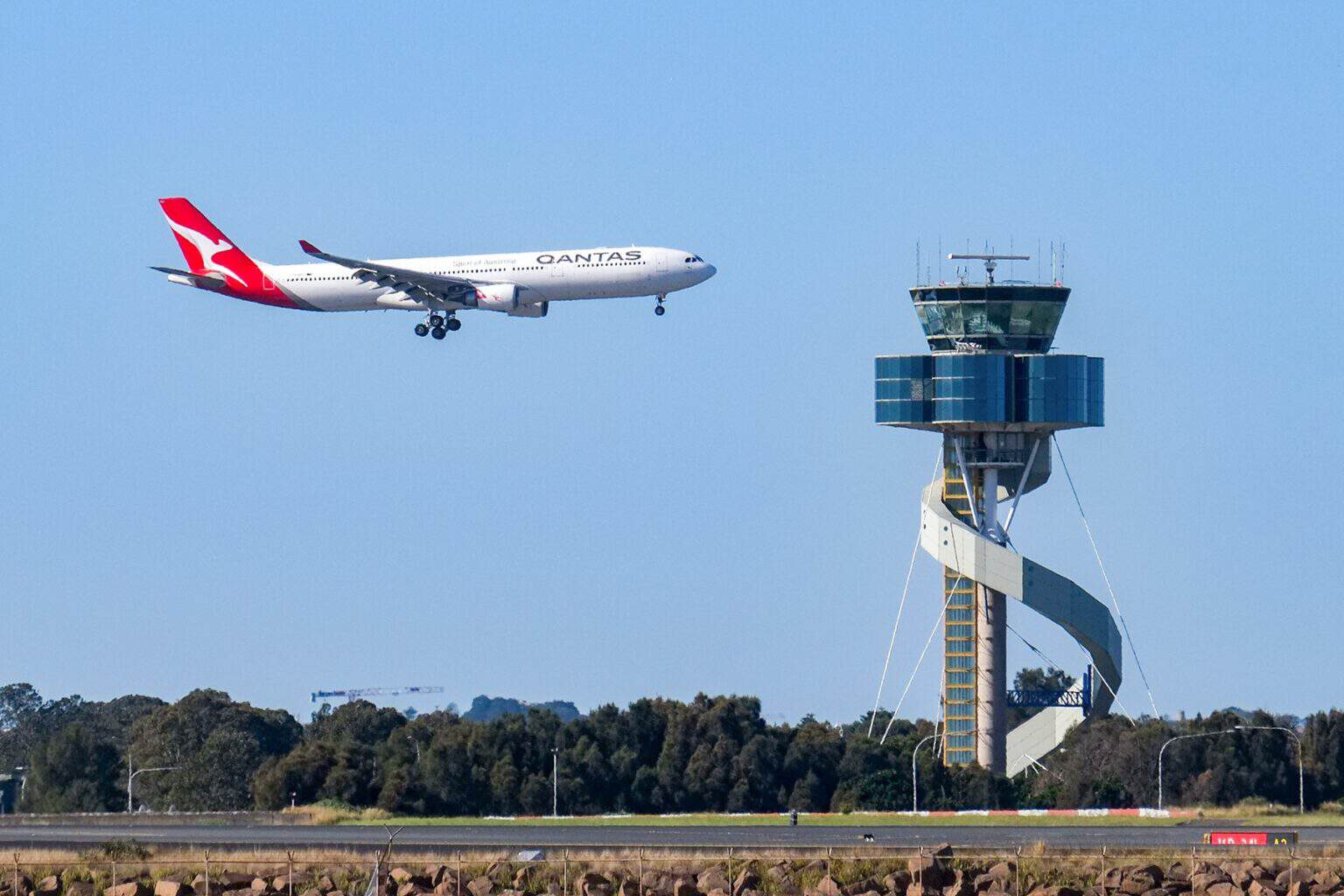
On September 30, 2026, the Australian Transport Safety Bureau (ATSB) released preliminary reports into four near misses at Sydney Airport, led by a July 27 runway incursion in which Qantas flight QF124 crossed in front of a landing QantasLink Dash 8. The two aircraft stopped about 120 meters (394 feet) apart.
The bureau said staff resourcing in Sydney Tower at the time of many of the occurrences has emerged as “a recurring area of enquiry.” On the same day, the federal government set up an independent panel to oversee how Airservices Australia, the country’s air navigation provider, fixes the problems at Sydney.
What happened on July 27
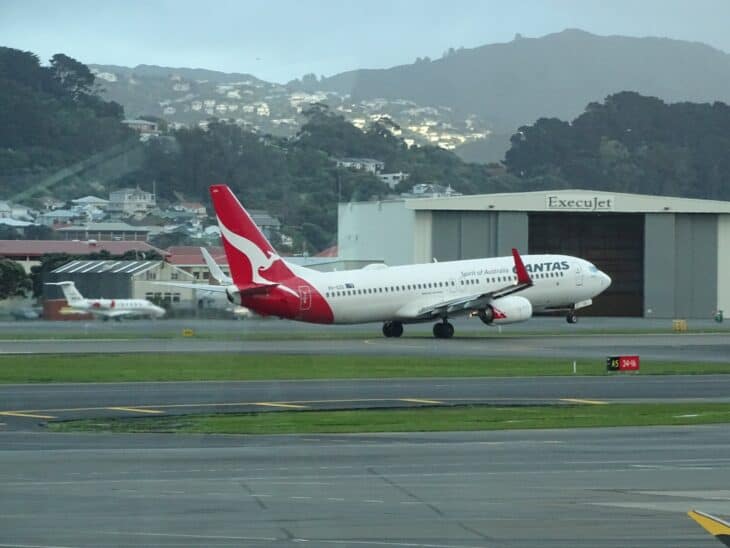
QF124, a Boeing 737-800 registered VH-XZG, had landed from Queenstown, New Zealand, with 154 people on board, according to the ATSB. It was holding on the cross runway, runway 25, waiting to cross the main runway, 34L, on its way to the international terminal.
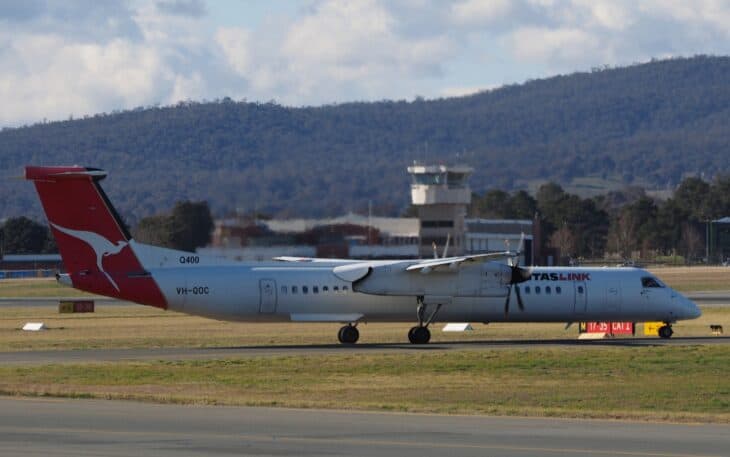
At the same time, QantasLink flight QLK424D from Canberra was landing on 34L with 55 people aboard. The Dash 8-400 had been cleared to roll through to the end of the runway, past the intersection where QF124 was waiting.
Just before the Dash 8 touched down, the runway controller went on a scheduled break. The ATSB says that break was required because the controller’s predicted fatigue risk for the shift was high. The handover to the incoming controller took 25 seconds, and the Dash 8 landed 7 seconds after it ended.
The new controller saw the turboprop slowing and assumed it would turn off at the usual rapid exit for Dash 8s. They told the ground controller to cross QF124, the stop bar lights were switched off, and the 737 began to move.
The Dash 8 passed that exit at about 88 knots. The ground controller cancelled the crossing over the 737 crew’s readback, and both controllers then told both aircraft to stop immediately.

QF124 stopped short of the runway intersection but past the stop bars, inside the runway area. No injuries or damage were reported. ATSB Chief Commissioner Angus Mitchell called it a Category A runway incursion, the most severe at Sydney and only the third in Australia since ATSB records began in 2003, ABC News reported.
Three more near misses in August
The other three reports cover August. On August 9, a Jetstar A320 braked hard to avoid a Qatar Airways 777 under tow, and a flight attendant fractured a wrist, the event AeroCorner covered as the Jetstar and Qatar near collision.
Later that morning, Virgin Australia flight VA555 to Perth was cleared to take off on 34L while Qantas flight QF728 was crossing the same runway 0.8 miles (1.3 km) ahead. An instructor supervising the runway controller spotted the conflict. The Virgin captain, who had seen the Qantas jet enter the runway, pulled the thrust back at about the same moment the take-off clearance was cancelled.
The runway controller in that event told the ATSB they felt “extremely tired.” Tower managers judged it not reportable, so Airservices did not report it to the ATSB, the preliminary report says.
That morning the tower had started one controller short, and another had been stood down after the Jetstar event. On August 18, a Qantas A321 had to brake to let a Qantas 737 pass in front of it.
Why staffing is the common thread
Sydney Tower has seven operational positions, from the two runway controllers to the shift manager. Controllers need breaks, so covering every position all day takes extra people. Otherwise, positions have to be combined.
Mitchell said the investigations will look at “the practice of combining operational roles, the routine reliance on overtime to fill shifts, and training or supervision activities being conducted alongside operational duties.” Airservices’ own roster modeling predicted elevated fatigue risk for staff at the time of many of the occurrences.
What the reports do not say
Preliminary reports set out the sequence of events and contain no findings. The ATSB says it has not determined whether staffing directly contributed to any occurrence, and that an elevated fatigue risk does not mean a controller was fatigued.
A separate ATSB statistical study of Australia’s five busiest airports from 2016 to August 2026 found national ground-conflict rates broadly steady. Sydney Airport had the highest rate per aircraft movement since COVID, about 20% above the national average, which Mitchell said should be read against it being the country’s most complex airport.
The government’s response
Transport Minister Catherine King named retired Air Vice Marshal Ken Robinson to chair the Sydney Airport Air Traffic Control Independent Assurance Panel, with Peter Wilson and David Oliver, for an initial six months, Australian Flying reported. Its remit covers controller workforce planning, recruitment, training, roster resilience and system improvements.
The panel sits alongside an existing working group of the government, Airservices, the Civil Aviation Safety Authority (CASA), airlines, unions and Sydney Airport. Airservices is also running its own Service Resilience Plan for the airport, the ATSB said.
CASA said that, having reviewed the reports, none of the incidents indicates an immediate safety risk, and that it is running its own safety assurance review. Airservices said safety “remains our number one priority” and that it would review the reports. The ATSB’s final reports, with findings, will follow at the end of each investigation.
Sources and references used for research and fact-checking.
- ATSB, ATSB releases Sydney Airport preliminary reports
- ATSB, Air traffic control procedural error and serious runway incursion involving Bombardier DHC-8, VH-QOC, and Boeing 737-800, VH-XZG, at Sydney Airport, 27 July 2026 (AO-2026-086)
- ATSB, Air traffic control procedural error and runway incursion involving Boeing 737-8SA, VH-IJQ, and Boeing 737-838, VH-XZH, at Sydney Airport, 9 August 2026 (AO-2026-090)
Get the Newsletter
The latest aviation news and stories sent to your inbox.
About the Author

Tim is the owner and lead editor of AeroCorner since 2019, overseeing aviation content covering aircraft, airlines, airports, and the broader aviation industry. Through years of researching, writing, editing, and publishing aviation-focused content, he has developed extensive practical knowledge of commercial aviation and air travel. Based in Asia and a frequent traveler himself, Tim also brings firsthand passenger experience to AeroCorner’s coverage. Outside of publishing, he has also explored aviation firsthand through hands-on flight training in New Zealand.