

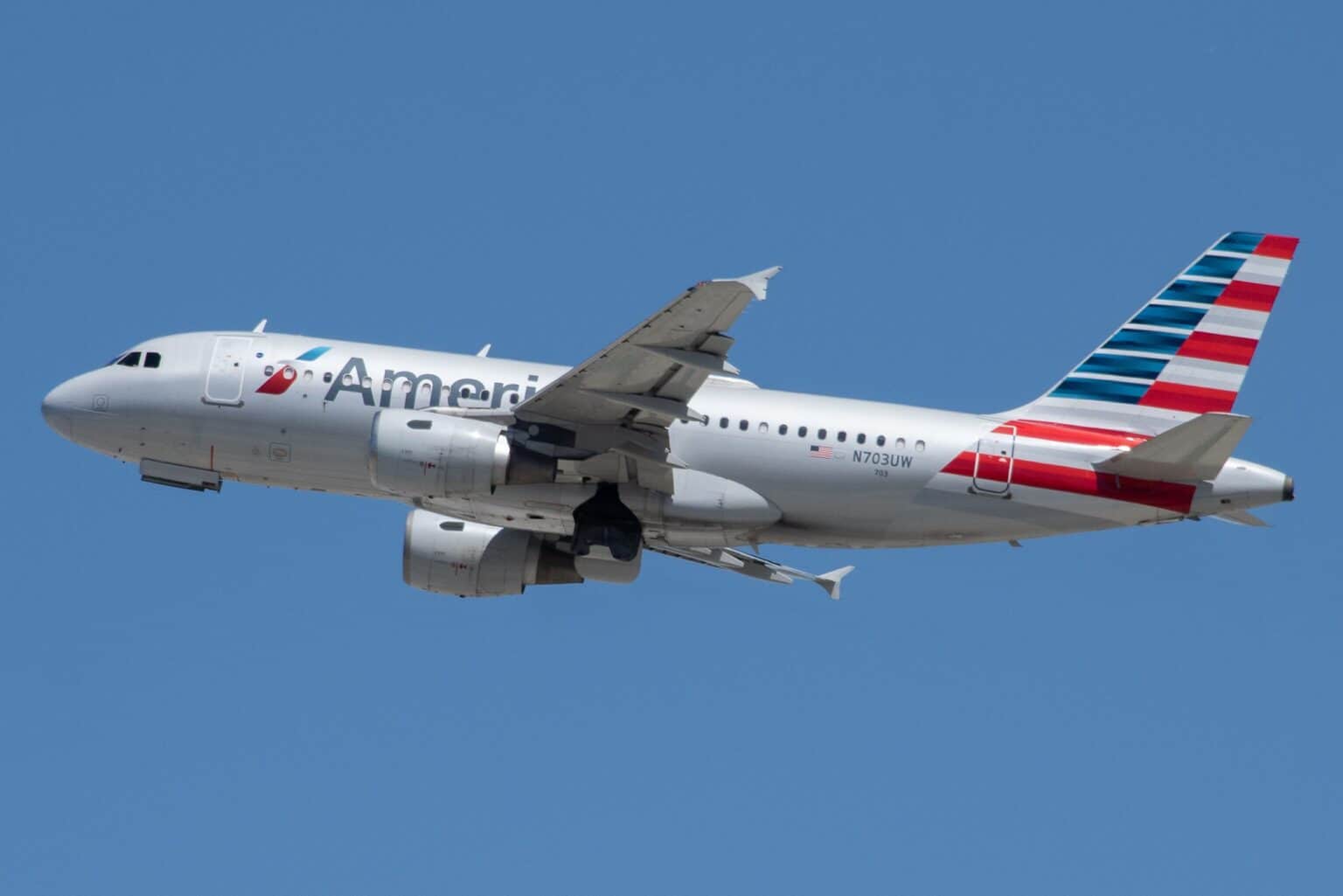
American Airlines flight AA3230, an Airbus A319 bound for Portland, Oregon, declared a mayday and returned to Phoenix Sky Harbor International Airport on Thursday, Nov. 19, 2026. The crew of a SkyWest flight departing behind it had reported seeing flames from one of its engines, and controllers passed the warning on.
The jet landed back in Phoenix about 19 minutes after it left, according to FlightAware data. American said the aircraft returned because of a mechanical issue and that it landed safely.
What happened on the radio
The exchange with air traffic control was first reported by the aviation account Flightdrama on X, in a post made while the flight was still in the air. In its account, controllers passed on the SkyWest crew’s report of flames from one engine and what looked like a possible fluid leak.
The American pilots said they had a hydraulic problem and wanted to return to Phoenix. Moments later they declared “Mayday, Mayday, Mayday” and asked for vectors back to the airport.
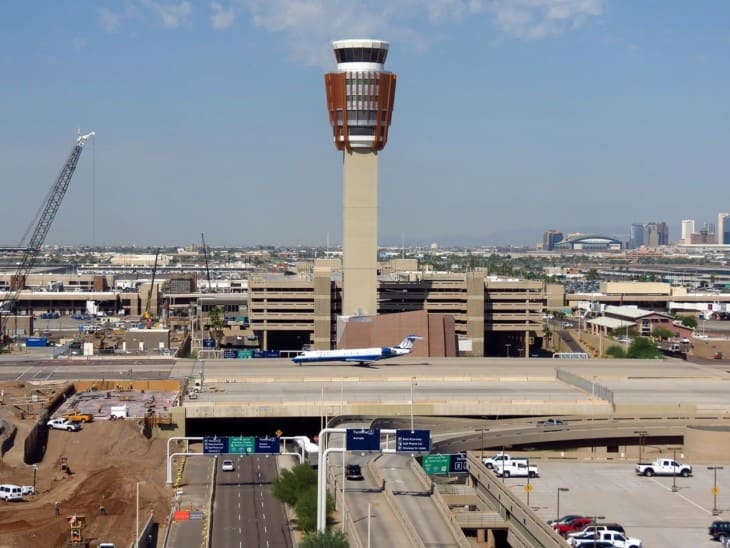
Asked whether they needed to burn off fuel before landing, the pilots said no, according to Flightdrama, and confirmed 120 people on board. The flames rest on the SkyWest crew’s sighting as relayed over the radio; neither American nor the FAA has said whether there was a fire.
The flight and the aircraft
AA3230 is American’s afternoon service from Phoenix to Portland, scheduled out of the gate at 3:58 p.m. local time. FlightAware’s history for the flight shows it leaving Phoenix at 4:15 p.m. and landing back there at 4:34 p.m.
FlightAware tracking ties the flight to N703UW. The FAA aircraft registry lists that tail number as an Airbus A319-112, serial number 904, built in 1998 and fitted with CFM56-series engines.
In a statement reported by Simple Flying, American said the aircraft “landed safely, taxied to the gate under its own power” and that customers deplaned normally. The airline said they would leave that evening on a new aircraft, and Simple Flying reported the A319 was taken out of service for inspection.
The replacement was a long wait. FlightAware shows the rescheduled AA3230 leaving the gate at 8:36 p.m. and taking off at 8:59 p.m., nearly five hours later than planned.
At the time of writing, the FAA had not posted a statement on the flight on its accident and incident page, and American had not named a cause. The airline’s statement says only “mechanical issue”, and it does not mention flames or the hydraulics.
Why an engine report and a hydraulic problem can arrive together
The A319 is a shortened version of the Airbus A320 and shares its hydraulic layout. France’s BEA, in an A320 incident report, describes three separate circuits coded green, blue and yellow.
The green system is pressurized by a pump driven by engine No. 1 and the yellow system by a pump on engine No. 2. The blue system runs on an electric pump.
That layout means a problem at one engine can show up in the cockpit as a hydraulic warning for the system that engine drives. Nothing published so far says which engine was involved on AA3230, or whether the reported flames and the hydraulic problem were connected.
The fuel question from the controller is routine on a quick return. A jet that has just taken off can weigh more than its maximum landing weight, so the crew either burns fuel first or lands heavy. SKYbrary notes that landing overweight is accepted in the interest of safety, but it usually triggers a special inspection afterward.
Choosing to come straight back after a mayday call trades that inspection for less time airborne with an unresolved problem. Whether AA3230 landed above its maximum landing weight has not been published.
Earlier this month, American flight AA675 to Honolulu also turned back to Phoenix, in that case with a brake issue, on Nov. 3.
Sources and references used for research and fact-checking.
Get the Newsletter
The latest aviation news and stories sent to your inbox.
About the Author

AeroCorner News is the aviation news desk of AeroCorner.com. It covers accidents and incidents, safety rulings, airline and airport disruption, and new aircraft. It works from primary sources such as the NTSB, FAA, EASA and the manufacturers' own announcements.