

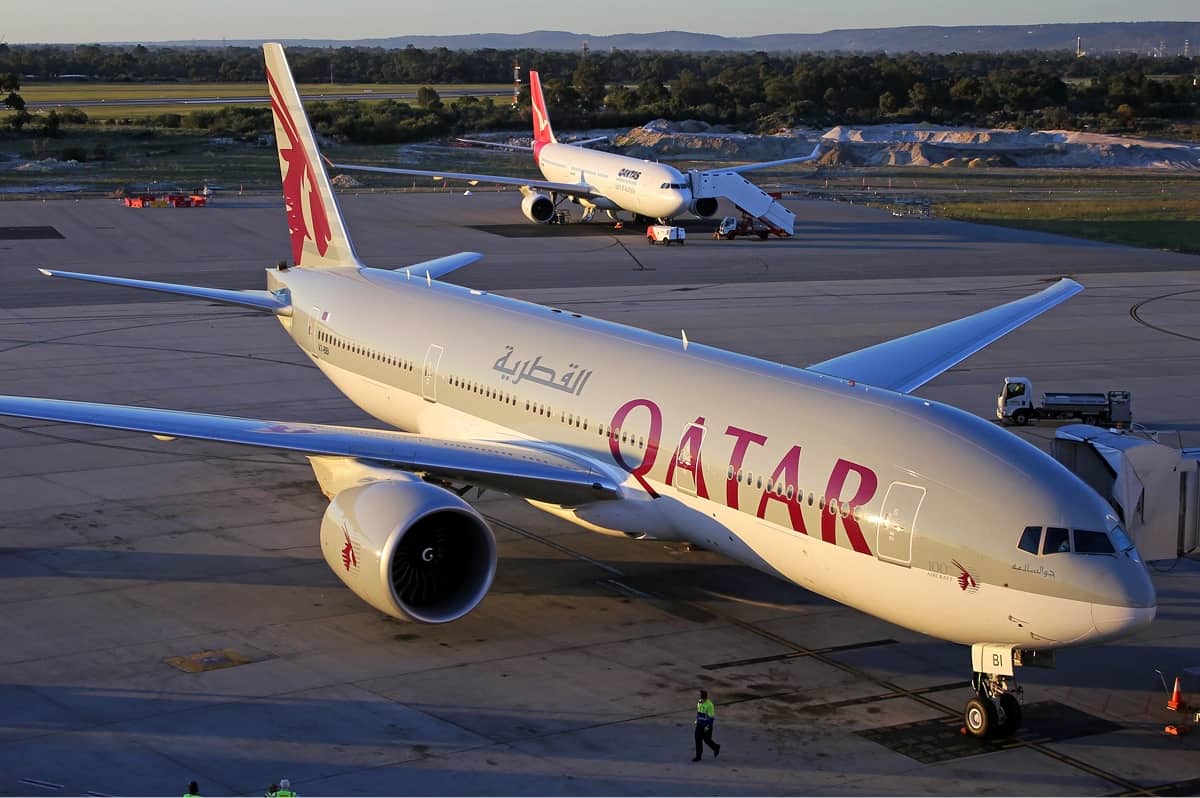
A Jetstar Airbus A320 braked hard on a Sydney Airport taxiway on the morning of August 9, 2026, to avoid a Qatar Airways Boeing 777 crossing under tow. One Jetstar cabin crew member was injured in the abrupt stop, and the Australian Transport Safety Bureau (ATSB) has opened a formal investigation.
What happened on the taxiway
Jetstar flight JQ402 was taxiing for a scheduled departure to the Gold Coast around 7 a.m. local time when its crew spotted an empty Qatar Airways 777 crossing a taxiway ahead of them, under tow to a remote stand, as The National reported.
The Jetstar pilots applied firm braking and brought the Airbus A320 to an abrupt stop. The towed 777 also stopped suddenly, and the connection between its nose gear and the tug was damaged.
No passengers were hurt, but a Jetstar cabin crew member moving through the cabin was thrown off balance and treated by paramedics. Flight JQ402 was cancelled and its passengers rebooked, and Aviation A2Z reported knock-on delays to more than 150 flights that day at Sydney Airport.
Jetstar said its crew “had been following air traffic control instructions” when they were forced to brake. Qatar Airways has not commented.
What investigators are looking at
The ATSB will interview the flight crew, the tug operator, and air traffic controllers, and review CCTV footage and ground movement records. A ground controller and the tug operator involved were stood down for mandatory drug and alcohol testing, standard practice after a serious ground incident and not itself a finding of fault.
Early reporting cited by The National and Aviation A2Z suggests the tug may not have followed its taxi instructions, but ATSB Chief Commissioner Angus Mitchell said it was too early to say where the breakdown occurred.
An aircraft under tow moves through the same airport surface as taxiing traffic, following the same taxiway markings and the same air traffic control clearances. A tug crew that misses or misreads one instruction on a crossing taxiway can put a 200-foot widebody directly in the path of an aircraft that has already been cleared to move.
What's confirmed, and what isn't
The ATSB has not yet determined why the tug and the Jetstar A320 ended up on a collision course, and the drug and alcohol tests are routine, not an indication either party is at fault. That determination is still weeks or months away.
The second close call in two weeks
The incident follows a runway conflict at the same airport on July 27, when a Qantas Boeing 737 arriving from Queenstown was cleared to cross Runway 34L while a QantasLink Dash 8 was still on its landing roll. Controllers stopped the 737 before it reached the runway, and the ATSB opened a separate investigation, case AO-2026-086, as Nomad Lawyer reported.
Both incidents happened amid ongoing air traffic control staffing pressure at Sydney, Australia’s busiest airport. Airservices Australia cited insufficient rostered controllers for delays to more than 150 flights on the Saturday before the Jetstar incident, echoing the staffing gaps behind a similar wave of US cancellations at Northeast airports the same week, covered in AeroCorner’s report on the FAA’s controller shortage.
The Transport Workers’ Union, which represents ground handlers and air traffic controllers, said the two Sydney incidents reflect years of understaffing across the industry. National secretary Michael Kaine said the situation is “not business as usual in aviation, it is an industry crisis,” according to HCA Mag.
Two Sydney close calls in two weeks
August 9’s taxiway near-miss followed a July 27 runway conflict between two Qantas Group aircraft at the same airport, both now under separate ATSB investigation.
Get the Newsletter
The latest aviation news and stories sent to your inbox.
About the Author
Tim is the owner and lead editor of AeroCorner since 2019, overseeing aviation content covering aircraft, airlines, airports, and the broader aviation industry. Through years of researching, writing, editing, and publishing aviation-focused content, he has developed extensive practical knowledge of commercial aviation and air travel. Based in Asia and a frequent traveler himself, Tim also brings firsthand passenger experience to AeroCorner’s coverage. Outside of publishing, he has also explored aviation firsthand through hands-on flight training in New Zealand.