

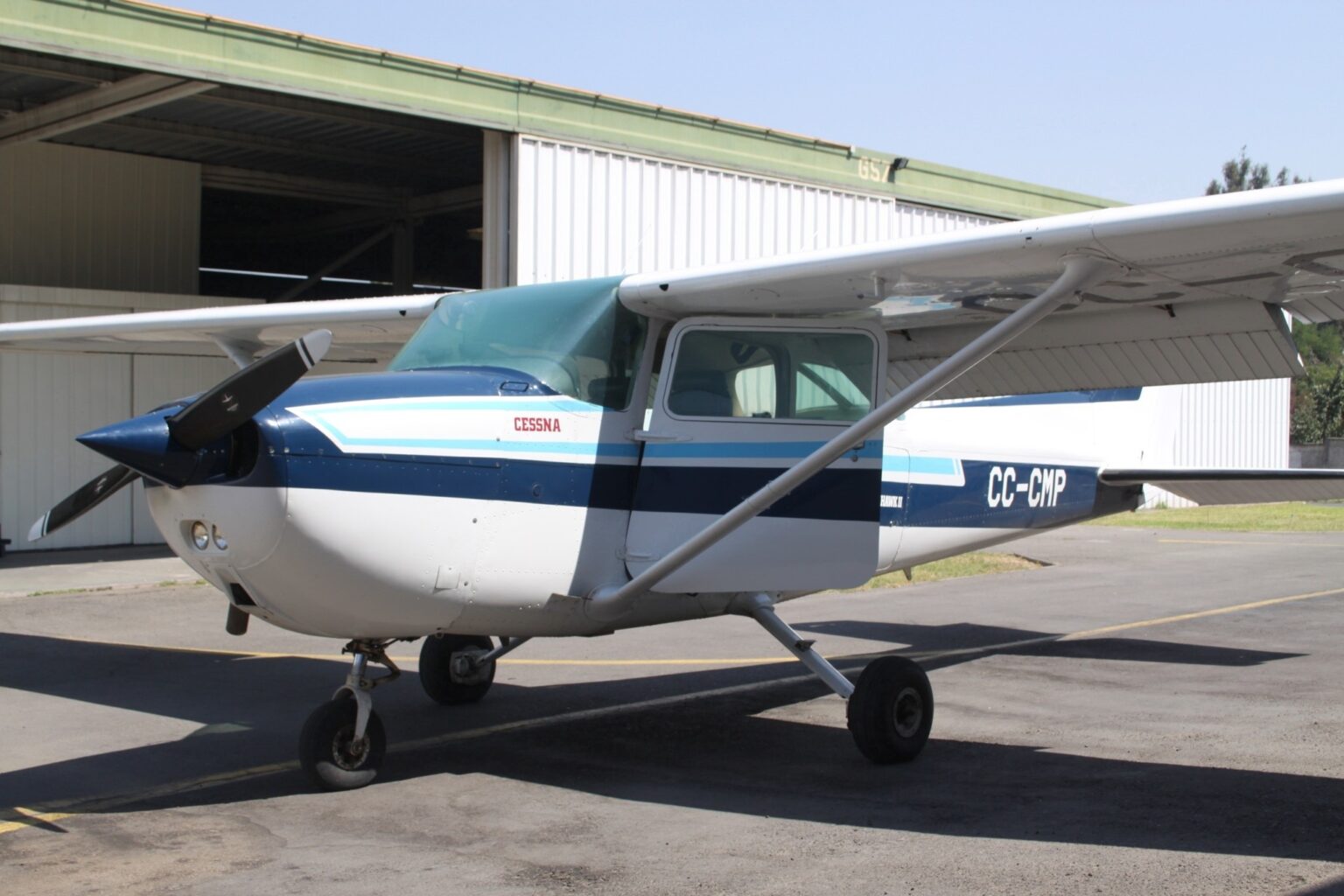
CC-LRA, a Cessna 172 belonging to a flying club for staff of Chile’s Investigations Police (PDI), made a forced landing inside a condominium in Peñalolén, in eastern Santiago, on Saturday, November 21, 2026. All four people aboard were injured.
Chile’s civil aviation authority, the DGAC, said in an update that night that the airplane had reportedly suffered an engine failure. It said the four were taken to medical centers and their lives were not at risk.
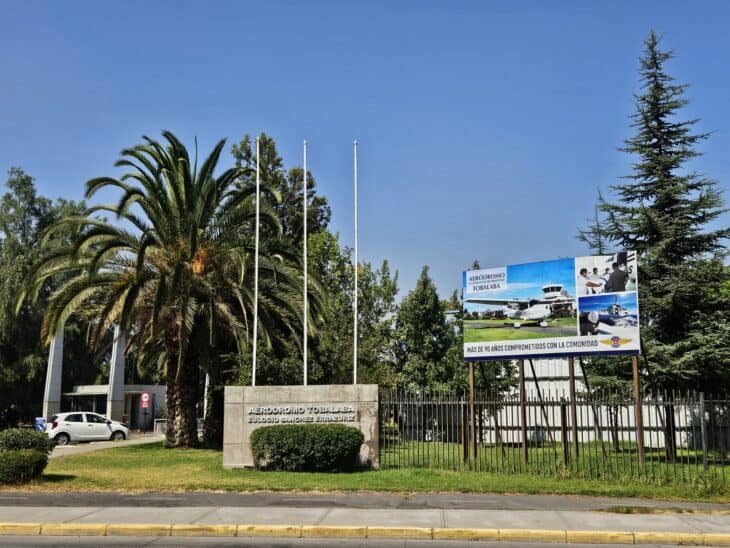
The crash site is south of Eulogio Sánchez aerodrome, better known as Tobalaba, where the flight began. DGAC accident investigators went to the scene, and the agency has not announced a cause.

What police say happened to CC-LRA
The airplane took off shortly before 6 p.m. local time, senior PDI officer Óscar Bacovich told reporters. According to the pilot’s account, as Bacovich relayed it to La Tercera and other media, the trouble began immediately after takeoff.
Bacovich spoke of a problem with “one of its engines,” although the Cessna 172 has only one. He said the pilot first tried for a nearby vineyard, was prevented by the wind, and then chose a street with parked cars but no pedestrians.
The timeline is not settled. BioBioChile, citing information it gathered at the scene, reported that the airplane had been flying for about 10 minutes and had departed toward the south.
Some early reports pointed to the landing gear. Puranoticia noted that investigators had not established that as a cause, and the DGAC’s later update mentioned only a possible engine failure.
A private club’s airplane, outside the police fleet
Those aboard were three serving PDI officers, two of them pilots, and a relative of one officer, according to Bacovich. One was flown to the Carabineros police hospital by helicopter, and none was seriously hurt.
He said nobody on the ground was injured. A parked vehicle was damaged and no homes were reported hit, El Mostrador reported.
Firefighters controlled a small fuel spill in the engine compartment, Ñuñoa fire captain Jack Behar told BioBioChile. He said the tanks were full because the airplane had just left the aerodrome.
Although some early headlines called it a police plane, Bacovich said CC-LRA is not part of the PDI fleet. The club is private, funded by its members, and rents facilities at Tobalaba, while the force’s own hangar is at Santiago’s main Arturo Merino Benítez airport.
He also said it was not an instructional flight, and declined to describe it as recreational.
Mayor asks for a review of Tobalaba flights
Peñalolén Mayor Miguel Concha asked the DGAC to review safety at Tobalaba and consider suspending its flights for a time, La Tercera reported. The DGAC’s two statements on Saturday did not address that request.
“The residents of Peñalolén got off lightly today,” Concha said in Spanish, in remarks carried by BioBioChile. He counted four accidents in the district in about 20 years, naming 2008, 2014, 2018 and Saturday’s.
On February 27, 2008, a Carabineros Cessna 210 on a training flight fell onto a municipal sports court. All six aboard and seven people on the ground died.
The DGAC’s investigation of that crash found a magneto failure combined with a poor maneuver by the pilot, Cooperativa reported in 2018. That finding says nothing about the cause of Saturday’s accident, which is still under investigation.
Why a street can become the landing site
An engine failure after takeoff in a single-engine airplane leaves the pilot little height and little time. The FAA’s Airplane Flying Handbook, a US training reference, says landing straight ahead or after a slight turn usually carries the lowest risk.
It allows that urban airports can have numerous hazards in the departure path. Even then, the handbook says a pilot should turn back only if certain of reaching the field and trained in the maneuver, which can end in a fatal stall if flown badly.
Roads bring their own traps, as obstacles beside them and the wires that often run alongside may be hard to see on approach. Wind matters as well, because a higher speed over the ground sharply increases the energy in an impact: double the speed and that energy quadruples.
A similar decision faced the pilot of a Piper Cherokee that landed on Huntington Beach after losing its engine. For CC-LRA, the open questions include how high the airplane was, whether the engine failed completely, and which landing sites were within reach.
Sources and references used for research and fact-checking.
Get the Newsletter
The latest aviation news and stories sent to your inbox.
About the Author

AeroCorner News is the aviation news desk of AeroCorner.com. It covers accidents and incidents, safety rulings, airline and airport disruption, and new aircraft. It works from primary sources such as the NTSB, FAA, EASA and the manufacturers' own announcements.