

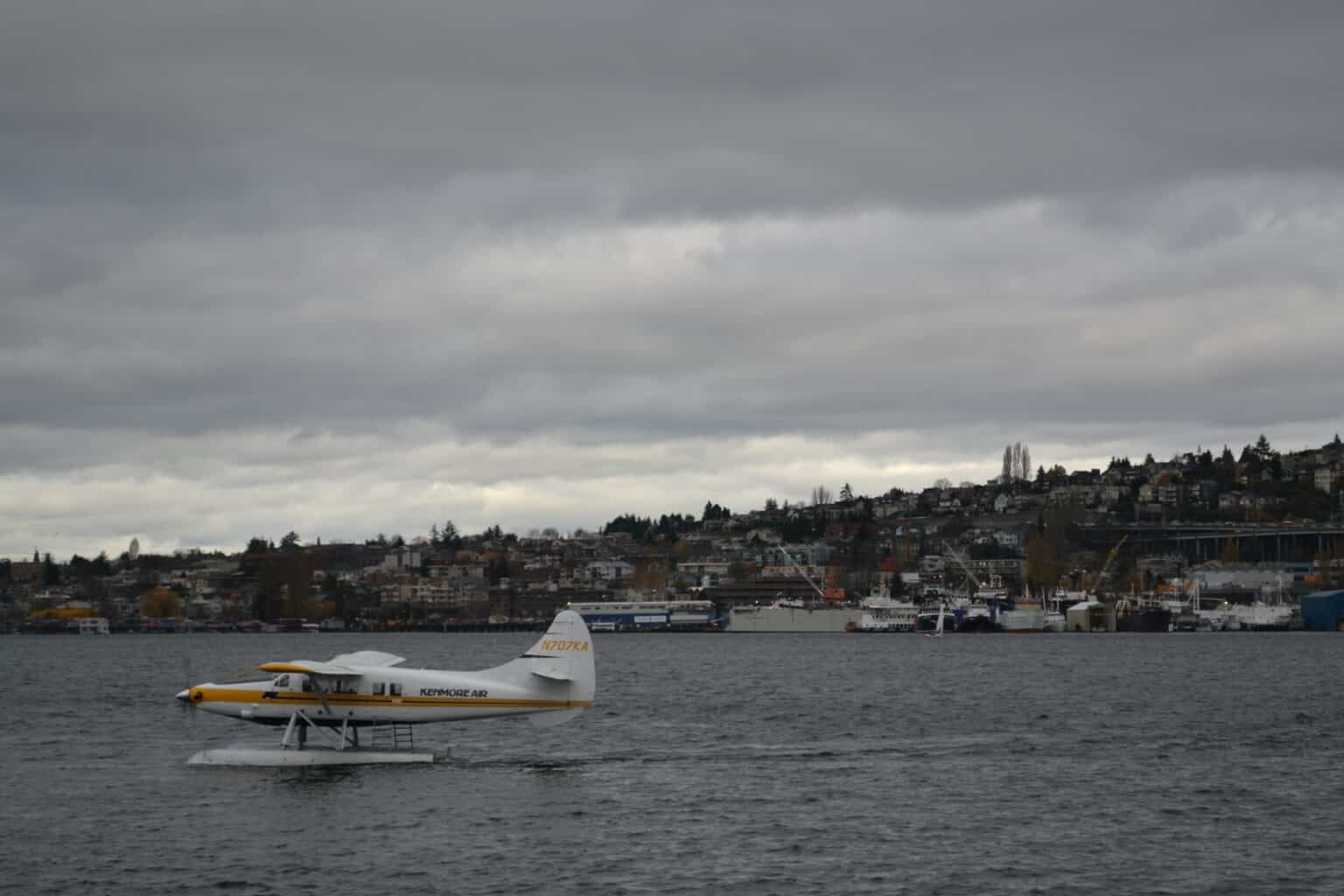
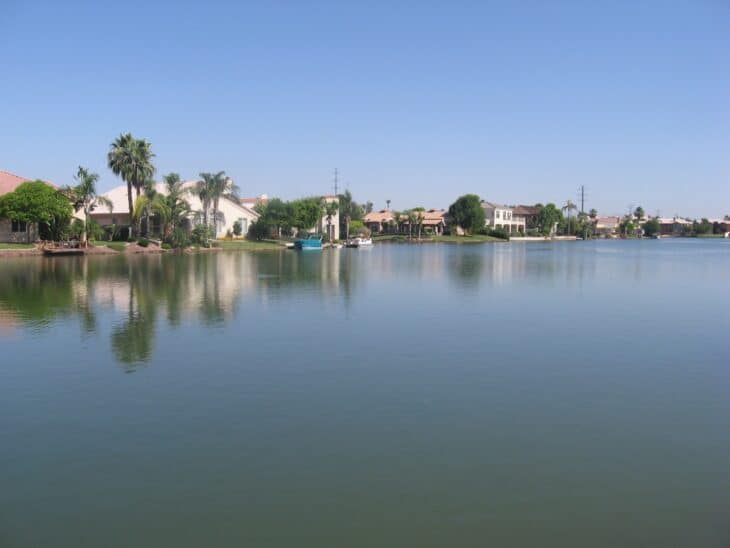
A small seaplane made an emergency landing on a lake in the Val Vista Lakes community in Gilbert, Arizona, on Saturday, November 21, 2026. The two people on board were not injured, according to local authorities.
Gilbert police said the seaplane came down in a neighborhood lake, and officials cited a suspected mechanical issue during the flight, AZFamily reported. The station put the location near Baseline Road and Val Vista Drive and said those on board were the pilot and one passenger.
Gilbert’s police and fire departments responded, and fire crews said both occupants were able to walk away, according to 12News. The station said a preliminary investigation indicated the plane may have had a mechanical issue in flight.
What is known about the Gilbert seaplane landing
Police asked people to stay away from the area around Val Vista Lakes, and traffic was restricted while crews worked to recover the aircraft safely, 12News said. Neither station’s report said whether the recovery had finished.

The National Transportation Safety Board (NTSB) and the Federal Aviation Administration (FAA) are to investigate, both stations reported. 12News said the NTSB was responding and would work in coordination with the FAA.
The two reports do not give the aircraft’s make, model or registration, where it took off, where it was headed, or the time of the landing. They also do not say which system may have failed or whether the plane was damaged.
The FAA’s accident and incident statements page had no entry for the event when checked late Saturday night, Arizona time.
Why a lake can be an option for a seaplane
The word seaplane covers more than one design, as our guide to seaplanes and floatplanes explains. The FAA’s seaplane handbook describes two main types: flying boats, which land on the hull of the fuselage, and floatplanes, which typically are landplanes fitted with separate floats.
Flying boats usually carry smaller floats near the wingtips to help on the water. Either type can also be an amphibian, meaning it has retractable wheels for landing on dry land.
A photo published with AZFamily’s report shows the Gilbert aircraft upright on the water with small floats under its wings and boats nearby. That layout is consistent with a flying boat, although officials have not identified the type.
The handbook’s section on emergency landings says emergencies within gliding distance of water usually present no landing difficulty for a seaplane. It still advises pilots to match the type of landing to the water conditions and to be as prepared as possible well before touchdown.
That preparation includes putting on flotation gear, unlatching the doors so they cannot jam if the airframe bends, and briefing passengers on how to get out. The reports from Gilbert do not say what preparations were possible on this flight.
Getting down can also be only part of the problem in a confined area. The handbook warns that most seaplanes need a much longer run to take off than to land, so one of a pilot’s first concerns before a planned landing in such an area is whether it is possible to get out again.
In a genuine emergency, the pilot has wide authority to choose. Federal rule 14 CFR 91.3 allows the pilot in command to deviate from the Part 91 operating rules as far as needed to meet an in-flight emergency requiring immediate action, with a written report due if the FAA asks for one.
What investigators will need to establish
An emergency landing is not automatically an accident under federal rules. Under NTSB rules, an event counts as an aircraft accident when someone is killed or seriously injured, or the aircraft suffers substantial damage, while people are aboard for a flight.
With no injuries reported in Gilbert, the condition of the airplane will matter for that classification. Under the rules, engine failure or damage limited to a single engine is not considered substantial damage, and neither are dented skin or damage to wingtips and landing gear.
Operators must notify the NTSB immediately of accidents and of certain listed serious incidents, such as a flight control malfunction or an in-flight fire. In those cases they must also preserve the wreckage and records as far as possible until the board takes custody or releases them.
AeroCorner has covered other recent emergencies involving water-capable aircraft, including a Seawind amphibian on I-80 in Nevada in October. In July, all 11 people aboard survived the Kenmore Air seaplane crash near Sucia Island in Washington.
Early information
The suspected mechanical issue comes from preliminary accounts by local officials as reported by AZFamily and 12News. The cause had not been established at the time of writing, and details may change.
Sources and references used for research and fact-checking.
- FAA, Seaplane, Skiplane, and Float/Ski Equipped Helicopter Operations Handbook, Chapter 2
- FAA, Seaplane, Skiplane, and Float/Ski Equipped Helicopter Operations Handbook, Chapter 6
- eCFR, 14 CFR 91.3, Responsibility and authority of the pilot in command
- eCFR, 49 CFR Part 830, NTSB notification and preservation rules
Get the Newsletter
The latest aviation news and stories sent to your inbox.
About the Author

AeroCorner News is the aviation news desk of AeroCorner.com. It covers accidents and incidents, safety rulings, airline and airport disruption, and new aircraft. It works from primary sources such as the NTSB, FAA, EASA and the manufacturers' own announcements.