

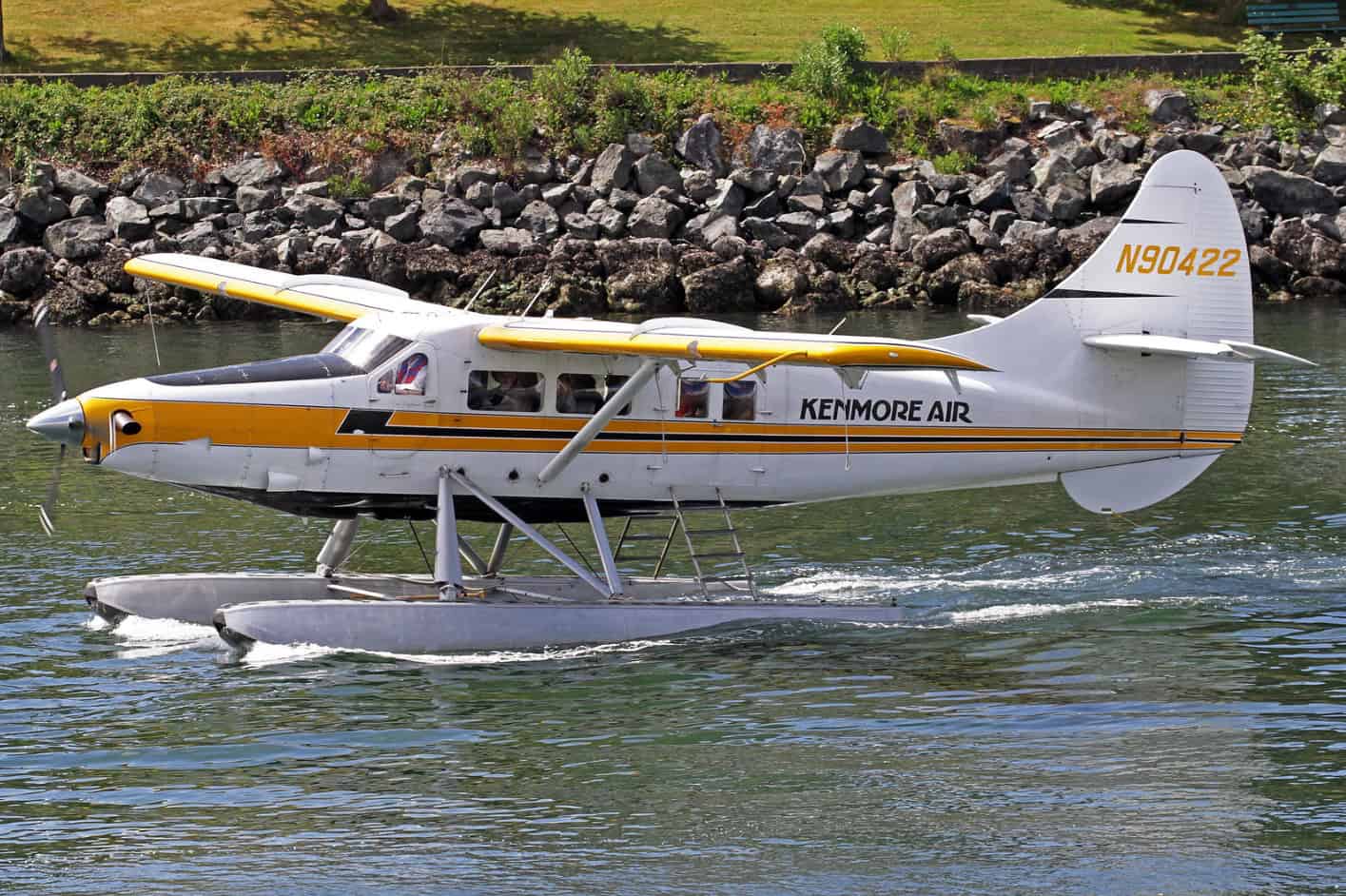
A Kenmore Air seaplane crashed and caught fire in Washington’s San Juan Islands on the evening of July 23, 2026, yet every one of the 11 people aboard survived. The de Havilland DHC-3 Otter had left Seattle’s Lake Union around 4:30 p.m. bound for Roche Harbor and went down in Shallow Bay off Sucia Island roughly 45 minutes later.
What happened
The aircraft impacted the water and then caught fire, according to the National Transportation Safety Board, which is leading the investigation. Ten passengers and one pilot were on board.
All 11 were pulled from the water alive. Navy and Coast Guard helicopter crews carried out the rescues, and a civilian boater reached the scene first, responding agencies said. The San Juan County Sheriff’s Office described injuries ranging from head trauma to broken bones and lacerations, with one person initially reported in critical condition.
Three people remained hospitalized on Friday. One was treated at PeaceHealth St. Joseph Medical Center in Bellingham, and two, both in their 20s, were in satisfactory condition at Harborview Medical Center in Seattle. The pilot was released.
“The pilot probably did a really good job to set it down gently enough to give everybody a chance,” Coast Guard Lt. Cmdr. Marshall Burtt told reporters.
Everyone survived
A de Havilland DHC-3 Otter crashed and burned in Shallow Bay, yet all 10 passengers and the pilot were rescued from the water, with three still hospitalized as of Friday.
A Pacific Northwest workhorse
The DHC-3 Otter is a single-engine floatplane that has worked the waters of the Pacific Northwest for decades. Kenmore Air runs a fleet of these classic de Havilland aircraft, alongside the smaller DHC-2 Beaver, on scheduled hops to the San Juans, where many destinations have a dock but no runway.
This particular Otter was built in 1960 and was current on its inspections, Kenmore Air said, with a 100-hour check on June 25 and an annual in January 2026. The airline said a weather system in the area had prompted a change to the flight’s path.
The type has a hard recent history in these same waters. In September 2022, a DHC-3 Otter operated by another company crashed near Whidbey Island, killing all 10 aboard. The NTSB later traced that accident to a failed lock ring in the horizontal stabilizer trim system and pushed an emergency airworthiness directive across the Otter fleet.
That history is why this crash stands out for the opposite reason: a low-altitude descent onto a sheltered bay, close to shore, gave rescuers a fighting chance. A controlled water arrival is survivable in a way that a high-energy impact is not, which is part of why investigators will focus closely on how the aircraft came down rather than only on why.
The NTSB expects to recover the sunken aircraft and to publish a preliminary report within about a month, much as it did after a recent NTSB investigation into a ground collision. A probable cause, however, typically takes one to two years.
Early days
The NTSB’s work has just begun. No cause has been established, and every explanation for why the aircraft went down remains under investigation. Treat any early theory as provisional.
Get the Newsletter
The latest aviation news and stories sent to your inbox.
About the Author

Tim is the owner and lead editor of AeroCorner since 2019, overseeing aviation content covering aircraft, airlines, airports, and the broader aviation industry. Through years of researching, writing, editing, and publishing aviation-focused content, he has developed extensive practical knowledge of commercial aviation and air travel. Based in Asia and a frequent traveler himself, Tim also brings firsthand passenger experience to AeroCorner’s coverage. Outside of publishing, he has also explored aviation firsthand through hands-on flight training in New Zealand.