

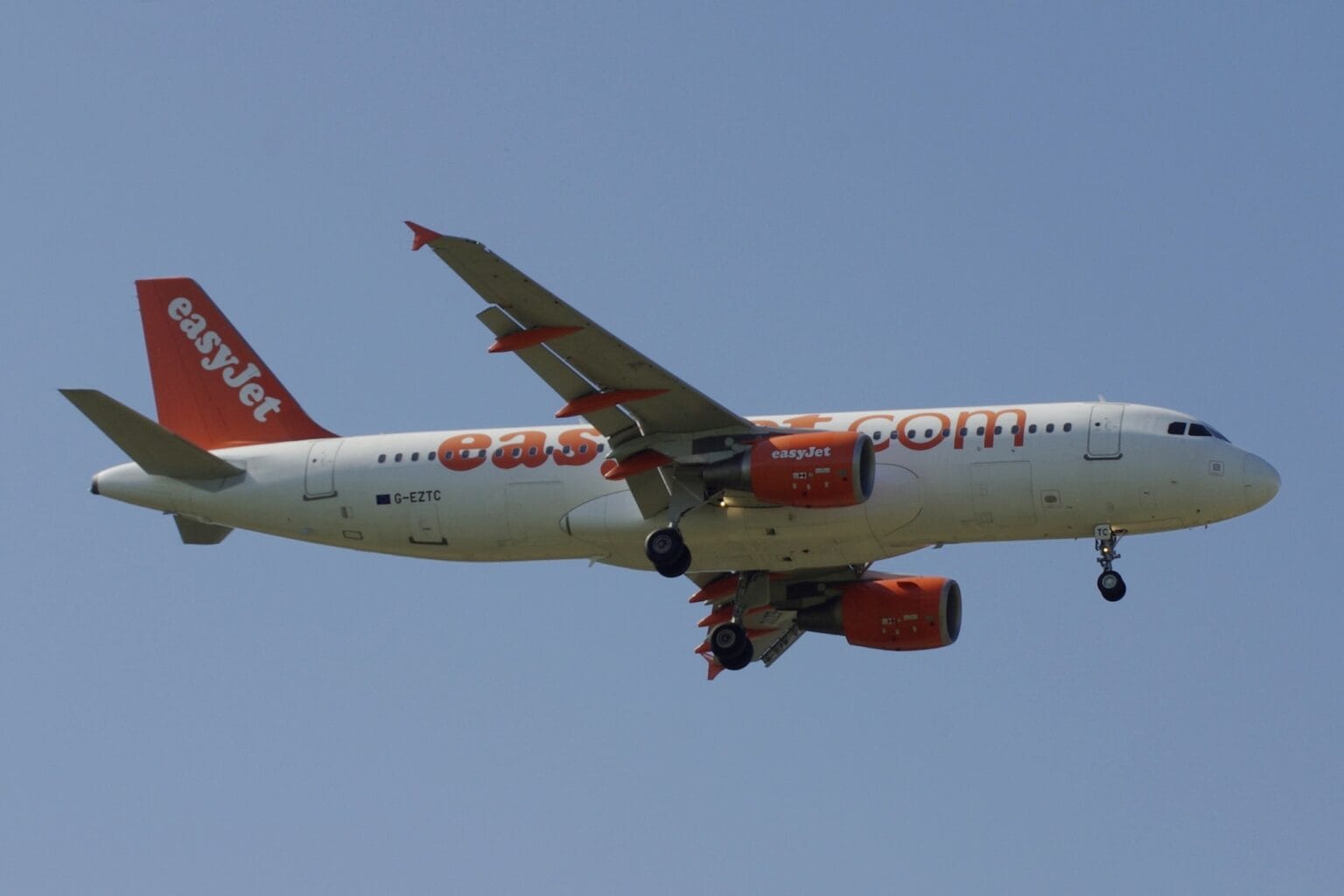
easyJet flight U23443 from Liverpool to Amsterdam declared an emergency near Norwich, England, on the evening of Friday, November 20, 2026, and landed safely at Schiphol. The Aviation Herald reported that the crew of the Airbus A320, registered G-EZTC, raised the alarm at 37,000 feet and shut down the left engine.
Dutch air traffic control, LVNL, confirmed that it received a mayday call from the pilot. The jet had not flown again by Saturday evening, and its return flight to Liverpool that night was canceled.
What happened on U23443
The flight left Liverpool John Lennon Airport at 6:19 p.m. GMT, nine minutes behind schedule, according to Flightradar24. FlightStats lists the aircraft as G-EZTC, flying under the radio callsign EZY27CF.
According to The Aviation Herald, the crew declared the emergency at flight level 370, north of Norwich in eastern England, because of a problem with the left engine, one of the jet’s two CFM56s. The engine was then shut down, and the A320 continued across the North Sea toward Amsterdam.
Tracking data compiled by The Aviation Hub shows the crew set the emergency transponder code 7700 during the cruise. The site said the AirNav Radar emergency account reported a problem with engine number 1, which on the A320 is the left engine.
Norwich lies about 150 miles (240 km) west of Schiphol. The A320 landed on runway 06, the airport’s Kaagbaan, about 30 minutes after the emergency call, The Aviation Herald reported.
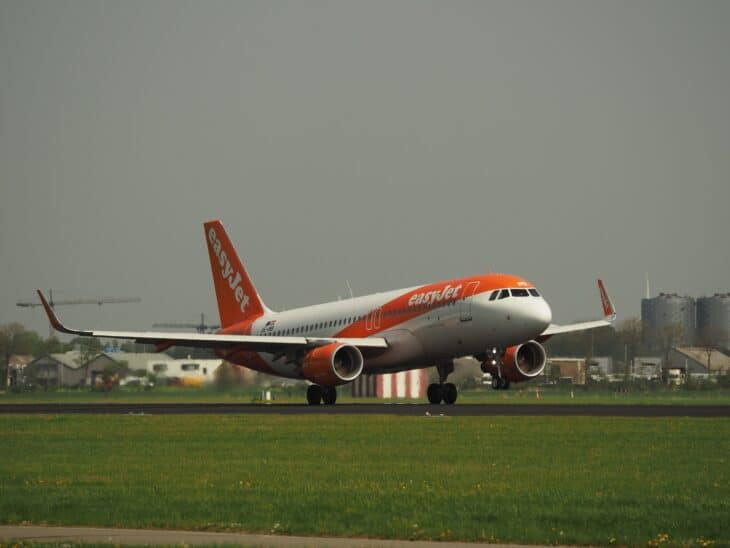

Flightradar24 records the touchdown at 8:12 p.m. local time (7:12 p.m. GMT), and FlightAware data cited by Hart van Nederland puts it at 8:13 p.m. The Aviation Herald added that Dutch controllers told other crews they were handling two emergencies at once, the second one a medical situation.
What Dutch air traffic control said
LVNL told Hart van Nederland that it had received a mayday from the pilot, which gave the aircraft priority to land. Firefighters checked the jet after it landed, and as far as LVNL knew, nothing had to be extinguished.
After that check, the A320 taxied to the terminal and reached its gate at 8:46 p.m., according to FlightStats. LVNL said it had no information on the cause of the emergency or on how the passengers were looked after.
AeroCorner found no public statement from easyJet about the flight at the time of writing. The Aviation Hub reported on Friday evening that the airline had not yet commented.
Why one engine changes the plan
The Airbus A320 is a twinjet built to keep flying and land safely on one engine. Crews shut an engine down by checklist when its readings point to a fault, so that a problem does not grow into serious damage.
What follows is a quick landing. U23443 flew under UK and European rules, but the US airline rule, 14 CFR 121.565, shows the logic: when an engine of a twin fails or is shut down “to prevent possible damage,” the captain must land at “the nearest suitable airport, in point of time.”
“In point of time” means the quickest suitable runway, not simply the closest one on the map. In practice, runway length, weather, rescue services and the descent from cruise height all weigh on it, and the crew of U23443 was already heading for a major airport roughly half an hour away.
A mayday call is the top level of distress call, above the “pan-pan” urgency call. It gives the flight priority over all other traffic, useful on an evening when Dutch controllers were handling a second emergency at the same time.
The aircraft and what is still unknown
G-EZTC was due to fly back to Liverpool as U23444 at 9:20 p.m. local time, and that flight was canceled, FlightStats and Flightradar24 show. As of Saturday evening, November 21, Flightradar24 listed no flight for the jet since its landing in Amsterdam.
The Aviation Herald reported that the A320 was still on the ground about 22 hours after it landed. Earlier on Friday, the same aircraft had flown a round trip from Liverpool to the Isle of Man, Flightradar24 shows.
The Aviation Hub, citing Planespotters.net, said Airbus delivered the jet to easyJet in April 2009, which makes it about 17 years old. No cause for the engine problem has been published, and neither has the number of people on board.
Two days earlier, on November 18, easyJet flight U2213 returned to Bristol after a bird strike, and AIRLIVE reported that one of its engines had been damaged.
Sources and references used for research and fact-checking.
Get the Newsletter
The latest aviation news and stories sent to your inbox.
About the Author

AeroCorner News is the aviation news desk of AeroCorner.com. It covers accidents and incidents, safety rulings, airline and airport disruption, and new aircraft. It works from primary sources such as the NTSB, FAA, EASA and the manufacturers' own announcements.