

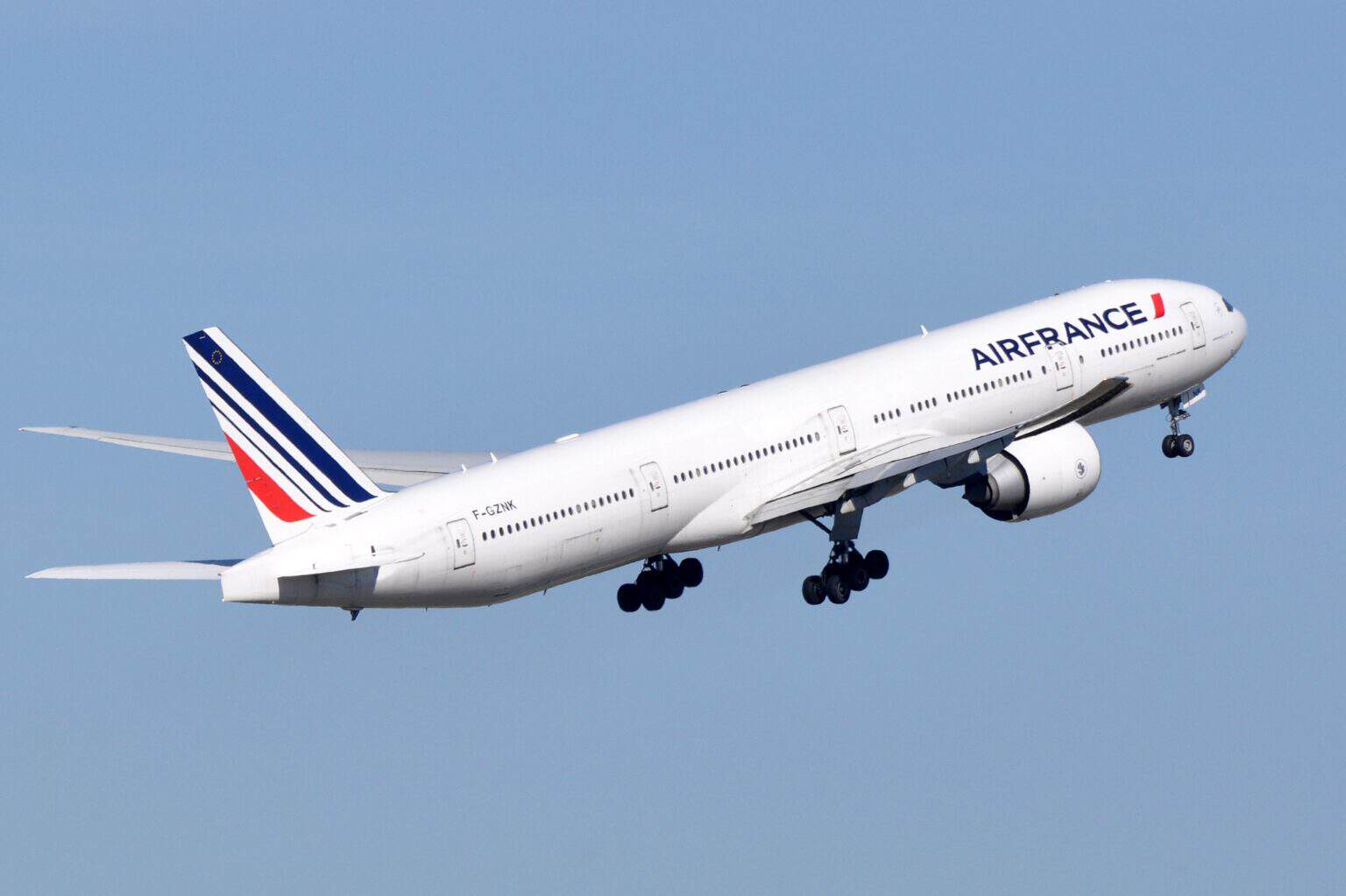
Air France flight AF4 from Paris to New York JFK turned around over the North Atlantic on Friday, November 20, 2026, and landed back at Charles de Gaulle after 5 hours and 39 minutes in the air. The aircraft was the Boeing 777-300ER registered F-GZNK, according to Flightradar24 data.
AIRLIVE, which reported the turnback while the jet was still in the air, said the crew found a fault in the fuel quantity indication on the captain’s side of the flight deck. AeroCorner found no Air France statement on the flight at the time of writing, so that cause rests on AIRLIVE’s reporting, not on the airline.
What the tracking data shows
The jet left gate M45 in Terminal 2E at 11:11 a.m. Paris time, 41 minutes behind its 10:30 a.m. schedule, and took off at 11:26 a.m., FlightAware records show. It climbed to 34,000 feet over Wales and crossed Ireland heading northwest, out toward the ocean.
AIRLIVE put the turn about three hours into the flight. FlightAware’s track has a gap far out over the ocean, so the exact turning point cannot be read from it.
When the 777 reappears in the data at 3:30 p.m. Paris time, it is west of Ireland and heading east at 35,000 feet. It landed at Charles de Gaulle at 5:05 p.m. local time.
Air France then put another 777-300ER, F-GSQK, on AF4. That jet had arrived in Paris from Washington Dulles that morning, and it took off for New York at 9:01 p.m. Paris time, FlightAware shows.
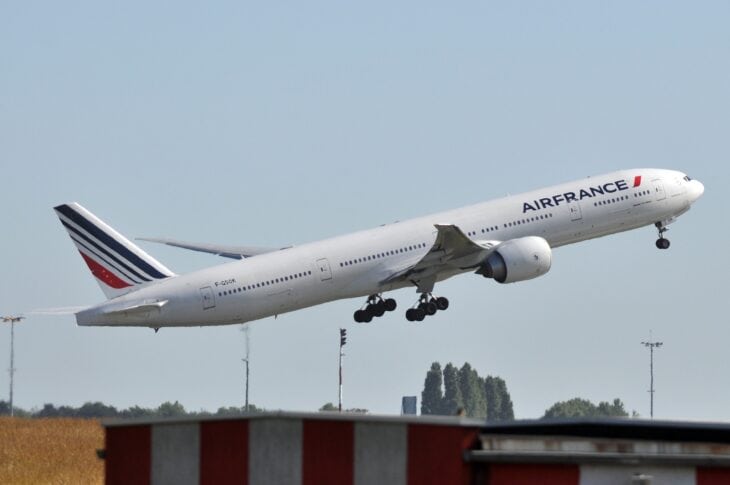

Its arrival at JFK was estimated at about 10:17 p.m. New York time, more than nine hours after the 12:55 p.m. scheduled arrival. How many passengers and crew were on the first flight has not been published.
AeroCorner covered a similar case on August 19, when another Air France 777 bound for Washington turned back over the Atlantic. The airline did not give a cause for that one either.
Why a fuel display fault can end an ocean crossing
On the Boeing 777-300ER, fuel on board is measured by the fuel quantity indicating system, or FQIS, built around a fuel quantity processor unit. Its figures feed the flight deck displays and the crew alert messages.
The FAA has treated errors in that system as a serious hazard before. Its airworthiness directive 2022-23-11, covering the 777-200, -200LR, -300, -300ER and 777F, followed reports that the center tank quantity shown by the FQIS did not match the fuel the refueling truck had pumped in.
The agency’s worry was a crew dispatched with less fuel than they believed, then pressing on after alert messages. It said that could end in fuel exhaustion and the loss of all engines, and it required new processor software or a new unit.
Nothing published links the AF4 fault to that directive. It shows why a wrong or doubtful fuel reading is taken seriously on this type: fuel exhaustion with a working airplane is one of aviation’s oldest lessons.
Fuel planning assumes the crew knows what is in the tanks. European rules require an airline to carry enough fuel to cover changes to the plan, such as approach delays or weather that rules out a landing, EASA says.
A crew that cannot fully trust its fuel display cannot be sure that margin is intact, and an ocean crossing leaves few places to land and check. AIRLIVE reported that the pilots chose to return rather than cross with reduced redundancy in their fuel monitoring.
Why Paris and not the nearest airport
Where to land after a fault is a choice for the crew and the airline, and a diversion to the nearest airport is only one option. Nothing in the tracking data suggests haste: the jet was back at 35,000 feet when it reappeared west of Ireland, cruising home rather than descending toward the closest runway.
Paris is Air France’s main base, with its own engineers. Going back there let the airline put F-GSQK, already on the ground after its morning arrival from Washington, on AF4 the same evening, instead of flying a jet out to wherever the 777 might have diverted.
The price was a long day. Anyone booked through on AF4 boarded in Paris before noon, landed back where they started at 5 p.m., and faced a second departure after 9 p.m. on the replacement jet.
What is not confirmed
Air France has not described the fault. The fuel indication cause comes from AIRLIVE’s reporting, and an earlier fuel system repair on this aircraft that AIRLIVE mentioned could not be confirmed. The exact point where the jet turned around is not visible in public tracking data.
Sources and references used for research and fact-checking.
- FlightAware, AFR4 flight history, Nov 20 2026 (CDG to CDG, returned)
- FlightAware, AFR4 flight history, Nov 20 2026 replacement (CDG to JFK)
- Flightradar24, F-GZNK flight history
- Flightradar24, F-GSQK flight history
- FAA (Federal Register), AD 2022-23-11, Boeing 777 FQIS fuel quantity processor unit
- EASA, Fuel Management - New Rules
Get the Newsletter
The latest aviation news and stories sent to your inbox.
About the Author

AeroCorner News is the aviation news desk of AeroCorner.com. It covers accidents and incidents, safety rulings, airline and airport disruption, and new aircraft. It works from primary sources such as the NTSB, FAA, EASA and the manufacturers' own announcements.