

Table of Contents
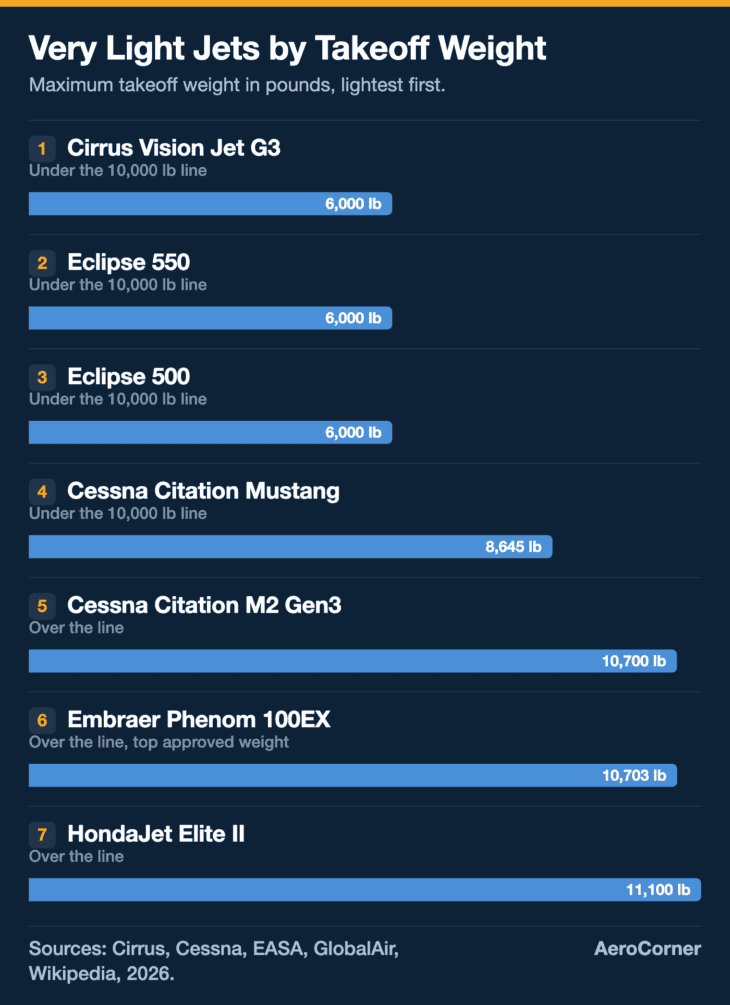
Seven jets are sold or described as very light jets as of November 2026, but only four meet the definition. The National Business Aviation Association (NBAA) draws the line at 10,000 pounds (4,536 kg) and single-pilot certification.
Of those four, the Cirrus Vision Jet G3 is the only one that shows up in current factory shipment data, with 106 delivered in 2025. The Eclipse 500 and Citation Mustang are out of production, and the Eclipse 550’s new-build status is unclear.
This list ranks all seven by maximum takeoff weight, lightest first, because weight is what defines the class. It also gives each jet’s price, its real range, and whether you can still buy one new.
| Jet | Max takeoff weight | Max cruise | Max range | Price (dated) | How to buy |
|---|---|---|---|---|---|
| 1. Cirrus Vision Jet G3 | 6,000 lb (2,722 kg) | 317 kt | 1,275 nm | About $3.4M (2026) | New |
| 2. Eclipse 550 | 6,000 lb (2,722 kg) | 375 kt | 1,125 nm | $2.0M average used (Nov. 2026) | Used; new-build status unclear |
| 3. Eclipse 500 | 6,000 lb (2,722 kg) | 370 kt | 1,125 nm | $1.29M average used (Nov. 2026) | Used only |
| 4. Cessna Citation Mustang | 8,645 lb (3,921 kg) | 340 kt | 1,167 nm | $1.4M to $2.1M used (Oct. 2026) | Used only |
| 5. Cessna Citation M2 Gen3 | 10,700 lb (4,853 kg) | 404 kt | 1,550 nm | $5.85M to $6.15M for the Gen2 (2023 to 2024) | New |
| 6. Embraer Phenom 100EX | Up to 10,703 lb (4,855 kg) | 406 kt | 1,178 nm | $4.95M (2024) | New |
| 7. HondaJet Elite II | 11,100 lb (5,035 kg) | 422 kt | 1,547 nm | $6.95M list (Q2 2025) | New |
How this ranking works
The measure is maximum takeoff weight, because that is the test in the NBAA definition. A jet makes this list if it is single-pilot capable, reached customers, and is called a very light jet by its maker or the trade press. Prices are the latest we could source, and each carries its date. Nautical miles (nm) are about 1.15 statute miles each.
1. Cirrus Vision Jet G3: the only true VLJ with reported deliveries
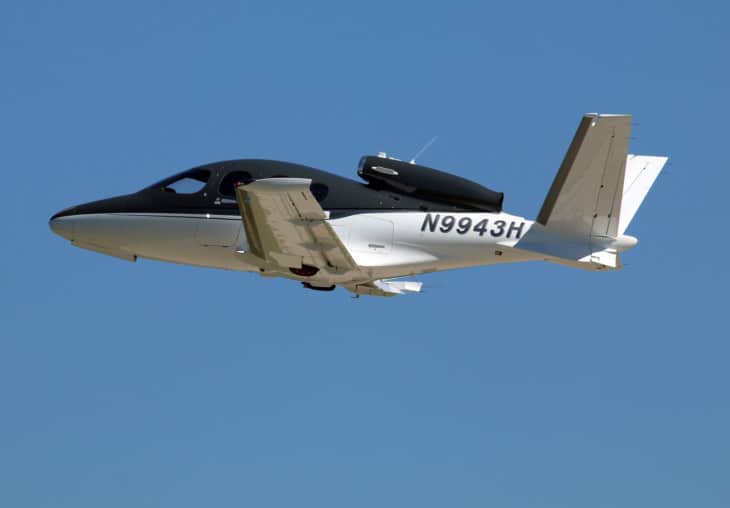
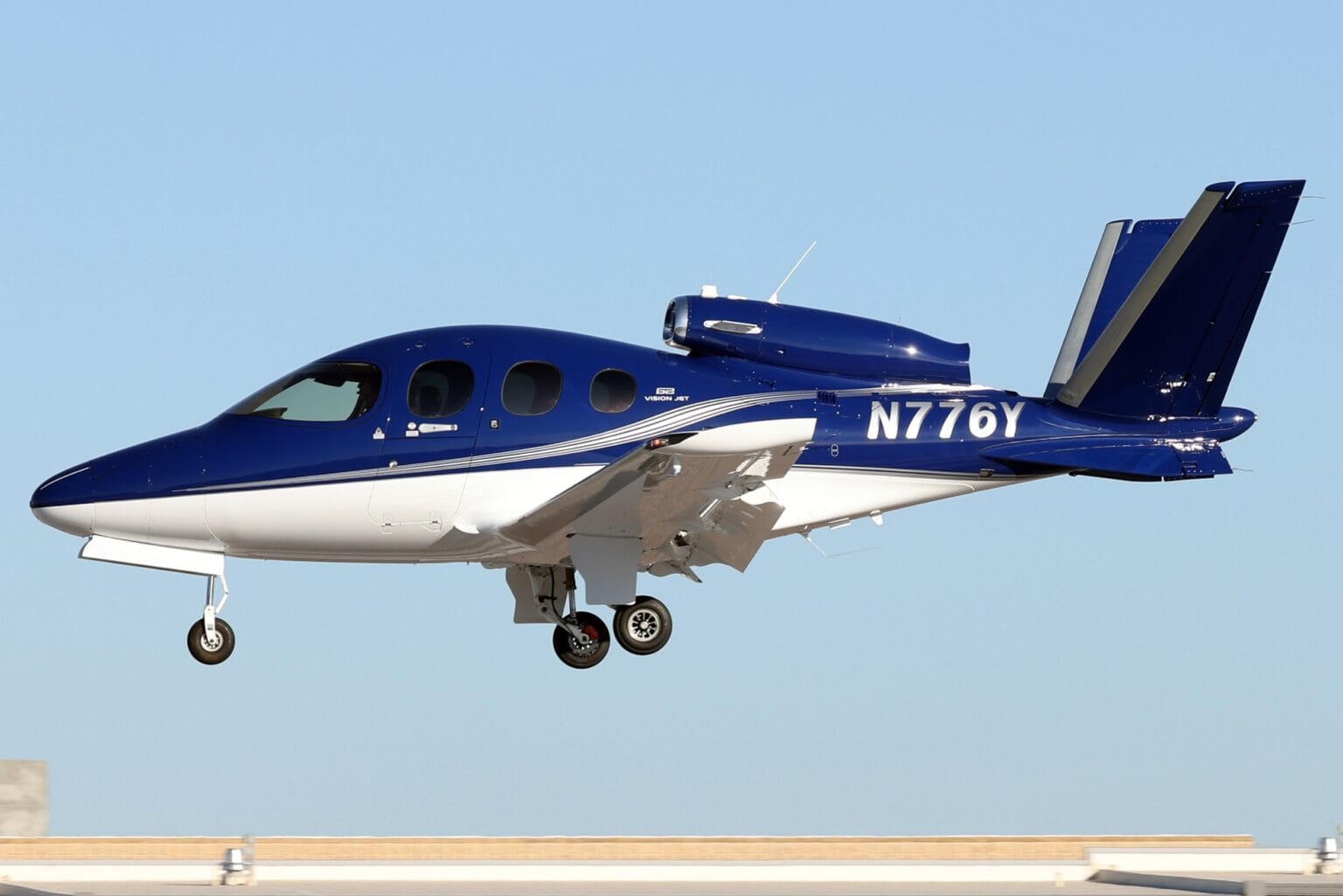
The Cirrus Vision Jet weighs 6,000 pounds (2,722 kg) at takeoff and has one Williams FJ33-5A engine on its back. It was the first civilian single-engine jet to win a type certificate, in October 2016.
The G3, launched in February 2026, performs the same as the G2+ it replaced. The gains are inside: seating for six adults and one child, and air traffic control datalink messaging. Every G3 includes the CAPS whole-airframe parachute and Safe Return emergency autoland.
It is also the slowest jet here, at 317 knots, and the trade press puts the price at about $3.4 million. The trade-off is simplicity: Cirrus notes that flying it needs no multi-engine rating, only the Vision Jet type rating.
One jet outsells the rest combined
GAMA shipment data shows 106 Vision Jets delivered in 2025, against 22 Citation M2s, 14 Phenom 100EXs and 12 HondaJets. That is more than double the other three combined, and the lead held in the first half of 2026 at 57 against 21.
2. Eclipse 550: the twin with an unclear future
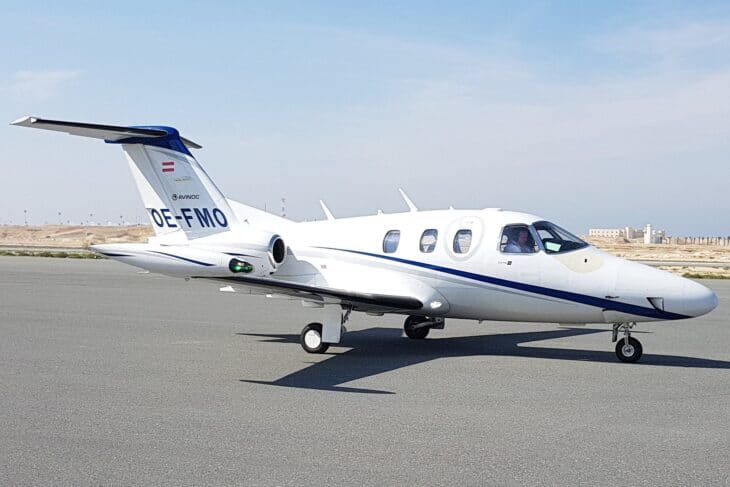

The Eclipse 550 has two Pratt & Whitney Canada PW610F engines, a 375-knot maximum cruise and a 41,000-foot ceiling, all at 6,000 pounds (2,722 kg). It is the fastest jet in this list that truly meets the 10,000-pound test.
Buying a new one is the open question. Production stopped in 2017, and it restarted in 2023 after a new company bought the assets, with 35 built through that year. Eclipse Aerospace still markets it as new production, but it publishes no price and has no line in GAMA’s 2025 shipment report.
For most buyers this is a used purchase, with an average pre-owned price of about $2 million according to Aircraft Cost Calculator. Call the factory before assuming a new build slot exists.
3. Eclipse 500: the cheapest way into a twin jet

The Eclipse 500 has the most telling price history in the class. It was first quoted at $775,000, had climbed to $2.15 million by May 2008, and Eclipse Aviation filed for Chapter 11 that November.
The company went into liquidation in February 2009 after 260 aircraft. Today the average used price is about $1.29 million, the lowest on this list, for a 370-knot twin with 1,125 nm of range under NBAA reserves. That makes it the natural entry in any list of the least expensive private jets.
The catch is support, since the type has outlived two manufacturers. Wikipedia lists AML Global Eclipse as the company now maintaining support for all Eclipse aircraft, so check its service network before you buy.
4. Cessna Citation Mustang: the safest used bet

At 8,645 pounds (3,921 kg), the Citation Mustang is the heaviest jet that still meets the NBAA line. It cruises at 340 knots and flies 1,167 nm at maximum takeoff weight, on two Pratt & Whitney Canada PW615F engines.
Cessna built 479 before production ended in May 2017, nearly double the Eclipse 500 total. Its killer was Cessna’s own M2: sales had averaged about 40 a year, then fell to 24 over the three years after the M2 arrived in 2013.
Flycraft’s listing-based estimate runs from $1.4 million to $2.1 million by build year as of October 2026. A used Mustang costs little more than a used Eclipse and comes from a manufacturer that still exists, which is why it is our pick for a first jet bought used.
5. Cessna Citation M2 Gen3: the jet Cessna calls entry-level

The Citation M2 is here because the trade press lists it as a VLJ, though Cessna itself calls it an entry-level jet. At 10,700 pounds (4,853 kg), it is single-pilot certified, seats up to seven occupants, and cruises at 404 knots.
Cessna does not publish a Gen3 price. The Gen2 was reported at $5.85 million in early 2024 and $6.15 million equipped in 2023, so treat that as a floor rather than a quote. Deliveries were 22 in 2025 and 11 in the first half of 2026, both logged by GAMA under the Gen2 name.
6. Embraer Phenom 100EX: three weights, one airplane

Published weights for the Phenom 100 family disagree because there are three. Europe’s EASA certification sheet lists 10,472, 10,582 and 10,703 pounds, with the higher two tied to specific notes. Even the lowest is over the 10,000-pound line.
Embraer quotes 406 knots at high-speed cruise, and it gives a full set of conditions for its 1,178 nm range: four occupants at 200 pounds each with NBAA reserves. That honesty makes the number look worse than rivals’ figures, and it is the one to trust.
Business Jet Traveler put a typical new price at $4.95 million in early 2024, when used Phenom 100s averaged $2.89 million. Embraer delivered 14 of the EX in 2025 and 5 in the first half of 2026.
7. HondaJet Elite II: the fastest and the heaviest
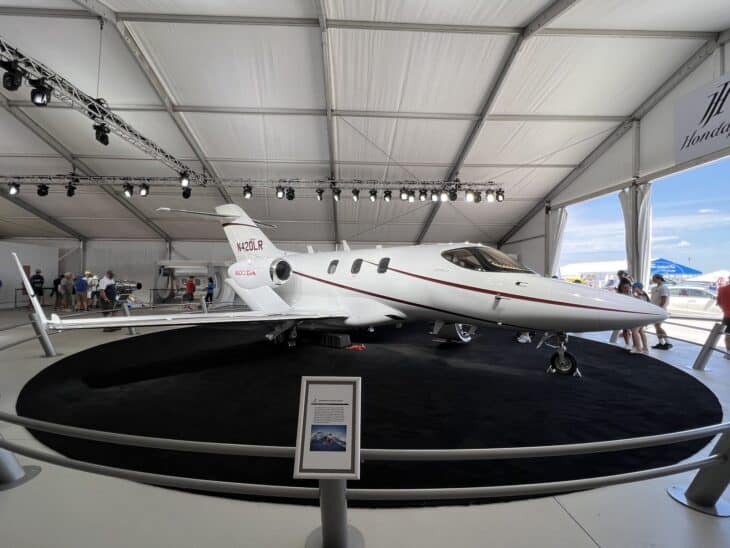

The HondaJet Elite II tops this list on weight at 11,100 pounds (5,035 kg), a figure 1,100 pounds past the NBAA line. It is also the fastest jet here at 422 knots, with a 43,000-foot ceiling and engines mounted on pylons above the wing to free up cabin space.
GlobalAir gives a factory list price of $6.95 million as of Q2 2025, the highest on this list. Sales are thin: GAMA logged 12 in 2025 and 5 in the first half of 2026. WUNC reported in October 2026 that Honda’s larger Echelon jet has slipped by a few years.
Trade sources cannot agree what to call it. SherpaReport files it under light jets, while Business Jet Traveler lists it among new VLJs. By weight, SherpaReport has the better case, and our ranking of the smallest private jets treats it the same way.
Why the range numbers on this page are not equal
The Citation M2’s 1,550 nm looks like a clear win over the Phenom’s 1,178 nm, but Business Jet Traveler notes the Cessna figure assumes no passengers. Fly it with one pilot and four passengers at high-speed cruise, and the published figure is about 1,150 nm.
The Vision Jet shows the gap most clearly. The G2’s specifications list 1,200 nm at economy cruise with a 200-pound payload, and 500 nm at maximum cruise with 1,200 pounds aboard. Cirrus gives 1,275 nm for the G3 without stating the conditions.
The HondaJet follows the same pattern, at 1,547 nm maximum against 1,223 nm with four occupants for the earlier version. When comparing any two jets, ask for the range with your real passengers and the reserves you plan to carry.
Which very light jet is best?
Our picks follow the mission. For an owner-pilot buying new, the Vision Jet wins: it has the lowest new price by about $1.5 million, and it comes with a whole-airframe parachute and emergency autoland. For a used first jet, take the Mustang.
If you carry four people on most trips, the extra weight earns its keep, and the Phenom 100EX or Citation M2 are the better tools. The HondaJet is for buyers who want the top speed and will pay for it. All of them require a type rating, and the wider private jet classes show what you gain one step up.
What about the D-Jet, Epic Victory, PiperJet and Adam A700?
You cannot buy any of them. Diamond suspended the D-Jet in 2013, Piper suspended the PiperJet in 2011, Adam ended in bankruptcy in 2008, and Epic’s Victory and Elite ended in bankruptcy in 2009. The Flaris LAR 1 from Poland first flew in 2019, but the maker’s own FAQ says the first examples go out as experimental aircraft, with certified versions planned later.
For the full database of these types, including the ones that never reached customers, see our very light jets category page.
FAQ
Sources and references used for research and fact-checking.
- NBAA, VLJ Training Guidelines
- GAMA, 2025 Year-End Aircraft Shipment Report
- GAMA, Q2 2026 Aircraft Shipment Report
- Cirrus Aircraft, G3 Vision Jet
- Business Jet Traveler, Cirrus Aircraft Unveils Third-generation G3 Vision Jet
- Wikipedia, Cirrus Vision Jet
- SherpaReport, New Private Jet Sales Rise in 2025
- Eclipse Aerospace, Eclipse 550
- Wikipedia, Eclipse 550
- Wikipedia, Eclipse 500
- Aircraft Cost Calculator, Eclipse 500 Price and Operating Costs
- Aircraft Cost Calculator, Eclipse 550 Price and Operating Costs
- Wikipedia, Cessna Citation Mustang
- Flycraft, Cessna Citation Mustang: Price, Value, Specs
- Cessna, Citation M2 Gen3
- Wikipedia, Cessna CitationJet/M2
- EASA, EASA Type Certificate Data Sheet, EMB-500 Phenom 100, Issue 09
- Embraer, Phenom 100EX
- Business Jet Traveler, The Embraer Phenom 100EX's Lightness of Being
- GlobalAir, HondaJet Elite II Specifications
- Wikipedia, HondaJet
- WUNC, Honda Aircraft delays Echelon delivery due to supply chain issues
- Cornell Legal Information Institute, 14 CFR 61.31, Type rating requirements
- Wikipedia, Very light jet
- Flaris, Frequently Asked Questions
Get the Newsletter
The latest aviation news and stories sent to your inbox.
About the Author

Tim is the owner and lead editor of AeroCorner since 2019, overseeing aviation content covering aircraft, airlines, airports, and the broader aviation industry. Through years of researching, writing, editing, and publishing aviation-focused content, he has developed extensive practical knowledge of commercial aviation and air travel. Based in Asia and a frequent traveler himself, Tim also brings firsthand passenger experience to AeroCorner’s coverage. Outside of publishing, he has also explored aviation firsthand through hands-on flight training in New Zealand.