VLJ (Very Light Jets)
Epic Victory
ICAO: EVIC
The single-engine jet that brought turbine performance to personal aviation

The latest aviation news and stories sent to your inbox.
The Cirrus Vision Jet, officially designated the SF50, was created to make jet ownership more accessible to owner-pilots. Compact, modern, and equipped with advanced safety systems, it bridges the gap between high-performance piston aircraft and traditional business jets. Its distinctive V-tail and single engine configuration set it apart in the light jet market.
Live Fleet Activity (SF50)
Fetching live data…










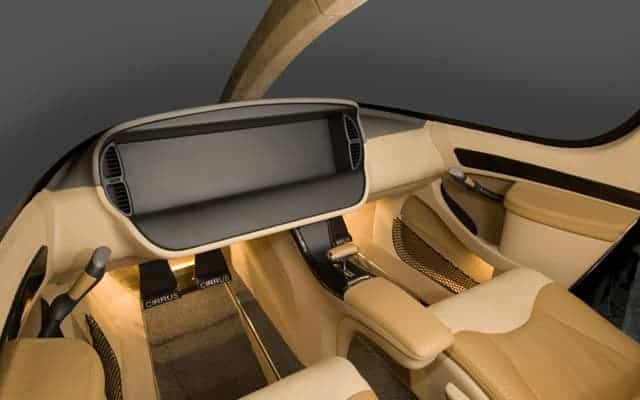


The Cirrus Vision Jet SF50 first flew in 2008 and entered service in 2016. It was designed as a personal jet capable of being flown by pilots transitioning from high-performance piston aircraft, offering simplified systems and advanced automation. The aircraft is powered by a single Williams FJ33 turbofan engine mounted above the rear fuselage.
One of the Vision Jet’s defining features is the inclusion of the Cirrus Airframe Parachute System, a whole-aircraft ballistic parachute designed to enhance safety in extreme emergencies. This system builds on Cirrus’s long-standing focus on safety technology in general aviation.
The Vision Jet typically seats up to five adults and two children, depending on configuration, and offers a range of approximately 1,200 nautical miles. Its Garmin Perspective Touch+ avionics suite provides intuitive flight controls and advanced situational awareness tools, including optional autoland functionality in later models.
Although smaller and slower than traditional light business jets, the Vision Jet occupies a unique niche. It offers turbine performance with lower operating complexity and cost, appealing to private owners, charter operators, and regional businesses.
The Cirrus Vision Jet represents a shift in business aviation philosophy, emphasizing accessibility, automation, and safety while maintaining the performance advantages of jet propulsion.
Sources and references used for research and fact-checking.