

Table of Contents
The failure started with three small vanes turned out of position deep inside the engine. The part of the compressor they sit in cannot be inspected without taking the engine apart.
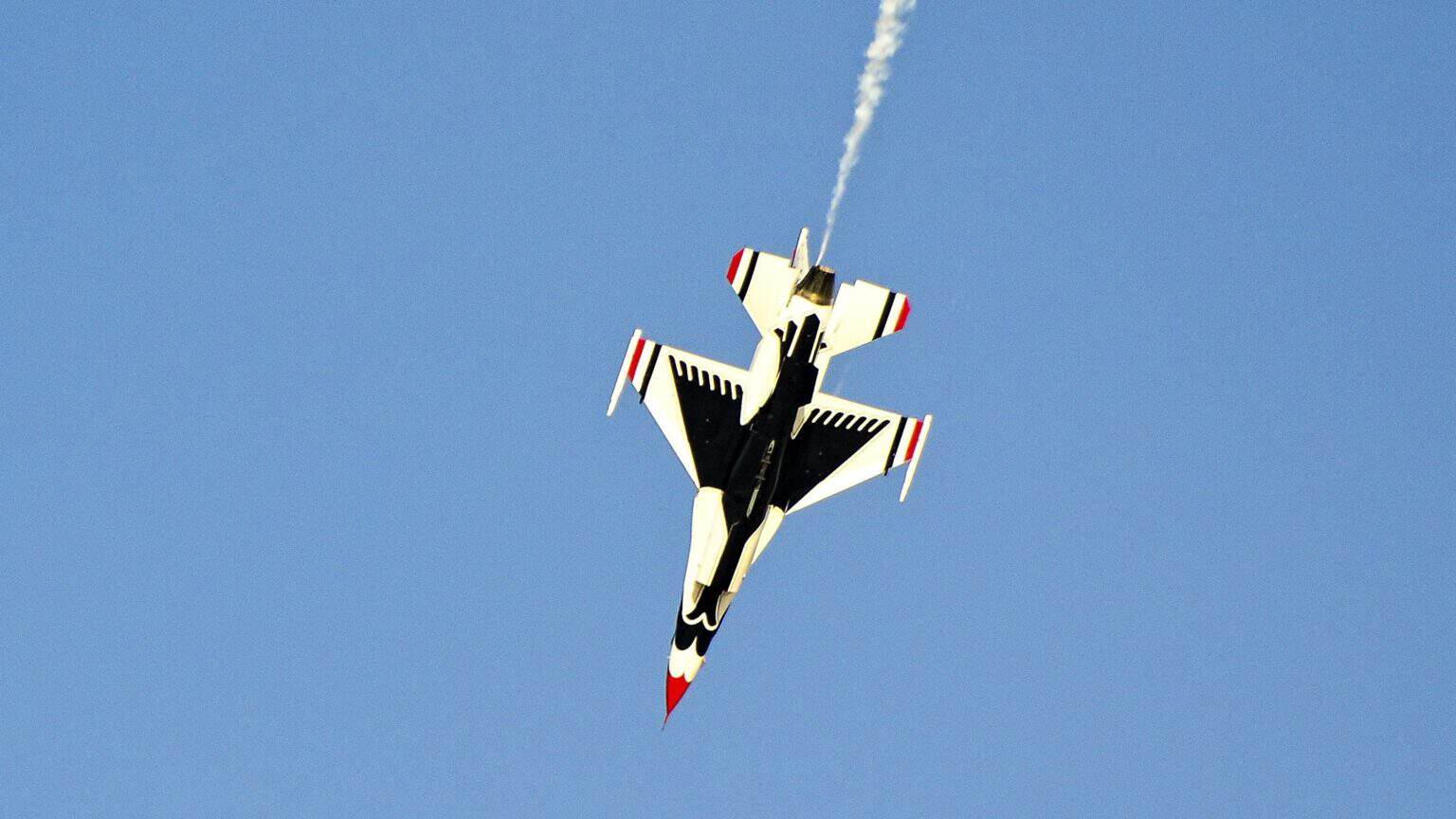
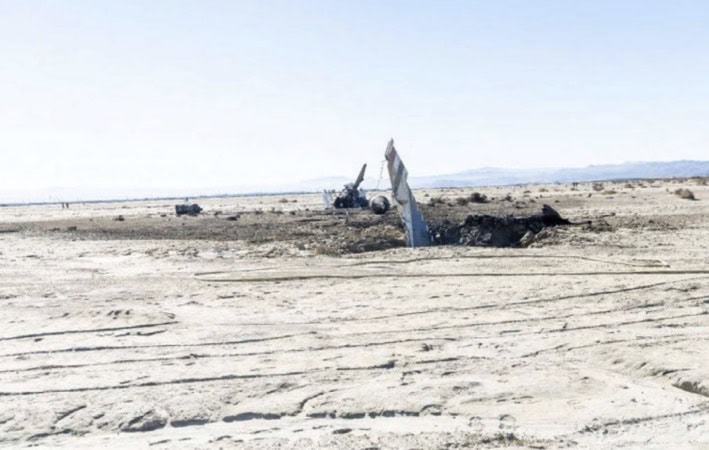
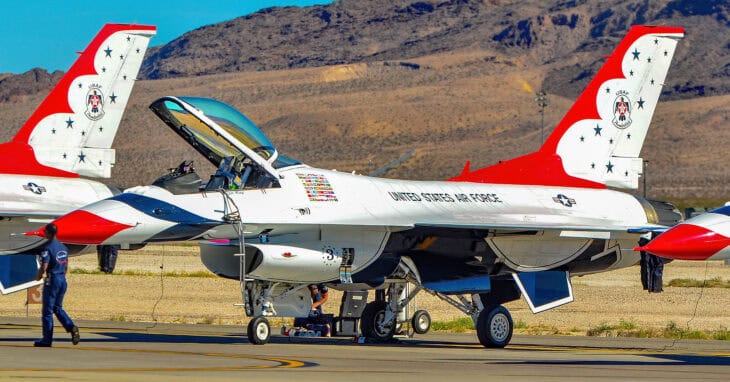
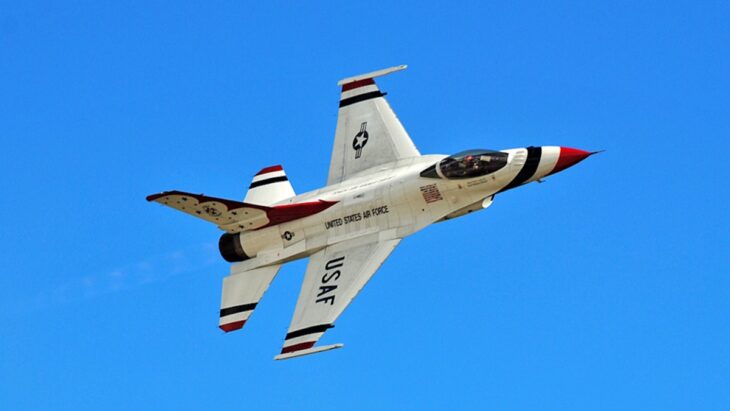
Air Combat Command released its accident investigation board report on September 21, 2026, into the loss of a Thunderbirds F-16C near Trona, California, on December 3, 2025. The jet was valued at $33,460,770.
Three misaligned, or turned, variable vanes in the fourth and fifth stages of the compressor disturbed the airflow through the engine. Two compressor blades failed from high cycle fatigue and separated in flight, wrecking the engine and taking the thrust with them.
The aircraft had flown normally the day before. Investigators concluded that mechanics could not have seen the turned vanes without disassembling the engine core, and that the pilot, who ejected at low altitude and was released the same day with minor injuries, had no other option.
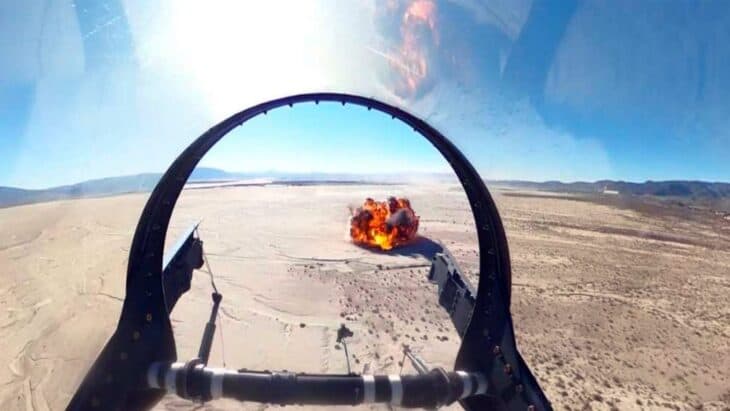
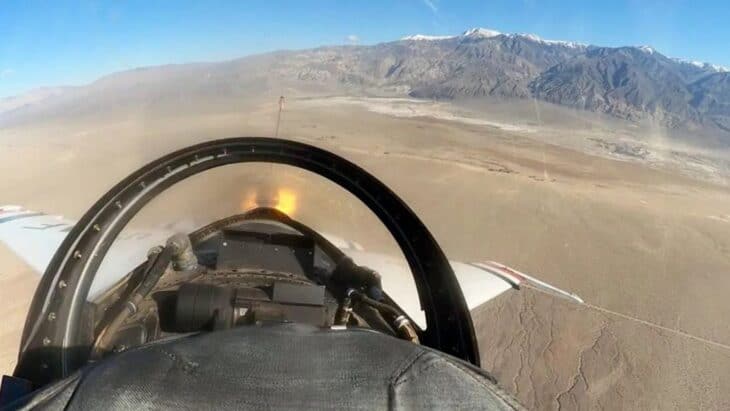
How Three Vanes Destroy an Engine
Variable vanes are not moving parts in the way blades are. They are stationary guides that set the angle at which air enters each stage of the compressor, and they pivot together to keep that angle correct across the engine’s speed range.
When three of them sit turned out of position, the air arriving at the next row of blades is no longer smooth. The report describes abnormal aerodynamic forces and irregular wake patterns hitting the blades behind them.
Those blades then vibrate at a rate they were never designed to absorb. One fifth-stage blade and one sixth-stage blade cracked and broke free, and a loose piece of titanium inside a running compressor destroys everything downstream of it.
The jet lost thrust at low altitude on a training sortie. The Thunderbirds fly from Nellis Air Force Base in Nevada, roughly 117 miles from where the aircraft came down.
What the board could not establish was why the vanes turned in the first place. The report states that evidence was insufficient to conclusively determine the cause.
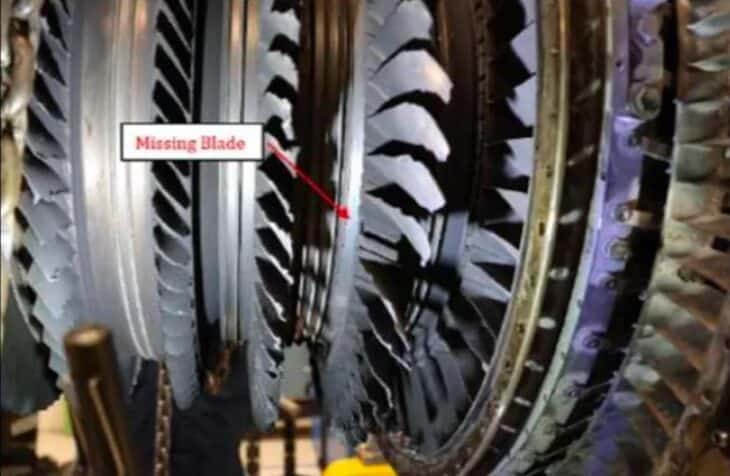
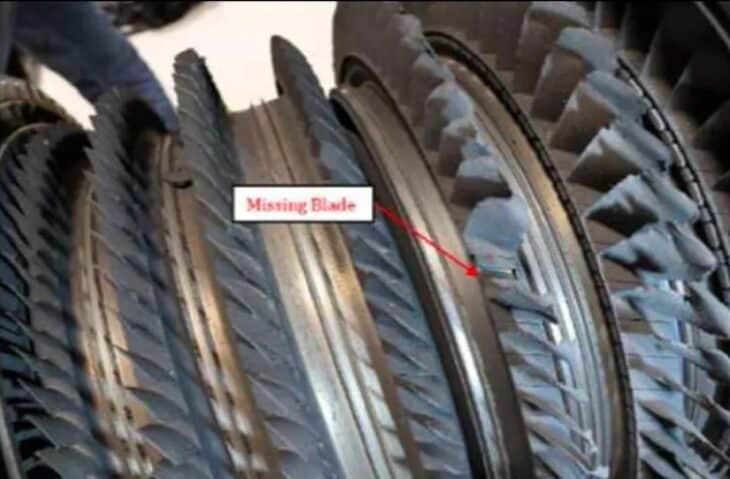
Stage Five Is the One Nobody Can Look At
The F-16 in question was powered by a Pratt & Whitney F100-PW-220, an engine whose compressor runs 13 stages. Maintainers inspect it with a borescope, a camera on a flexible probe fed in through access ports.
From the front of the engine, that probe reaches stages one through four. From the rear, it reaches stages six through 13. Those inspections happen every 100 flying hours.
Stage five sits between the two, and on this engine it cannot be reached from either direction. Seeing it means pulling the engine, shipping it to the depot at Tinker Air Force Base in Oklahoma, and taking the core apart.
The blind spot, in one line
On the F100-PW-220, stages 1 through 4 are inspected from the front and stages 6 through 13 from the rear, every 100 flying hours. Stage 5 is visible only after the engine is removed and fully disassembled at depot.
So the vanes that brought down a $33 million fighter were not missed through carelessness. They sat in the one row of the compressor that routine maintenance is not built to see.
The Same Failure Took an F-16 at Holloman in 2024
This is what makes the Trona report more than a single bad engine. On April 30, 2024, an F-16 crashed near Holloman Air Force Base in New Mexico after turned vanes in the same part of the same engine type let a compressor blade break loose.
That pilot also ejected with minor injuries. That aircraft was valued at about $21 million, and the report on it came out in February 2025, ten months before the Thunderbirds jet went down.
The Holloman engine had taken a foreign object debris event in August 2022. Its last depot visit, the only occasion on which anyone could have looked at stage five, was in 2016.
Technical orders do not require the core to be opened after a debris event when the stages either side of the blind spot show no damage. That is the gap: an engine can be cleared as undamaged while the one row nobody checked is not.
The Holloman board reached the same dead end on cause. Its president, Col. James B. Stewart, wrote that he found the cause for the turned vane impossible to determine.
Two Reports, No Fix Announced
Neither report announces a change to how the F100 is inspected. The Trona report contains no fleet-wide inspection order, and it does not claim to have found the mechanism that turns the vanes.
That matters because of how many aircraft this engine flies in. The F100 family has powered F-16s and F-15s for decades, which is a large installed base for a known inspection gap that has now been named in two crash reports.
The Air Force has been looking at its fighter engine supply more broadly, and last year it asked industry for alternatives to Pratt & Whitney and GE for its F-16 and F-15EX fleets. That is a procurement question rather than an inspection one, but it runs on the same aging hardware.
Both pilots walked away, which is the part of this that worked. Ejection seats and training did their job twice.
The Thunderbirds fly F-16s that are inspected and flown as carefully as any in the Air Force. The failure that destroyed one of them was invisible to that inspection by design, and until stage five can be seen without a teardown, it stays invisible.
Sources and references used for research and fact-checking.
- Air & Space Forces Magazine, Investigators Blame F-16 Thunderbird Crash on Turned Blade Deep in Engine
- Stars and Stripes, Loss of thrust caused Thunderbird jet crash in December, report says
- Task & Purpose, How a broken part in a jet engine's blind spot brought down an Air Force F-16
- Task & Purpose, Air Force Thunderbird crashed after failure in engine blind spot, investigation finds
Get the Newsletter
The latest aviation news and stories sent to your inbox.
About the Author

Tim is the owner and lead editor of AeroCorner since 2019, overseeing aviation content covering aircraft, airlines, airports, and the broader aviation industry. Through years of researching, writing, editing, and publishing aviation-focused content, he has developed extensive practical knowledge of commercial aviation and air travel. Based in Asia and a frequent traveler himself, Tim also brings firsthand passenger experience to AeroCorner’s coverage. Outside of publishing, he has also explored aviation firsthand through hands-on flight training in New Zealand.