

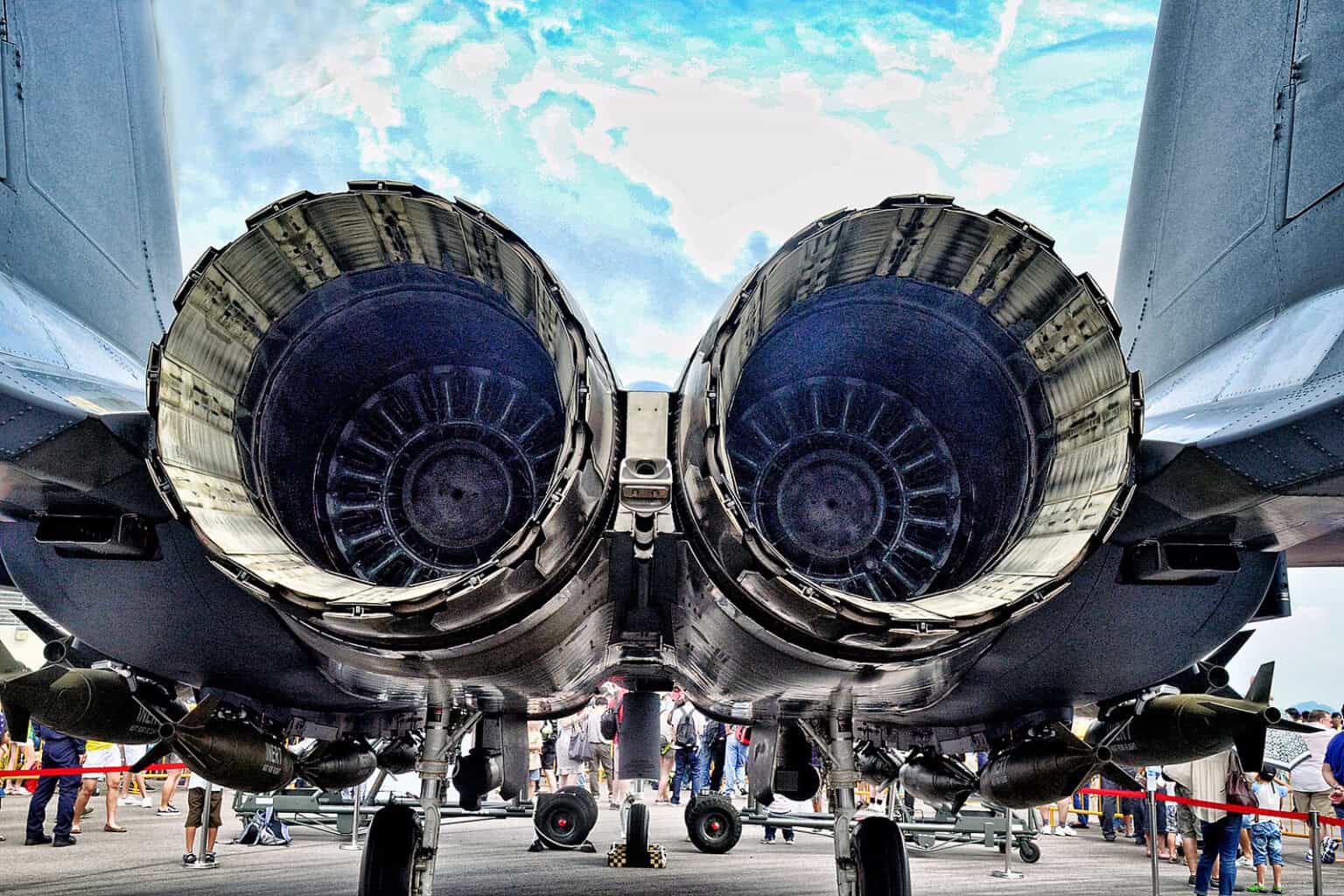
The US Air Force has asked industry to propose alternatives to the two engines that have powered its F-15 and F-16 fleets for more than forty years. The request for information became public this week and sets an August 28 deadline for responses.
It covers a future multiyear engine buy spanning both Air Force aircraft and jets sold abroad through Foreign Military Sales. That combination is what makes the volume interesting.
Since the 1970s, the F-15 and the F-16 Fighting Falcon have flown behind either the Pratt & Whitney F100 or the GE Aerospace F110. The F-15EX uses the F110. No third supplier has ever broken into the pair.
What the Air Force is asking for
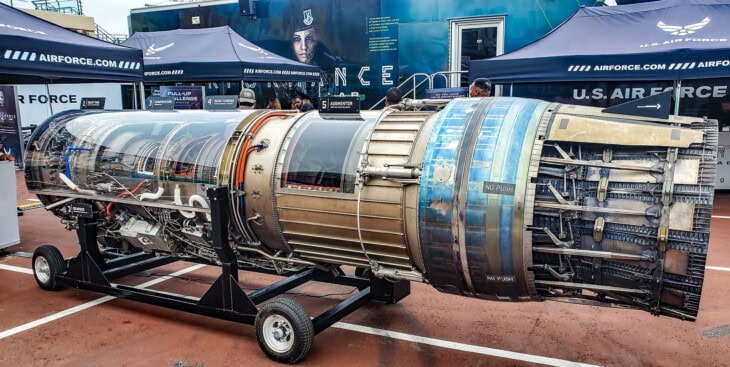
The service expects demand to reach more than 180 engines a year by fiscal 2034. That is a substantial run rate for a fighter powerplant, and it is the number a new entrant would be sizing a factory against.
The reasoning in the document is unusually blunt about the incumbent supply base. “The current industrial base has demonstrated significant challenges, including production delays, quality control issues, and critical obsolescence,” the Air Force wrote, in a passage reported by Defense News.
The evaluation emphasis has shifted accordingly. The Air Force says it will weigh lifecycle cost, supply chain resilience, maintainability and aircraft availability rather than purchase price alone, and it wants evidence that a bidder can scale production quickly and keep spares flowing for decades.
What the document does not say is whether the service wants clean sheet engines or improved versions of what already exists. That ambiguity is deliberate at this stage.
This is market research, not a contract
A request for information asks industry what is possible. It commits no money, guarantees no competition, and frequently leads nowhere. Treat the August 28 deadline as the point at which the Air Force learns whether a credible third supplier exists, not as the start of a procurement.
The Air Force has run this play before
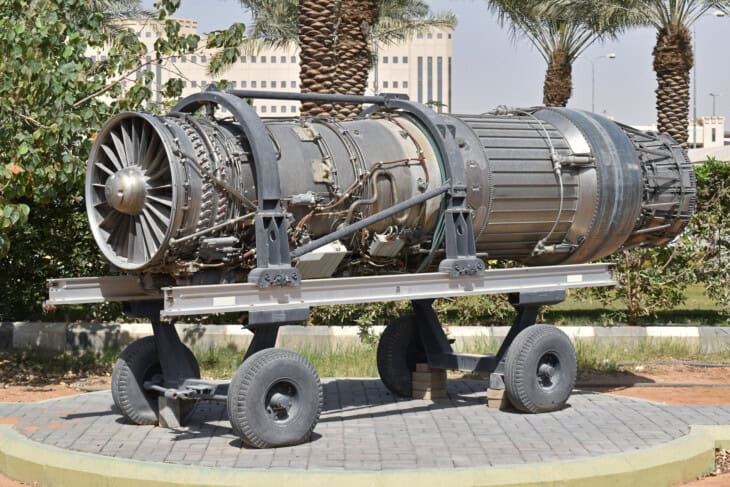
This is not a new idea. It is the second act of a fight the Air Force started in the late 1970s, when the F100 was suffering stalls and durability problems and Pratt & Whitney was the only supplier that could fix them.
The answer then was to manufacture a competitor. General Electric adapted the F101 from the B-1 bomber into what became the F110, and in February 1984 the Air Force split its fighter engine buy between the two companies.
Industry called it the Great Engine War. The Air Force credited it with roughly $2 billion in competitive savings, and both engines came out of the decade markedly more reliable than the design that started it.
Why 1984 still gets cited
The Alternate Fighter Engine program is the standing proof that competition fixed a fighter engine problem that contract pressure alone had not. It is also the reason a request like this one is read in the industry as a warning shot at the incumbents rather than a genuine search for a newcomer.
The counterexample is more recent. The F-35’s alternate engine, the GE and Rolls-Royce F136, was cancelled in 2011 on cost grounds, leaving that program with a single engine supplier.
The Government Accountability Office has since found that the F-35 engine contractor “is still not delivering engines to contract specifications after 20 years of production.” Engine trouble has also added about $3 billion and 15 months to the B-52 re-engining effort, according to the same GAO work.
Why breaking in is so hard
A fighter engine is not a component you can simply sell into an airframe. It has to be qualified to that specific aircraft, flight tested, cleared through the full envelope, and then supported with parts and depot capacity for thirty years or more.
That is an enormous entry cost against a modest annual volume by commercial standards, which is exactly why the field narrowed to two companies and stayed there. The structural pressures on engine manufacturers have only tightened since, with castings, forgings and specialty alloys now the constraint across the industry.
The export half of the request is the part that changes the math. F-16 production continues largely for foreign customers, so a meaningful share of that 180 engines a year sits outside the US fleet.
The wider context is an Air Force running short of patience with single source propulsion. It has already held F-35 production flat while the program works through its own supply problems. Whether anyone answers on August 28 with something the service can actually buy is a different question.
Sources and references used for research and fact-checking.
Get the Newsletter
The latest aviation news and stories sent to your inbox.
About the Author

Tim is the owner and lead editor of AeroCorner since 2019, overseeing aviation content covering aircraft, airlines, airports, and the broader aviation industry. Through years of researching, writing, editing, and publishing aviation-focused content, he has developed extensive practical knowledge of commercial aviation and air travel. Based in Asia and a frequent traveler himself, Tim also brings firsthand passenger experience to AeroCorner’s coverage. Outside of publishing, he has also explored aviation firsthand through hands-on flight training in New Zealand.