

Table of Contents
At 7 a.m. on Monday, August 3, 1981, more than 10,000 of America’s air traffic controllers walked off the job. By the end of that first day, about 7,000 flights had been canceled.
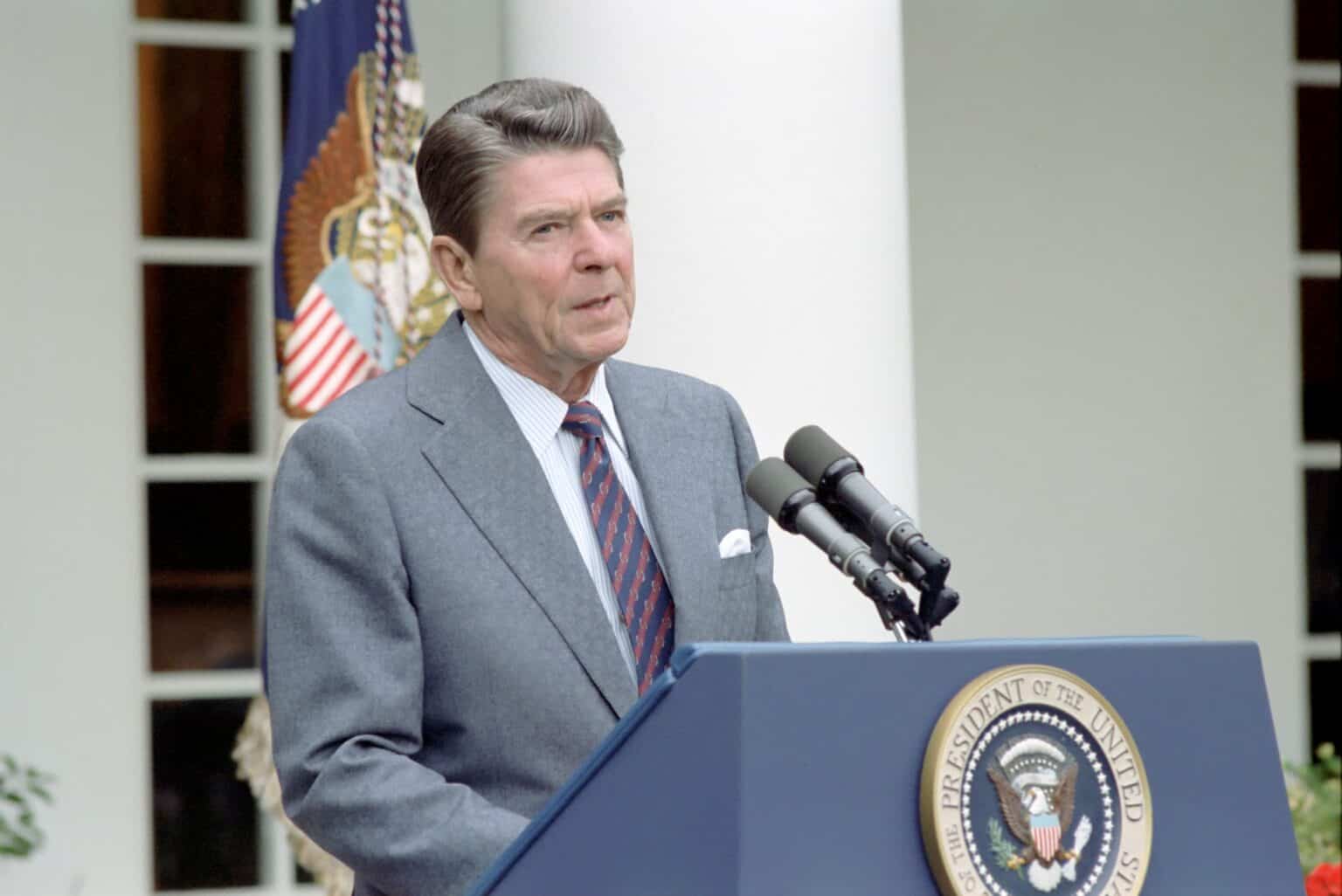
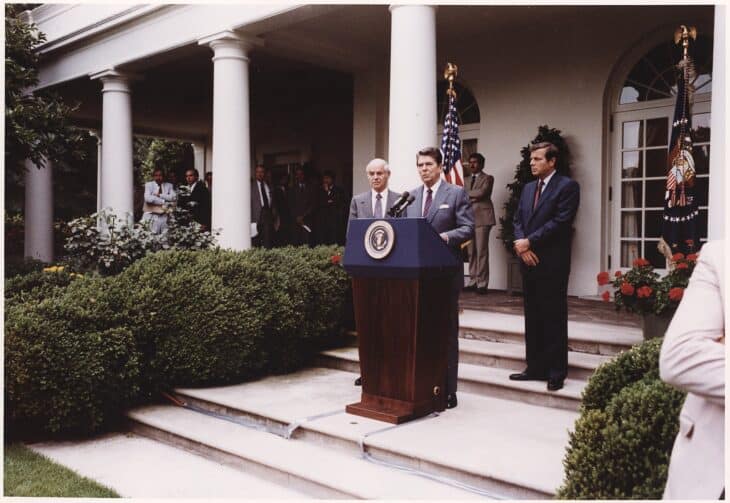
Shortly before 11 a.m., President Ronald Reagan stood in the White House Rose Garden and gave the strikers an ultimatum. If they did not report for work within 48 hours, he said, “they have forfeited their jobs and will be terminated.” Two days later he fired the ones who stayed out, and banned them from ever working for the FAA again.

The story usually ends there, with the airplanes somehow still in the sky. How the system actually kept running with most of its controllers gone is the more interesting part, and it is the reason the strike still matters every time the FAA stops departures nationwide or warns of a controller shortage.
How Did the Planes Keep Flying During the 1981 PATCO Strike?
They kept flying because the FAA flew fewer of them. A contingency plan put about 3,000 supervisors and roughly 900 military controllers into the gaps alongside the controllers who refused to strike, and it ordered the airlines to cut their schedules hard.
At 22 major airports, airlines had to fly 50 percent of their pre-strike peak-hour flights, later raised to 75 percent. The National Transportation Safety Board found the system ran at 75 to 83 percent of pre-strike scheduled airline levels, and that no basic air traffic control procedure was changed or compromised to keep it going.
The strike at a glance
Strike began August 3, 1981. Strikers fired August 5. Controllers left at work that month: 4,669, per the NTSB. Flights capped at 22 major airports at 50, then 75 percent of peak-hour levels. Full rebuild of the workforce: about a decade.
Why the Controllers Walked Out, and Why Reagan Could Fire Them
The Professional Air Traffic Controllers Organization, PATCO, opened contract talks with the FAA in February 1981. It asked for a $10,000 raise for every controller, a 32-hour work week and a better retirement package, citing the stress and safety load of the job.
The government had offered a package Reagan put at $40 million, a raise Transportation Secretary Drew Lewis described as 11.4 percent. Reagan said the union’s demands came to $681 million, 17 times what had been agreed.
The legal problem for PATCO was simpler than the money. Federal employees are barred from striking, and controllers had sworn an oath that reads, in part, “I am not participating in any strike against the Government of the United States or any agency thereof.” Reagan read that line aloud in the Rose Garden.
The courts went after the union’s money: a federal court impounded PATCO’s $3.5 million strike fund. Then, on October 22, 1981, the Federal Labor Relations Authority decertified PATCO as the controllers’ bargaining agent.
The Machinery That Kept the System Running
The FAA had written its strike plan before the walkout. On the first afternoon, Lewis told reporters the system was “operating somewhat in excess of 50 percent capacity,” and that the 150 military controllers already on duty would grow to between 700 and 850.
The people were only half of it. The other half was rationing the sky, so that the controllers who were left never faced more traffic than they could safely handle.
That rationing was called the Interim Operations Plan. For the first six weeks, the FAA’s command center handled the airlines’ schedule requests, which arrived at up to 200 a day.
By mid-September the airlines had crept back up to as much as 84 percent at the 22 pacing airports, so the FAA ordered a further 5 percent cut from the December schedule to keep a cushion for winter weather.
Private pilots were rationed too. From October 19, 1981, a General Aviation Reservation was required to fly on an instrument flight plan in en route airspace, booked through a flight service station, with the number of slots based on 1980 traffic scaled down to the reduced staffing.
Flow control was the real strikebreaker
The tools the FAA leaned on in 1981, a central command center metering traffic and caps on how many flights an airport can take, are the same ones it uses today. A modern ground stop or ground delay program is a direct relative of the strike plan.
That is the part of the story that never left. The FAA still manages delays before a flight pushes back, from a national command center, which our explainer on ground stops and flow control walks through step by step.
How Many Controllers Were Actually Fired?
The headline number, 11,345, is the one most histories repeat. It is not the only one, and the spread says something about how messy the firings were.
| Source | Figure | What it counts |
|---|---|---|
| ABA Journal | 11,345 | Controllers fired for ignoring the order |
| History.com, Encyclopedia.com | 11,359 | Controllers fired or dismissed |
| NTSB special investigation, 1981 | About 11,400 | Walked out, of a 17,272-strong workforce |
| FAA Civil Aeromedical Institute, 1998 | 10,438 struck, about 10,400 fired | PATCO members on strike, of about 17,000 controllers |
The differences come from what is being counted. Some strikers went back before the deadline, and Encyclopedia.com puts the number who returned at about 1,300, so walkout totals run higher than firing totals. History.com also describes August 5 as the day Reagan began the firings, not the day he finished them.
The safe statement is that a little over 11,000 controllers were fired, out of a workforce of about 17,000. The FAA’s own research office, writing in 1998, used the lower figure of about 10,400.
The Myth: Reagan Replaced Them Overnight
The myth
Military controllers took over and the system was back to normal within weeks. In fact the military supplied fewer than 1,000 of the stand-ins, flights stayed capped for months, and the FAA did not finish rebuilding its controller workforce until 1992.
A controller cannot be hired on Monday and working traffic on Friday. The FAA began taking applications on August 17, 1981, but every new hire still had to pass an aptitude test, the FAA Academy and then years of on-the-job training before certification.
The scale of that pipeline was enormous. Between 1981 and 1992, the controller aptitude test was given more than 400,000 times, and only 25,277 applicants were selected on their scores to go on to the Academy.
The General Accounting Office, now the Government Accountability Office, tracked the result. Before the strike the FAA had about 16,200 controllers, 13,200 of them fully certified. Right after it, the workforce fell to about 6,700, with only 5,000 fully certified.
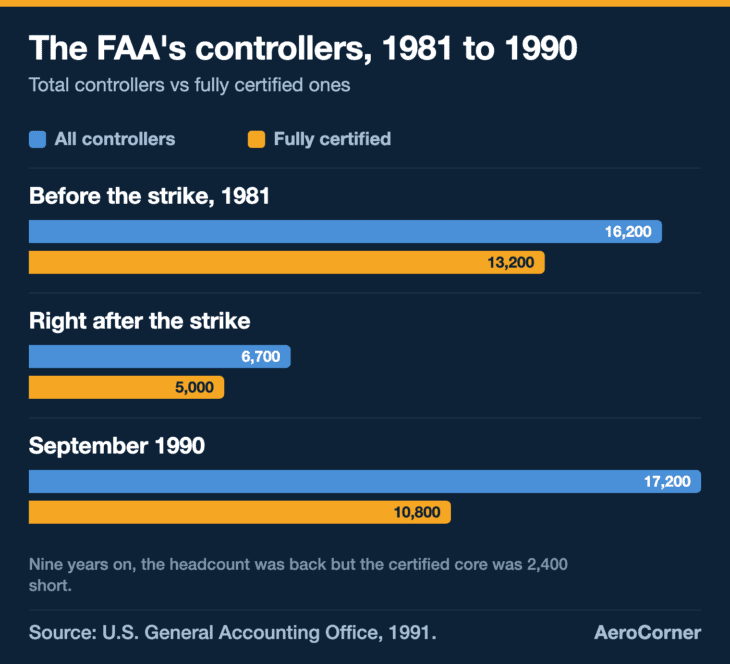
By September 1990 the headcount was back to 17,200, more than before the strike. But only 10,800 were fully certified, about 2,400 short of the pre-strike level, while airline flights at FAA-towered airports had grown from about 10 million in 1981 to almost 13 million in 1990.
The FAA’s own research arm dates the end of the recovery to mid-1992, when the large hiring program was no longer needed. That is roughly 11 years from the walkout.
What Happened Next
The controllers hired after 1981 eventually organized a union of their own. The aftermath ran for 12 years:
Aug. 3, 1981
The walkout. More than 10,000 PATCO members strike at 7 a.m. Reagan sets a 48-hour deadline the same morning.
Aug. 5, 1981
The firings. Controllers who stayed out are dismissed and barred from rehire by the FAA.
Aug. 17, 1981
Hiring opens. The FAA starts taking applications for new controllers.
Oct. 19, 1981
Private flying rationed. The General Aviation Reservation program starts.
Oct. 22, 1981
PATCO decertified. The Federal Labor Relations Authority strips the union of its bargaining rights.
June 19, 1987
A new union. NATCA is certified after seven in 10 voting controllers choose it.
1992
Rebuild complete. The FAA ends its post-strike mass hiring program.
Aug. 12, 1993
Ban lifted. President Clinton ends the prohibition on rehiring the 1981 strikers.
Lifting the ban did not bring many people back. By 2006, NPR counted about 850 former strikers rehired by the FAA.
The lesson about time never changed either. A controller is still hired young, trained for years and retired at 56 by law, so a lost workforce cannot be bought back quickly, the same math behind today’s controller staffing crisis.
Why the 1981 Strike Still Matters
The FAA counted 11,027 certified professional controllers on September 30, 2026, which is fewer than the 13,200 fully certified controllers it had the day before the 1981 strike. Our breakdown of how many air traffic controllers there are explains how that number is built and what the FAA’s target is.
Controllers are still federal employees who cannot strike, which is why pay disputes now play out in Congress and contract talks instead of on picket lines. One recent fight was over a withheld raise, settled in a deal covered in our news story on the controllers’ 2.8% raise.
The next time a ground stop holds your flight at the gate, you are watching the same tool that carried the country through August 1981. The planes kept flying then because the FAA decided how many could fly, and it has been doing it ever since.
Sources and references used for research and fact-checking.
- Miller Center, University of Virginia, August 3, 1981: Remarks on the Air Traffic Controllers Strike
- Ronald Reagan Presidential Library, National Archives, On This Day: Reagan and the Air Traffic Controllers
- National Transportation Safety Board, Air Traffic Control System, Special Investigation Report SIR-81-07
- FAA Civil Aeromedical Institute, Recovery of the FAA Air Traffic Control Specialist Workforce, 1981-1992 (DOT/FAA/AM-98/23)
- U.S. General Accounting Office, Aviation Safety: Limited Success Rebuilding Staff and Finalizing Aging Aircraft Plan (GAO/RCED-91-119)
- Federal Aviation Administration, FAA World, February 1982
- NPR, Timeline: America's Air-Traffic Controllers Strike
- ABA Journal, August 5, 1981: Reagan fires air traffic controllers
- Encyclopedia.com, PATCO Strike
- History.com, Reagan fires 11,359 air traffic controllers
- Fox News, FAA breaks controller hiring record after chief warned system chronically understaffed
- National Air Traffic Controllers Association, NATCA: This Sunday Marks 35th Anniversary of FLRA Certification
Get the Newsletter
The latest aviation news and stories sent to your inbox.
About the Author

Tim is the owner and lead editor of AeroCorner since 2019, overseeing aviation content covering aircraft, airlines, airports, and the broader aviation industry. Through years of researching, writing, editing, and publishing aviation-focused content, he has developed extensive practical knowledge of commercial aviation and air travel. Based in Asia and a frequent traveler himself, Tim also brings firsthand passenger experience to AeroCorner’s coverage. Outside of publishing, he has also explored aviation firsthand through hands-on flight training in New Zealand.