

Table of Contents
The largest drone known to have flown is the AeroVironment Sunglider, a solar-powered flying wing with a 262-foot (80 m) wingspan that climbed to 62,500 feet over New Mexico in 2020. That wing is wider than a Boeing 747-8’s.
Most lists crown the Northrop Grumman RQ-4 Global Hawk instead. It is the largest drone in regular military service, at 130.9 feet (39.9 m) across and 32,250 pounds (14,628 kg), but at least seven purpose-built drones with wider wings have already flown.
This list ranks drones by wingspan, the measure everyone pictures when they say “big,” as of September 2026. A second leaderboard below ranks them by weight, where the order changes completely, and a final section covers the biggest drones you can actually buy.
| Rank | Drone | Wingspan | Status |
|---|---|---|---|
| 1 | AeroVironment / SoftBank Sunglider | 262 ft (80 m) | Test program, flew 2019 to 2024 |
| 2 | NASA / AeroVironment Helios | 247 ft (75.3 m) | Destroyed 2003 |
| 3 | Boeing Condor | Over 200 ft (61 m) | Retired, museum |
| 4 | AeroVironment Global Observer | 175 ft (53 m) | Crashed 2011 |
| 5 | AVIC Qimingxing-50 | 164 ft (50 m) | Flew 2022 |
| 6 | Boeing Phantom Eye | 150 ft (46 m) | Retired, museum |
| 7 | Facebook Aquila | About 140 ft (43 m) | Canceled 2018 |
| 8 | Northrop Grumman RQ-4 Global Hawk / MQ-4C Triton | 130.9 ft (39.9 m) | In service |
| 9 | BAE Systems PHASA-35 | 115 ft (35 m) | In development |
How this ranking works
The measure is wingspan, because that is what makes a drone look big. To qualify, a drone had to be built as an unmanned aircraft and actually fly: paper designs and mockups are out, and so are crewed aircraft later converted to fly without a pilot, which get their own section at the end. Where the maker and a partner publish different figures, both are given.
If you are wondering where the quadcopters are, our guide to the main types of drones covers how rotor, fixed-wing and hybrid designs differ. At this scale, every contender is a fixed-wing aircraft.
1. AeroVironment / SoftBank Sunglider
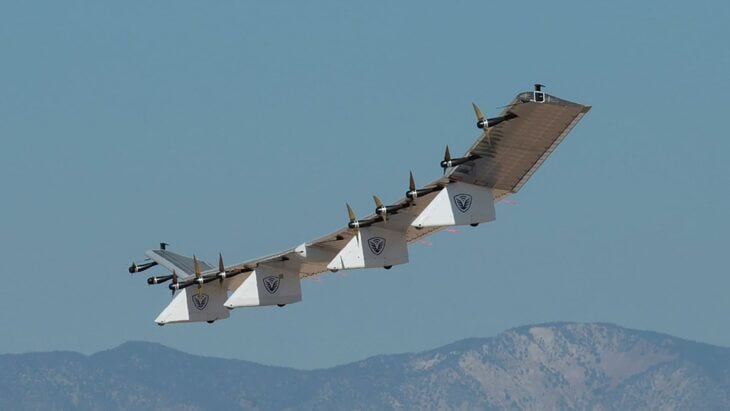
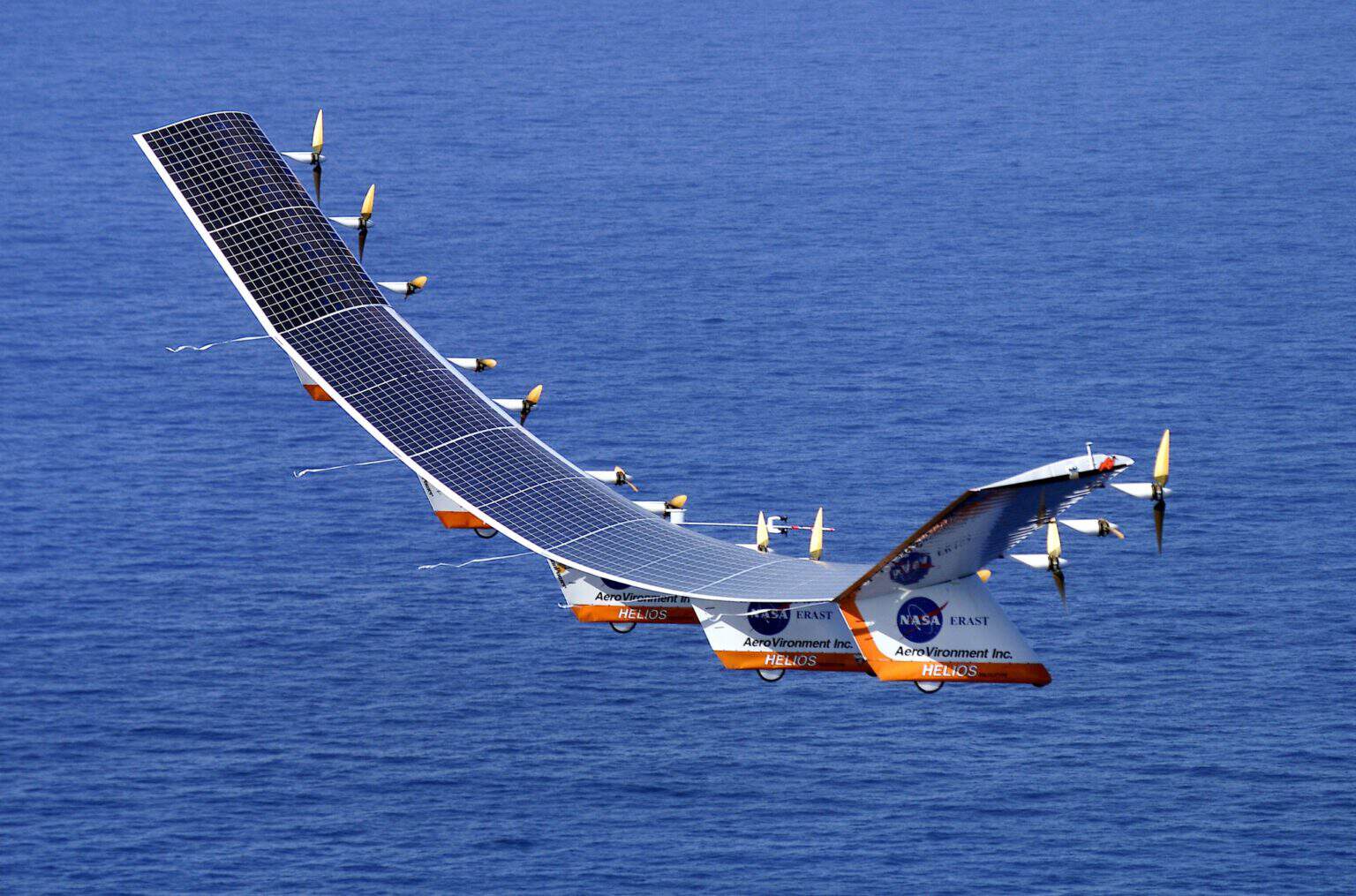
AeroVironment gives the Sunglider a wingspan of 262 feet, while its Japanese partner SoftBank quotes 78 meters (256 feet). Either figure puts it first, and either is wider than the 224 ft 5 in wingspan of a Boeing 747-8.
It was built as a flying cell tower. Ten electric motors run on solar panels covering the wing, and the aircraft is meant to circle about 65,000 feet up for months, beaming mobile service to the ground.
On September 22, 2020, it reached 62,500 feet above Spaceport America and stayed aloft for more than 20 hours, while engineers on the ground made video calls through it on ordinary LTE phones. An upgraded version flew to the stratosphere again in August 2024, in a US Department of Defense trial.
A 262-foot wing, a 150-pound payload
For all that span, AeroVironment rates the Sunglider to carry payloads of only up to 150 pounds (68 kg). The wing is huge because it has to collect enough sunlight to fly all night on stored battery power, not because it carries anything heavy.
2. NASA / AeroVironment Helios
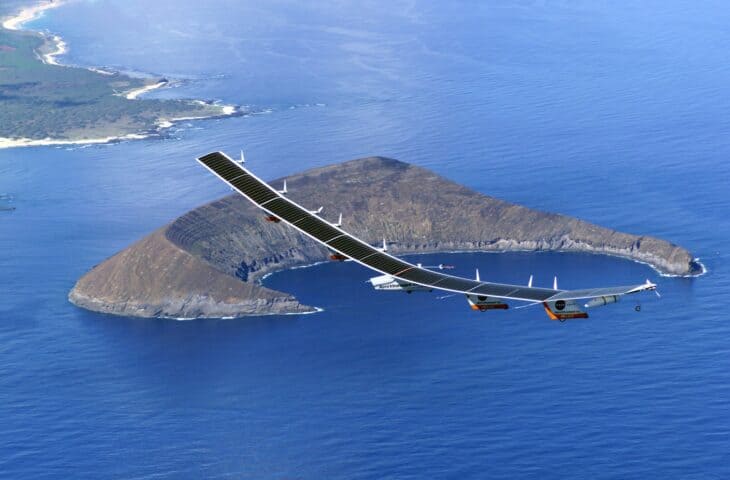

Helios held the title for nearly two decades. NASA lists its wingspan at 247 feet (75.3 m), yet it weighed only 1,322 pounds (600 kg) empty and up to 2,048 pounds (929 kg) loaded.
It was developed from NASA’s 206-foot (63 m) Centurion. On August 13, 2001, Helios reached 96,863 feet, which NASA records as a world record for sustained horizontal flight by a winged aircraft.
The record still stands, but the aircraft does not. Helios crashed on June 26, 2003, during a checkout flight from the Navy’s Pacific Missile Range Facility on Kauai.
3. Boeing Condor
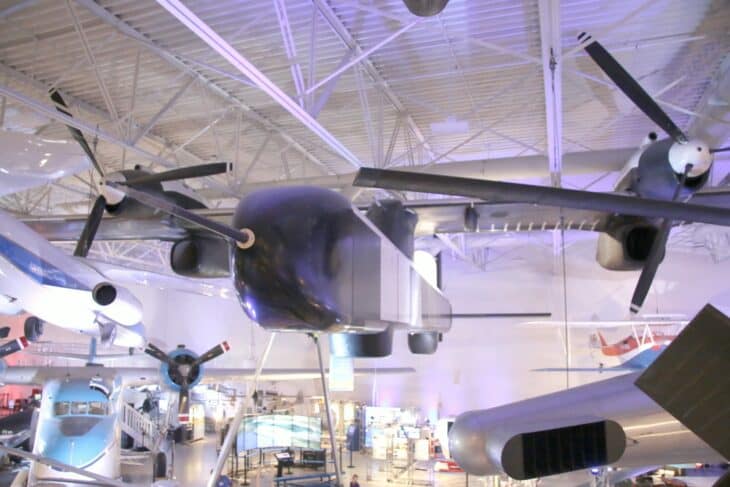
The Condor proves that giant drones are not a solar-age idea. Boeing built it in the late 1980s as a secret high-altitude reconnaissance testbed, with a wingspan of over 200 feet (61 m) and two 175-horsepower piston engines.
According to the Hiller Aviation Museum, it set an altitude record for a piston-powered aircraft of 67,000 feet and logged more than 300 hours of flying, all of it from Moses Lake, Washington. It flew itself, talking to computers on the ground by satellite, decades before that was routine.
4. AeroVironment Global Observer
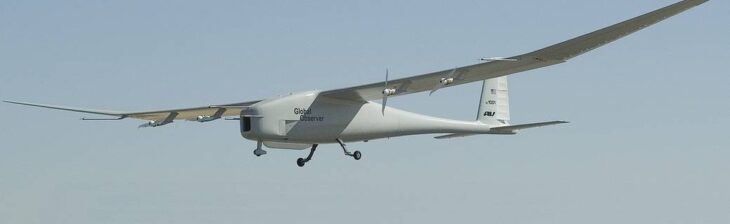

Global Observer’s all-composite wing measured 175 feet (53 m), slightly wider than the 172 ft 0 in span of a B-2 Spirit bomber. It was designed to stay aloft between 55,000 and 65,000 feet, with a program goal of five to seven days of non-stop flight.
It never got there. On April 1, 2011, the prototype crashed about 18 hours into its ninth test flight at Edwards Air Force Base, having already flown nearly twice as long and higher than on any earlier flight.
5. AVIC Qimingxing-50
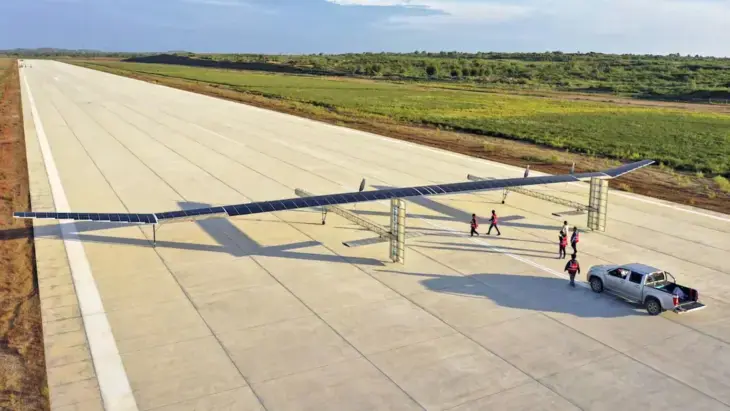
The Qimingxing-50 has a 50-meter (164-foot) wing, according to its head designer, Zhu Shengli. The drone, or Morning Star 50, first flew on September 3, 2022, from an airport in Yulin, Shaanxi province, and stayed up for 26 minutes.
It shares that 164-foot span with Google’s Solara 50, which never made the list for a simple reason. On its only flight, in May 2015, the Solara 50 suffered a structural failure and hit the ground a little over four minutes after takeoff.
6. Boeing Phantom Eye
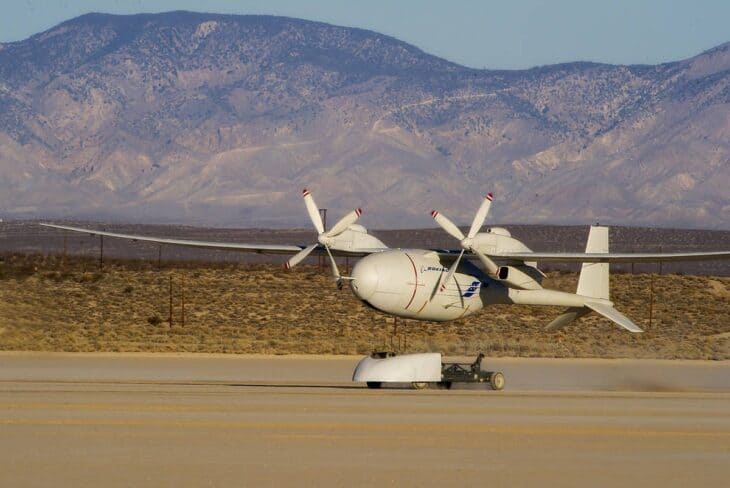

Phantom Eye ran on liquid hydrogen, not sunlight, and its 150-foot (46 m) wing was designed to keep it on station at up to 65,000 feet for four days. Boeing rated it to carry a 450-pound (204 kg) payload.
Its first autonomous flight, on June 1, 2012, was modest: 4,080 feet and 62 knots. NASA transferred the demonstrator to the Air Force Flight Test Museum at Edwards in 2016.
7. Facebook Aquila
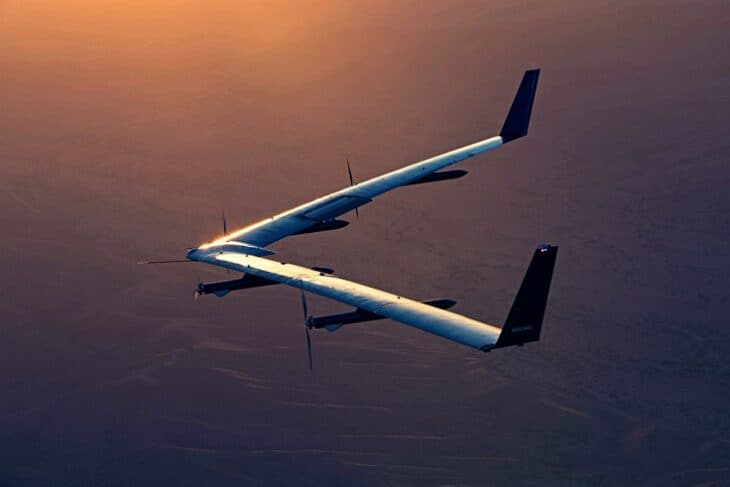
Facebook compared Aquila’s wingspan to a Boeing 737’s and put it at 140 feet (43 m), while FlightGlobal reported 42 m (138 feet). Both are wider than the 117 ft 5 in span of a Boeing 737-800, and the aircraft weighed under 1,000 pounds.
Its first flight, on June 28, 2016, lasted 96 minutes and ended with a structural failure on final approach, according to the NTSB. A second flight in 2017 landed cleanly, but Facebook shut the program down in 2018.
8. Northrop Grumman RQ-4 Global Hawk and MQ-4C Triton
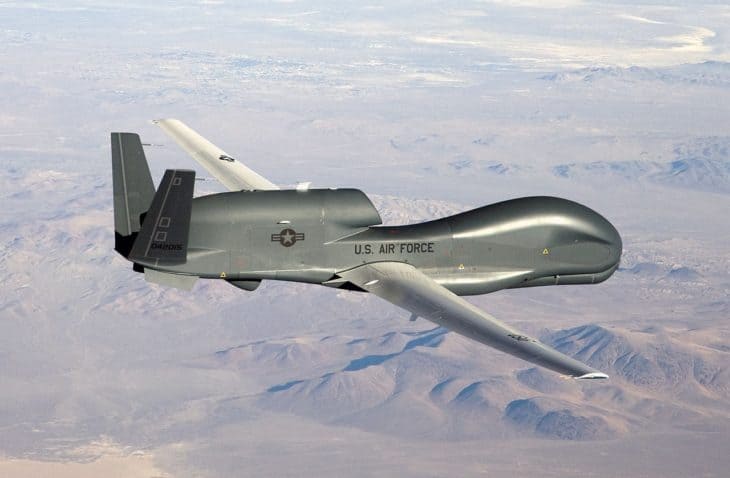
This is the largest drone you can actually find on duty today. The Air Force’s RQ-4 and the Navy’s MQ-4C Triton share the same 130.9-foot (39.9 m) wing, a 47.6-foot (14.5 m) fuselage and a maximum takeoff weight of 32,250 pounds (14,628 kg).
That wing is wider than the 103 ft 0 in span of the U-2 Dragon Lady, the Air Force’s crewed high-altitude spy plane. An RQ-4 Block 40 holds the Air Force endurance record for an unrefueled flight, at 34.3 hours.
The Global Hawk first flew in 1998, and the Air Force has since cut its fleet, but current law bars it from retiring any more RQ-4s through September 30, 2030. Japan’s Air Self-Defense Force flies the type too, and lost one off the coast of Tottori.
The Triton reached initial operating capability in 2023. NAVAIR says it can fly above 50,000 feet for more than 24 hours with a range of 7,400 nautical miles, watching the ocean for the Navy. For how these compare with the armed drones that fly combat missions, see our ranking of the best military drones in the world.
9. BAE Systems PHASA-35
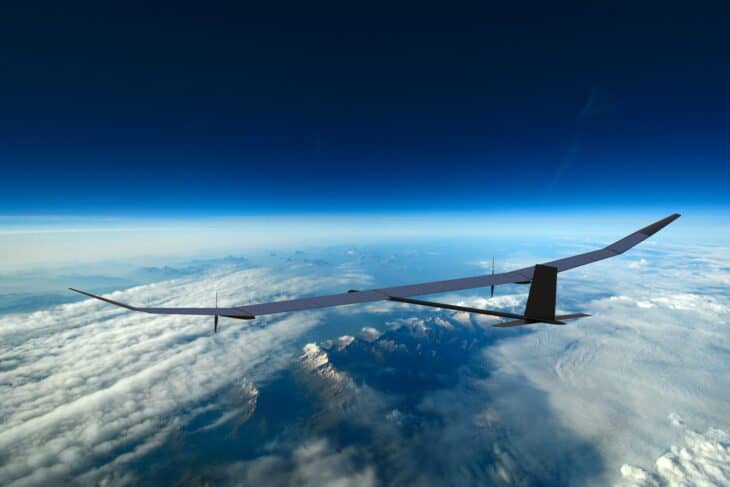
BAE Systems gives the PHASA-35 a 35-meter (115-foot) wingspan, yet the aircraft weighs only about 330 pounds (150 kg) and carries a 33-pound (15 kg) payload. In June 2023, it climbed above 66,000 feet and stayed up for 24 hours on its first stratospheric flight.
Like the Sunglider, it is designed to stay aloft for months at a time. It edges out the Airbus-designed Zephyr, now run by AALTO, which is smaller at 82 feet (25 m) but holds the more famous record.
The longest-flying drone weighs 154 pounds
AALTO’s Zephyr weighs about 154 pounds (70 kg), and in 2025 it stayed airborne for 67 days, 6 hours and 52 minutes, a world record for continuous flight. The flight ended when the aircraft had to be ditched in the Indian Ocean.
The heaviest drones: a different leaderboard
Rank by weight instead of wingspan and the solar giants vanish. Helios, the No. 2 drone by span, weighed less loaded than the payload of some drones in this table.
| Drone | Max takeoff weight | Wingspan | Status |
|---|---|---|---|
| Sukhoi S-70 Okhotnik | About 44,000 to 55,000 lb (20 to 25 t), reported | Over 62 ft (19 m), reported | Flight testing |
| Northrop Grumman X-47B | 44,000 lb (20,000 kg) | 62.1 ft (18.9 m) | Navy demonstrator |
| Boeing MQ-25 Stingray | About 44,000 lb (20,000 kg), unofficial | 75 ft (22.9 m) | In production |
| AVIC Jiutian | 35,300 lb (16,000 kg) | 82 ft (25 m) | Flew December 2025 |
| RQ-4 Global Hawk / MQ-4C Triton | 32,250 lb (14,628 kg) | 130.9 ft (39.9 m) | In service |
| Baykar Kizilelma | 18,700 lb (8,500 kg) | 32.8 ft (10 m) | Flying since 2022 |
| Baykar Akinci | 13,200 lb (6,000 kg) | 65.6 ft (20 m) | In service |
| General Atomics MQ-9B SkyGuardian | 12,500 lb (5,670 kg) | 79 ft (24 m) | In service |
| IAI Heron TP | 12,500 lb (5,670 kg) | 85 ft (26 m) | In service |
Sukhoi S-70 Okhotnik
Russia’s stealth flying wing is probably the heaviest drone to have flown, but Russia has never published an official weight. Russian state news agency TASS gave its takeoff weight as 20 tons in 2019, and other reports put it as high as 25 tons.
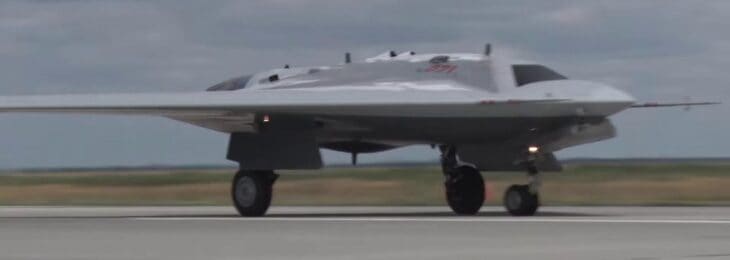

On October 5, 2024, an S-70 carrying a glide bomb was shot down over eastern Ukraine, apparently by a missile from a Russian fighter, and its wreckage came down near Kostiantynivka.
Northrop Grumman X-47B and Boeing MQ-25 Stingray
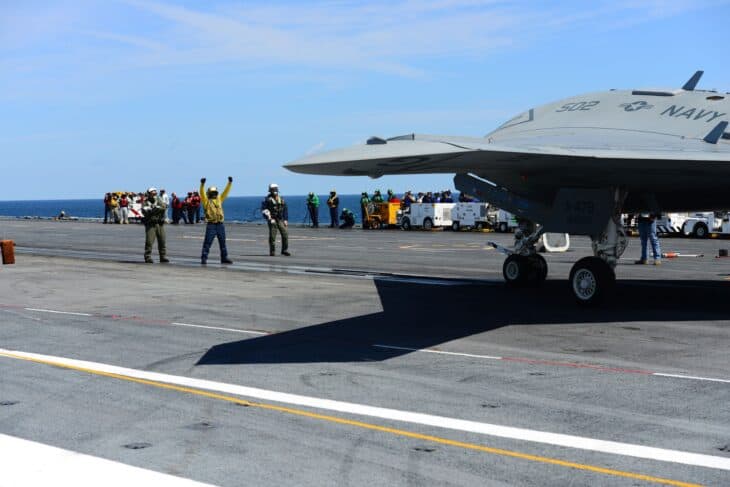
Northrop Grumman lists the X-47B’s maximum gross takeoff weight at 44,000 pounds (20,000 kg), on a wingspan of just 62.1 feet (18.9 m). The Navy demonstrator first flew in February 2011, and it is the heaviest drone here with an official weight on record.
_May_14,_2013,_in_the_Atlantic_Ocean_130514-N-TB177-393.jpg)
Its successor on the carrier deck, Boeing’s MQ-25 Stingray, is a 75-foot (22.9 m) aerial tanker built to pass at least 14,000 pounds of fuel to fighters 500 nautical miles from the ship. The Navy has not published its weight; one widely cited estimate puts it at about 44,000 pounds.
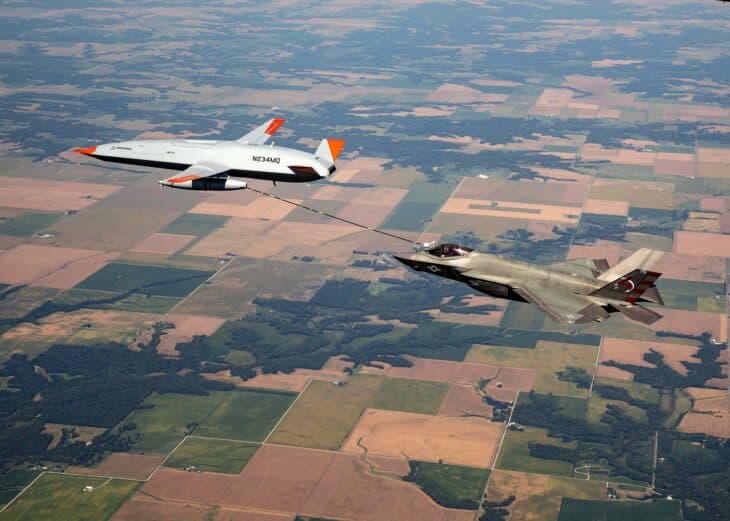

The first production MQ-25A flew in April 2026, and the Navy now expects it to reach initial operating capability in 2029, four years later than planned.
AVIC Jiutian
China’s newest heavyweight first flew on December 11, 2025, from Pucheng in Shaanxi province. Xinhua gives it a maximum takeoff weight of 16 tonnes (35,300 pounds) and a 25-meter (82-foot) wingspan.
Its payload capacity alone is 6,000 kilograms (13,230 pounds), which is more than the entire loaded weight of an MQ-9B. Xinhua gives it an endurance of up to 12 hours.
Those medium-altitude drones at the bottom of the table are the ones fighting today’s wars. Our comparison of the Reaper and Predator shows how the Reaper family outgrew the drone that started it all.
How big are US Army drones?
Smaller than most people assume. The largest drone the US Army operates is the General Atomics MQ-1C Gray Eagle, a Predator relative with a 56-foot (17 m) wingspan, a 3,600-pound (1,633 kg) maximum takeoff weight and up to 25 hours of endurance.
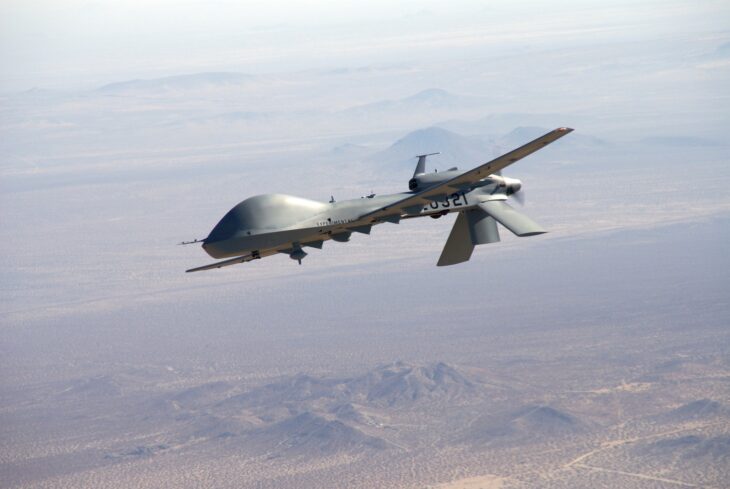

That is about a third of the Air Force Reaper’s 10,500-pound (4,760 kg) maximum takeoff weight, and about a ninth of a Global Hawk’s. The big, long-range drones belong to the Air Force and the Navy.
The largest drones you can buy
In the United States, the dividing line is 55 pounds (25 kg). FAA Part 107 defines a small drone as one weighing less than 55 pounds at takeoff, including everything on board, and anything heavier needs a special exemption under 49 U.S.C. 44807, which the FAA grants case by case.
Registration rules apply well below that line, and our guide explains how to register a drone step by step.
DJI’s biggest drones are far beyond that line. Its Agras T100 crop sprayer, launched worldwide in July 2025, has a maximum takeoff weight of up to 177 kg (390 pounds) and an operating payload of 100 kg (220 pounds).
The FlyCart 100 delivery drone, launched in December 2025, tops out at 170 kg (375 pounds). DJI quotes payloads from 65 kg (143 pounds) over 12 km (7.5 miles) to 100 kg depending on battery setup and distance, while its smaller FlyCart 30 maxes out at 95 kg (209 pounds).
Spraying crops with any drone also requires an FAA Part 137 agricultural operator certificate. Cargo drones go bigger still: China’s Feihong FH-98, an unmanned conversion of the Y-5B biplane, first flew in 2018 with a 1.5-tonne (3,300-pound) payload, and a Tengden cargo drone that flew in August 2024 is rated for 2,000 kg (4,400 pounds).
What about crewed aircraft flown as drones?
Several crewed designs have flown with nobody aboard, and they are left out of the ranking because they were not built as drones. Skydweller, the rebuilt Solar Impulse 2, has flown uncrewed on a 236-foot (72 m) wing. On December 1, 1984, NASA flew a remotely piloted Boeing 720 airliner with no crew aboard and deliberately crashed it at Edwards to test an anti-misting fuel additive, which failed. The Air Force has also taken delivery of 127 retired F-16s converted into optionally piloted QF-16 target drones since the first unmanned flight in 2013.
The practice goes back decades. In the Cold War, several B-47 Stratojet bombers were converted into target drones for the Bomarc missile program, so flying a big jet with nobody aboard is a Cold War idea, not a new one.
FAQ
Sources and references used for research and fact-checking.
- AeroVironment, AeroVironment Successfully Completes Sunglider Solar HAPS Stratospheric Test Flight
- SoftBank Corp., HAPS: a deep dive into HAWK30
- Telecom Review Asia, SoftBank's Large-Scale Solar Sunglider Achieves Stratospheric Flight in U.S. Defense Trial
- NASA, Helios Prototype fact sheet
- NASA, Helios Prototype Solar Aircraft Lost in Flight Mishap
- NASA, Centurion
- Aerospace Testing International, Skydweller drone completes first uncrewed flight test campaign
- Hiller Aviation Museum, Boeing Condor
- New Atlas, AeroVironment Global Observer wing load tests
- New Atlas, Global Observer crash
- The State Council of the PRC, China's Qimingxing 50 solar drone makes maiden flight
- Insurance Journal (Bloomberg), Google's Solara 50 drone crash
- Wikipedia, Titan Aerospace
- Boeing, Boeing Phantom Eye Completes 1st Autonomous Flight
- Edwards Air Force Base, Air Force Flight Test Museum taking in more NASA history with Phantom Eye
- CBC News (Associated Press), Facebook ready to test giant internet-beaming solar drone
- FlightGlobal, Facebook unveils 42m-wingspan Aquila UAV
- NTSB, NTSB final report, Facebook Aquila accident
- TechCrunch, Facebook's Aquila drone completes its second test flight
- IEEE Spectrum, Facebook pulls out of secret spaceport internet drone tests
- U.S. Air Force, RQ-4 Global Hawk fact sheet
- National Museum of the U.S. Air Force, Northrop Grumman RQ-4 Global Hawk
- Army Recognition, U.S. Air Force charts a new path for RQ-4 Global Hawk operations deep into the 2030s
- NAVAIR, MQ-4C Triton
- Shephard Media, MQ-4C Triton UAS achieves operational capability
- BAE Systems, PHASA-35 completes first successful stratospheric flight
- Royal Aeronautical Society, Exclusive: BAE Systems PHASA-35 makes breakthrough stratospheric flight
- AALTO, Zephyr sets world record for longest continuous flight, flying 67 days in stratosphere
- Aerospace America (AIAA), AALTO maintains 2026 target for commercial operations despite aircraft loss
- TASS, Russia's heavy strike drone Okhotnik makes its first flight
- The War Zone, Russia's S-70 Hunter drone was armed when shot down by friendly fighter over Ukraine
- Northrop Grumman (archived), X-47B UCAS-D data sheet
- Northrop Grumman (archived), X-47B Navy UCAS fact sheet
- Boeing, MQ-25 Stingray
- Defense News, US Navy, Boeing ink first MQ-25A Stingray production contract
- The Aviationist, Boeing releases images of first operational MQ-25's maiden flight
- The Defense Post, MQ-25A Stingray guide
- Xinhua, China's Jiutian large unmanned aerial vehicle makes maiden flight
- Baykar, Bayraktar Kizilelma
- Baykar, Bayraktar Akinci
- General Atomics Aeronautical Systems, MQ-9B SkyGuardian data sheet
- Israel Aerospace Industries, Heron TP data sheet
- U.S. Air Force (Creech AFB), MQ-9 Reaper fact sheet
- General Atomics Aeronautical Systems, Gray Eagle data sheet
- Legal Information Institute, Cornell Law School, 14 CFR 107.3 Definitions
- FAA, Section 44807: Special Authority for Certain Unmanned Systems
- FAA, Dispensing Chemicals and Agricultural Products with UAS
- DJI, DJI Agras T100 specs
- DJI, DJI releases Agras T100, T70P and T25P
- DJI, DJI FlyCart 100 specs
- DJI, DJI releases DJI FlyCart 100
- DJI, DJI FlyCart 30 specs
- China Daily, China's largest unmanned transport aircraft makes maiden flight
- The Aviationist, China's largest heavy transport UAV performs maiden flight
- NASA, Controlled Impact Demonstration fact sheet
- Boeing, Boeing QF-16 Aerial Target Completes 1st Pilotless Flight
- The Aviationist, Final delivery of QF-16 target drone
- Air Force Armament Museum, B-47 Stratojet
Get the Newsletter
The latest aviation news and stories sent to your inbox.
About the Author

Tim is the owner and lead editor of AeroCorner since 2019, overseeing aviation content covering aircraft, airlines, airports, and the broader aviation industry. Through years of researching, writing, editing, and publishing aviation-focused content, he has developed extensive practical knowledge of commercial aviation and air travel. Based in Asia and a frequent traveler himself, Tim also brings firsthand passenger experience to AeroCorner’s coverage. Outside of publishing, he has also explored aviation firsthand through hands-on flight training in New Zealand.