

Table of Contents
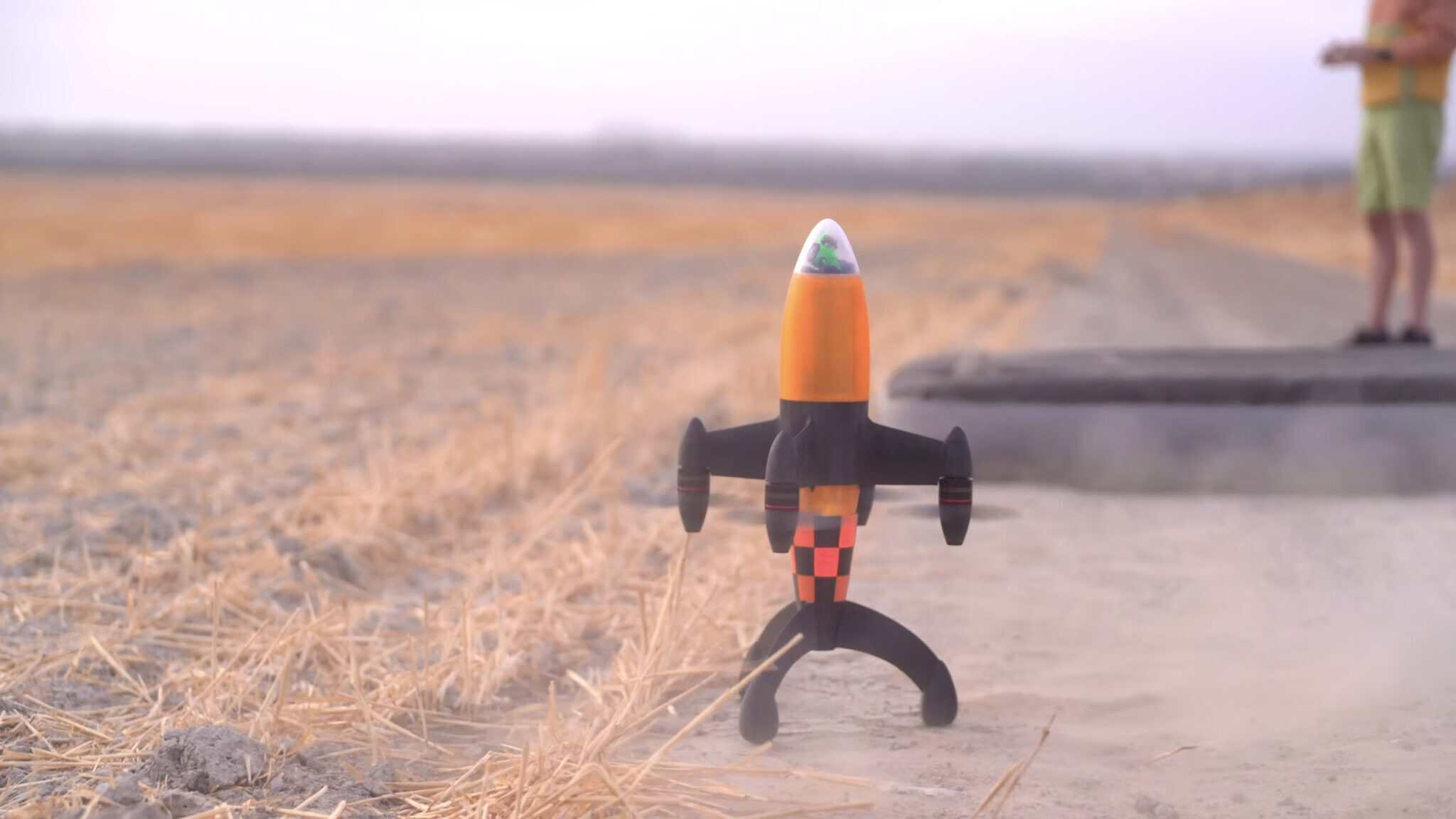
The fastest drone in the world is the Peregreen V4, a 3D-printed quadcopter built by South African father and son Mike and Luke Bell. On December 11, 2025, in Cape Town, it set the Guinness World Record at 408.60 mph (657.59 km/h), and that record still stands as of October 2026.
Two drones have flown faster since, but neither run counts yet. Australian engineer Benjamin Biggs’s Blackbird averaged 425 mph (685 km/h) over two runs in May 2026 with no official observer, and Quantum Systems says its Apex Recordhunter reached 434 mph (699 km/h) in an internal test that June, with certification still pending.
That answers the question for the drones most people picture: battery-powered multirotors flown by remote control. Count every uncrewed aircraft and the answer changes completely, because NASA’s unmanned X-43A reached Mach 9.6, about 7,000 mph, in 2004.
The fastest drone you can actually buy is far slower. DJI’s FPV drone reaches 87 mph (140 km/h) in manual mode, and the fastest model in DJI’s current consumer lineup, the Avata 2, tops out at 60 mph (97 km/h). Below, all three races are ranked by verified top speed.
| Category | Drone | Top speed | Status (October 2026) |
|---|---|---|---|
| Fastest quadcopter, official record | Peregreen V4 | 408.60 mph (657.59 km/h) | Guinness record, December 2025 |
| Fastest quadcopter run, unofficial | Blackbird | 425 mph (685 km/h), two-way average | Builders’ telemetry, no official observer |
| Fastest electric drone, claimed | Apex Recordhunter | 434 mph (699 km/h) | Certification pending |
| Fastest drone you can buy | DJI FPV | 87 mph (140 km/h) | Discontinued, used or old stock |
| Fastest drone on sale new | DJI Avata 2 | 60 mph (97 km/h) | Current |
| Fastest US military drone in regular use | GQM-163A Coyote | Mach 2.5+ at sea level | In service (target drone) |
| Fastest unmanned aircraft ever, air-breathing | NASA X-43A | Mach 9.6 (about 7,000 mph) | Retired 2004 |
How this ranking works
Each drone is ranked by the highest speed it has actually demonstrated, using the figure from the record body, the manufacturer or the operator. Guinness records are the average of two runs in opposite directions, so a tailwind cannot flatter them, and any run measured only by its builder is labeled unofficial. Consumer drones use the maker’s still-air figure, not the faster tailwind number DJI also prints. Missiles, so-called missile-drones and unpowered boost-glide vehicles are left out of the main ranking.
The fastest quadcopters ever flown
Every drone in this section is a battery-powered, remote-controlled quadcopter, flown by a pilot watching a live video feed. The record they chase is Guinness’s fastest ground speed by a battery-powered remote-controlled (RC) quadcopter.
The rules are strict. Each attempt is two passes in opposite directions at a level altitude, each pass is timed over at least 328 feet (100 m), and the two speeds are averaged. A gust, a dive or a single lucky pass cannot set a record.
1. Peregreen V4: 408.60 mph (657.59 km/h)
The Peregreen V4 holds the record at 408.60 mph (657.59 km/h), set in Cape Town on December 11, 2025. Guinness notes it was the third time Mike and Luke Bell had taken the title, after 480 km/h in 2024 and 580 km/h in June 2025.
The airframe is 3D-printed and runs on T-Motor 3120 brushless motors. DroneXL reported that the team flew four runs in about an hour on record day.
The Bells took the record back just three days after losing it. Australian builder Benjamin Biggs had set 389.24 mph (626.42 km/h) on December 8, 2025, and the V4 beat him by about 19 mph.
Faster than a Reaper
The record-holding Peregreen V4 is more than 130 mph faster than the US Air Force’s MQ-9 Reaper, which General Atomics lists at 240 knots (276 mph). A 3D-printed quadcopter built by a father and son outruns the most famous military drone in the world.
2. Blackbird: 389.24 mph (626.42 km/h)
Benjamin Biggs’s Blackbird held the Guinness record for three days in December 2025. DroneXL reports it flew 599 km/h upwind and 655 km/h downwind in Melbourne for the certified average of 626.42 km/h (389.24 mph).
Since then, the Blackbird has gone faster twice on its builders’ own telemetry. In January 2026, an upgraded Blackbird peaked at 429 mph (690 km/h) on GPS in the Australian outback, for an estimated average of about 411 mph (661 km/h), just above the record.
Biggs followed the Guinness method of two runs in opposite directions, but DroneXL reports he could not get the required professional witnesses to the remote site, so the run could not be submitted.
In May 2026, Biggs and Aidan Kelly went faster again, with a 453 mph (730 km/h) downwind pass and a 425 mph (685 km/h) two-way average, according to Tom’s Hardware. Again, no official observer was present.
On paper, that makes the Blackbird the fastest quadcopter yet flown. Under the rules that count, it is second.
3. Peregreen 3: about 360 mph (580 km/h)
Guinness credits 580 km/h, about 360 mph, to Dubai Police in association with the Bells, flown in the Al Qudra desert outside Dubai on June 22, 2025. It was two timed passes in opposite directions, the standard method.
New Atlas later reported the Peregreen 3 at 585 km/h (363.5 mph) in October 2025, but that run was never ratified. The official figure stays at 580 km/h.
4. Fastboy 2: 346.5 mph (557.64 km/h)
Swiss student Samuele Gobbi set 557.64 km/h (346.5 mph) in Fribourg on February 28, 2025. It took the record from the Bells for almost four months.
According to the Swiss news site bluewin, external experts monitored the decisive flight and confirmed the speed. It is the only record on this list not set by the Bells or Biggs since 2024.
5. Peregreen 2: 298.47 mph (480.23 km/h)
The Bells’ first ratified record came on April 21, 2024, in South Africa’s Western Cape, at 298.47 mph (480.23 km/h). Guinness noted the drone actually touched 317 mph (510 km/h) during the runs, a peak that did not count.
Their original Peregreen had already reached 247 mph (397 km/h), but Guinness never recognized it.
6. XLR V3: 224.00 mph (360.50 km/h)
American pilot Ryan Lademann pushed the record to 224.00 mph (360.503 km/h) in Scottsdale, Arizona, on November 8, 2022. His drone weighed 17.3 ounces (490 g), and New Atlas reported it had touched an instantaneous 257.25 mph (414 km/h) on an earlier flight.
The record has been ratified five more times since that flight, and it is now two and a half times the first entry from 2017.
July 2017
DRL RacerX, 163.5 mph. The Drone Racing League sets the first quadcopter speed record, averaged over runs back and forth across a 328-foot (100 m) field.
November 2022
XLR V3, 224.00 mph. Ryan Lademann breaks 200 mph in Scottsdale, Arizona.
April 2024
Peregreen 2, 298.47 mph. Mike and Luke Bell take their first record in South Africa.
February 2025
Fastboy 2, 346.5 mph. Swiss student Samuele Gobbi reaches 557.64 km/h in Fribourg.
June 2025
Peregreen 3, about 360 mph. 580 km/h in the desert outside Dubai, with Dubai Police.
December 8, 2025
Blackbird, 389.24 mph. Benjamin Biggs sets 626.42 km/h in Melbourne.
December 11, 2025
Peregreen V4, 408.60 mph. The Bells retake the record at 657.59 km/h in Cape Town, three days later.
Small drones have their own race too. A separate Guinness record for drones under 250 grams (8.8 ounces) stands at 222.6 mph (358.36 km/h), set by Chinese students Yao Siqi, Guo Jiyuan and Zhang Wei in December 2025.
Faster than the record, but not official
Three runs have beaten the Peregreen V4’s 408.60 mph since it was set. None is in the record book, because each was measured by the team that flew it, but all three are real flights with published telemetry.
| Drone | Date | Speed | Why it does not count |
|---|---|---|---|
| Apex Recordhunter | June 26, 2026 | 434 mph (699 km/h) in level flight | Internal company test, certification pending |
| Blackbird | May 2026 | 425 mph (685 km/h) two-way average, 453 mph (730 km/h) peak with a tailwind | No official observer |
| Blackbird | January 2026 | About 411 mph (661 km/h) estimated average, 429 mph (690 km/h) peak | No professional witnesses |
The fastest of them, the Apex Recordhunter, was flown for a separate title, the fastest battery-electric flying object, and no certification had been announced by early October 2026. Reports even disagree on whether it is a quadcopter or a fixed-wing aircraft.
The 453 mph Blackbird headline needs a footnote too. It was a single pass with a tailwind, and its builders put the true airspeed at 419 mph (674 km/h).
The next jump may come from defense rather than hobbyists. Quantum Systems says its Apex Recordhunter is a technology demonstrator and that innovations from it are expected to support future interceptor drone programs, the fast drones built to chase down attack drones.
There is still room to go. Biggs told The Australian he expects propeller-driven multirotors to top out somewhere around 500 to 560 mph (800 to 900 km/h), where the propeller tips approach the speed of sound.
The fastest drones you can buy
Off-the-shelf drones are limited by software, batteries and regulators, so the fastest one you can buy flies at about a fifth of the record speed. The figures below are each maker’s maximum horizontal speed in still air at sea level, in the drone’s fastest mode.
| Rank | Drone | Top speed | Mode | Status (October 2026) |
|---|---|---|---|---|
| 1 | DJI FPV | 87 mph (140 km/h) | Manual | Discontinued |
| 2 | DJI Avata 2 | 60 mph (97 km/h) | Manual | Current |
| 3 | DJI Inspire 3 | 58 mph (94 km/h) | Sport | Professional cinema drone |
| 4 | DJI Mavic 4 Pro | 56 mph (90 km/h) | Sport | Current |
| 5 | Autel EVO Max 4T V2 | 51 mph (83 km/h) | Ludicrous | Enterprise drone |
| 6 | DJI Air 3S | 47 mph (76 km/h) | Sport | Current |
| 7 | Skydio X10 | 45 mph (72 km/h) | Maximum | Enterprise drone, US-built |
| 7 | Autel EVO II Pro | 45 mph (72 km/h) | Ludicrous | Prosumer camera drone |
| 9 | DJI Mini 5 Pro | 43 mph (68 km/h) | Sport, Battery Plus | Current |
| 10 | DJI Avata 360 | 40 mph (65 km/h) | Sport | Current, launched March 2026 |
1. DJI FPV: 87 mph (140 km/h)
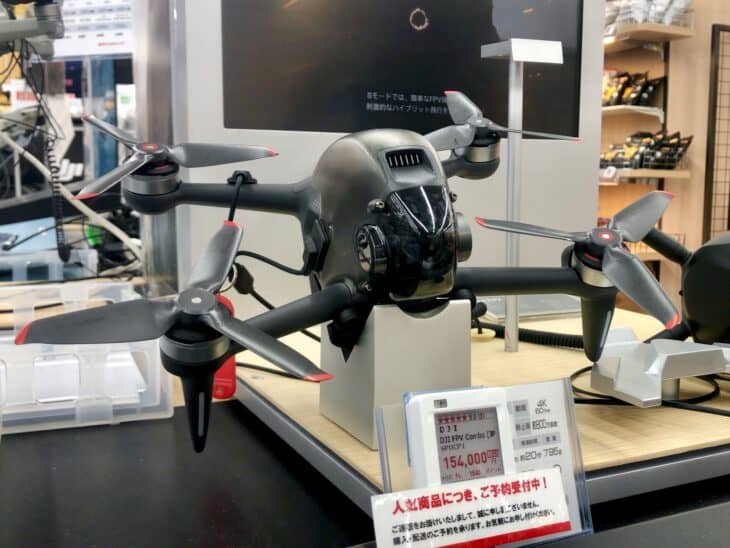

Launched in March 2021, the DJI FPV reaches 39 meters per second, about 87 mph (140 km/h), in manual mode. DJI rates it from 0 to 62 mph (0 to 100 km/h) in two seconds.
It is the fastest ready-to-fly drone in this comparison, but DJI no longer lists it, and its spec page now redirects to a support page. Buying one today means used or old stock.
2. DJI Avata 2: 60 mph (97 km/h)
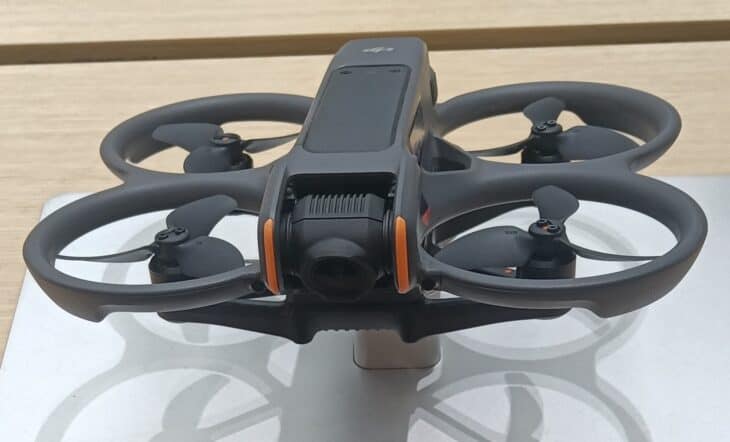

Released in April 2024, the Avata 2 is the fastest drone in DJI’s current consumer lineup, at 27 meters per second (60 mph, 97 km/h) in manual mode. In the EU, DJI limits manual mode to 19 meters per second, about 43 mph (68 km/h).
DJI’s newest FPV-style drone, the Avata 360 from March 2026, is slower at 40 mph (65 km/h). Its spec sheet lists no manual mode at all.
3. DJI Inspire 3: 58 mph (94 km/h)
The Inspire 3 is a professional cinema drone, and DJI rates it at 94 km/h (58 mph) in Sport mode with its gimbal camera and lens attached. DJI says the figure was measured in a controlled wind tunnel.
4. DJI Mavic 4 Pro: 56 mph (90 km/h)
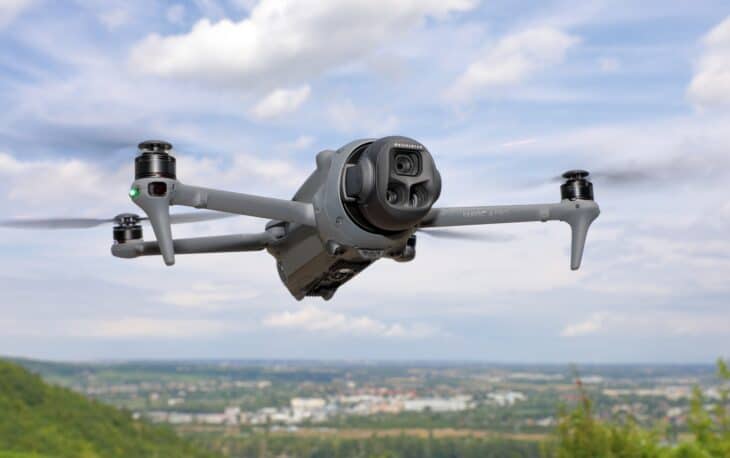

The Mavic 4 Pro, launched in May 2025, is the fastest camera drone in DJI’s consumer range, at 25 meters per second (56 mph, 90 km/h) in Sport mode. DJI also prints 27 meters per second for it, but that is with a tailwind, so it is not a true top speed.
US buyers have fewer choices than this table suggests. DJI’s US website carries no spec pages for the Mavic 4 Pro, Mini 5 Pro or Avata 360.
DroneXL reports that foreign-made drones were added to the FCC’s Covered List on December 22, 2025, which blocks new models while previously authorized ones stay legal to buy and fly.
That makes the US-built Skydio X10, at 45 mph (72 km/h), worth knowing about, although it is an enterprise and public-safety drone rather than a consumer one. Skydio rates it at 16 meters per second, about 36 mph (58 km/h), with standard obstacle avoidance switched on.
No consumer drone reaches 100 mph. Under the FAA’s Part 107 rules for small drones, groundspeed may not exceed 87 knots (100 mph), and racing drones sit below that too: the Drone Racing League’s Racer4 tops out at about 90 mph.
The fastest military and experimental drones
Military drones play on a different scale. The fastest unmanned aircraft are rocket-boosted research vehicles and target drones, while almost every new combat drone flies just below the speed of sound.
| Rank | Drone | Top speed | Type | Status (October 2026) |
|---|---|---|---|---|
| 1 | NASA X-43A | Mach 9.6 | Scramjet research aircraft | Retired 2004 |
| 2 | Boeing X-51A Waverider | Mach 5.1 | Scramjet research aircraft | Program complete 2013 |
| 3 | Lockheed X-7 | Mach 4.31 | Ramjet test vehicle | Retired 1960 |
| 4 | Beech AQM-37 Jayhawk | Mach 4 at 100,000 ft | Rocket-powered target drone | Retired |
| 5 | Lockheed D-21B | Mach 3+ | Ramjet reconnaissance drone | Canceled 1971 |
| 6 | AVIC WZ-8 | Mach 3 (reported) | Rocket-powered reconnaissance drone | Reportedly in service |
| 7 | Northrop Grumman GQM-163A Coyote | Mach 2.5+ at sea level | Supersonic target drone | In service |
| 8 | Boeing QF-16 | Mach 2 | Unmanned F-16 target | In service |
| 9 | Hermeus Quarterhorse Mk 2.1 | Mach 1.21 | Uncrewed test aircraft | Flight testing |
| 10 | Anduril FQ-44A Fury | Mach 0.95 (estimate) | Collaborative combat aircraft | Ordered into production |
| 11 | Boeing MQ-28 Ghost Bat | Mach 0.9 | Collaborative combat aircraft | In development |
| 11 | Baykar Bayraktar Kizilelma | Mach 0.9 | Jet combat drone | Serial production |
| 13 | Kratos XQ-58 Valkyrie | Mach 0.86 | Collaborative combat aircraft | In production |
1. NASA X-43A: Mach 9.6
.jpg)
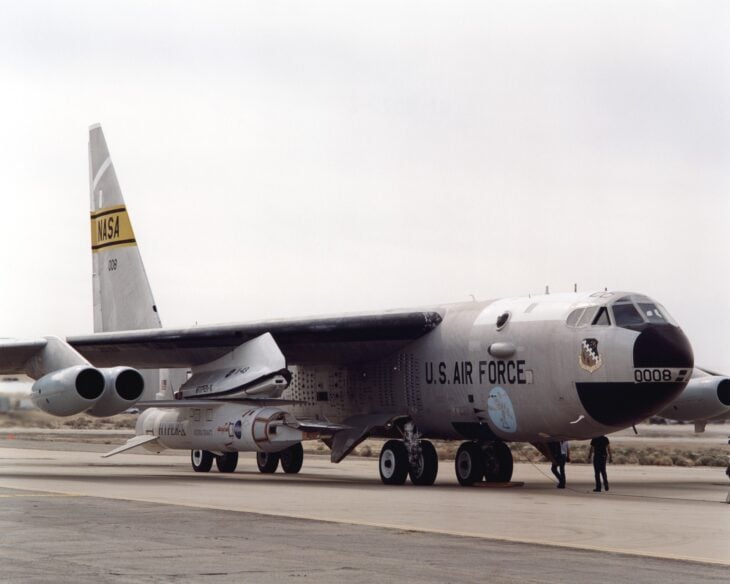
NASA built three X-43A research aircraft, and none carried a pilot. On November 16, 2004, the last of them reached Mach 9.6, which NASA puts at approximately 7,000 mph (11,300 km/h) at 110,000 feet, a speed record for an air-breathing vehicle that Guinness recognized.
A rocket booster carried it to test speed, and its scramjet then ran for about ten seconds. It is also the outright answer to the fastest aircraft in the world, crewed or not.
One unmanned vehicle has gone faster. DARPA’s Falcon HTV-2 glided at Mach 20, approximately 13,000 mph (20,900 km/h), in 2010 and 2011, but it was a rocket-launched, unpowered glider rather than a drone flying under its own power.
2. Boeing X-51A Waverider: Mach 5.1
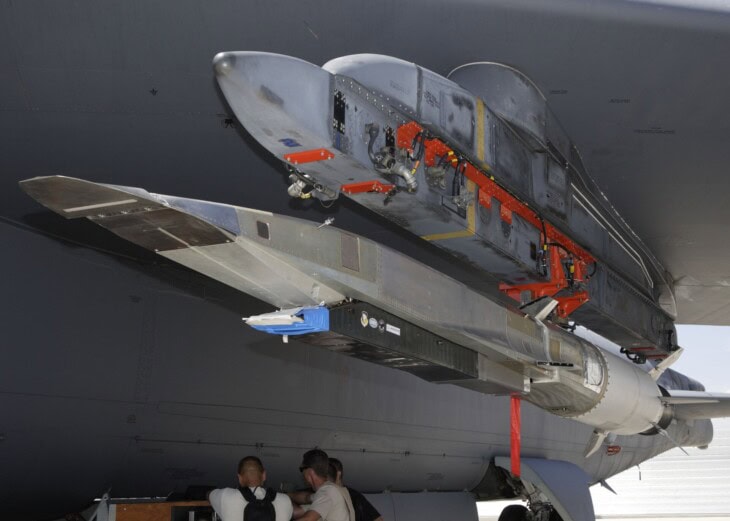
On May 1, 2013, a rocket booster took the unmanned X-51A to Mach 4.8 in about 26 seconds. Its scramjet then pushed it to Mach 5.1, about 3,400 mph (5,400 km/h), at 60,000 feet.
The Air Force called it the longest air-breathing hypersonic flight ever at the time. Both the X-51A and the X-43A are covered in depth in our ranking of the fastest hypersonic aircraft.
3. Lockheed X-7: Mach 4.31
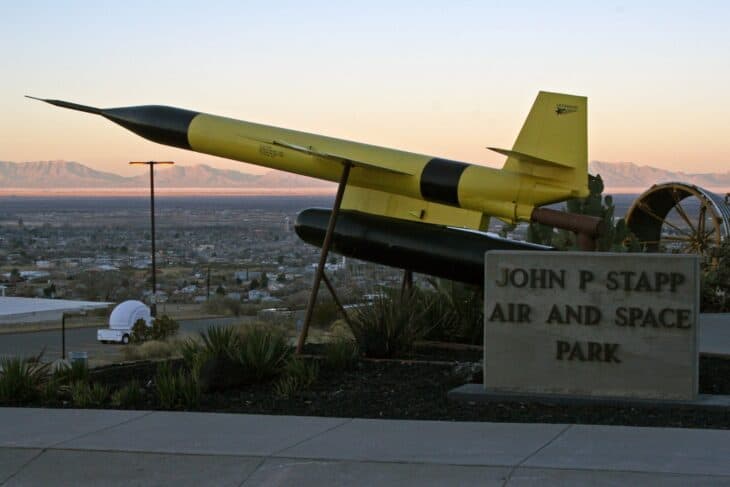

The X-7 was an unmanned 1950s test bed for ramjet engines, designed to be recovered by parachute. An X-7A-3 with a larger Marquardt ramjet reached Mach 4.31 and became the first aircraft to exceed Mach 4, according to Vintage Aviation News.
4. Beech AQM-37 Jayhawk: Mach 4
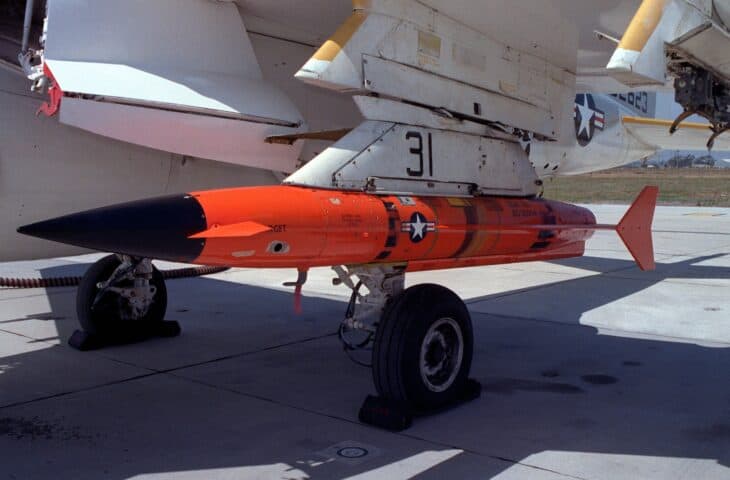

The AQM-37 was a rocket-powered target drone that first flew in 1961 and gave missile crews a high, fast threat to shoot at. It was rated at Mach 3 at 80,000 feet and Mach 4 at 100,000 feet.
5. Lockheed D-21B: Mach 3+
.jpg)
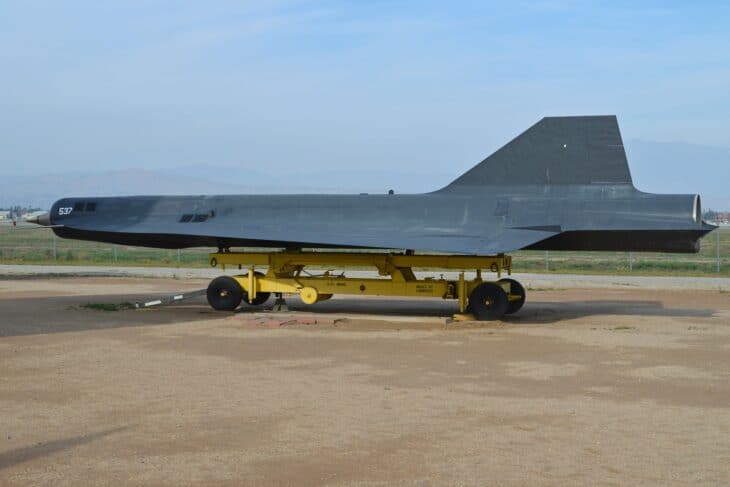
The D-21B was a ramjet-powered reconnaissance drone that flew at more than 2,000 mph (3,200 km/h), Mach 3+, up to about 95,000 feet, according to the National Museum of the US Air Force.
It is the fastest jet-powered spy drone on this list, but its career was short. The Air Force canceled the program in 1971.
6. AVIC WZ-8: Mach 3 (reported)
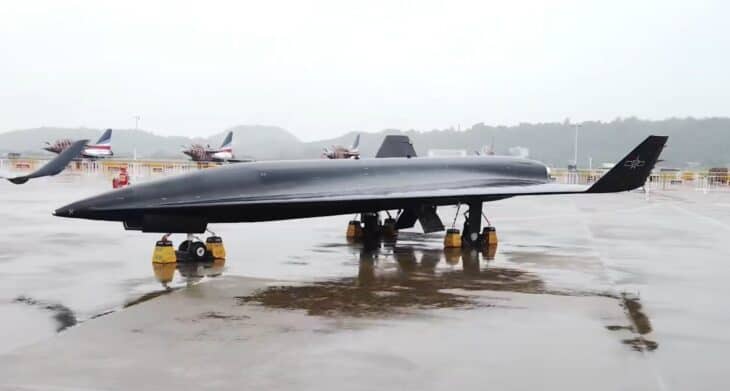

China’s WZ-8 is the modern counterpart: a rocket-powered reconnaissance drone launched from an H-6M bomber. Naval News puts its speed at Mach 3 at 100,000 feet. Treat that as a reported figure, not an official specification.
7. Northrop Grumman GQM-163A Coyote: Mach 2.5+
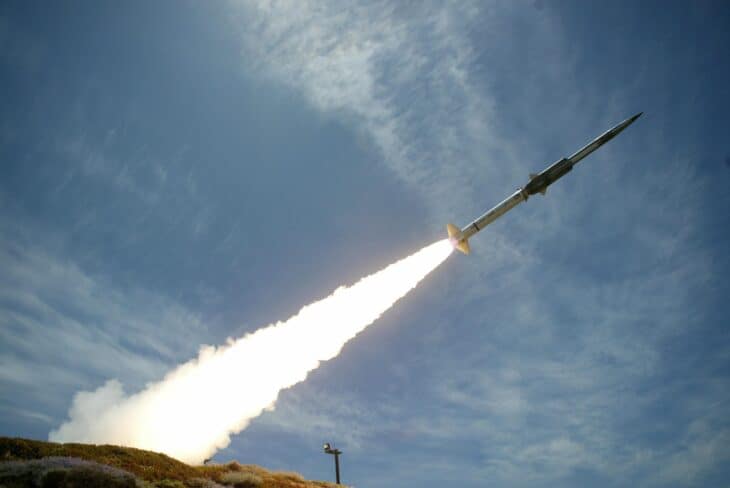

The fastest drone the US flies regularly is a target. The Coyote can cruise at over Mach 2.5 skimming the sea, or climb to about 52,000 feet and dive at Mach 3.5 or more, giving US Navy ships a realistic supersonic threat to train against.
It uses a solid-fueled, air-breathing ducted-rocket engine, and Northrop Grumman delivered the 200th Coyote in June 2025.
8. Boeing QF-16: Mach 2
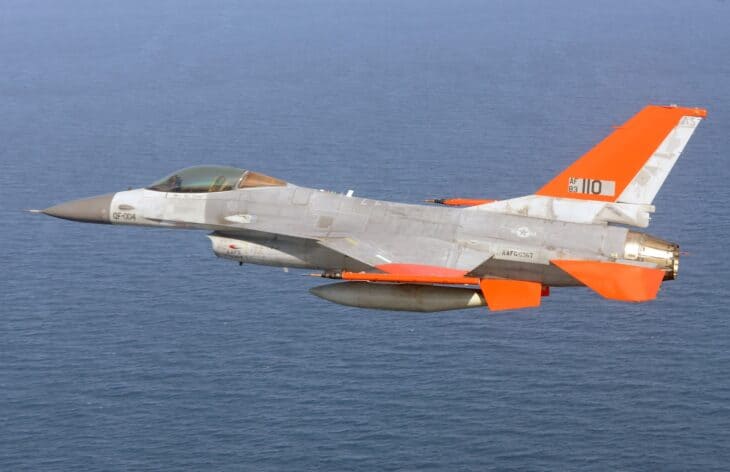

The QF-16 is a full-size F-16 fighter flown without a pilot, converted by Boeing as an aerial target. It keeps the fighter’s Mach 2 top speed, and Boeing redelivered the 127th and final conversion in late 2025.
9. Hermeus Quarterhorse Mk 2.1: Mach 1.21
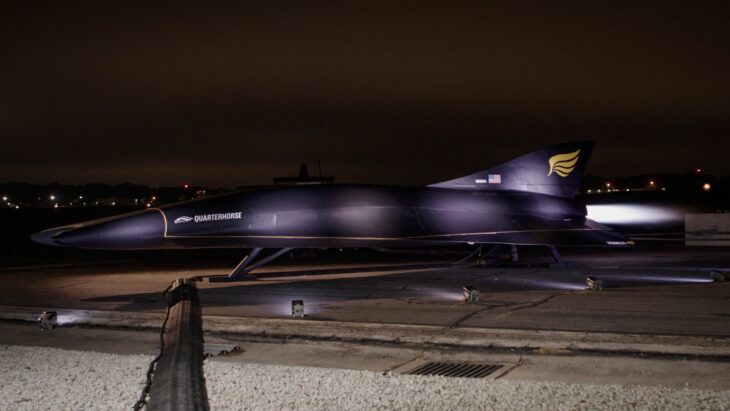

The Quarterhorse Mk 2.1 went supersonic on May 26, 2026, reaching Mach 1.21 on only its third test flight, out of Spaceport America in New Mexico. Aerospace Testing International put that at 930 mph (1,497 km/h).
Hermeus is targeting Mach 3 in 2027 and a hypersonic Quarterhorse Mk 3 before 2030. The FAA has already cleared a second Quarterhorse to fly supersonic.
10. The new combat drones: just under Mach 1
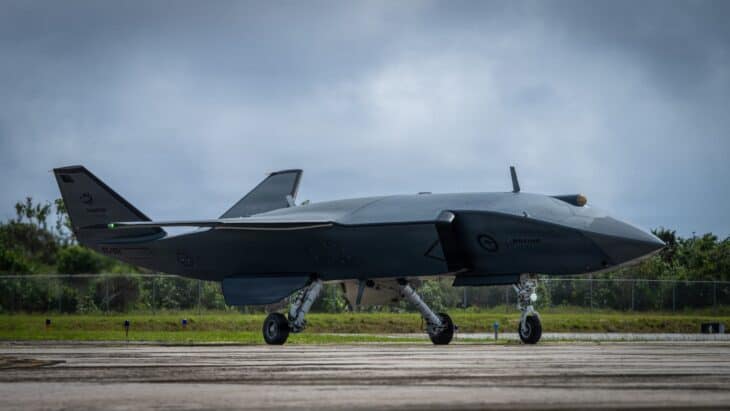

The loyal wingmen being built to fly beside crewed fighters are fast, but none with a published top speed is supersonic. They are designed to keep pace with fighters, not to outrun them.
Anduril’s own page lists no top speed for the FQ-44A Fury, one of the Air Force’s new fighter drones, but the Directory of US Military Rockets and Missiles estimates Mach 0.95.
Boeing lists the MQ-28 Ghost Bat at up to Mach 0.9, Baykar lists the Kizilelma at Mach 0.9, and Kratos lists the XQ-58 Valkyrie at Mach 0.86.
The drones that made military drones famous are much slower. General Atomics lists the MQ-9 Reaper at 240 knots (276 mph), and Baykar lists the Bayraktar TB2 at up to 110 knots (127 mph).
Neither earned its place in our ranking of the best military drones in the world through speed. Endurance, sensors and payload matter far more for those jobs.
Even the Geran-3, the Russian-built jet version of the Shahed attack drone, is credited with only 500 to 600 km/h (311 to 373 mph), depending on whether Iranian claims or a test demonstration are believed.
So which drone is really the fastest?
For the drone most people mean, the answer is the Peregreen V4 at 408.60 mph (657.59 km/h), and it stays the answer until Guinness ratifies a faster run. That may not take long, because the Blackbird and the Apex Recordhunter both claim to have gone faster already.
The more surprising story is the gap. A hobby quadcopter now outruns the MQ-9 Reaper, while the fastest drone a consumer can buy flies at about a fifth of the record. For unmanned aircraft of any kind, NASA’s X-43A has held the crown at Mach 9.6 since 2004.
FAQ
Sources and references used for research and fact-checking.
- Guinness World Records, Fastest ground speed by a battery-powered remote-controlled (RC) quadcopter
- Guinness World Records, Father and son duo create world's fastest drone that reaches 500 km/h
- New Atlas, Peregreen V4 sets new Guinness drone speed record
- DroneXL, Luke Bell's Peregreen V4 is the new fastest drone
- DroneXL, Ben Biggs' Blackbird 626 km/h build video
- Tom's Hardware, Drone breaks world speed record with 453 mph in test run
- BGR, Drone speed record carbon fiber explained
- New Atlas, World's fastest electric drone targets threats to Ukraine
- European Security & Defence, The need for speed: Quantum Systems chases multiple records
- DroneXL, Quantum Systems Apex 699 km/h interceptor drone
- New Atlas, Fastest quadcopter record
- bluewin, Swiss student breaks speed record with drone
- What's On, Dubai Police world record drone faster than supercars
- TechCrunch, Watch this racing drone set the Guinness World Record for fastest drone
- SlashGear, Self-made mini drone fastest speed record
- ASME, Drone racing is built for speed
- DJI, DJI FPV specifications
- PetaPixel, DJI launches the FPV drone
- DJI, DJI Avata 2 specs
- DJI, DJI Inspire 3 specs
- DJI, DJI Mavic 4 Pro specs
- DJI, DJI Air 3S specs
- DJI, DJI Mini 5 Pro specs
- DJI, DJI Avata 360 specs
- DroneXL, DJI Avata 360 launch
- DroneXL, FCC legacy import ban and DJI grandfathering
- Skydio, Skydio X10 technical specs
- Autel Robotics, EVO Max 4T
- Autel Robotics, EVO II Pro specification
- Cornell Law School LII, 14 CFR 107.51 Operating limitations for small unmanned aircraft
- NASA, X-43A
- DARPA, Falcon HTV-2
- U.S. Air Force, X-51A Waverider achieves breakthrough in final flight
- Vintage Aviation News, The Lockheed X-7, Mach 4 ramjet
- Directory of U.S. Military Rockets and Missiles, Beech AQM-37 Jayhawk
- Wikipedia, Beechcraft AQM-37 Jayhawk
- Wikipedia, AVIC WZ-8
- National Museum of the U.S. Air Force, Lockheed D-21B
- Naval News, China's WZ-8 supersonic reconnaissance drone
- Overt Defense, Northrop Grumman delivers 200th GQM-163A Coyote
- Air & Space Forces Magazine, QF-16
- Hermeus, Hermeus achieves its first unmanned supersonic flight
- Aerospace Testing International, Hermeus hits Mach 1.21 with Quarterhorse in first supersonic flight test
- Directory of U.S. Military Rockets and Missiles, YFQ-44A
- Boeing, MQ-28 Ghost Bat
- Baykar, Bayraktar Kizilelma
- Kratos Defense, XQ-58A Valkyrie
- General Atomics Aeronautical Systems, MQ-9A
- Baykar, Bayraktar TB2
- UNITED24 Media, New Russian jet drone mimics cruise missile
- Drone Pro Hub (YouTube), THE COMEBACK - World's FASTEST Drone the BlackBird
- DroneXL, Ben Biggs hits 690 km/h in unofficial drone speed run, reclaims title from Luke Maximo Bell
- DroneXL, Blackbird Builder Benjamin Biggs Opens Up About the 690 km/h Drone, John Wick, and the Sound Barrier Wall
- DroneXL, Benjamin Biggs' Blackbird Drone Tops 730 km/h, But The 685 km/h Average Won't Count
Get the Newsletter
The latest aviation news and stories sent to your inbox.
About the Author

Tim is the owner and lead editor of AeroCorner since 2019, overseeing aviation content covering aircraft, airlines, airports, and the broader aviation industry. Through years of researching, writing, editing, and publishing aviation-focused content, he has developed extensive practical knowledge of commercial aviation and air travel. Based in Asia and a frequent traveler himself, Tim also brings firsthand passenger experience to AeroCorner’s coverage. Outside of publishing, he has also explored aviation firsthand through hands-on flight training in New Zealand.