

Table of Contents
Book Hawaiian Airlines if you want a twin-aisle jet, free Wi-Fi you can count on, or a hop between the islands. Book Alaska Airlines if Hawaiian does not fly nonstop from your city, or if you want a newer plane and more departure times.
Everything else is now the same. One company owns both, one FAA certificate covers both, and one loyalty program, Atmos Rewards, earns and spends on both, with identical checked bag fees.
We compared the two brands as of November 2026, using Alaska Air Group’s 2025 annual report (10-K), the airlines’ fee, food and Wi-Fi pages, and their 2025 and 2026 news releases. For how Alaska stacks up against a true rival, see our Alaska Airlines vs Delta comparison.
| Criterion | Hawaiian Airlines | Alaska Airlines | Edge |
|---|---|---|---|
| Owner and loyalty program | Alaska Air Group; Atmos Rewards; oneworld since April 22, 2026 | Alaska Air Group; Atmos Rewards; oneworld | Even |
| Mainline passenger jets, Dec. 31, 2025 | 61 (24 A330-200, 18 A321neo, 19 717-200) | 248 (243 Boeing 737s, 5 Boeing 787-9s) | Alaska |
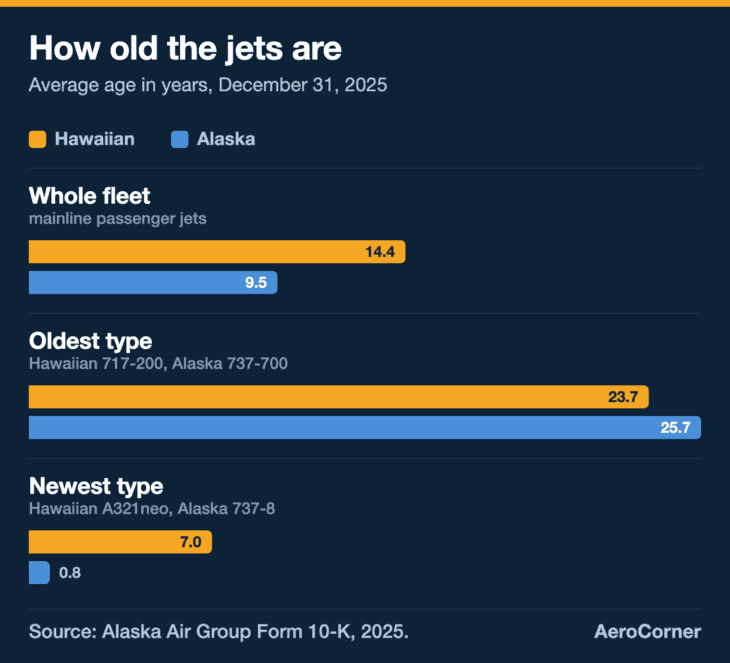
| Average jet age, Dec. 31, 2025 | 14.4 years | 9.5 years | Alaska |
| Biggest jet on Hawaii routes | A330-200, 278 seats, two aisles | 737-9, 178 seats, one aisle | Hawaiian |
| Lie-flat seats to Hawaii | 18 per A330 | None on the 737 | Hawaiian |
| Main Cabin food, mainland to Hawaii | Pre-order meals $10 to $17; free drinks, local snacks and a sweet treat | Meals for purchase | Hawaiian |
| Wi-Fi | Free Starlink on every Airbus since 2024 (not the 717) | Free Starlink for Atmos members, fleet done in 2027 | Hawaiian |
| First / second checked bag, North America | $45 / $55 | $45 / $55 | Even |
| Flights between the islands | Yes, 717s | No | Hawaiian |
How we compared
Fleet counts and ages come from the aircraft table in Alaska Air Group’s 2025 Form 10-K, at December 31, 2025. The 10-K does not split the fleet by brand, so we counted the A330-200, A321neo and 717 as Hawaiian and the 737s and 787-9s as Alaska, which matches the liveries they fly in. Freighters and the E175 regional jets are left out. Average age is each type’s age multiplied by its count, divided by the brand’s total jets. Fees, food and Wi-Fi are as published in November 2026.
Is Hawaiian still a separate airline?
Not legally. Alaska Air Group bought Hawaiian Holdings on September 18, 2024, and the FAA put both airlines on a single operating certificate on October 29, 2025.
Since April 2026 every flight from both brands is sold under Alaska’s AS code, and Hawaiian’s old HA code is retired. You can still search and book a Hawaiian flight as Hawaiian, and it still flies in Hawaiian’s Pualani livery.
Loyalty merged first. Atmos Rewards replaced Alaska’s Mileage Plan and HawaiianMiles in 2025, and Hawaiian joined the oneworld alliance on April 22, 2026. Status earned on one brand counts on the other, including complimentary upgrades on Hawaiian flights within North America.
In practice, alaskaair.com and the Hawaiian site now search the same combined schedule. A flight shows the Pualani tail image when Hawaiian operates it, and some Hawaiian flights got new numbers so they would not clash with Alaska’s.
Edge: Even. One account, one status level and one set of points cover both.
The planes: bigger at Hawaiian, newer at Alaska
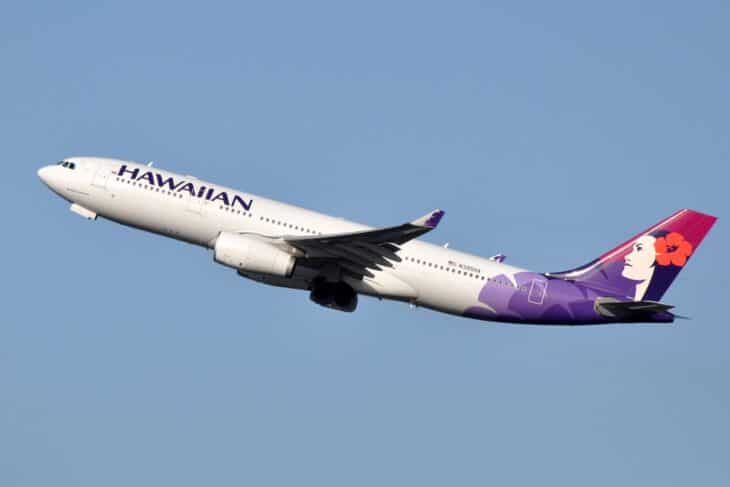
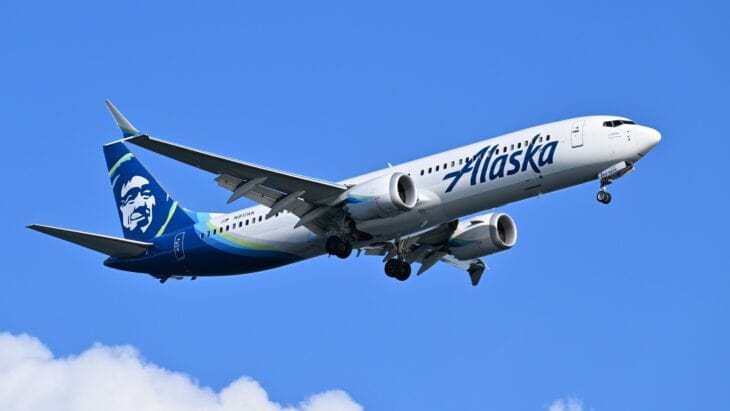
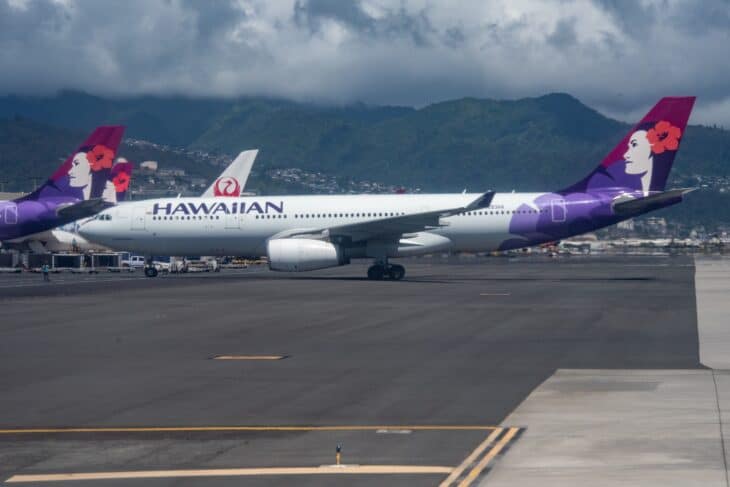
This is the difference you will feel. Hawaiian flies 24 Airbus A330-200s, 18 A321neos and 19 Boeing 717s. Alaska’s mainline fleet is 243 Boeing 737s plus five 787-9s that fly long-haul routes out of Seattle.

Across the whole fleet, Hawaiian’s jets average 14.4 years and Alaska’s 9.5. The gap is almost all one type: Hawaiian’s 717s average 23.7 years, while Alaska’s 80 737-9s average 2.8. Alaska’s 11 737-700s are older still, at 25.7 years, but they are a small slice of a 248-jet fleet.
Size runs the other way. An A330-200 seats 278 people across two aisles, 100 more than the 178 on a 737-9, Alaska’s biggest Hawaii jet. Hawaiian’s single-aisle A321neo seats 189 and averages 7.0 years.

The fleet plan in the same filing widens the age gap before it closes. Alaska plans to take 25 Boeing 737-10s in 2027 and 25 more in 2028, once the type is certified, plus two more 787-9s and its first four 787-10s.
Hawaiian’s fleet stays flat through 2027, then four A330s leave in 2028, taking the type from 24 to 20. Its A321neo fleet holds at 18.
Edge: Alaska on age, Hawaiian on size. If two aisles matter more to you than a newer cabin, check whether your route gets the A330.
Seats and premium cabins
Hawaiian’s A330 is the jet to book if you want to lie flat to Hawaii. It carries 18 lie-flat seats in a 2-2-2 layout, 68 Extra Comfort seats with 36 inches of pitch, and 192 Main Cabin seats.
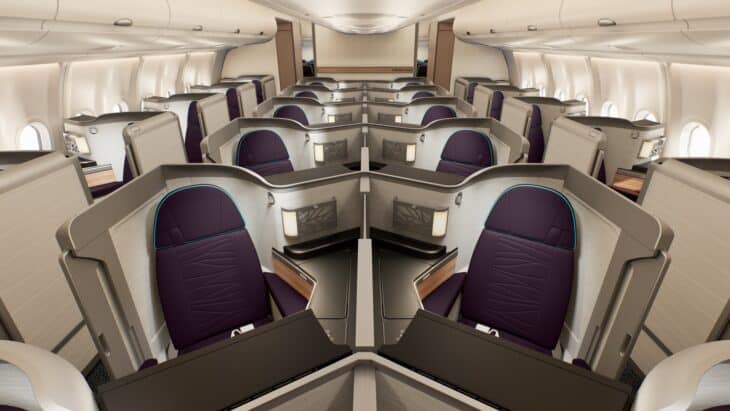
Alaska’s 737s have three cabins: First Class, Premium Class and Main Cabin. Its first lie-flat 737 suites are planned for 2028 on select transcontinental routes, not Hawaii.
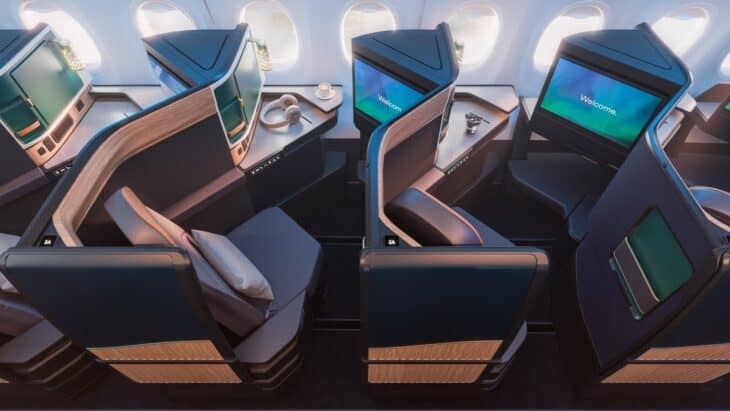
Hawaiian’s A330 cabins are being rebuilt too. From 2028 each A330 gets 22 Leihoku Suites with privacy doors and 28 Premium Reserve premium economy seats with 38 inches of pitch, raising the premium share of the cabin from about 30% to 40%.
Edge: Hawaiian. A flat bed on a five- or six-hour flight beats any recliner.
Food in Main Cabin
Hawaiian’s free Main Cabin meal is gone on most mainland routes. Since July 1, 2026, you pre-order and pay $10 to $17 for a chef-designed meal, with ordering open from two weeks before the flight.
Hawaiian still hands out free drinks, local snacks and a sweet treat before landing. Honolulu to New York JFK keeps a free Main Cabin meal.
Alaska sells its Main Cabin meals, served on most flights of 1,100 miles (1,770 km) or more, and pours Passion Orange Guava juice on Hawaii flights. Only Atmos Titanium members can pre-order a free one.
Edge: Hawaiian, narrowly. Both now charge for the meal, but Hawaiian still gives you something to eat for free.
Wi-Fi
Hawaiian finished fitting SpaceX’s Starlink to all 24 A330s in September 2024, after starting on the A321neo that February, and it is free for every passenger. The 717s will never get it: Hawaiian said it does not plan to fit Wi-Fi to them.
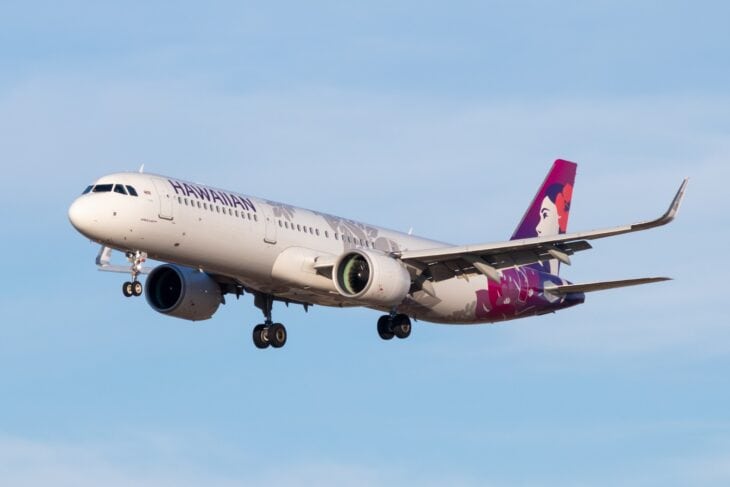

Alaska is still catching up. Its Starlink service is free for Atmos Rewards members through a T-Mobile sponsorship, and about 150 jets across the group had it by June 2026, with the rest due in 2027.
Joining Atmos Rewards costs nothing, so the members-only rule is a sign-up step rather than a fee. Members on a Starlink-equipped Alaska jet are connected automatically.
Edge: Hawaiian. On any Hawaiian Airbus, fast free Wi-Fi is a sure thing today. On Alaska it depends on the tail number until 2027.
Earning and spending points
Both brands earn Atmos points the same way, because they sell the same tickets. Until the end of 2026, every member earns one point per mile flown.
From October 1, 2026, members can choose how they earn on flights departing from January 1, 2027: by distance, at one point per mile; by price, at five points per dollar; or by segment, at 500 points a flight. Current members who do not choose stay on distance, and new members from 2027 default to price.
Hawaii trips are where the choice bites. Los Angeles to Honolulu is about 2,550 miles (4,100 km), so a $300 one-way fare earns about 2,550 points by distance, 1,500 by price and 500 by segment, whichever brand flies it.
Edge: Even. Points earn and spend the same way on either brand.
A family of four pays $360 in bag fees either way
Hawaiian and Alaska charge the same $45 for a first checked bag between Hawaii and the mainland, for tickets bought on or after April 10, 2026. Four travelers checking one bag each way pay 4 x 2 x $45 = $360 on either brand, so bag fees should never decide which one you book.
Checked bags and fees
One fee table now covers both brands. A first checked bag costs $45 and a second $55 on North American flights booked from April 10, 2026, when the airline also dropped its $5 online discount.
Flights within Hawaii cost less, at $30 for the first bag and $40 for the second. Atmos status holders, eligible co-branded cardholders and active-duty military keep their free bags on both brands.
Edge: Even. The fees are identical to the dollar.
Flying between the islands
Only Hawaiian does it. Its 19 Boeing 717s, with 128 seats each, run the shuttle between Honolulu and the neighbor islands, and Hawaii residents in Hawaiian’s Huaka’i program get a free checked bag on those flights.
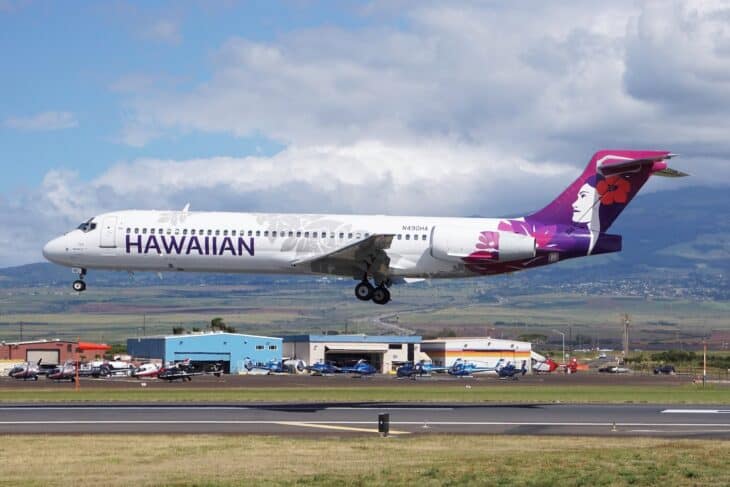
That is changing. Alaska said in July 2026 that it will retire the 717s from 2028 and move inter-island flying to Boeing 737-800s painted in Hawaiian colors.
Edge: Hawaiian. Alaska jets do not fly between the islands.
Routes and reliability
Hawaiian is built around Honolulu, with A330s to Japan, Tahiti and the US mainland. It is pushing into Seattle as well, with A330 nonstops to Osaka from May 14, 2027 and to Papeete, Tahiti from June 11, 2027, pending government approval.
Alaska covers far more mainland cities. Its 737s fly to Hawaii from West Coast hubs, and this winter add seasonal Honolulu nonstops from Boise (daily from December 17, 2026) and Spokane (Saturdays from December 19).
Alaska’s 787s fly Seattle’s long-haul routes, including the 2026 launches to Rome, London and Reykjavik. Our count of Alaska’s combined fleet shows how few of its planes have two aisles.
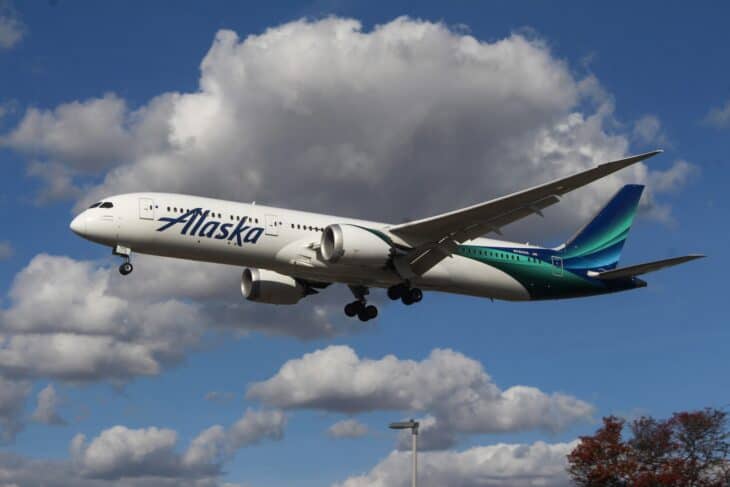

Reliability can no longer be split. The two report as one airline, and Alaska Air Group says the combined operation ranked first in the industry for on-time performance in the first half of 2026.
Edge: Even. Your home airport decides this one, not the brand.
Who should pick which
| If you… | Pick | Because |
|---|---|---|
| Want to lie flat to Hawaii | Hawaiian | 18 lie-flat seats on the A330; Alaska’s 737s have none |
| Need to work online the whole way | Hawaiian (Airbus) | Free Starlink on every A330 and A321neo since 2024 |
| Are hopping between islands | Hawaiian | Alaska does not fly within Hawaii |
| Live away from the big West Coast airports | Alaska | More mainland cities, including new seasonal Boise and Spokane nonstops |
| Want the newest plane | Alaska | Fleet average 9.5 years vs 14.4 |
| Care mostly about points, status or bag fees | Either | One program, one fee table |
For the rest of the US field, our ranking of the best airlines to fly in the US scores the combined Alaska and Hawaiian against everyone else.
Myth: Hawaiian Airlines is going away
The HA code is gone and Hawaiian now flies under Alaska’s certificate, but the brand is staying. Hawaiian flights are still booked and flown as Hawaiian, the A330s are getting new Leihoku Suites from 2028, and Hawaiian A330s will open new Seattle routes to Osaka and Tahiti in 2027.
FAQ
Sources and references used for research and fact-checking.
- US Securities and Exchange Commission (EDGAR), Alaska Air Group Form 10-K for 2025
- Alaska Airlines, Alaska Airlines and Hawaiian Airlines reach major integration milestone: a single operating certificate
- Alaska Airlines, Introducing Atmos Rewards
- Alaska Airlines, Atmos Rewards expands
- Alaska Airlines, Update on bag fees
- Hawaii Public Radio, Hawaiian Airlines ends free meal service, replaces with pre-order menu
- Alaska Airlines, Main Cabin food and drink
- Hawaiian Airlines, Hawaiian Airlines now offering fast and free Starlink Wi-Fi across entire Airbus fleet
- AirlineGeeks, Alaska, Hawaiian expand Starlink Wi-Fi to around 150 aircraft
- Alaska Airlines, Alaska Airlines and Hawaiian Airlines unveil Aurora and Leihoku
- AirlineGeeks, Hawaiian Airlines unveils new Premium Cabin
- Alaska Airlines, Alaska Air Group reports second quarter 2026 results
- The Points Guy, Alaska Airlines adds Hawaii routes from Boise and Spokane
- Hawaii News Now, Hawaiian Airlines to launch new nonstop Seattle flights to Osaka, Tahiti
Get the Newsletter
The latest aviation news and stories sent to your inbox.
About the Author

Tim is the owner and lead editor of AeroCorner since 2019, overseeing aviation content covering aircraft, airlines, airports, and the broader aviation industry. Through years of researching, writing, editing, and publishing aviation-focused content, he has developed extensive practical knowledge of commercial aviation and air travel. Based in Asia and a frequent traveler himself, Tim also brings firsthand passenger experience to AeroCorner’s coverage. Outside of publishing, he has also explored aviation firsthand through hands-on flight training in New Zealand.