

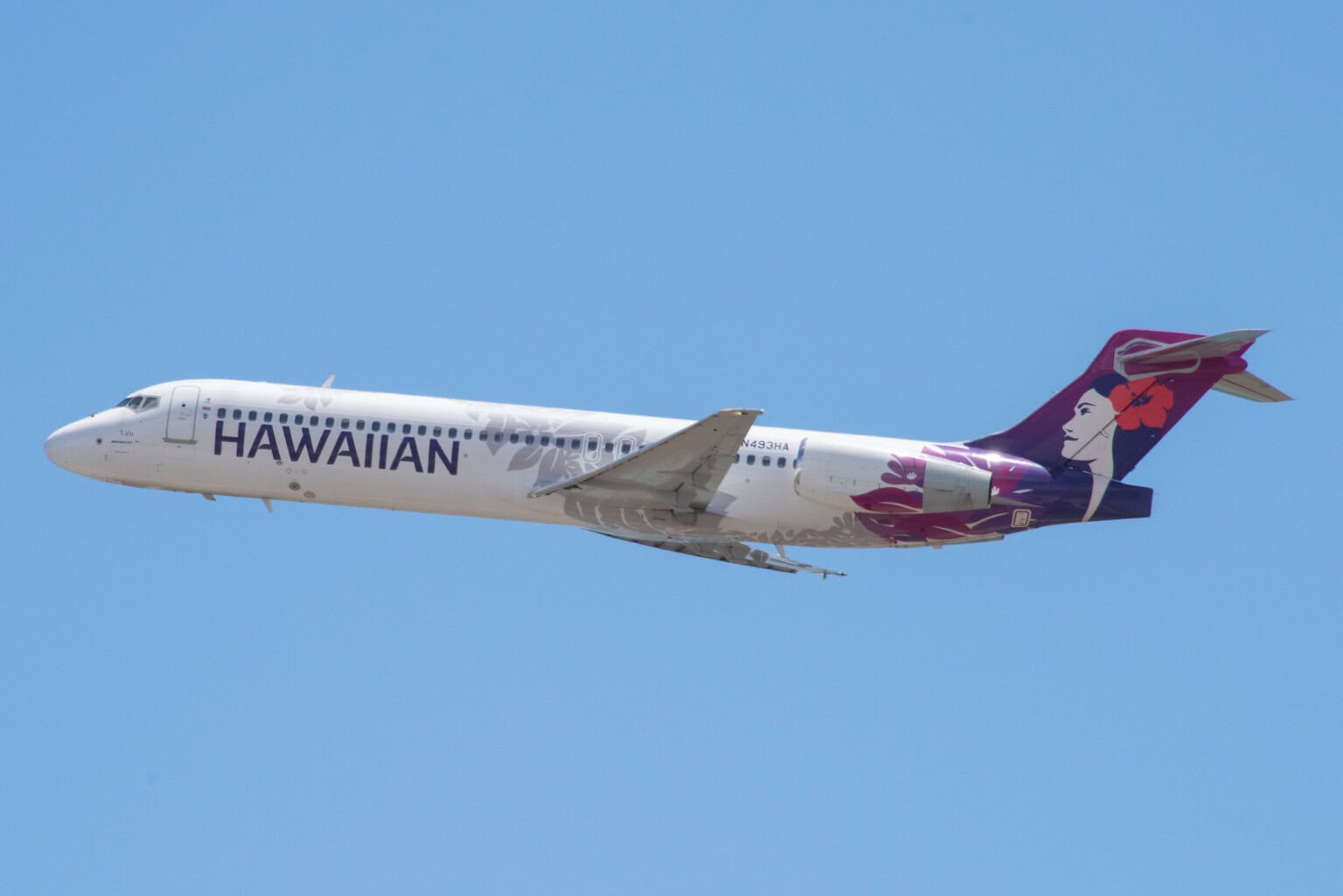
On July 21, 2026, Alaska Air Group said it will retire Hawaiian Airlines’ fleet of Boeing 717s and shift the carrier’s inter-island flying to larger Boeing 737-800s, starting in 2028. The plan, disclosed with the group’s second-quarter results, brings one of the last major 717 fleets in service toward the end of its life.
What Hawaiian announced
Hawaiian operates roughly 19 Boeing 717s, aircraft that average about 25 years old, on up to 160 daily flights across the islands. Alaska Air Group, which now owns Hawaiian, said it will replace them with Boeing 737-800s already in its fleet, refitted in full Hawaiian livery rather than Alaska colors.
The company cited better reliability, economics, and cargo capability as the reasons. A 737-800 seats about 161 passengers against roughly 123 to 128 on the 717, and the newer jets will add Starlink Wi-Fi, a larger premium cabin, and more hold space for cargo and surfboards.
The rollout starts small. One 737-800 will be based in Honolulu from October 2026 as an initial step, with the full 717 retirement running from 2028. Hawaiian’s chief executive, Diana Birkett Rakao, said the move “reflects our commitment to invest in Hawai’i for the long term.”
Why the 717 fit island-hopping, and why it is leaving
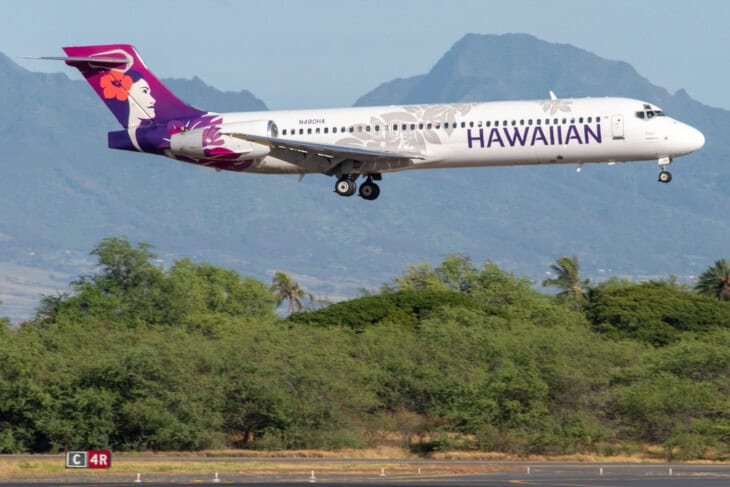
The Boeing 717 is the last descendant of the DC-9 family. It began life as the McDonnell Douglas MD-95 and was renamed after Boeing absorbed McDonnell Douglas, with production ending in 2006. Only a handful of airlines still fly it in numbers, so Hawaiian’s exit removes one of the type’s larger remaining fleets.
The jet was well matched to Hawaii. Inter-island hops are extremely short, some barely 20 minutes gate to gate, and they are flown many times a day. A compact, rugged, roughly 120-seat twinjet with rear-mounted engines and quick turnaround suited that high-cycle pattern almost perfectly.
The last of a lineage
The 717 traces directly back to the DC-9 of the 1960s. When Hawaiian retires its fleet, one of the world’s biggest concentrations of the type will disappear, leaving very few passenger 717s still flying anywhere.
Two forces are ending that run. The 717 is aging and increasingly costly to keep flying, with spare parts harder to source as the global fleet shrinks. At the same time, upgauging to a 161-seat 737 spreads the cost of each departure across more seats, which improves unit economics on busy routes.
The larger driver is fleet commonality. Alaska Airlines flies an all-737 mainline fleet, so standardizing Hawaii on the same type simplifies maintenance, crew training, and spare parts across the combined airline. It is the same logic behind other carriers’ fleet-renewal plans, including United’s move to retire dozens of older jets as newer 737s arrive.
A plan, not an overnight switch
This is a multi-year transition. The 717 retirement does not begin until 2028, only one 737 arrives inter-island in 2026, and Alaska Air Group has not said exactly how many 737-800s will move to Hawaiian service. The details could still shift.
Sources and references used for research and fact-checking.
Get the Newsletter
The latest aviation news and stories sent to your inbox.
About the Author

Tim is the owner and lead editor of AeroCorner since 2019, overseeing aviation content covering aircraft, airlines, airports, and the broader aviation industry. Through years of researching, writing, editing, and publishing aviation-focused content, he has developed extensive practical knowledge of commercial aviation and air travel. Based in Asia and a frequent traveler himself, Tim also brings firsthand passenger experience to AeroCorner’s coverage. Outside of publishing, he has also explored aviation firsthand through hands-on flight training in New Zealand.