

Table of Contents
A German airline has decided that not every seat needs its own catalogue. The idea sounds petty until you see what a few ounces are worth across a whole fleet.
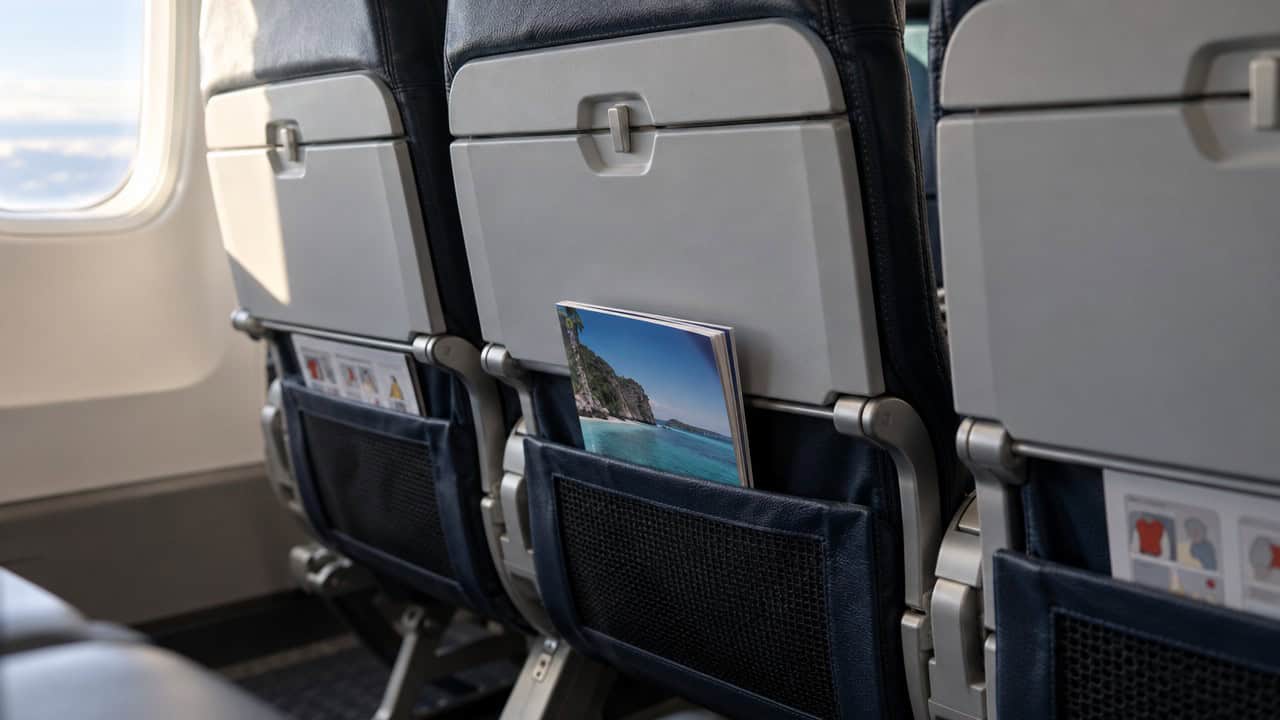
Since November 1, 2026, Condor has stopped putting a printed copy of its onboard shop magazine in front of every passenger. Its short- and medium-haul jets now carry two magazines for every three seats, and its long-haul jets carry one for every two.
The reason, Condor told aeroTELEGRAPH, is to reduce the weight on board and with it fuel consumption. It is a trial for the winter, and the airline will decide afterwards whether to keep it.
Why Condor is clearing out its cabins
The magazine is the Bordshop catalogue, the menu of food, drinks and duty-free goods passengers can buy in flight. It is also available on the seatback screens, which is why Condor says it can print fewer copies.
On Condor’s Airbus A320 family jets, the narrowbody line that includes the A320neo, seated three and three across the aisle, the new ratio works out to two copies per row of three. On the A330-900neo, seated 2-4-2, it is one copy per pair, as One Mile at a Time laid out on November 16.
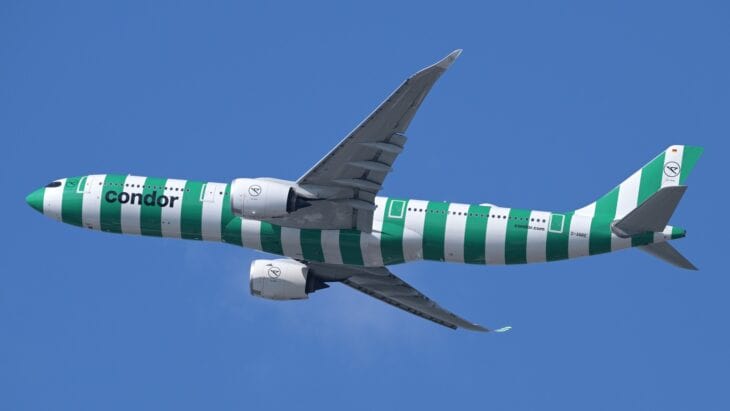

The magazines are only the first visible result of something bigger. Condor calls it “Cabin-Clearing”: every movable item is taken off the aircraft, checked and judged on whether it still needs to fly. Safety equipment stays on board.
According to aeroTELEGRAPH, the airline sees the biggest savings in items carried in large numbers and in heavy materials that can be swapped for lighter ones. A spokesperson called the reduced print run “a concrete measure of the program.”
The pressure behind it is money. Condor still posts losses despite growing revenue, and its “Zukunftspakt” aims to save 100 million euros in each of the next two business years, aeroTELEGRAPH reports.
What an ounce of paper is worth
Condor has published no figure for the weight or fuel it expects to save. United has, for almost the exact same move.
In January 2018, United said it had begun printing its inflight magazine, Hemisphere, on lighter paper. Each copy lost 1 ounce (28 g) and came down to 6.85 ounces (194 g), according to an internal message reported by Tribune News Service.
On a typical 737 carrying 179 passengers, that removed about 11 pounds (5 kg) from each flight. Across roughly 4,500 daily flights, United put the saving at about 170,000 gallons (643,000 liters) of fuel and $290,000 a year.
The shop catalogue was worth more. A year earlier, United had stopped selling duty-free goods on board altogether, and the same report credited that with saving about 1.4 million gallons of fuel and $2.3 million a year.
Paper in the cockpit counts too. In June 2013, American Airlines finished replacing pilots’ kitbags, which held more than 35 pounds (16 kg) of manuals and charts, with a 1.35-pound iPad. The airline said removing the kitbags saved a minimum of 400,000 gallons and $1.2 million of fuel a year at then-current prices.
The arithmetic is the same every time. Extra weight means extra fuel burned to carry it, and some of that fuel is burned only to carry the rest of the fuel. Our guide to how much fuel aircraft use shows how fast those numbers add up over a day of flying.
The famous olive was a different kind of saving
Most stories about airline penny-pinching end up at the same olive. Robert Crandall, American’s president from 1982 and its chief executive from 1985 to 1998, is credited with taking one olive off every salad served to passengers.
As the story is usually told, no one noticed and American saved $40,000 a year. Even the figure moves: an ABC report in 2001 put it at $100,000, Mashed notes.
Either way, the anecdote prices the olive. It says nothing about what the olive weighed, and that is the part Condor is now counting.
The weight version of the idea is newer, and it is driven by the fuel price. When oil spiked in 2008, inflight magazines were among the first things airlines looked at.
That July, Emirates said it could save up to one tonne on each Airbus A380 by removing printed material, including magazines, newspapers, entertainment guides and shopping catalogues, and moving the content onto its seatback screens, Gulf News reported.
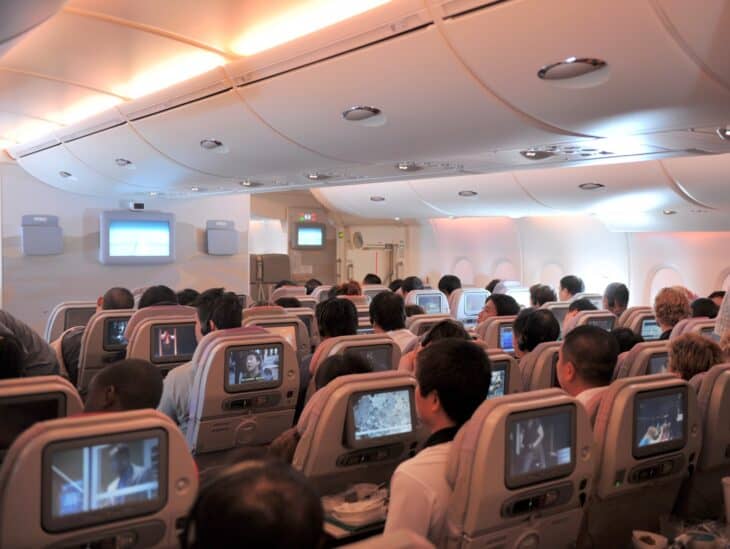

Emirates then told The National it had no plans to discontinue its magazine, Open Skies. Its publisher said the magazine had instead lost 37 percent of its weight through a smaller size and lighter paper. The same report said Delta and Japan Airlines had cut the paper stock and size of their magazines, and Etihad had swapped metal cutlery for plastic.
Why Condor shares instead of cutting
Condor’s version is unusual because it keeps the magazine and the sales it brings. The catalogue is a shop, so every copy left on the ground is a small bet that the screen or the seat neighbour’s copy sells just as well.
That is why it is a trial, not a ban. If onboard sales hold up through the winter, the cut stays. If they fall, the fuel saved has to beat the revenue lost, and Condor has not said how it will score that.
Weight is one input among many in how an airline settles the fuel on board, a process we cover in why planes carry more fuel than they need. A few pounds of paper will never decide a flight, but across thousands of flights a year it shows up in the bill.
What happens after the winter
For now, a Condor passenger who wants the catalogue may have to ask a neighbour or use the screen. The full cabin review goes on behind it, item by item, with every finding documented before Condor decides what stays on the ground.
The magazine is the part passengers can see. The real test is what else comes off the aircraft once the airline has weighed everything that flies, down to the catalogue in the seatback pocket.
Sources and references used for research and fact-checking.
- aeroTELEGRAPH, Condor spart auch beim Bordmagazin: Nicht jeder erhält eines
- One Mile at a Time, Condor Asks Passengers To Share Magazines To Save Fuel Costs
- Honolulu Star-Advertiser (Tribune News Service), United Airlines saves 170K gallons of fuel using lighter paper for inflight magazine
- American Airlines, American Airlines Completes Electronic Flight Bag Implementation
- Wikipedia, Robert Crandall
- Mashed, How Serving One Less Olive Per Salad Saved American Airlines $100,000
- Gulf News, Emirates to do away with paper to cut weight
- The National, Airlines face a weighty problem
Get the Newsletter
The latest aviation news and stories sent to your inbox.
About the Author

Tim is the owner and lead editor of AeroCorner since 2019, overseeing aviation content covering aircraft, airlines, airports, and the broader aviation industry. Through years of researching, writing, editing, and publishing aviation-focused content, he has developed extensive practical knowledge of commercial aviation and air travel. Based in Asia and a frequent traveler himself, Tim also brings firsthand passenger experience to AeroCorner’s coverage. Outside of publishing, he has also explored aviation firsthand through hands-on flight training in New Zealand.