

Table of Contents
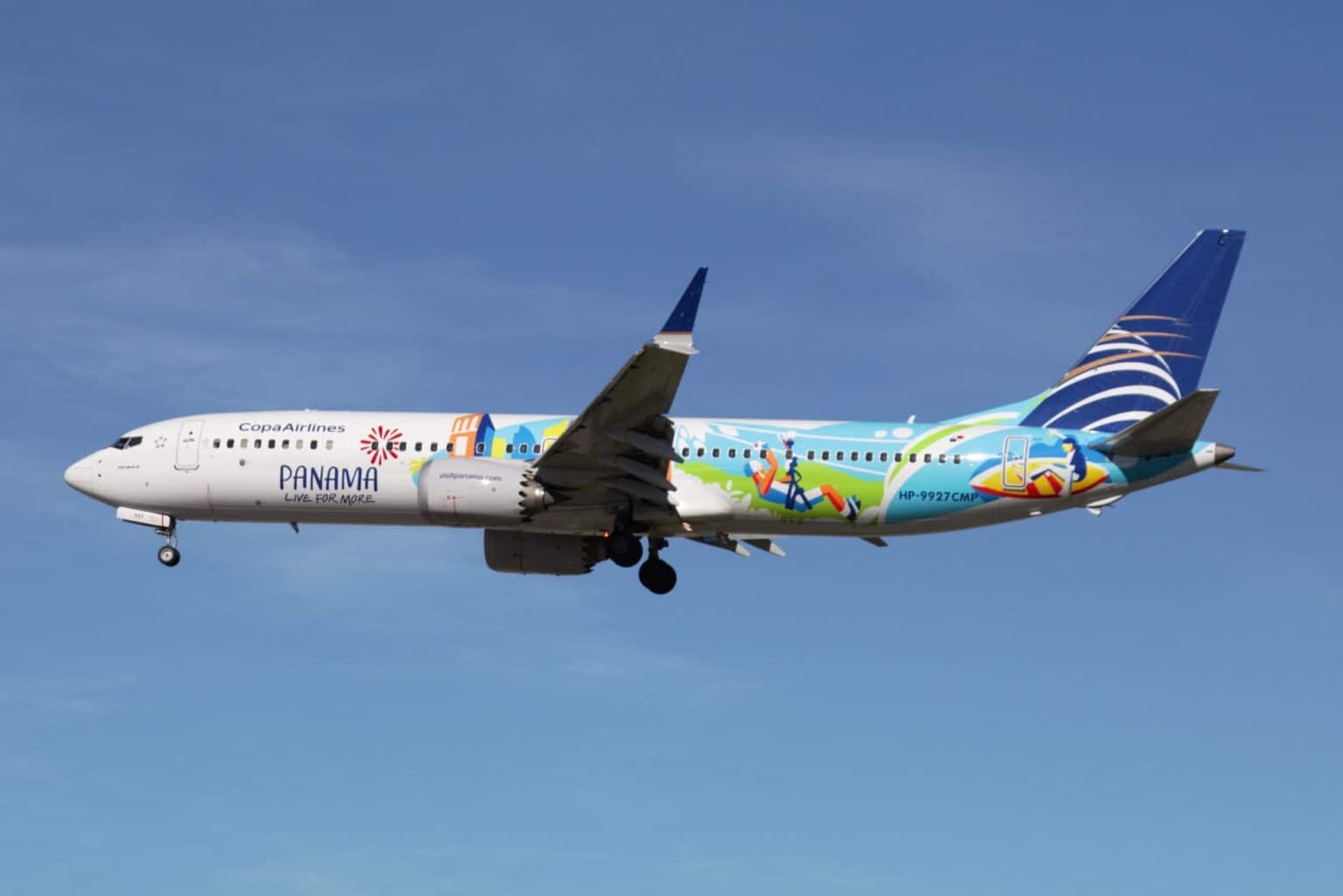
Copa Holdings has 131 planes. That is the fleet in its second-quarter 2026 results, filed with the SEC for June 30, 2026, after four new Boeing 737 MAX 8s arrived in the quarter.
Every one of them is a Boeing 737. Copa flies four versions of the same jet out of one hub in Panama City, and in April 2026 it ordered 40 more, with options on another 20.
How Many Planes Does Copa Airlines Have?
131, as of June 30, 2026. Copa’s results split that total three ways: 119 jets flown by Copa Airlines itself, 10 flown by Wingo, its low-cost airline in Colombia, and two freighters for Copa Cargo.
The fleet was 125 at the end of 2025, according to Copa’s 2025 annual report on Form 20-F. Two MAX 8s were delivered in the first quarter of 2026 and four in the second, which takes it to 131.
The count at a glance
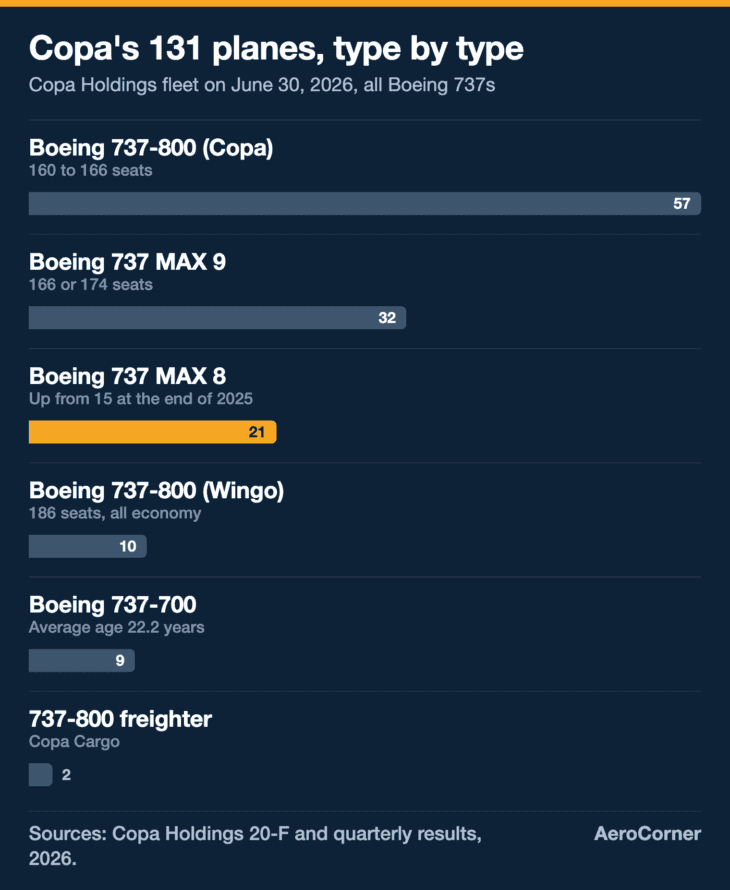
131 aircraft on June 30, 2026, all Boeing 737s. 57 737-800s, 32 737 MAX 9s, 21 737 MAX 8s and nine 737-700s at Copa Airlines, 10 737-800s at Wingo and two 737-800 freighters. Up from 125 at the end of 2025. Sources: Copa Holdings 2025 Form 20-F and first- and second-quarter 2026 results.
Copa’s fleet, type by type
The 2025 annual report lists the fleet by type. The only change since then is six more MAX 8s, so the June 2026 column is the December 2025 table plus those deliveries.
| Aircraft | Seats | Dec 31, 2025 | Jun 30, 2026 |
|---|---|---|---|
| Boeing 737-800 (Copa) | 160 to 166 | 57 | 57 |
| Boeing 737 MAX 9 | 166 or 174 | 32 | 32 |
| Boeing 737 MAX 8 | 166 | 15 | 21 |
| Boeing 737-800 (Wingo) | 186 | 10 | 10 |
| Boeing 737-700 | 124 to 126 | 9 | 9 |
| Boeing 737-800BCF freighter | Cargo | 2 | 2 |
| Total | 125 | 131 |
The Boeing 737-800 is still the backbone. Copa has 67 of them, including the 10 at Wingo, and they averaged 13.3 years old at the end of 2025.
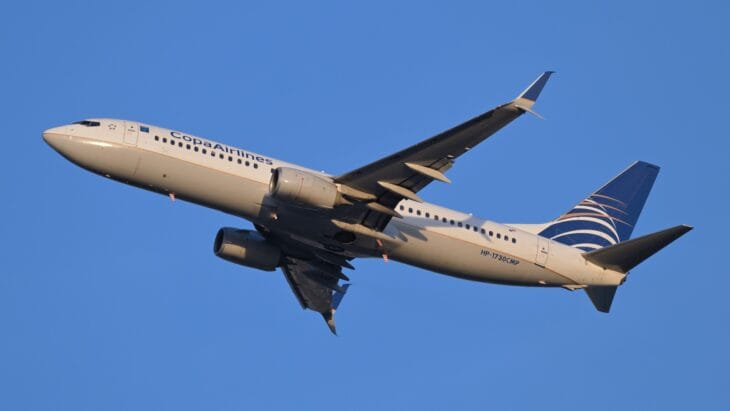

Copa’s 737-800s carry 16 business-class seats and 160 or 166 seats in total. Wingo’s 10 are packed tighter, with 186 seats and no business class at all.
The Boeing 737 MAX 9 is Copa’s flagship. Its 32 jets come in two layouts: 16 lie-flat business seats and 166 in total, or 12 lie-flat seats and 174 in total.
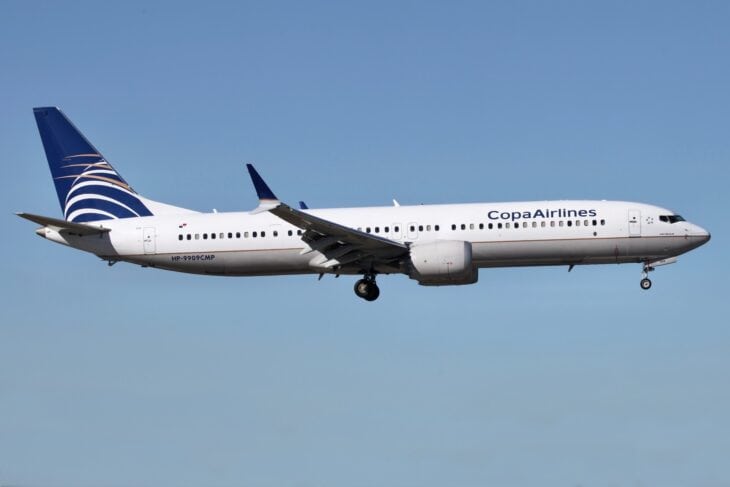

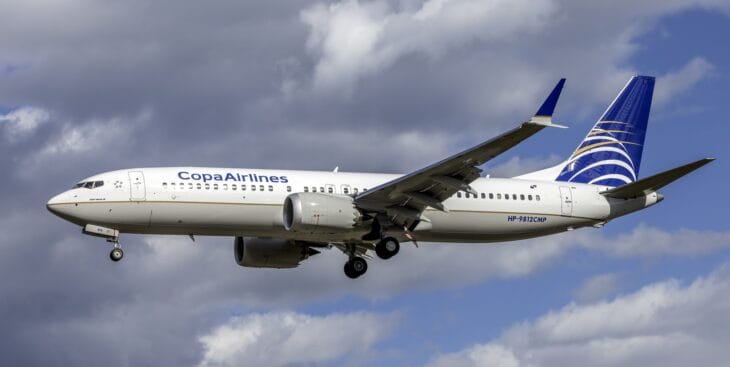
All the growth is in the Boeing 737 MAX 8, with 16 business seats and 166 in total. Copa had 15 at the end of 2025 and 21 by June 2026. Across the MAX fleet, the average age was 2.9 years.

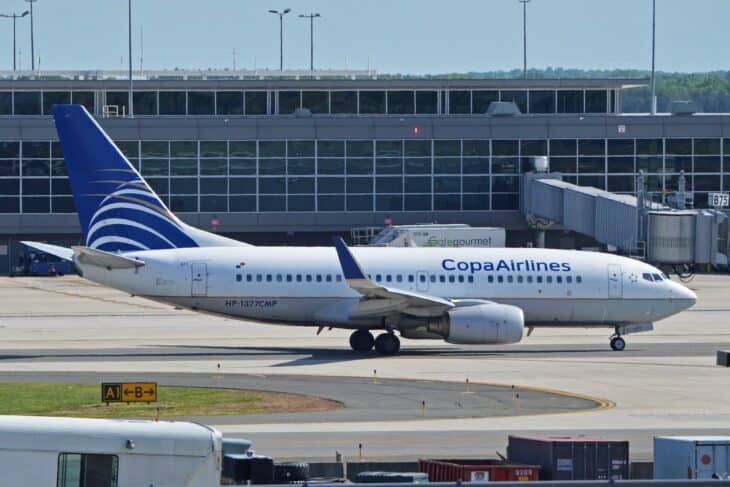
The oldest jets are the nine Boeing 737-700s, at an average of 22.2 years. They seat 124 to 126 people, with 12 in business class.

Why only one jet type
Copa’s annual report says its 737s have simplified maintenance procedures and need just one type of standardized training for its crews. One spare-parts stock, one simulator family and pilots who can fly any jet in the fleet are worth more to a hub airline than a mix of sizes.
That single type has to work from one place. Most of Copa’s flights go through its hub at Tocumen International Airport in Panama City.
Copa says it runs about 436 daily scheduled flights to 84 destinations in 32 countries. Our Tocumen airport page shows Copa flying 85% of the routes from PTY, in data updated November 12, 2026.
The 737-800 has also been in the news. In November 2026, Copa flight CM427, a 737-800 in from Panama City, clipped the nose of a UPS 767 while taxiing at Miami.
Why the numbers differ
Search for Copa’s fleet and you will see anything from 97 to 133. Each figure comes from a different date, or counts a different part of the company.
119: Copa Airlines without Wingo and cargo
Copa Holdings is the listed company. Copa Airlines is its main airline, and on June 30, 2026 it flew 119 of the 131 jets. Fleet-tracking sites that list only Copa Airlines itself land on this number.
125: last year’s annual report
125 is the fleet at December 31, 2025, the number in the 2025 Form 20-F. It was right for that date and is still the figure in the latest annual report.
133: a plan, not a fleet
The same annual report projects 133 aircraft at the end of 2026, built on eight MAX 8 deliveries that year. By June 30, six of the eight had arrived.
The myth: Copa still flies Embraer jets
Older fleet lists still show Copa with Embraer 190s. It flew 15 of them between 2005 and 2020. Copa has been an all-737 airline since then, and its newest order is for 737s too.
Older Copa figures also turn up. A guide quoting 97 aircraft is using a 2023 count, 34 jets ago.
Where Copa’s fleet is going
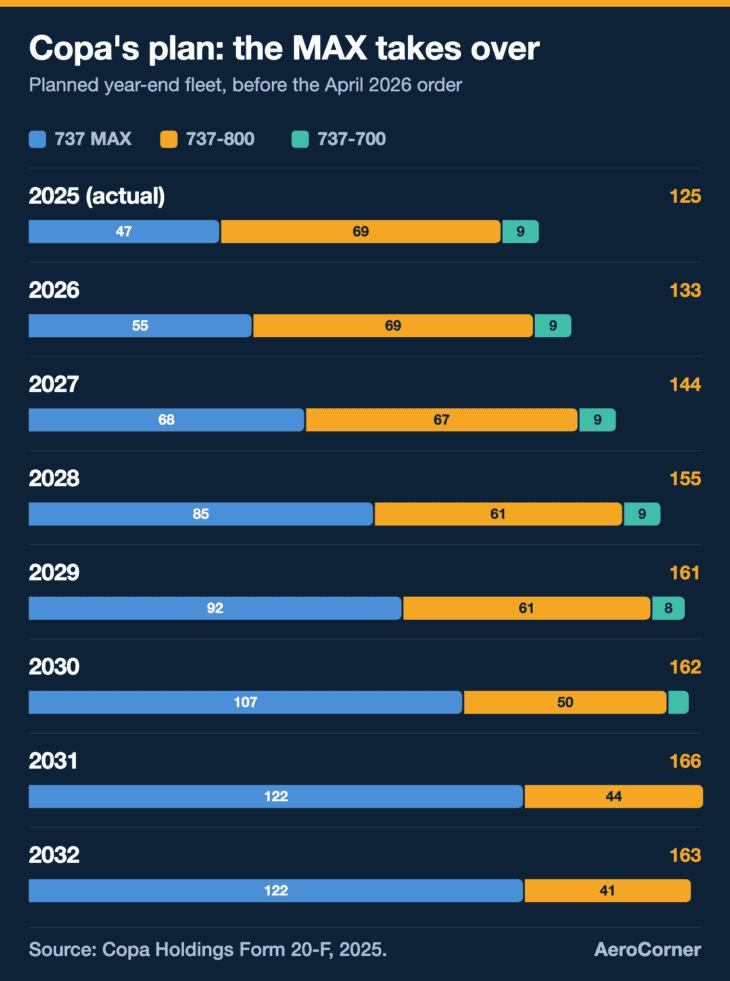
The 737 MAX will take over. At the end of 2025, Copa had 85 MAX jets on firm order for delivery from 2026 to 2034, plus 20 options.
Its fleet plan in the annual report shows the MAX count climbing from 47 to 122 by 2031, while the 737-700s are gone by that year and the 737-800s fall from 69 to 41 by 2032, freighters included.
Then came the April 28, 2026 order: 40 firm 737 MAX jets and options on 20 more, for delivery from 2030 to 2034. Boeing said the deal and Copa’s existing order book add up to more than 100 MAX jets.
Boeing’s announcement did not say which MAX models the new jets will be. The family now includes the 737 MAX 10, the largest version, which the FAA certified in October 2026.
1947
Copa starts flying. Panamanian investors and Pan American World Airways launch the airline with three Douglas C-47s on domestic routes.
1998
Continental buys in. Continental Airlines takes a 49% stake, and Copa adopts a livery and logo modelled on Continental’s.
2012
Star Alliance. Copa joins the alliance in June 2012.
2020
The Embraers go. The last of 15 Embraer 190s leave, and Copa becomes an all-737 airline.
December 2025
125 aircraft. 47 MAX jets, average fleet age 10.2 years.
April 2026
New order. 40 firm 737 MAX jets and 20 options, for delivery from 2030 to 2034.
June 2026
131 aircraft. Six MAX 8s delivered in the first half of the year.
How Copa’s fleet compares
Copa is a mid-sized airline with a very narrow fleet. The closest match in the US is Southwest, which also flies only 737s but has 803 of them, as our count of how many planes Southwest has shows.
Copa’s fleet is younger than the 737-700s suggest. The whole fleet averaged 10.2 years at the end of 2025, and the MAX deliveries keep pulling that down.
FAQ
Sources and references used for research and fact-checking.
- Copa Holdings, via SEC EDGAR, Copa Holdings Form 20-F for the year ended December 31, 2025
- Copa Holdings, via SEC EDGAR, Copa Holdings Reports Second-Quarter Financial Results
- Copa Holdings, via SEC EDGAR, Copa Holdings Reports First-Quarter Financial Results
- Boeing, Boeing and Copa Airlines Announce Order for up to 60 737 MAX Jets
- Wikipedia, Copa Airlines
- AeroCorner, Tocumen International Airport (PTY)
Get the Newsletter
The latest aviation news and stories sent to your inbox.
About the Author

Tim is the owner and lead editor of AeroCorner since 2019, overseeing aviation content covering aircraft, airlines, airports, and the broader aviation industry. Through years of researching, writing, editing, and publishing aviation-focused content, he has developed extensive practical knowledge of commercial aviation and air travel. Based in Asia and a frequent traveler himself, Tim also brings firsthand passenger experience to AeroCorner’s coverage. Outside of publishing, he has also explored aviation firsthand through hands-on flight training in New Zealand.