

Table of Contents
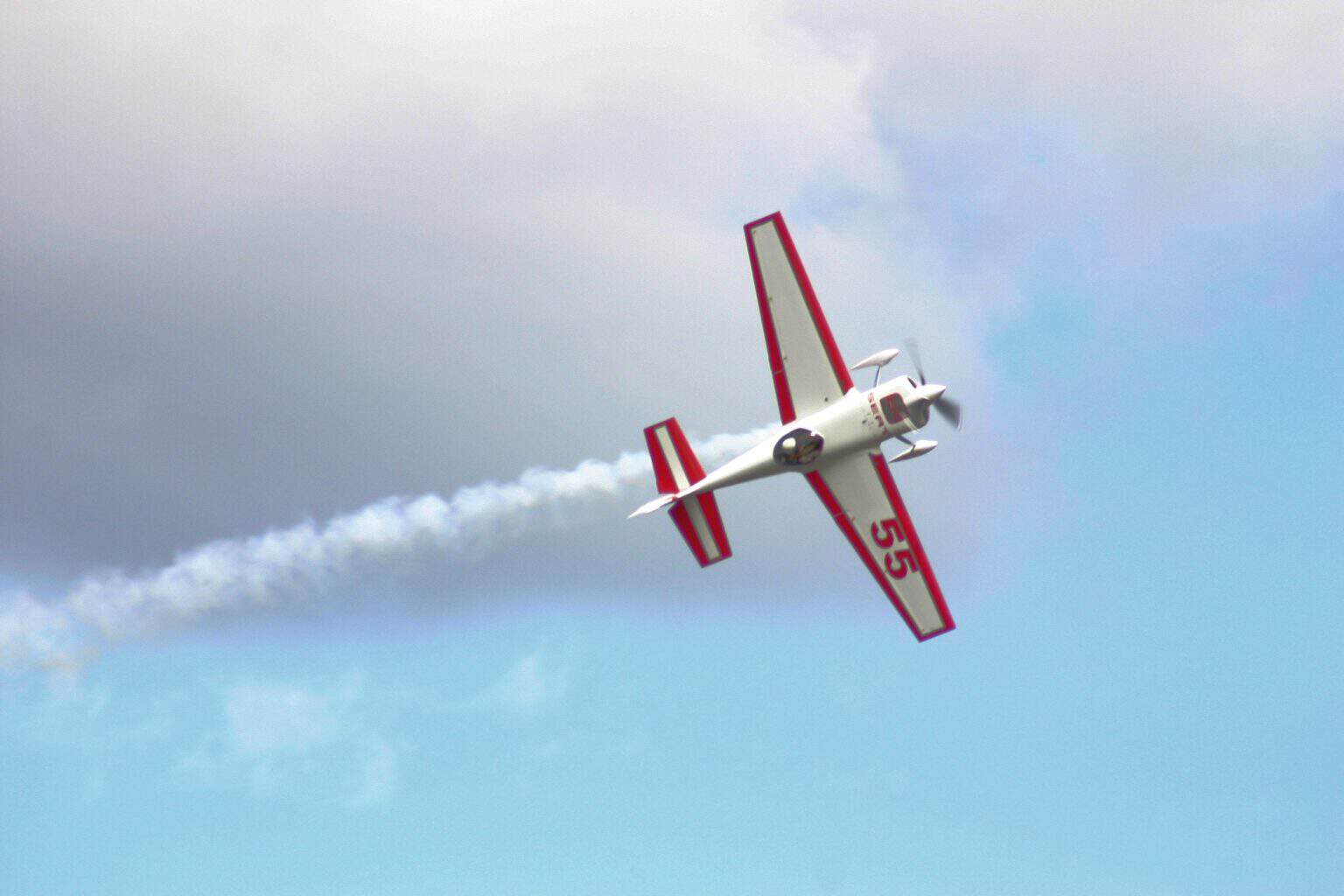
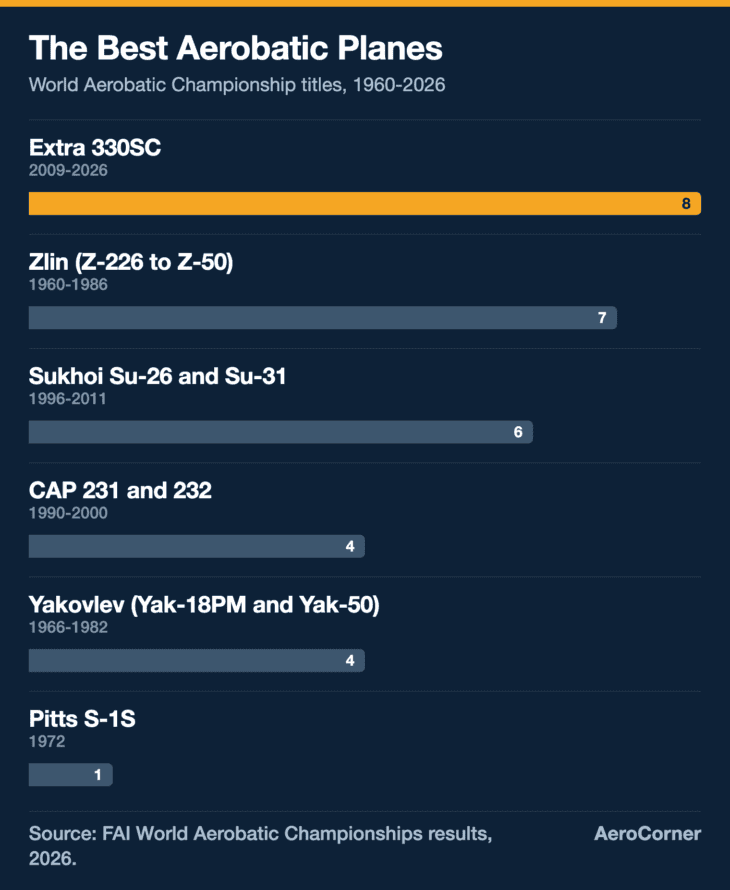
The best aerobatic plane in the world is the Extra 330SC, a 315 hp German single-seater that has won every FAI World Aerobatic Championship since 2013. That is seven titles in a row, and eight in all, more than any other aircraft in the history of the event.
We ranked aerobatic planes by the hardest evidence the sport has: which aircraft carried the overall Unlimited champion at the World Aerobatic Championships from 1960 to 2026. Then we added the planes that win somewhere else, in the four-minute freestyle, the air race, the two-seat trainer market and the first aerobatic lesson.
All results and statuses are as of November 2026.
| Rank | Aircraft | Best for | Seats | Limit load | World titles, 1960-2026 |
|---|---|---|---|---|---|
| 1 | Extra 330SC | Unlimited competition | 1 | +10/-10 g | 8 |
| 2 | Sukhoi Su-26 and Su-31 | Unlimited competition | 1 | +12/-10 g (Su-31) | 6 |
| 3 | MX Aircraft MXS | Freestyle and air shows | 1 | +14/-14 g ultimate | 0 |
| 4 | Zivko Edge 540 | Air racing and air shows | 1 (540T: 2) | Not published by maker | 0 |
| 5 | CAP 231 and 232 | Unlimited competition (classic) | 1 | +10/-10 g | 4 |
| 6 | Game Composites GB1 GameBird | Two-seat Unlimited and touring | 2 | +10/-10 g | 0 |
| 7 | Extra 330LX and Extra NG | Two-seat Unlimited training | 2 | +10/-10 g solo | 0 |
| 8 | XtremeAir Sbach 342 | Two-seat Unlimited | 2 | +10/-10 g | 0 |
| 9 | Pitts Special S-1 and S-2C | The classic biplane | 1 or 2 | +6/-5 g (S-2C) | 1 |
| 10 | Zlin Z-50 | Historic champion | 1 | +9/-6 g (Z-50L) | 7 (Zlin family) |
| 11 | Yakovlev Yak-50, Yak-52 and Yak-55 | Radial-engine trainer | 1 or 2 | +7/-5 g (Yak-52) | 4 (Yakovlev family) |
| 12 | American Champion Super Decathlon | Your first aerobatic lessons | 2 | +6/-5 g | 0 |
How this ranking works
The competition entries are ordered by overall individual titles at the FAI World Aerobatic Championships, the sport’s world final, weighted toward recent wins: a title in 2024 says more about a plane you can fly today than one in 1964. 32 championships were completed between 1960 and 2026 (none in 1974, and 1992 was not completed). The air show, air race and two-seat entries are ranked on their own records: US national titles, Red Bull Air Race championships, and certification and production. We excluded military jets and display teams, and pilots’ one-off specials that were never sold as a type.
1. Extra 330SC
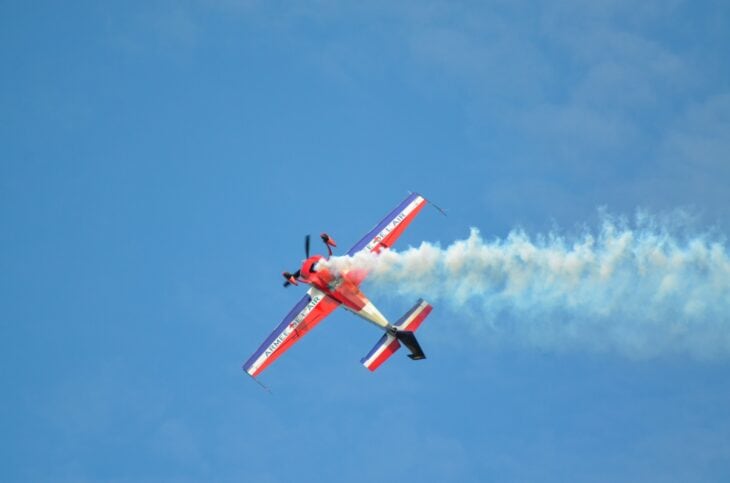

No aerobatic plane has ever dominated the world championships like the Extra 330SC. It carried Renaud Ecalle to the title in 2009, then won every championship from 2013 to 2026, with five different pilots.
The most recent was the 33rd World Aerobatic Championships at Mason City, Iowa, from August 24 to September 2, 2026. Florent Oddon of France won it, becoming the first pilot in the event’s history to take three consecutive world titles, all three in an Extra 330SC.
Extra Aircraft calls it a single-seat, low-wing monoplane for the unlimited competitor or freestyle pilot. It has a carbon fiber wing, a steel tube fuselage and a 315 hp Lycoming AEIO-580-B1A driving a three-blade propeller.
It is EASA certified to plus and minus 10 g in the aerobatic category, with a never-exceed speed of 220 knots and a typical equipped empty weight of 1,291 pounds (585 kg). That certification matters: the Extra is a factory airplane with a type certificate, not a one-off, so a winning airframe can be bought, insured and maintained anywhere.
Why does it beat the Sukhoi? Not raw numbers: the Su-31 has more power and a higher limit load. The 330SC was built for precision, with an improved roll rate and easier roll stops, and in a judged sport a crisp stop is worth more than raw power.
Its successor already flies
Extra flew the 330SX, a single-seat evolution of the 330SC, for the first time in July 2023. It has a wider cockpit, a shorter fuselage, more headroom and better roll authority, with deliveries planned from mid-2024. The 330SC has still won every world title since.
2. Sukhoi Su-26 and Su-31
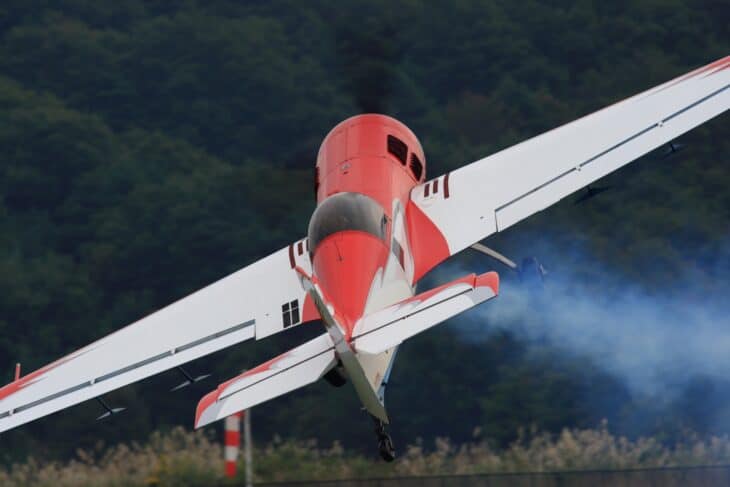

Before the Extra, the world belonged to Sukhoi. The Su-26 first flew in June 1984, and Sukhoi single-seaters won six world titles between 1996 and 2011: Victor Chmal in 1996, Mikhail Mamistov in 2001 and 2011, Sergey Rakhmanin in 2003 and 2005, and Ramón Alonso of Spain in 2007.
The Su-31 is the brute of the list. Its 400 hp Vedeneyev M-14PF radial gives it more power than any other production entry, and it is rated at +12/-10 g with a roll rate of about 400 degrees per second.
Mamistov’s 2011 win in a Su-26M3 was the last time anything but an Extra 330SC won the world title. When he won again in 2017, he did it in an Extra, and that switch is the clearest verdict on where the sport went.
3. MX Aircraft MXS
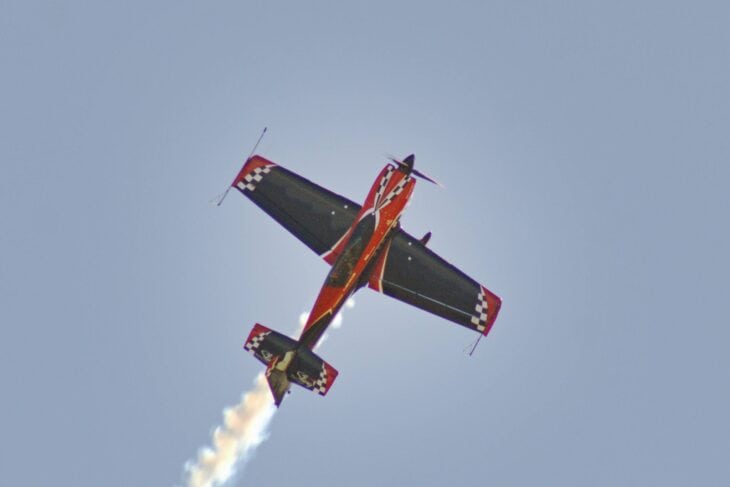

If the Extra owns the world title, the MXS owned the four-minute freestyle, where pilots are judged on their own choreography. The all-carbon single-seater is the plane Rob Holland flew from 2011, in a modified version called the MXS-RH.
Holland won 13 US National Unlimited titles in a row, every Nationals from 2011 to 2024 (there was no contest in 2020). He also won six world freestyle titles, the last in 2024, when he took freestyle gold and third overall at the World Aerobatic Championships in Poland.
MX Aircraft quotes a 420-degree-per-second roll rate, a 230-knot never-exceed speed and an ultimate load of plus and minus 14 g at aerobatic weight. Engines run from 250 to 380 hp, and the race version, the MXS-R, carried Nigel Lamb to the 2014 Red Bull Air Race title.
Holland died on April 24, 2025, when his MXS crashed on approach to Langley Air Force Base, Virginia, ahead of an air show. His US title run ended with 13 straight wins.
Why the ultimate load is higher
The MXS figure of plus and minus 14 g is an ultimate load, the point at which the structure is designed to fail. Most makers quote a limit load, the most a pilot may use. Comparing 14 g ultimate with 10 g limit is comparing two different numbers.
4. Zivko Edge 540
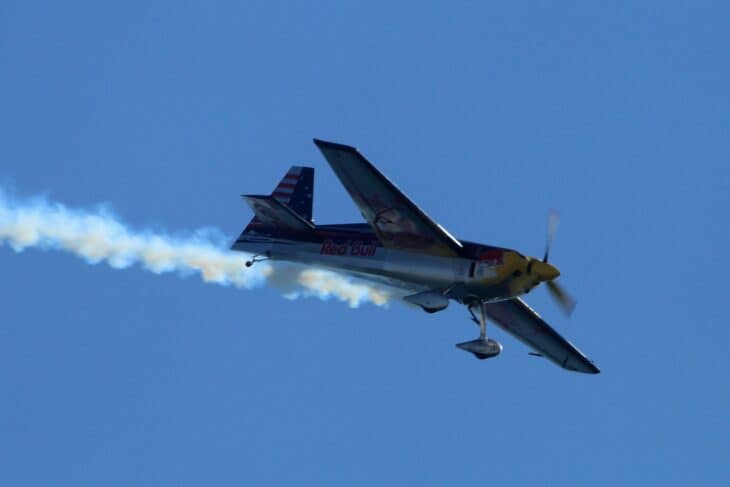
The Edge 540 is the plane most people picture when they think of aerobatic racing. It was the most common aircraft in the Red Bull Air Race, and its pilots won at least eight of the series’ championships.
Kirby Chambliss won in 2004 and 2006, Paul Bonhomme in 2009, 2010 and 2015, Matthias Dolderer in 2016 and Yoshihide Muroya in 2017. Matt Hall switched from an MXS-R to an Edge 540 V3 for 2017 and won the final championship in 2019.
The single-seater first flew in 1996, rolls at 420 degrees per second and climbs at 3,700 feet per minute. A two-seat version is sold as the Edge 540T.
It ranks fourth, not higher, because the race it was built for is gone. Red Bull cancelled the air race after the 2019 season, and no overall world aerobatic champion has ever flown an Edge.
5. CAP 231 and CAP 232
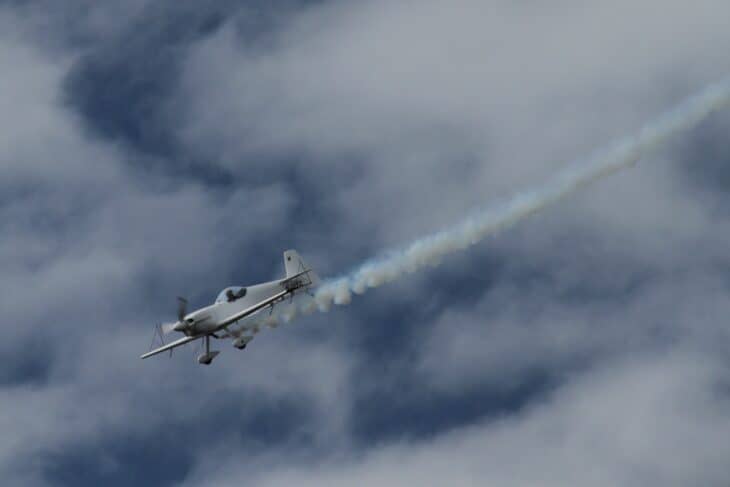

The French CAP family won four world titles in a decade: the CAP 231 in 1990, the carbon-winged CAP 231EX in 1994, and the CAP 232 in 1998 and 2000. Its lineage began with the CAP 230, developed in 1985 for the French Air Force.
The CAP 232 is a single-seater rated at plus and minus 10 g, with a 300 hp Lycoming AEIO-540. It won back-to-back world titles at the turn of the century, between Sukhoi wins in 1996 and 2001.
6. Game Composites GB1 GameBird
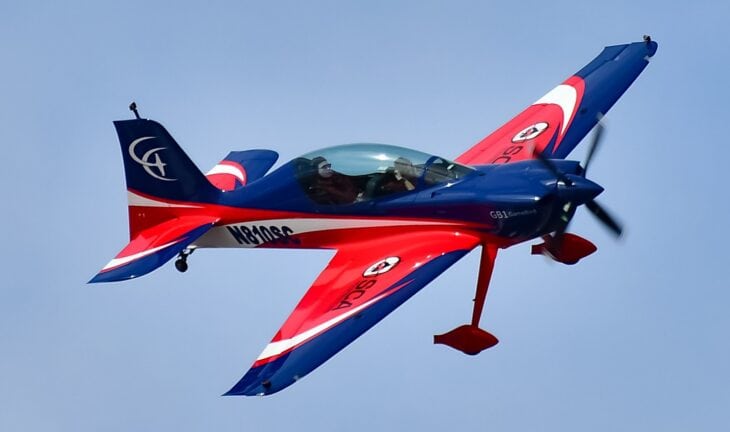
The GameBird is the best two-seat aerobatic plane you can buy new. It first flew on July 15, 2015, and was certified by EASA in the aerobatic category on April 12, 2017, and by the FAA on August 29, 2017.
It is rated at plus and minus 10 g with a 400-degree-per-second roll rate, yet it cruises at 200 knots with a range of more than 1,000 nautical miles. That combination, a competition airplane you can fly across the country, is what sets it apart.
Game Composites, based in Bentonville, Arkansas, delivered its 100th GameBird in November 2024. The company calls it the only FAA-certified two-seat airplane built in the US that is capable of unlimited aerobatics.
7. Extra 330LX and Extra NG
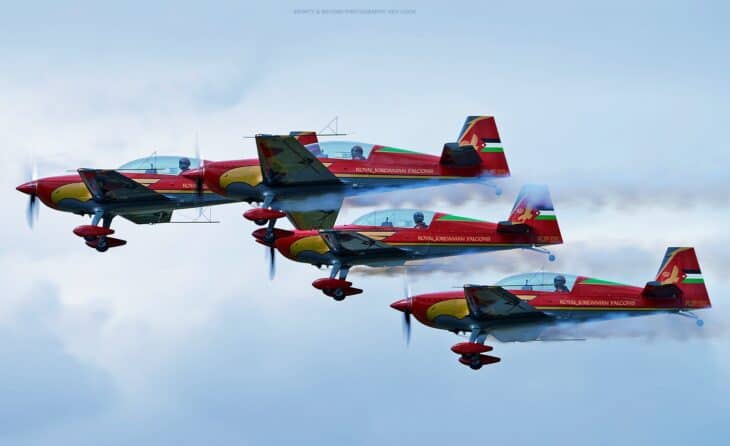
The two-seat Extras are where many Unlimited pilots learn the figures they later fly solo in the 330SC. The Extra 300 family is stressed for plus and minus 10 g with one person on board and plus and minus 8 g with two.
The current 330LX carries the same 315 hp Lycoming as the single-seater, a 220-knot never-exceed speed and a typical empty weight of 1,455 pounds (660 kg). Extra sells it for competition and aerobatic flight schools.
The Extra NG is the newer, all-carbon two-seater, unveiled at AirVenture in July 2019 and granted an EASA type certificate that October. It is lighter, at a typical empty weight of 1,400 pounds (635 kg), and cruises at up to 202 knots.
8. XtremeAir Sbach 342
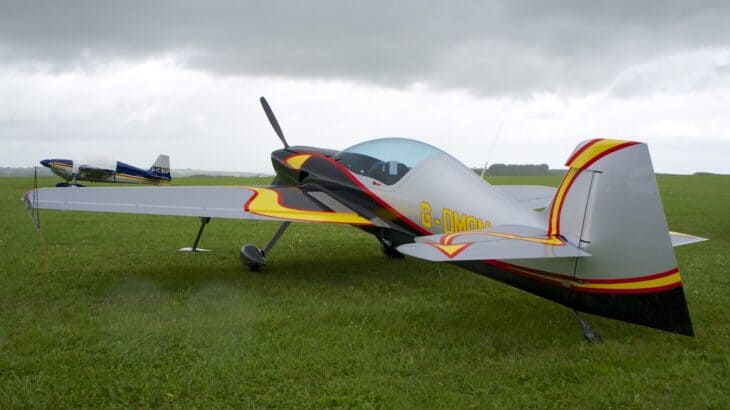

The Sbach 342, built as the XA42 by XtremeAir in Germany, is a carbon-fuselage two-seater for Unlimited aerobatics and touring. EASA certified it in March 2011, and the FAA followed in November 2012.
It shares the Extra’s 315 hp Lycoming and plus and minus 10 g rating, with a claimed 450-degree-per-second roll rate. It was designed by Philipp Steinbach with Albert Mylius, and Steinbach also designed the GameBird.
It ranks below the GameBird and the Extras because far fewer were built, more than 60 by one count, so parts and support are harder to find.
9. Pitts Special S-1 and S-2C
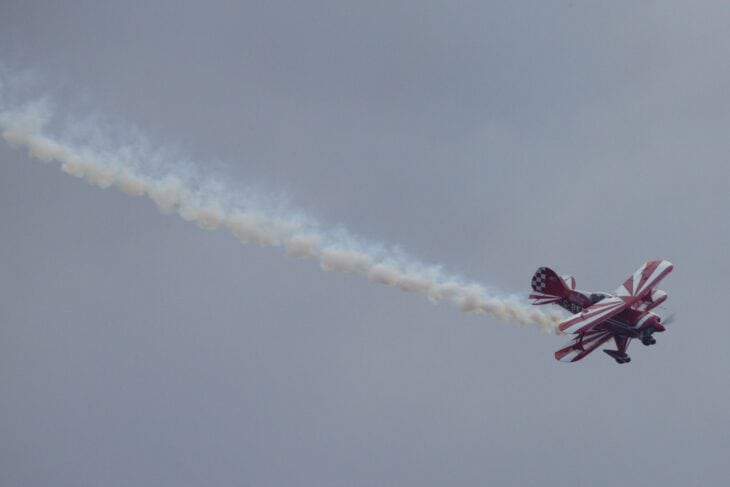

Curtis Pitts’ biplane first flew in September 1944 and became the standard by which other aerobatic aircraft were judged. Charlie Hillard won the 1972 world title in a Pitts S-1S, and the US took the team title too.
Aviat still builds the two-seat Pitts S-2C in Afton, Wyoming, with a 260 hp Lycoming. It is certified to +6/-5 g, well short of the monoplanes, but its short wings and quick handling make it a classic teacher of stick-and-rudder flying.
10. Zlin Z-50
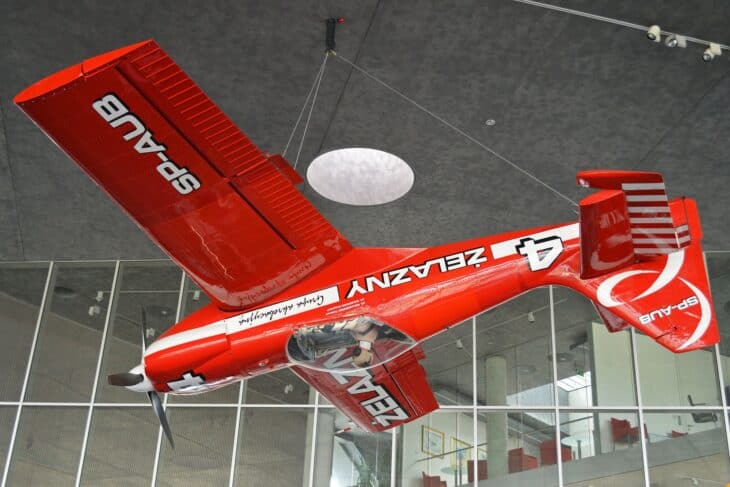
Czechoslovakia’s Zlin built the first world champions: Zlin aircraft won the title in 1960, 1962, 1964 and 1968. The Z-50, which first flew on July 18, 1975, added three more in 1978, 1984 and 1986.
That makes seven Zlin titles, second only to the Extra. The single-seat Z-50L was stressed to +9/-6 g, but newer designs from 1986 onward pushed it out of world-class competition, so it is a historic champion rather than a plane to buy today.
11. Yakovlev Yak-50, Yak-52 and Yak-55
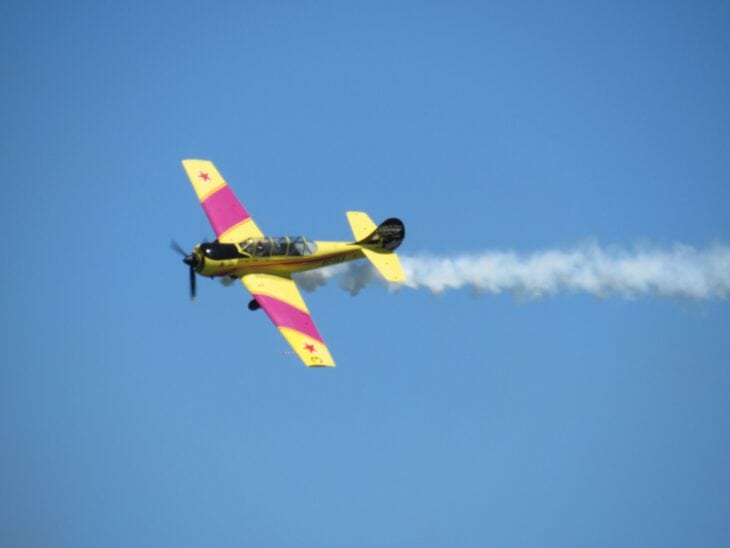

Yakovlev aircraft won four world titles: the Yak-18PM in 1966 and 1970, and the single-seat Yak-50 in 1976 and 1982. The single-seat Yak-55 that followed first flew on May 28, 1981, and the later Yak-55M is stressed to +9/-6 g.
For most pilots the Yak that matters is the two-seat Yak-52. It first flew in 1976, was built in Romania from 1977 to 1998, and is stressed to +7/-5 g with a 360 hp radial engine.
Built as a primary trainer, it has still been flown in international competition up to Advanced level.
12. American Champion Super Decathlon
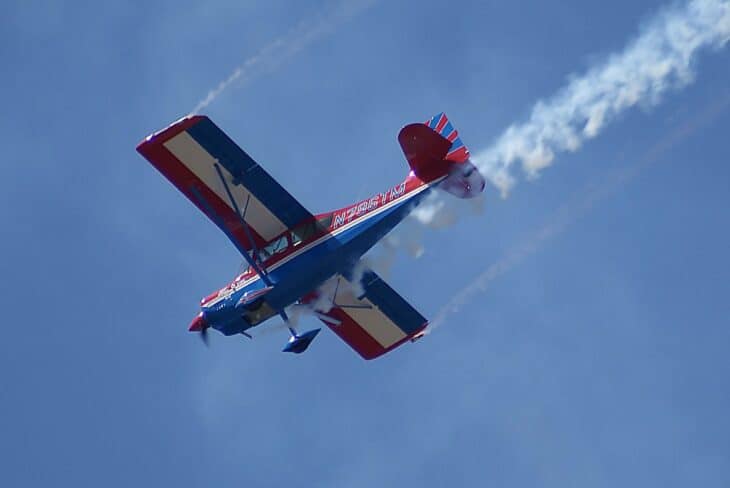

The Super Decathlon will never win a world title, and it does not need to. It is a two-seat tandem taildragger with a 180 hp Lycoming, inverted fuel and oil systems, and an acrobatic limit load of +6/-5 g.
American Champion still sells it new, with a never-exceed speed of 200 mph (320 km/h) and a top speed of 155 mph (250 km/h). Tandem seats put the instructor right behind the student, which suits a first loop or spin lesson.
What about the Laser and the Super Star?
Each won one world title: Leo Loudenslager in the Laser Z-200 in 1980, and Henry Haigh in the Super Star in 1988. The Laser was Loudenslager’s own airplane, adapted and built by him from a homebuilt Stephens Akro, and it now hangs in the Smithsonian. Neither became a factory type you could buy, so they sit outside a ranking of planes a pilot can actually fly.
What counts as aerobatic flight
In US rules, aerobatic flight is any intentional maneuver involving an abrupt change in attitude, an abnormal attitude or abnormal acceleration not needed for normal flight. The FAA bans it over towns and crowds, below 1,500 feet, within 4 nautical miles of a federal airway’s centerline, and in visibility under 3 miles.
That is why aerobatic practice happens over open country, and why these planes are proven at contests, where every figure is judged, as much as at the big US air shows. If you prefer engineless aerobatics, our ranking of the best gliders uses the same world-championship method for sailplanes.
FAQ
Sources and references used for research and fact-checking.
- Wikipedia, FAI World Aerobatic Championships
- KIOW, Mason City-hosted World Aerobatic Championship ends with French pilot's historic third straight title
- International Aerobatic Club, Rob Holland on the podium at WAC 2024
- International Aerobatic Club, US Nationals category winners
- Wikipedia, Rob Holland (pilot)
- Extra Aircraft, EXTRA 330SC
- Extra Aircraft, EXTRA 330LX
- Extra Aircraft, EXTRA NG
- Wikipedia, Extra NG
- Wikipedia, Extra EA-300
- AVweb, Extra Unveils 330SX
- Wikipedia, Sukhoi Su-26
- Wikipedia, Sukhoi Su-31
- MX Aircraft, MXS Aircraft
- Wikipedia, MX Aircraft MXS
- Wikipedia, Zivko Edge 540
- Wikipedia, Red Bull Air Race World Championship
- Wikipedia, Matt Hall (pilot)
- Wikipedia, Nigel Lamb
- Wikipedia, Kirby Chambliss
- Wikipedia, Paul Bonhomme
- Wikipedia, Mudry CAP 230
- Aviation International News, Game Composites delivers 100th aerobatic GameBird
- Wikipedia, Game Composites GB1 GameBird
- Wikipedia, XtremeAir Sbach 342
- Wikipedia, Pitts Special
- Wikipedia, Zlin Z-50
- Wikipedia, Yakovlev Yak-55
- Wikipedia, Yakovlev Yak-52
- American Champion Aircraft, Super Decathlon 8KCAB
- Cornell Law School LII, 14 CFR 91.303, Aerobatic flight
Get the Newsletter
The latest aviation news and stories sent to your inbox.
About the Author

Tim is the owner and lead editor of AeroCorner since 2019, overseeing aviation content covering aircraft, airlines, airports, and the broader aviation industry. Through years of researching, writing, editing, and publishing aviation-focused content, he has developed extensive practical knowledge of commercial aviation and air travel. Based in Asia and a frequent traveler himself, Tim also brings firsthand passenger experience to AeroCorner’s coverage. Outside of publishing, he has also explored aviation firsthand through hands-on flight training in New Zealand.