

Table of Contents
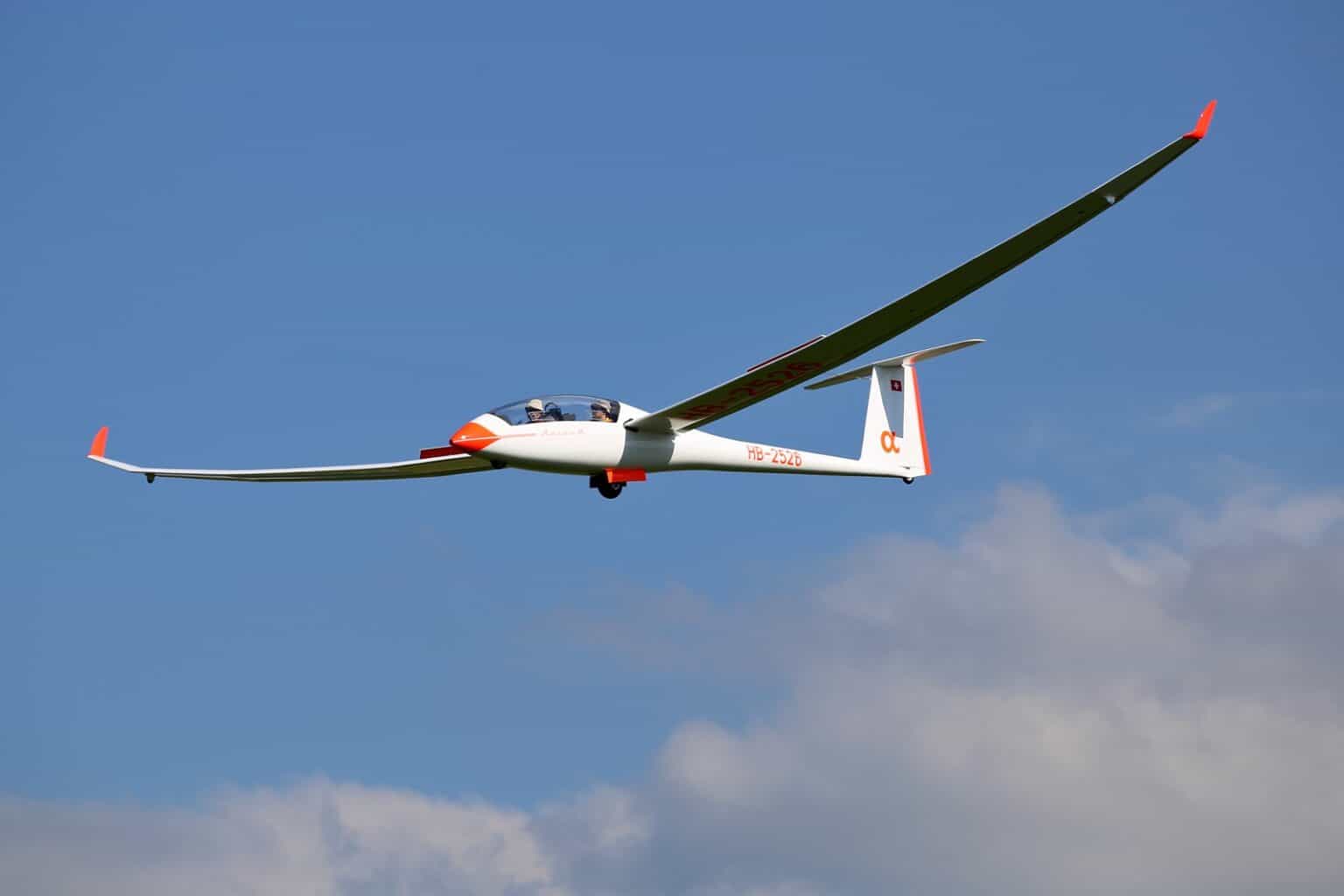
The best glider in the world right now is the Jonker JS3 Rapture, a South African racing sailplane that has taken more World Gliding Championship podium places since 2022 than any other single-seater. The Schempp-Hirth Arcus matches its seven podiums, but every one of them came in the two-seat class.
We ranked sailplanes, the high-performance gliders flown for cross-country soaring and racing, by the hardest evidence the sport has: who stood on the podium at the FAI World Gliding Championships from 2022 to 2026. Then we added the gliders that win somewhere else, in the training hangar, the record books and the used market.
All results and statuses are as of November 2026.
| Rank | Glider | Best for | Wingspan | WGC podiums, 2022–2026 |
|---|---|---|---|---|
| 1 | Jonker JS3 Rapture | Single-seat racing (15 m and 18 m) | 49 or 59 ft (15 or 18 m) | 7 |
| 2 | Schempp-Hirth Arcus | Two-seat racing | 66 ft (20 m) | 7 |
| 3 | Binder EB29R | Open class | 92 ft (28 m) | 5 |
| 4 | Rolladen-Schneider / DG LS8 | Standard class | 49 ft (15 m), 59 ft (18 m) tips | 6 |
| 5 | Diana 2 | 15 m racing | 49 ft (15 m) | 2 |
| 6 | Schleicher AS 33 | 18 m racing | 49 or 59 ft (15 or 18 m) | 2 |
| 7 | Schempp-Hirth Ventus 3 | All-round 15/18 m | 49 or 59 ft (15 or 18 m) | 2 |
| 8 | Rolladen-Schneider LS3 | Club class and used value | 49 ft (15 m) | 4 |
| 9 | Schleicher ASK 21 | Training | 56 ft (17 m) | Not raced |
| 10 | eta | Peak performance | 101 ft (30.9 m) | None in this period |
| 11 | Pipistrel Taurus Electro | Electric self-launch | 49 ft (14.97 m) | Not raced |
| 12 | Schweizer SGS 2-33 | American training classic | 51 ft (15.54 m) | Not raced |
How this ranking works
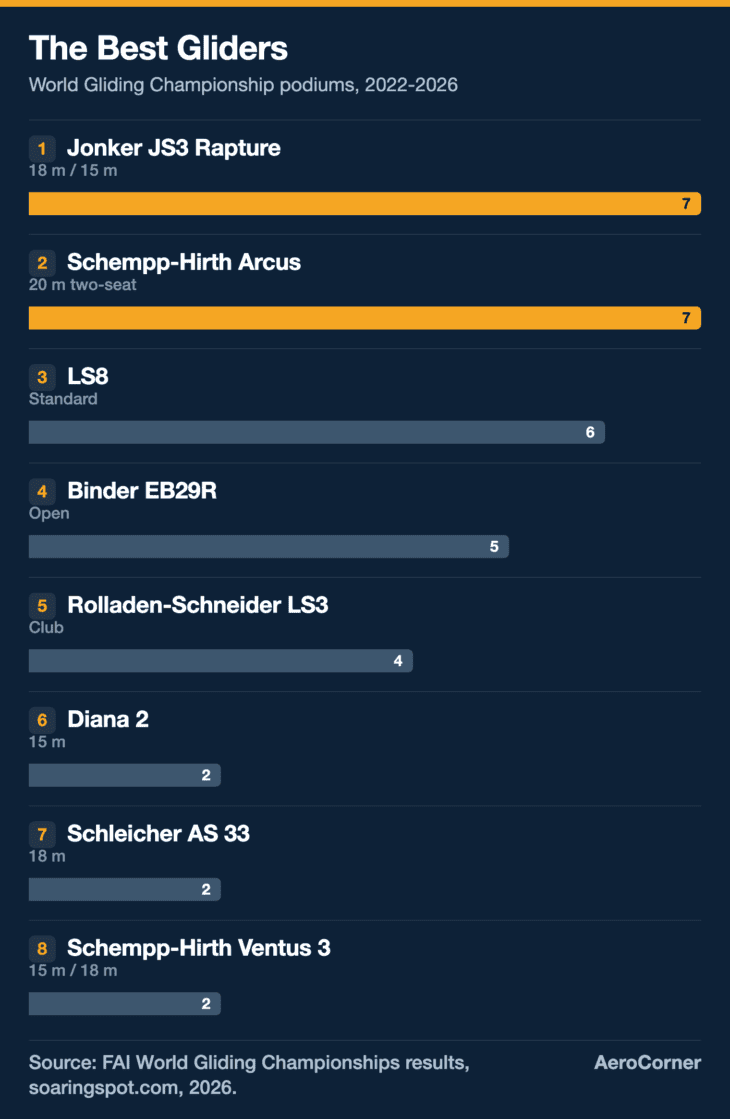
The racing gliders are ordered by World Gliding Championship podium finishes from 2022 to 2026, the five most recent championship years, weighted toward wins and toward the classes where the field is deepest. Podium counts alone would put the LS8 above the EB29R, but three straight Open titles outrank a sweep of the smaller Standard class. Entries 8 to 12 win on a different measure: training, value, raw performance or a first. Gliders are counted by type, so a JS3 and its self-launching JS-MD3 version count as one.
1. Jonker JS3 Rapture

The JS3 is the glider top pilots choose when they want to win the 18 m class. It first flew on December 12, 2016, and is built by Jonker Sailplanes in Potchefstroom, South Africa, the company founded by brothers Attie and Uys Jonker in 2004.
Its record is the deepest in the sport. At the 2022 championships in Szeged, Hungary, JS3s took first, second and third in the 18 m class. In May 2026 at Kościelec, Poland, Frenchman Victor Mallick won the class in a JS3, with 2022 champion Christophe Abadie second in another.
The wing carries full-span flaps and was developed with Delft University of Technology, and pilots can fly it at 49 feet (15 m) or 59 feet (18 m). That flexibility is why it also places in the 15 m class, where a JS-MD3 finished third in 2025.
One caution for buyers: the JS3 RES electric self-launching version was grounded by an emergency airworthiness directive, which Jonker reported in May 2026 had been revised and lifted. Check the directive’s current status before buying one.
2. Schempp-Hirth Arcus
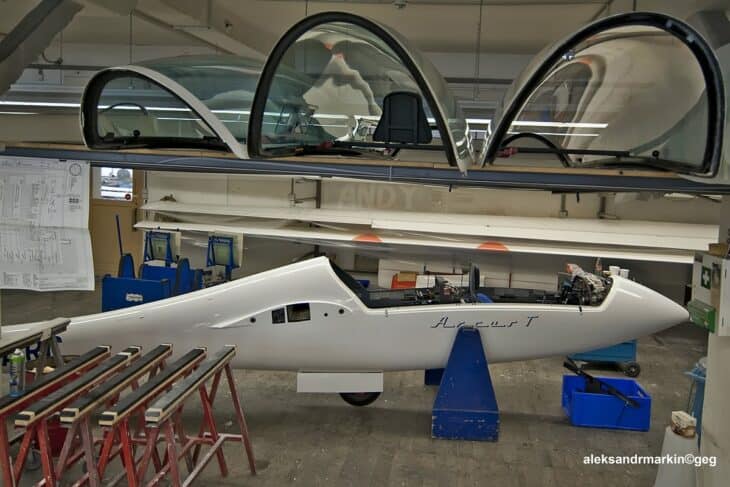

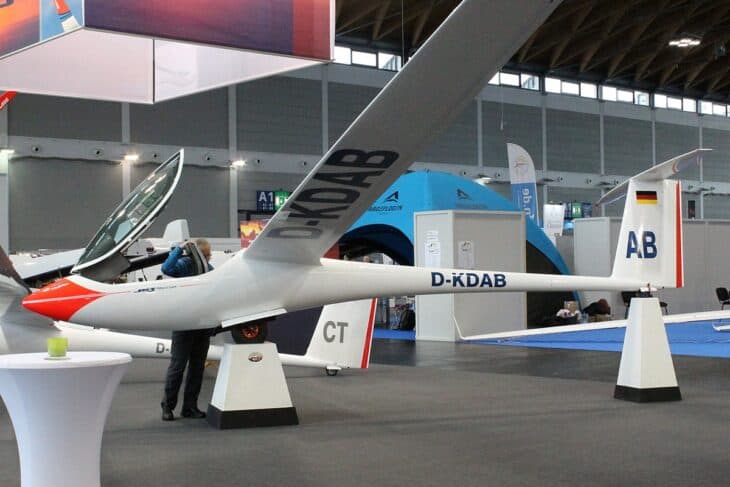
The Arcus is the best two-seat glider in the world, and the 2026 championships settled the argument. Every one of the top six crews in the 20 m two-seat class flew an Arcus, led by Germany’s Karsten Leucker and Jan Omsels in an Arcus T.
It first flew on April 7, 2009, and has a 66-foot (20 m) wing with flaperons along the whole span. Schempp-Hirth sells it as a pure glider, as a turbo with a sustainer engine for getting home, and as the self-launching Arcus M.
Americans have a reason to remember it. At the 2024 championships in Uvalde, Texas, Sarah Arnold and Karl Striedieck of the US won the two-seat class in an Arcus M, ahead of a Polish crew in a Schleicher ASG 32 Mi.
Many of the best gliders have engines
The EB29R that keeps winning the Open class carries a retractable Solo engine, and the Arcus M that won the 2024 two-seat title is a self-launcher. The engine folds into the fuselage and is shut down while the glider soars. It exists to take off without a towplane, or to get home instead of landing in a field when the lift runs out.
3. Binder EB29R
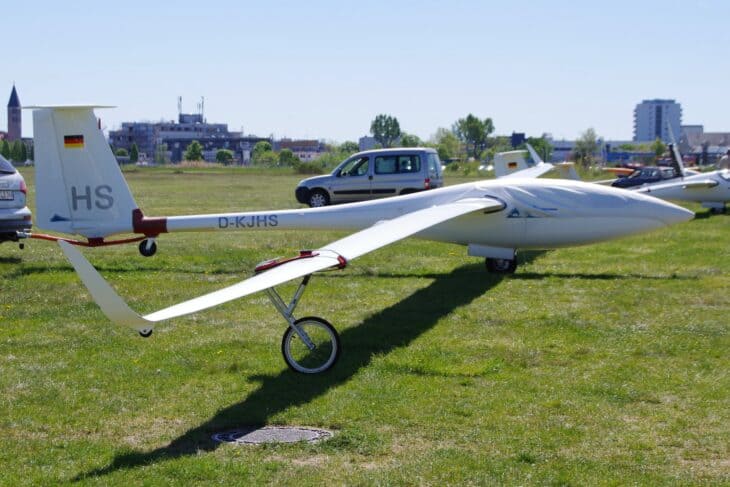

The EB29R owns the Open class, the no-limits category where wingspan is unrestricted. Germany’s Felipe Levin has won the Open class world title in one three times running: 2022 in Hungary, 2024 in Texas and 2026 in Poland.
Binder builds it with a 92-foot (28 m) wing and a retractable Solo engine. At Uvalde in 2024, EB29-family gliders filled five of the top six places in the Open class.
Its grip is not secure. In 2026, Poland’s Sebastian Kawa finished second in Jonker’s new JS5 Rey, just 7 points behind Levin after ten tasks (8,945 to 8,938). The JS5 first flew in late 2023 with a 79-foot (24.2 m) wing, and it is the glider to watch in the Open class.
4. Rolladen-Schneider / DG LS8
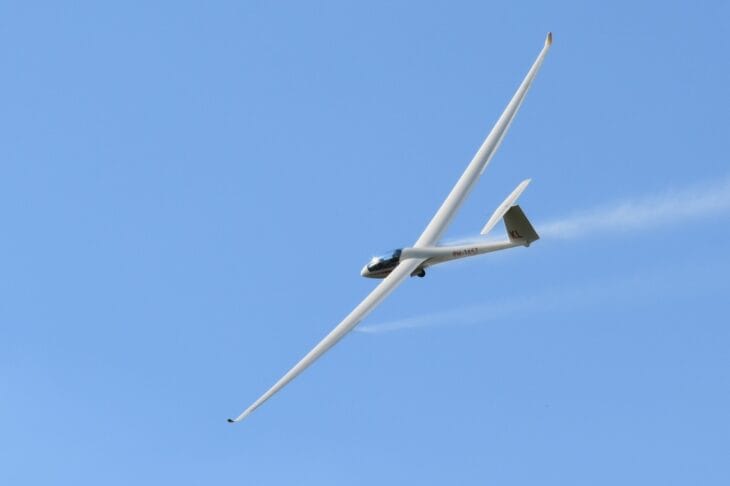

The LS8 has a lock on the Standard class. It swept the Standard class podium at both the 2023 championships in Narromine, Australia, and the 2025 championships in Tábor, Czech Republic, with Britain’s Tom Arscott winning in 2023 and Belgium’s Jeroen Jennen in 2025.
That is remarkable for a design that appeared in 1994. The Standard class bans flaps, and the LS8’s flapless wing has stayed competitive for three decades; tip extensions let it fly as an 18 m glider too.
Rolladen-Schneider built it from 1995, and DG Flugzeugbau took over production. Roughly 544 had been built, according to type references.
5. Diana 2
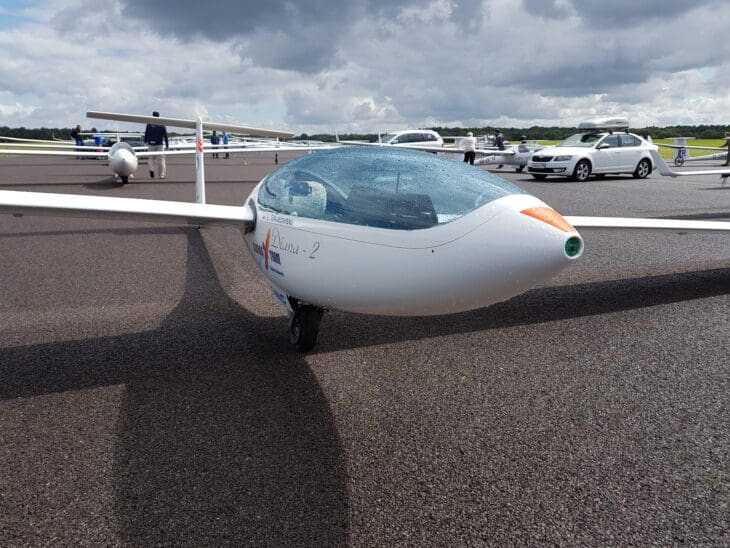

The Polish Diana 2 is the glider to beat in the 15 m class. Sebastian Kawa won the class in one in 2023, and Łukasz Grabowski won it in 2025 by just 10 points over Tom Arscott’s Ventus 2a.
It first flew on January 12, 2005, with a wing designed by Krzysztof Kubrynski using his own numerical flow-simulation software. Production passed to the Polish company Avionic in 2017, which also offers a version with a front electric sustainer engine.
6. Schleicher AS 33
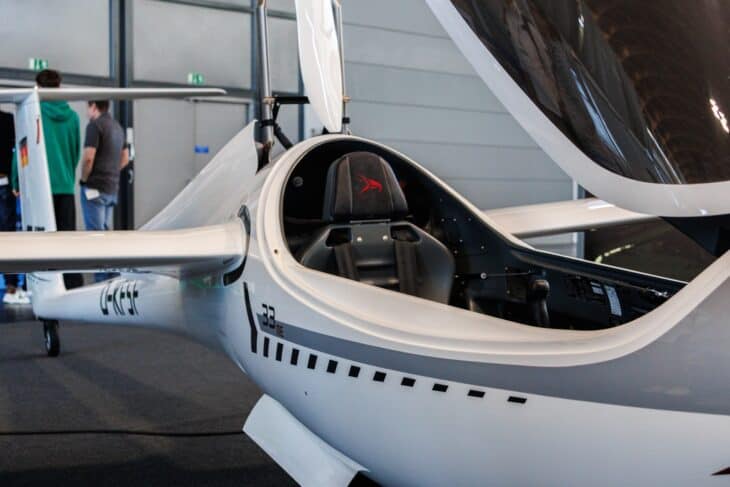

The AS 33 is the newest serious challenger to the JS3 in the 18 m class. It first flew on January 23, 2020, at Poppenhausen, Germany, and pairs the proven ASG 29 fuselage with an all-new 59-foot (18 m) wing.
Germany’s Stefan Langer won the 18 m world title in an AS 33 Me at Uvalde in 2024, then finished third in 2026. A second set of outer wings converts it to the 15 m class, and an electric self-launching AS 33 Es is offered.
Schleicher lists an empty mass of 661 pounds (300 kg) and a maximum takeoff mass of 1,322 pounds (600 kg) at 18 m. The difference is mostly water ballast, which racers carry to fly faster between thermals.
7. Schempp-Hirth Ventus 3
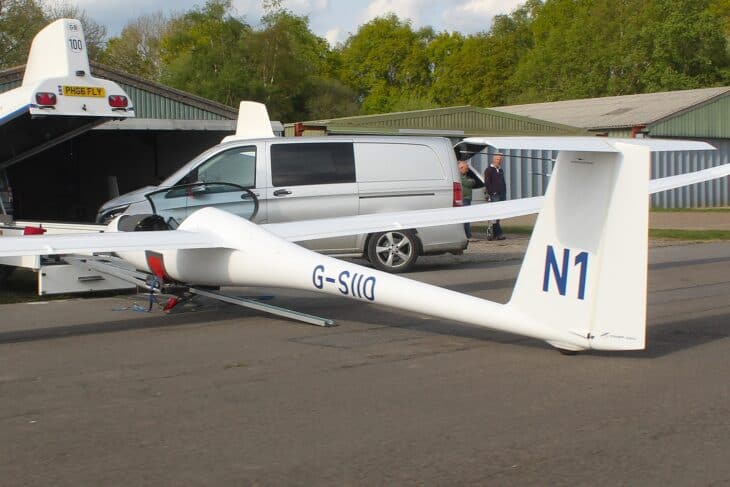

The Ventus 3 is the most flexible glider on the list, offered as a pure glider, a turbo, a self-launcher, a front electric sustainer and the electric self-launching Ventus E. The prototype flew on January 29, 2016, and a Ventus 3T won the 2018 world championship at Hosín.
It has not won a world title in the period we ranked, but it keeps finishing second: Henrik Bieler in the 15 m class in 2023 and Simon Schröder in the 18 m class in 2024. For a private owner who wants one glider for both spans and a choice of engines, it is the safest pick.
8. Rolladen-Schneider LS3
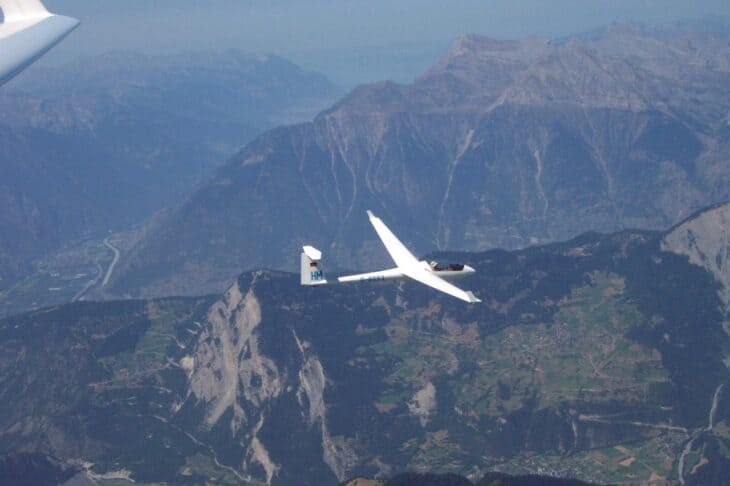

The best value in soaring is a glider built between 1976 and 1983. The Club class uses handicaps so that older gliders can race on equal terms, and LS3s took first, second and third in it in 2023, then won again in 2025 with Stefan Langer.
Rolladen-Schneider built 429 of them, so they come up for sale. A pilot who wants a flapped 49-foot (15 m) glider with a proven championship pedigree, at a fraction of a new glider’s price, should start here.
9. Schleicher ASK 21
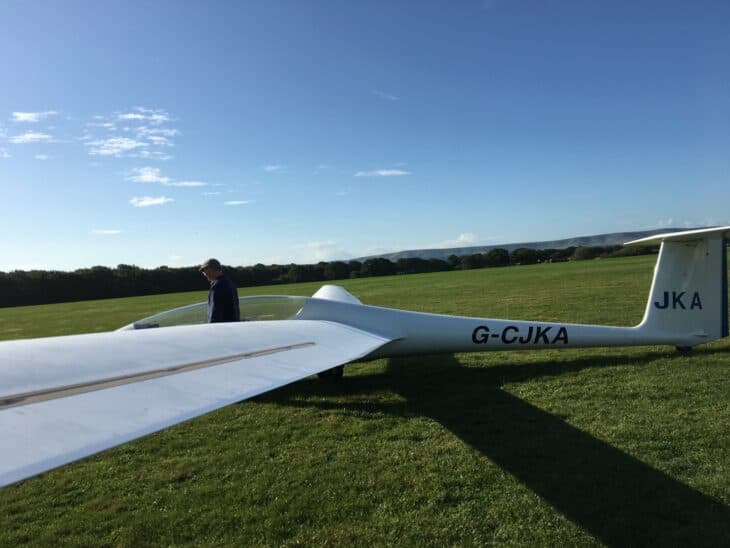

The ASK 21 is the best training glider ever built, and the numbers support it. Designed by Rudolf Kaiser and first flown in February 1979, it is still in production, and Schleicher says more than 950 have been built.
It is a two-seat, 56-foot (17 m) trainer with a best glide ratio of 34:1, meaning it travels 34 feet forward for every foot it descends in still air. Its gentle stall, and its suitability for cross-country and aerobatic instruction, make it the glider most clubs use to take students to solo, which is the first step toward a glider rating among the types of pilot licenses.
Schleicher rates the airframe for 18,000 hours, a life no sailplane had before it, and the updated ASK 21 B now connects all its controls automatically when the glider is rigged.
10. eta
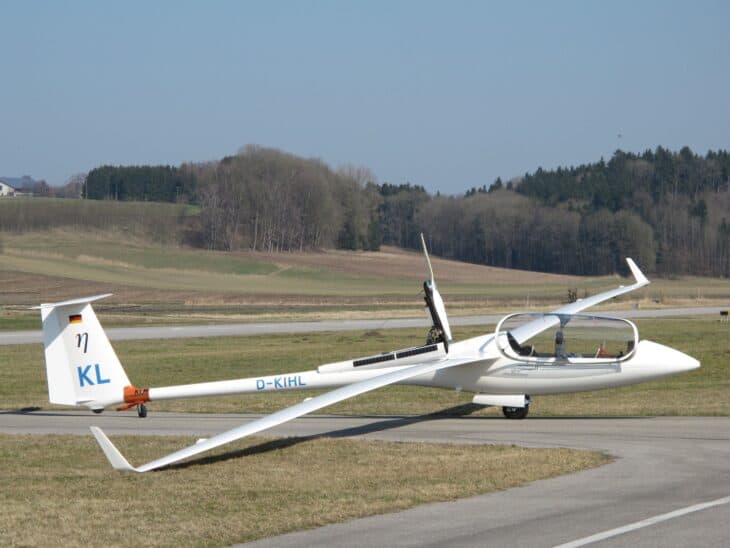

If “best” means pure gliding performance, the eta is the answer. This German-built two-seater has a 101-foot (30.9 m) wing, one of the largest of any sailplane, and first flew on July 31, 2000, at Cochstedt, Germany.
It is usually quoted at a glide ratio of about 70:1, among the highest figures quoted for any sailplane. Its builders, though, have refused to publish a single number, arguing that a glider’s performance can only be described by its whole speed polar.
It proved itself in competition early: Janusz Centka finished second overall in an eta at the 2003 World Championships in Leszno, Poland. It is a record-chaser’s machine, not a club glider.
11. Pipistrel Taurus Electro
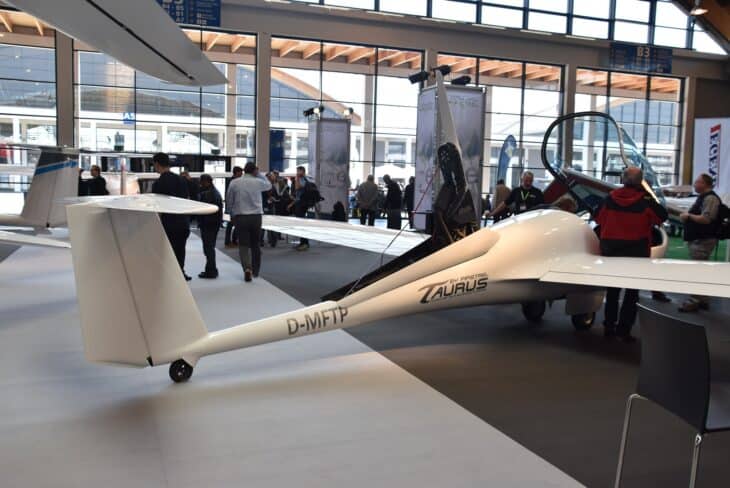

The Taurus Electro is the glider that proved electric flight could be sold, not just demonstrated. Announced in 2007 and in service from 2011, it became the first electric two-seat aircraft in serial production available on the market.
It is a side-by-side two-seater with a 49-foot (14.97 m) wing and a 41:1 glide ratio. Its motor climbs it to soaring height, then folds away, so there is no towplane and no fuel.
A twin-fuselage derivative, the Taurus G4, won the CAFE Foundation’s 2011 Green Flight Challenge, covering 403.5 passenger miles per gallon equivalent with two people aboard and taking a $1.35 million prize funded by NASA.
12. Schweizer SGS 2-33
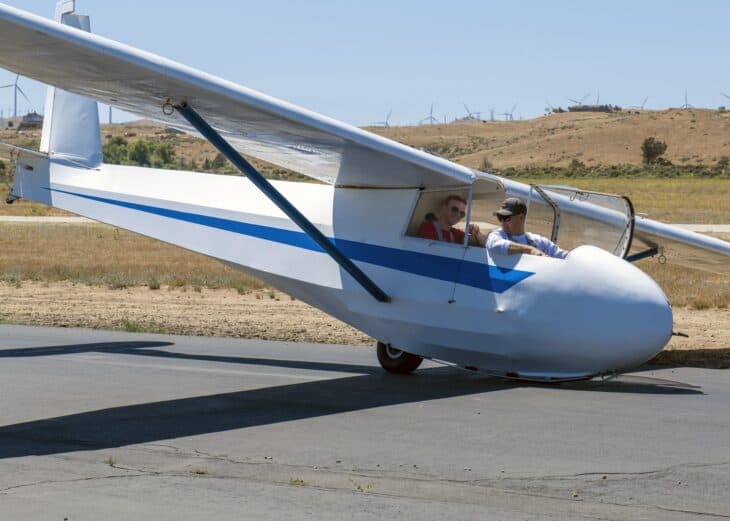

No glider taught more Americans to soar. The high-wing, strut-braced Schweizer 2-33 first flew in 1965, was built in Elmira, New York, from 1967 to 1981, and was North America’s main training glider until the late 1980s.
Schweizer built 579, and the US Air Force Academy flew 13 of them as the TG-4A until 2002. Its glide ratio of about 22:1 is modest, but it is forgiving, durable and cheap to keep flying.
It is not finished, either. A new 2-33B with a nose wheel and a roomier rear seat was certified on February 2, 2022, and the Air Cadet League of Canada still flew 79 2-33s as of 2022.
What about the LS4, the Discus or the ASG 32?
The Rolladen-Schneider LS4 is one of the most-produced gliders ever, with 1,048 built, and took the first six places at the 1983 World Championships, but it no longer wins at world level. The Schempp-Hirth Discus 2 is a fine Standard class glider that the LS8 has beaten in every recent final. The Schleicher ASG 32 Mi finished second in the two-seat class in 2024 and is the strongest alternative to the Arcus. All three are excellent buys; none has the recent record of the 12 above.
New to the sport? Start with how gliders fly without an engine, which explains thermals, ridge lift and why every glider is always descending through the air around it.
FAQ
Sources and references used for research and fact-checking.
- SoaringSpot, 40th FAI World Gliding Championships 2026, results
- SoaringSpot, 38th FAI World Gliding Championship 2024, Uvalde, results
- SoaringSpot, 39th FAI World Gliding Championships 2025, Tabor, results
- SoaringSpot, 37th FAI World Gliding Championships 2023, Narromine, results
- SoaringSpot, 37th FAI World Gliding Championships 2022, Szeged, results
- Wikipedia, World Gliding Championships
- Schempp-Hirth, Arcus technical data
- Schempp-Hirth, Ventus technical data
- Alexander Schleicher, AS 33
- Alexander Schleicher, ASK 21 B
- Binder Flugmotoren- und Flugzeugbau, Binder gliders: EB29R single-seater
- Jonker Sailplanes, Latest news
- eta Aircraft (Leichtwerk), eta: Technical data
- Wikipedia, Jonker JS-3 Rapture
- Wikipedia, Schempp-Hirth Arcus
- Wikipedia, Schempp-Hirth Ventus-3
- Wikipedia, Schleicher AS 33
- Wikipedia, Rolladen-Schneider LS8
- Wikipedia, Rolladen-Schneider LS3
- Wikipedia, Rolladen-Schneider LS4
- Wikipedia, Diana Sailplanes Diana
- Wikipedia, Binder EB29
- Wikipedia, Schleicher ASK 21
- Wikipedia, Eta (glider)
- Wikipedia, Pipistrel Taurus
- Wikipedia, Schweizer SGS 2-33
Get the Newsletter
The latest aviation news and stories sent to your inbox.
About the Author

Tim is the owner and lead editor of AeroCorner since 2019, overseeing aviation content covering aircraft, airlines, airports, and the broader aviation industry. Through years of researching, writing, editing, and publishing aviation-focused content, he has developed extensive practical knowledge of commercial aviation and air travel. Based in Asia and a frequent traveler himself, Tim also brings firsthand passenger experience to AeroCorner’s coverage. Outside of publishing, he has also explored aviation firsthand through hands-on flight training in New Zealand.