

Table of Contents
The largest rocket ever built is SpaceX’s Starship. The current Version 3 stands 408 feet (124.4 m) tall, weighs about 11 million pounds (5,000 tonnes) fueled, and its Super Heavy booster is rated at about 18.2 million pounds of thrust (80.8 MN).
That is more than twice the liftoff thrust of the Saturn V that carried Apollo crews to the Moon. As of November 2026, Starship is also the only rocket in this list to have a giant upper stage caught by its launch tower, on its 15th flight.
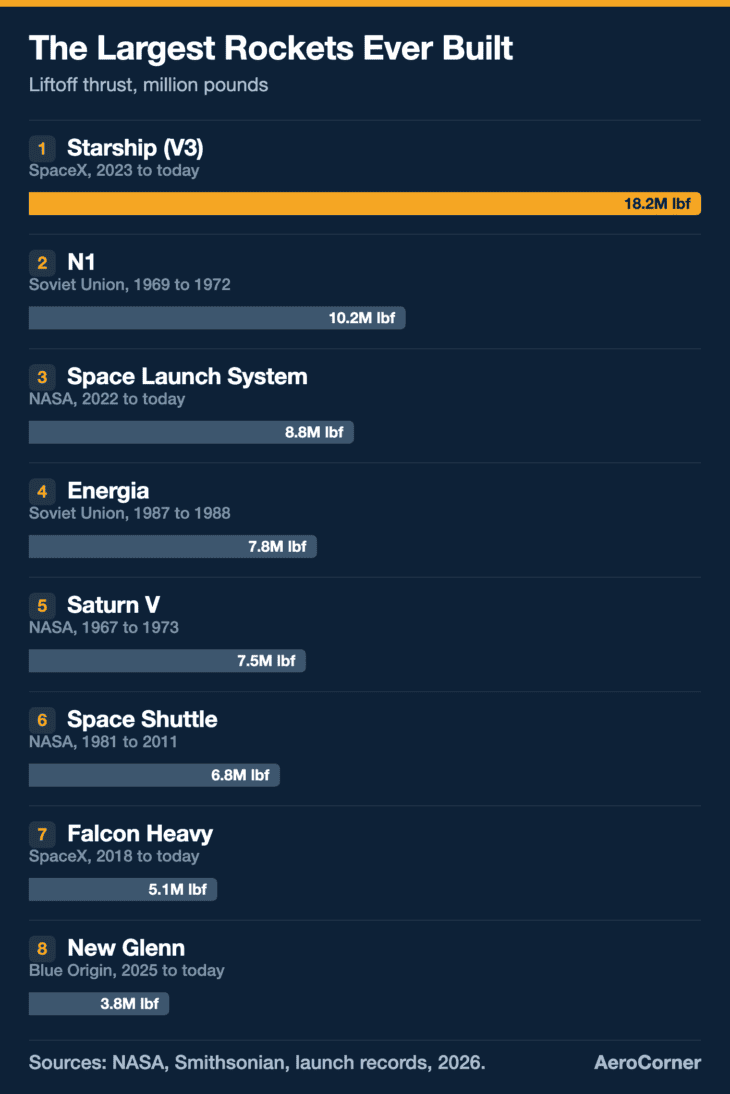
This list ranks the eight largest rockets that have actually flown by liftoff thrust, the force pushing them off the pad. Height and fueled mass sit beside it in the table, because “largest” can mean any of the three.
| Rank | Rocket | Liftoff thrust | Height | Fueled mass | Flights |
|---|---|---|---|---|---|
| 1 | Starship (V3) | 18.2 million lbf (80.8 MN) | 408 ft (124.4 m) | 11 million lb (5,000 t) | 2023 to today |
| 2 | N1 | 10.2 million lbf (45.4 MN) | 345 ft (105.3 m) | 6.06 million lb (2,750 t) | 1969 to 1972 |
| 3 | Space Launch System (Block 1) | 8.8 million lbf (39 MN) | 322 ft (98 m) | 5.75 million lb (2,610 t) | 2022 to today |
| 4 | Energia | 7.8 million lbf (34.8 MN) | 193 ft (58.8 m) | 5.3 million lb (2,400 t) | 1987 to 1988 |
| 5 | Saturn V | 7.5 million lbf (33.4 MN) | 363 ft (110.6 m) | 6.2 to 6.5 million lb (2,822 to 2,965 t) | 1967 to 1973 |
| 6 | Space Shuttle | 6.8 million lbf (30 MN) | 184 ft (56 m) | 4.48 million lb (2,030 t) | 1981 to 2011 |
| 7 | Falcon Heavy | 5.1 million lbf (22.8 MN) | 229.6 ft (70 m) | 3.13 million lb (1,420 t) | 2018 to today |
| 8 | New Glenn | 3.8 million lbf (17 MN) | 322 ft (98 m) | Not published | 2025 to today |
How this ranking works
Rockets are ranked by sea-level thrust at liftoff, the standard way launch vehicles are compared for raw size and power. Only rockets that have actually left the pad count, so paper giants like Sea Dragon and vehicles still in development are covered separately at the end. By height alone the order changes: Starship, Saturn V, N1, then SLS and New Glenn tied at 322 feet. By payload to orbit, Saturn V’s rating still beats every rocket that has flown.
1. Starship: 18.2 million pounds of thrust
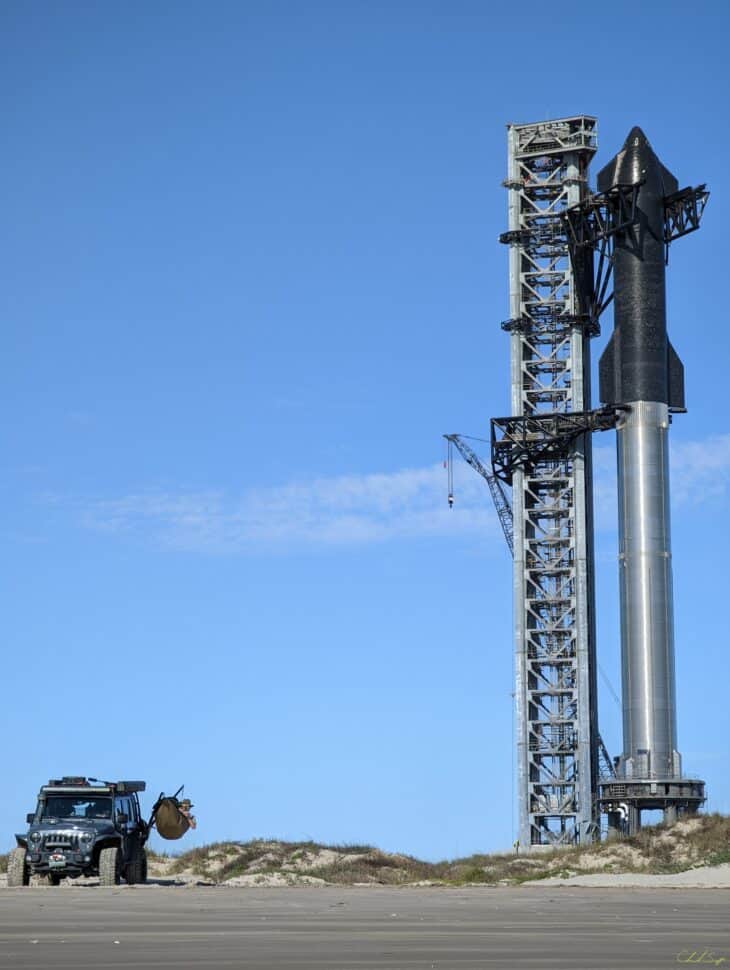

Starship wins on every measure at once: tallest, heaviest and most powerful. The Version 3 stack is 408 feet (124.4 m) tall and 30 feet (9 m) wide, and its 72.3-meter (237 ft) Super Heavy booster carries 33 Raptor 3 engines burning liquid methane and liquid oxygen.
The earlier booster already produced about 16.5 million pounds (73.5 MN), according to SpaceX founder Elon Musk. Version 3 is rated at about 18.2 million pounds (80.8 MN). Either figure is the most thrust any rocket has ever made.
The size is in service of reuse. Both stages are meant to land and fly again, which is why the booster carries so many engines and why SpaceX quotes a payload of about 100 tonnes (220,000 lb) to low Earth orbit for Version 3.
Fifteen Starships have flown since 2023. All four Version 3 flights in 2026 succeeded, and on Flight 15, launched Nov. 13, Ship 42 completed 14 orbits, deployed 26 Starlink satellites and was caught by the tower arms at Starbase, Texas, about 22.5 hours after liftoff.
45 feet taller than the Moon rocket
Starship V3 is 408 feet tall. The Saturn V that launched the Apollo crews was 363 feet. The extra 45 feet is roughly the height of a four-story building stacked on top of the rocket that went to the Moon.
2. N1: 10.2 million pounds of thrust
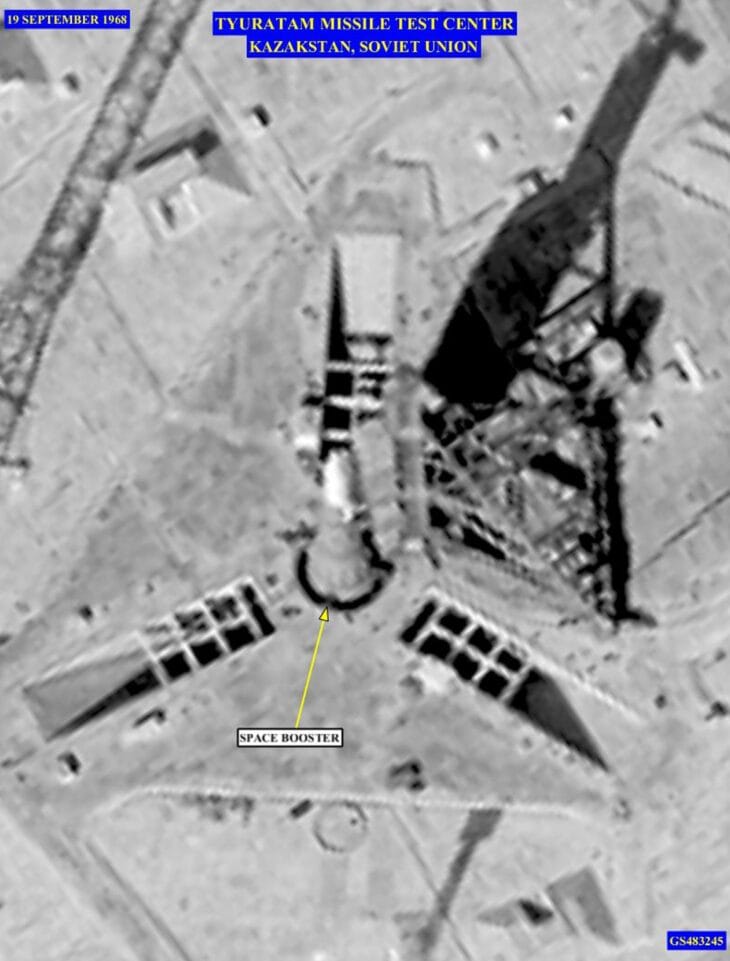

The Soviet Union’s Moon rocket was the most powerful launch vehicle of the 20th century. Its first stage fired 30 NK-15 engines at once for about 10.2 million pounds of thrust (45.4 MN), from a base 56 feet (17 m) wide.
It stood 345 feet (105.3 m) tall and weighed about 6.06 million pounds (2,750 tonnes). It never worked: all four launches, between February 1969 and November 1972, failed during first-stage flight.
The second launch, on July 3, 1969, was the worst. Every engine but one shut down as the rocket cleared the tower, and the N1 fell back onto its pad with about 2,300 tons of propellant aboard. The explosion destroyed the pad, which took 18 months to rebuild.
The N1’s 30-engine first stage is the usual cautionary tale for Starship, which lights 33, and it is why every Raptor shutdown on a Starship flight gets noticed.
3. Space Launch System: 8.8 million pounds of thrust
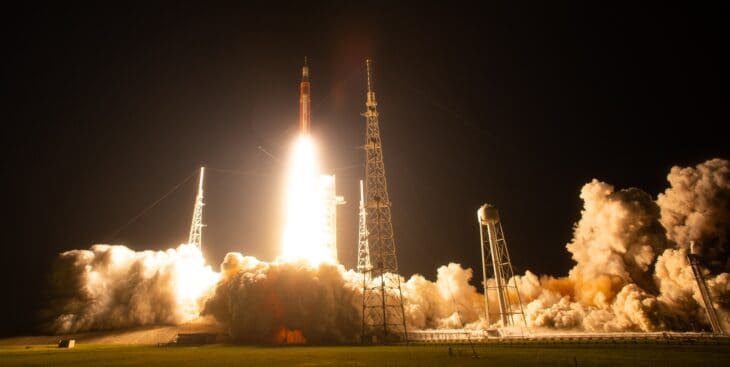

NASA’s Space Launch System (SLS) produces 8.8 million pounds of thrust at liftoff in its Block 1 form, which NASA says is 15 percent more than the Saturn V. It stands 322 feet (98 m) tall and weighs 5.75 million pounds (2,610 tonnes).
Two solid rocket boosters flank an orange core stage powered by RS-25 engines. That core stage, 212 feet tall, is the largest rocket stage NASA has ever produced.
SLS has flown twice, both successfully. Artemis I went uncrewed around the Moon in November 2022, and Artemis II launched four astronauts on April 1, 2026, the first crewed flight beyond low Earth orbit since 1972, with splashdown in the Pacific on April 10.
Those four join a short roster; the full list is in our guide to how many people have been to space.
4. Energia: 7.8 million pounds of thrust
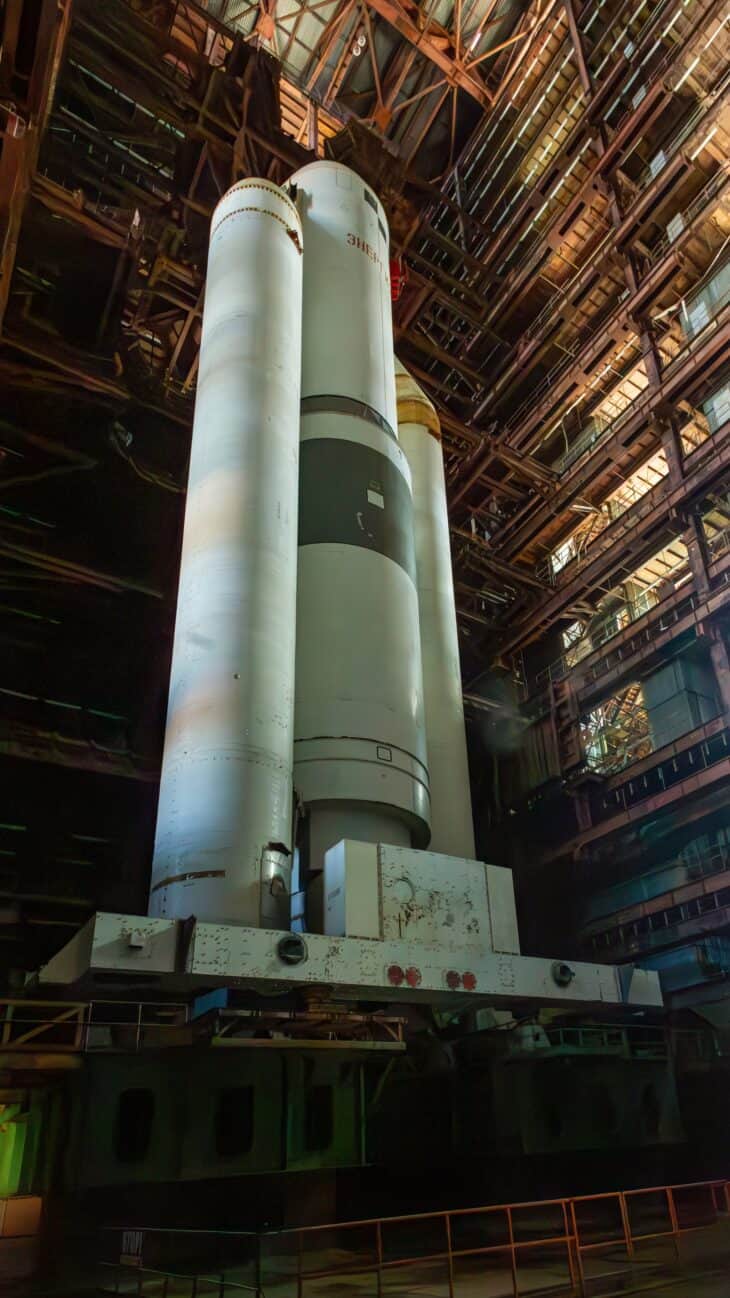

Energia is the rocket most lists forget, and it out-pushed the Saturn V. Four strap-on boosters made about 29,000 kN at sea level and the core stage about 5,800 kN, for a combined 7.8 million pounds (34.8 MN).
It was short and wide: 193 feet (58.8 m) tall but 58 feet (17.65 m) across with its boosters, weighing about 5.3 million pounds (2,400 tonnes). It was rated to lift 100 tonnes (220,000 lb) to low orbit.
Energia flew only twice. In May 1987 it launched the Polyus payload, which failed to reach orbit because of a fault in the payload’s own software, and in November 1988 it put the uncrewed Buran shuttle into orbit.
Airlifting Energia’s boosters and the Buran orbiter was the reason the Soviet Union built the Antonov An-225 Mriya, the largest airplane ever flown.
5. Saturn V: 7.5 million pounds of thrust
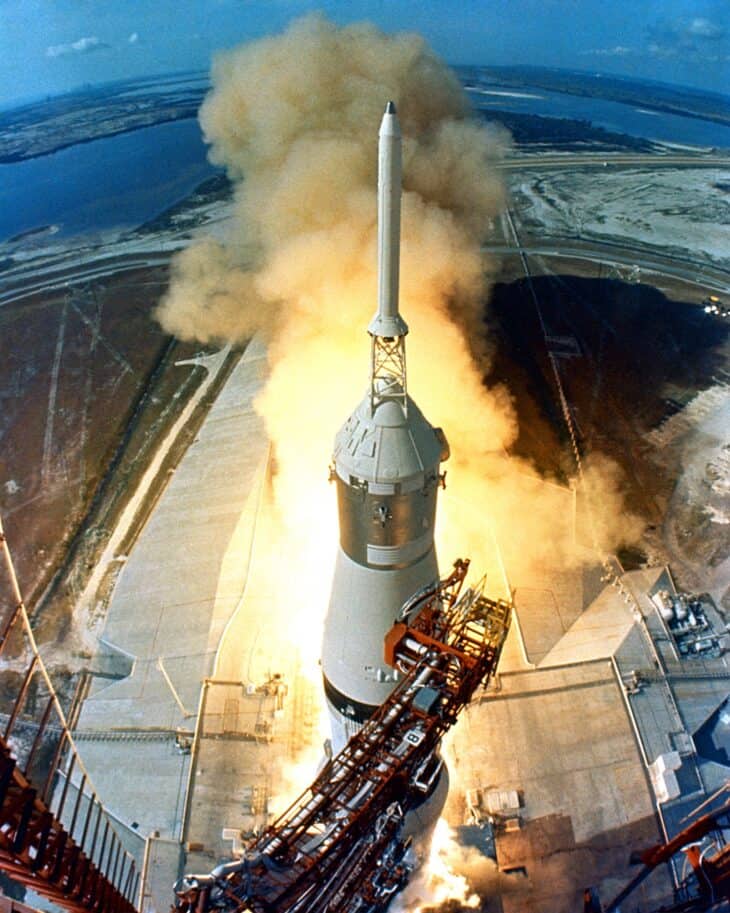

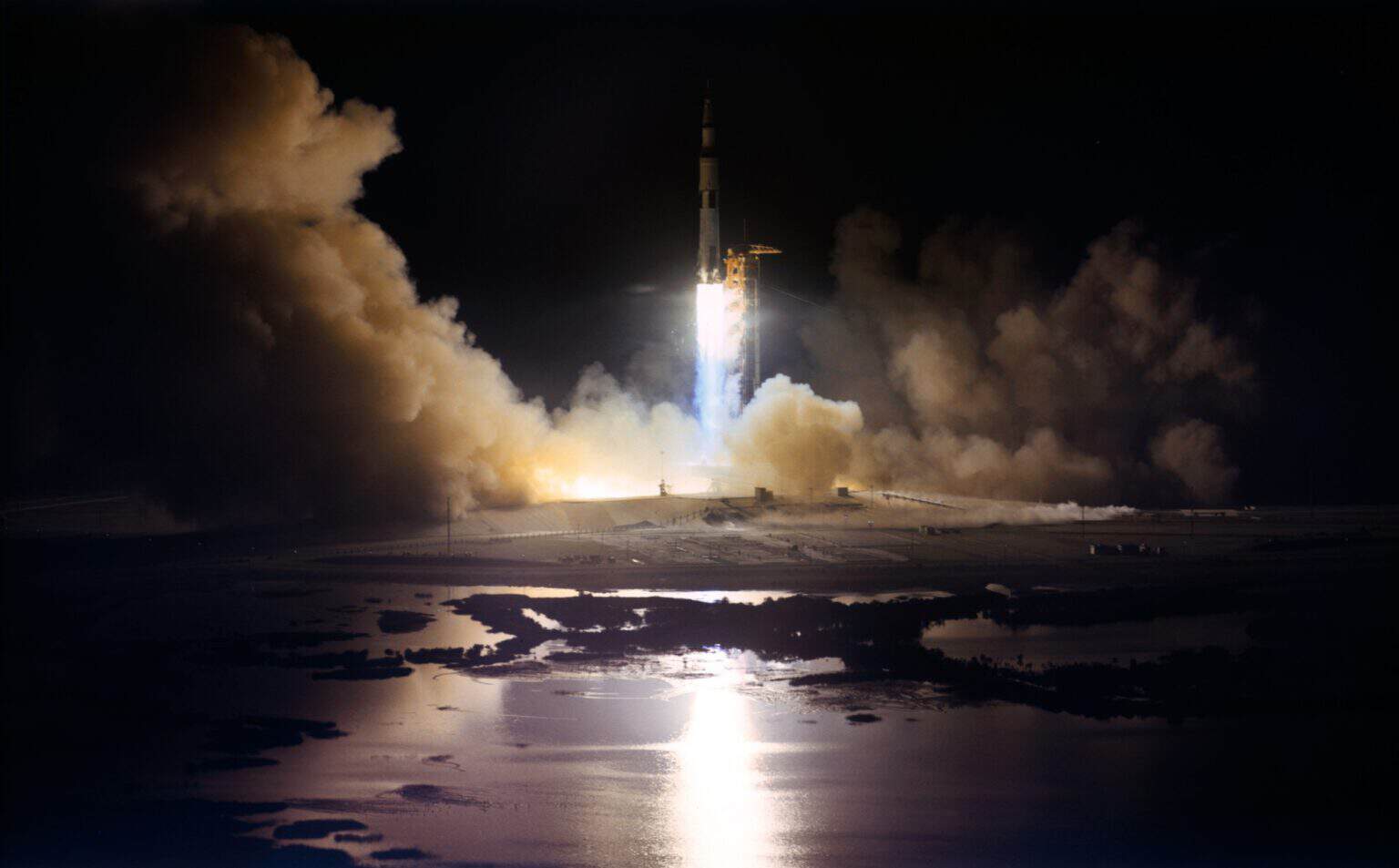
Saturn V is fifth on thrust and second on height, and it remains the most accomplished heavy rocket ever flown. Five F-1 engines, each rated at 1.5 million pounds, gave its first stage 7.5 million pounds of thrust (33.4 MN), according to the Smithsonian’s National Air and Space Museum.
It stood 363 feet (110.6 m) tall and weighed between about 6.2 and 6.5 million pounds (2,822 to 2,965 tonnes) fueled, depending on the mission. Thirteen flew between November 1967 and May 1973, with 12 successes and one partial failure, Apollo 6.
Nine Saturn Vs sent 24 astronauts toward the Moon, from Apollo 8 to Apollo 17. Several of them first learned to fly in jets, as our list of the most famous astronauts shows.
The 1960s rocket still holds the payload crown
Saturn V could put about 140 tonnes (310,000 lb) into low Earth orbit. SLS Block 1 is rated at 95 tonnes and Starship V3 at about 100 tonnes. More than 50 years later, no rocket that has flown is rated to lift more in a single launch.
6. Space Shuttle: about 6.8 million pounds of thrust
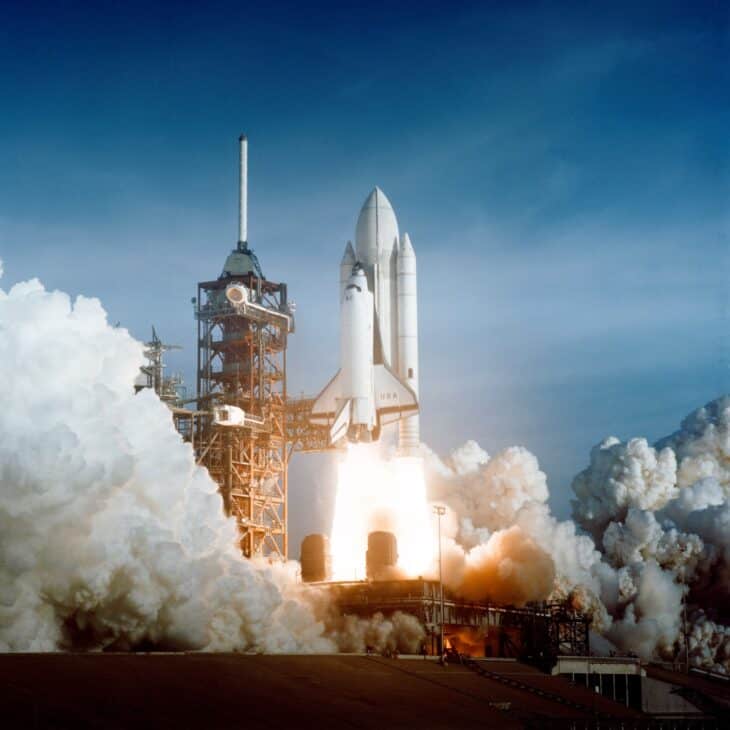

The Space Shuttle stack was 184 feet (56 m) tall and weighed 4.48 million pounds (2,030 tonnes) on the pad. Each of its two solid rocket boosters made about 2.8 million pounds of thrust at liftoff, and the orbiter’s three main engines added the rest, for roughly 6.8 million pounds (30 MN).
The boosters peaked at about 3.3 million pounds each shortly after liftoff, which is why higher totals circulate. Either way the Shuttle ranks below Saturn V, but it flew far more often: 135 missions from April 1981 to July 2011.
Only five of the six orbiters NASA built ever reached space, a story told in our piece on how many space shuttles there were.
7. Falcon Heavy: 5.1 million pounds of thrust
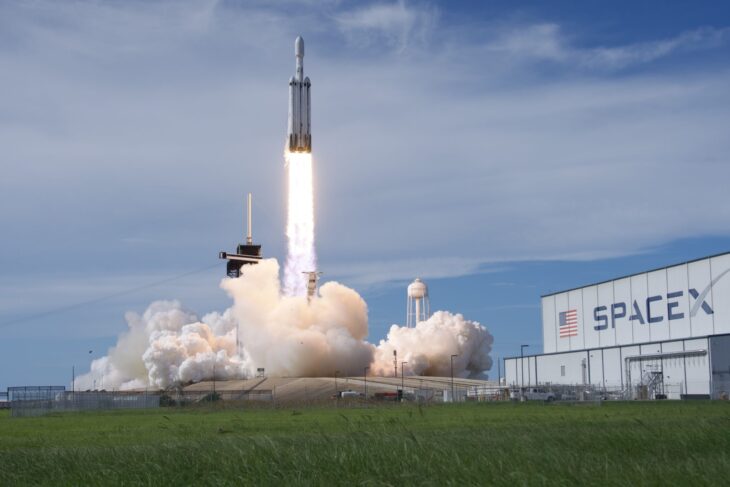
Falcon Heavy straps three Falcon 9 first stages together, so 27 Merlin engines light at liftoff for about 5.1 million pounds of thrust (22.8 MN). The rocket is 229.6 feet (70 m) tall and weighs 3.13 million pounds (1,420 tonnes).
Flown expendable, it can lift 63.8 tonnes (140,700 lb) to low Earth orbit. It has flown 14 times without a failure, most recently on Oct. 2, 2026.
8. New Glenn: 3.8 million pounds of thrust
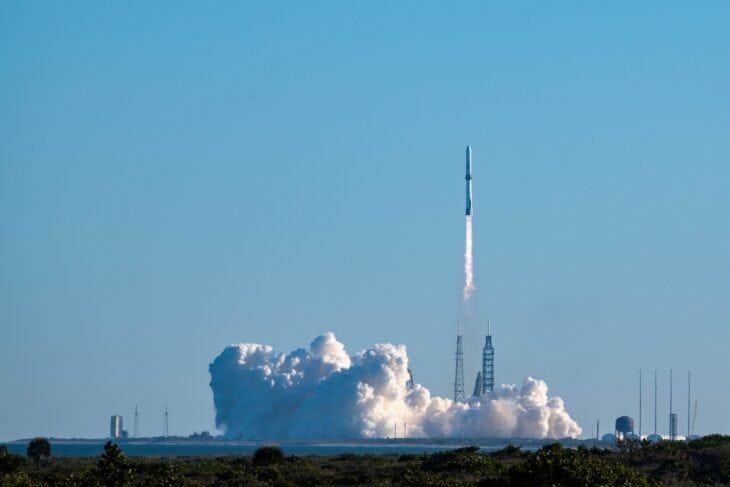

Blue Origin’s New Glenn is the least powerful rocket on this list but one of the tallest, at 322 feet (98 m), level with SLS. Seven BE-4 methane engines give it more than 3.8 million pounds of thrust (17 MN), and its first stage is built to land and fly again.
It has flown three times. The January 2025 debut reached orbit, the November 2025 flight landed its booster, and the April 2026 flight reused that booster but left its satellite in the wrong orbit.
A New Glenn then exploded during a static fire test on May 28, 2026, badly damaging its Florida pad. As of mid-November 2026 the pad tower has been rebuilt, and Blue Origin is targeting a return to flight around the turn of the year.
The rockets that would have topped this list
The biggest rocket ever designed was never built. Robert Truax’s Sea Dragon, drawn up at Aerojet in 1962, would have been 490 feet (150 m) tall and 75 feet (23 m) wide, launched from the ocean after flooding a ballast tank to float it upright.
Its first stage was to make about 80 million pounds of thrust (356 MN) and lift 550 tonnes (1.21 million lb) to orbit. It never left the drawing board.
Two real rockets could move up this list soon. Blue Origin’s New Glenn 9×4 is planned at about 400 feet (120 m) with nine BE-4s, and China’s three-core Long March 10, 303 feet (92.5 m) tall, is scheduled for an uncrewed lunar test in 2027 ahead of a crewed landing by 2030.
Isn't SLS the most powerful rocket ever?
It was, briefly. When Artemis I launched in November 2022, SLS became the most powerful rocket to fly successfully, beating Saturn V’s thrust by 15 percent. Starship’s first flight in April 2023 made it the most powerful rocket ever launched, and with Version 3 it now makes roughly twice SLS’s thrust. Many pages still repeat the 2022 claim.
For the opposite end of the scale, what those rockets launch and how fast it goes, see the fastest spacecraft ever launched.
FAQ
Sources and references used for research and fact-checking.
- Wikipedia, SpaceX Starship
- Wikipedia, SpaceX Super Heavy
- Wikipedia, List of Starship launches
- Aviation Week, Starship Flight 15 Ends With First Ship Tower Catch
- Wikipedia, N1 (rocket)
- Wikipedia, Space Launch System
- NASA, Space Launch System Core Stage
- Anchorage Daily News (AP), Artemis II crew splashdown in the Pacific to cap NASA's lunar comeback
- Wikipedia, Energia (rocket)
- Wikipedia, Antonov An-225 Mriya
- Smithsonian National Air and Space Museum, A New View of the Rocketdyne F-1 Engine
- Wikipedia, Saturn V
- Wikipedia, Space Shuttle
- Wikipedia, Space Shuttle Solid Rocket Booster
- Wikipedia, Falcon Heavy
- Wikipedia, New Glenn
- SatNews, Blue Origin Reconstructs Launch Complex 36 Tower, Targets November Return to Flight for New Glenn
- Wikipedia, Long March 10
- Wikipedia, Sea Dragon (rocket)
Get the Newsletter
The latest aviation news and stories sent to your inbox.
About the Author

Tim is the owner and lead editor of AeroCorner since 2019, overseeing aviation content covering aircraft, airlines, airports, and the broader aviation industry. Through years of researching, writing, editing, and publishing aviation-focused content, he has developed extensive practical knowledge of commercial aviation and air travel. Based in Asia and a frequent traveler himself, Tim also brings firsthand passenger experience to AeroCorner’s coverage. Outside of publishing, he has also explored aviation firsthand through hands-on flight training in New Zealand.