

Table of Contents
On November 13, 2026, Endeavour went back on public display in Los Angeles, standing upright on its fuel tank and boosters as if it were about to launch. It is the only shuttle displayed that way, and it is one of just four orbiters still in existence.
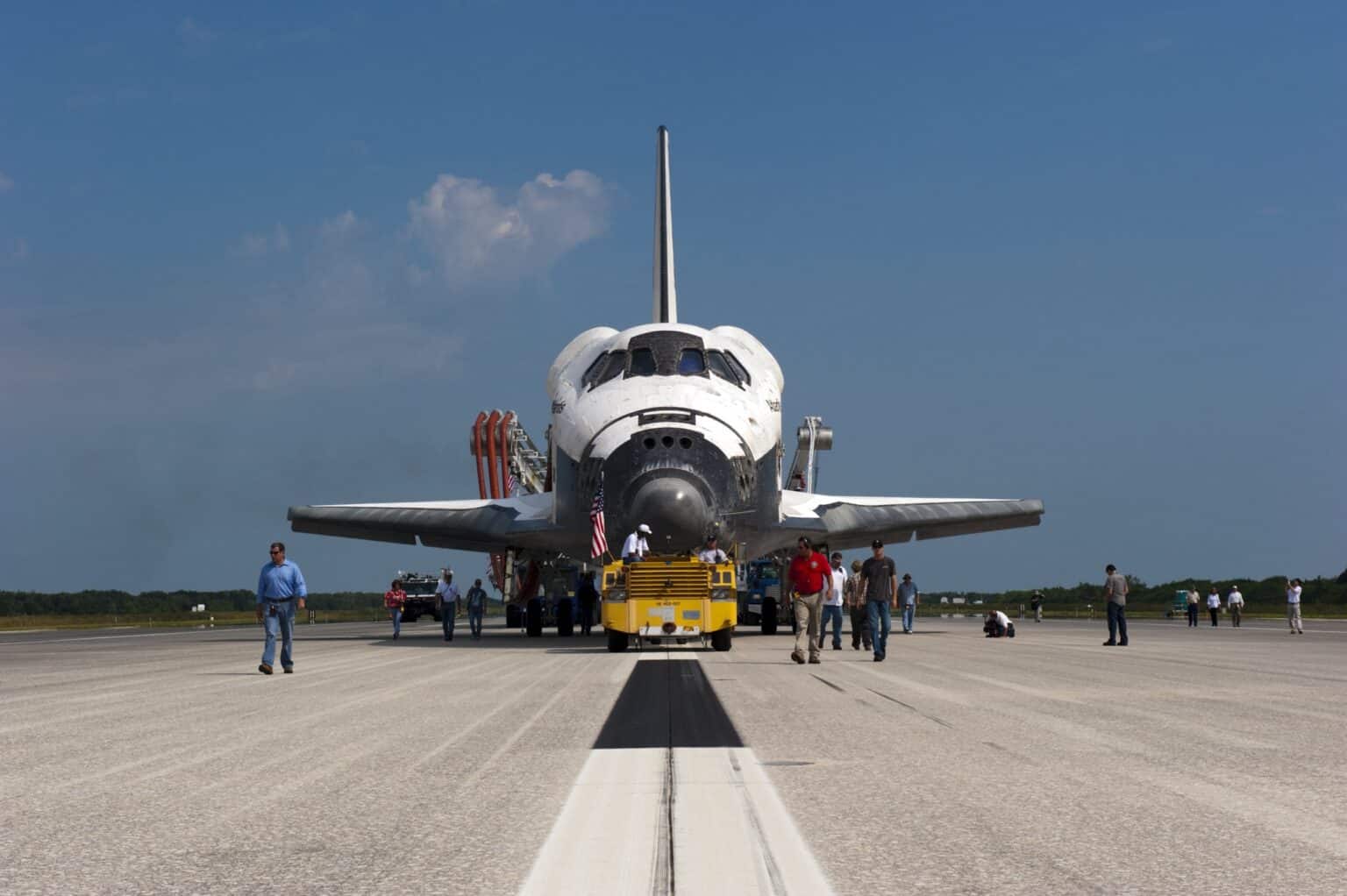
NASA built six space shuttle orbiters, according to NASA’s own fleet records. Five of them flew in space, between April 1981 and July 2011. The sixth, Enterprise, was a test glider that never left the atmosphere.
How Many Space Shuttles Were There?
Six full-size orbiters were built: Enterprise, Columbia, Challenger, Discovery, Atlantis and Endeavour. Together the five spaceflight orbiters flew 135 missions over 30 years, and they spent a combined 1,330 days in space.
Two were lost with their crews. Challenger broke apart during launch on January 28, 1986, and Columbia broke apart during re-entry on February 1, 2003, killing seven astronauts each time. The other four, Enterprise included, are on display in museums today.
The count at a glance
Built: 6 orbiters. Flew in space: 5. Missions: 135, from 1981 to 2011. Lost: 2 (Challenger and Columbia). Surviving: 4, all in museums. Counted as of November 2026.
The Six Orbiters, One by One
Each orbiter carried an OV (orbiter vehicle) number. The odd one out is Challenger, OV-099, which started life as a structural test article and was rebuilt into a flying orbiter, so its number is lower than Columbia’s.
| Orbiter | Space missions | Years flown | Where it is now |
|---|---|---|---|
| Enterprise (OV-101) | 0 (5 glide tests in 1977) | 1977 only | Intrepid Museum, New York City |
| Columbia (OV-102) | 28 | 1981 to 2003 | Lost on re-entry, 2003; remains stored at Kennedy Space Center |
| Challenger (OV-099) | 10 | 1983 to 1986 | Lost on launch, 1986; debris buried at Cape Canaveral |
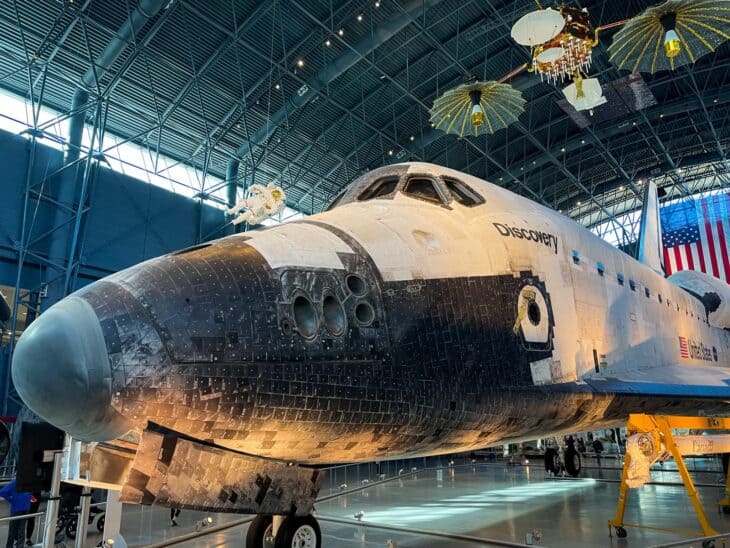
| Discovery (OV-103) | 39 | 1984 to 2011 | Smithsonian Udvar-Hazy Center, Chantilly, Virginia |
| Atlantis (OV-104) | 33 | 1985 to 2011 | Kennedy Space Center Visitor Complex, Florida |
| Endeavour (OV-105) | 25 | 1992 to 2011 | California Science Center, Los Angeles |
| Total | 135 | 1981 to 2011 | 4 surviving |
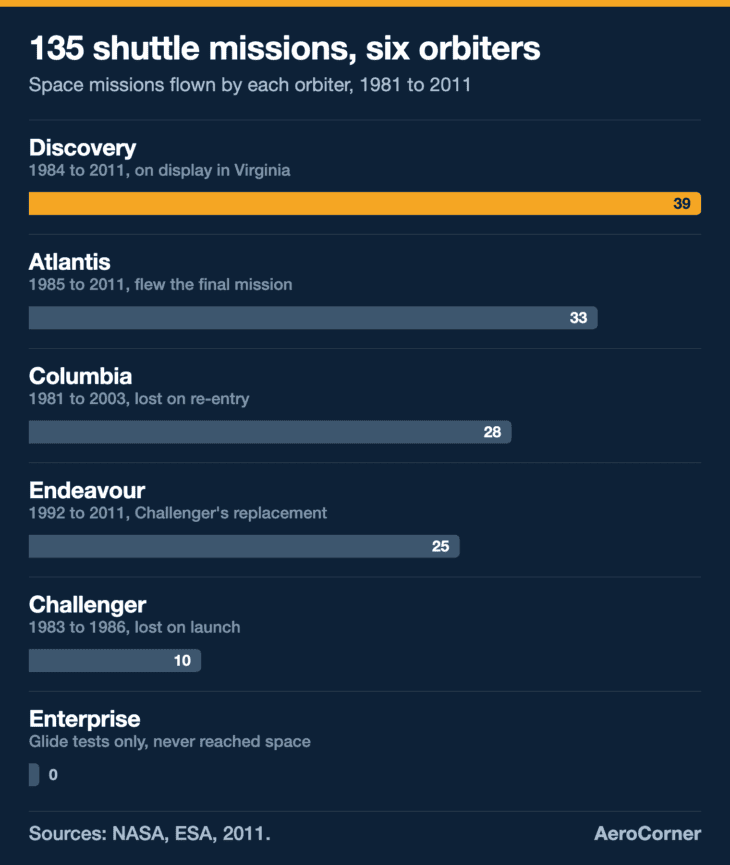
Discovery was the workhorse. It flew 39 times and logged nearly 365 days in space, almost a full year, more than any other orbiter.
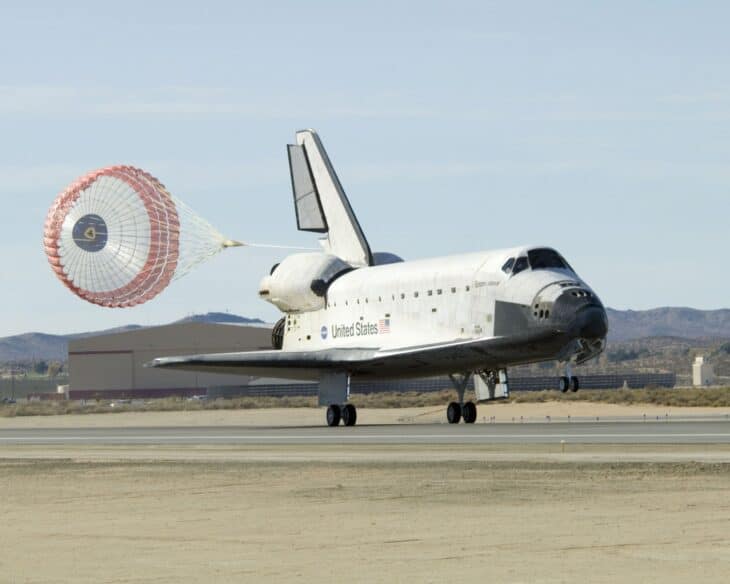
Endeavour was the replacement. NASA built it as Challenger’s successor, and it did not fly until May 1992, more than six years after the accident. Atlantis flew the very last mission, STS-135, and landed at Kennedy Space Center on July 21, 2011.

Why You See 4, 5, 6 or More
Search this question and you will get several different answers, and most of them are right about something. The difference is what each one counts.
Five counts the orbiters that flew in space. ESA’s fleet summary, for example, lists Enterprise separately because it was never built for spaceflight.
Six counts every full orbiter NASA built, Enterprise included. NASA could have converted Enterprise for spaceflight, but it found it cheaper to rebuild the structural test article STA-099 instead, and that airframe became Challenger.
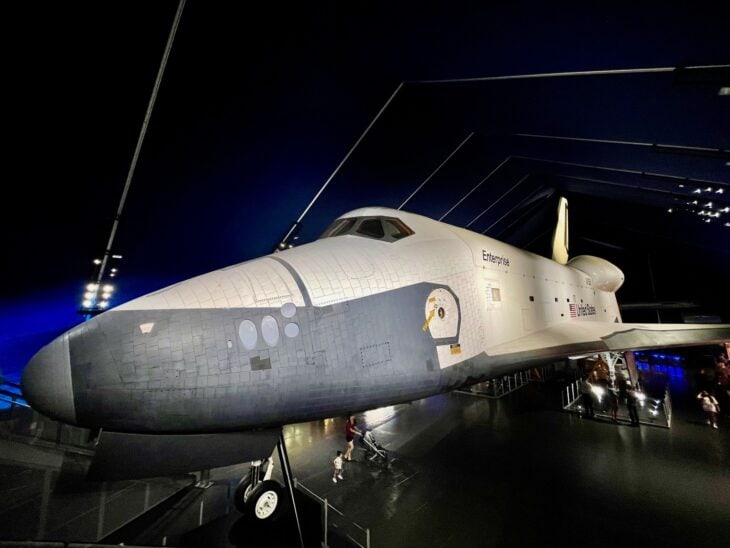

Four counts the survivors: Enterprise, Discovery, Atlantis and Endeavour. Only three of those four have been to space.
The mix-up to avoid
Saying there are five shuttles left is wrong. Two of the five spaceflight orbiters were destroyed, so three flown shuttles survive. The fourth survivor, Enterprise, is a test glider that never went to space.
More than six usually means mockups and test articles are being counted. Pathfinder, an orbiter simulator built for handling tests, sits at the U.S. Space & Rocket Center in Huntsville, Alabama. Independence, a full-scale replica, rides on top of a real Shuttle Carrier Aircraft at Space Center Houston, and two mockups named Inspiration exist in Florida and California.
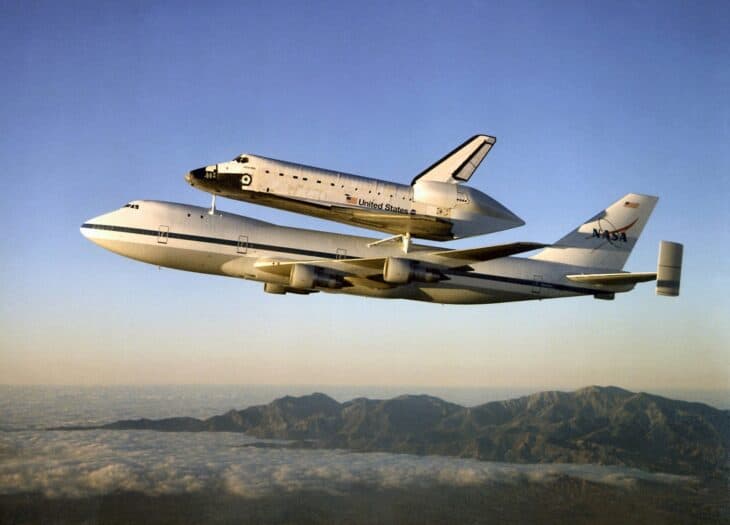
That carrier aircraft is a real flown airframe, though. NASA ferried its orbiters cross-country on two modified 747s, and N905NA is a Boeing 747-100, while its sister ship N911NA is on display in Palmdale, California.

Some lists also add the Soviet Buran. It was a separate program: Buran flew once, uncrewed, on November 15, 1988, circled Earth twice and landed itself. It was destroyed in 2002 when its hangar roof collapsed at Baikonur.
How the Fleet Got From Six to Four
The fleet was never all in service at once. Enterprise stopped flying before Columbia reached space, and Endeavour arrived only after Challenger was gone.
Aug. 1977
Enterprise glides. The first of five free-flight approach and landing tests, released from the back of a 747.
Apr. 1981
Columbia reaches orbit. STS-1, the first shuttle mission in space.
Apr. 1983
Challenger joins. Its first mission is STS-6.
1984 to 1985
Discovery and Atlantis join. The fleet peaks at four spaceflight orbiters.
Jan. 28, 1986
Challenger is lost. It breaks apart during launch on its 10th mission.
May 1992
Endeavour flies. Challenger’s replacement makes its first mission, STS-49.
Feb. 1, 2003
Columbia is lost. It breaks apart during re-entry at the end of STS-107, its 28th mission.
July 21, 2011
The program ends. Atlantis lands after STS-135, the 135th and final mission.
2012
The museum moves. Discovery goes to the Smithsonian, Enterprise to New York, and Endeavour to Los Angeles.
Nov. 13, 2026
Endeavour stands up. Its new gallery opens with the orbiter mounted vertically on its tank and boosters.
Where You Can See the Space Shuttles Today
All four survivors are open to the public. Discovery sits at the Smithsonian’s Udvar-Hazy Center next to Washington Dulles, one of the headline exhibits in our guide to aviation museums in Virginia. Enterprise sits on the flight deck of the USS Intrepid in Manhattan.
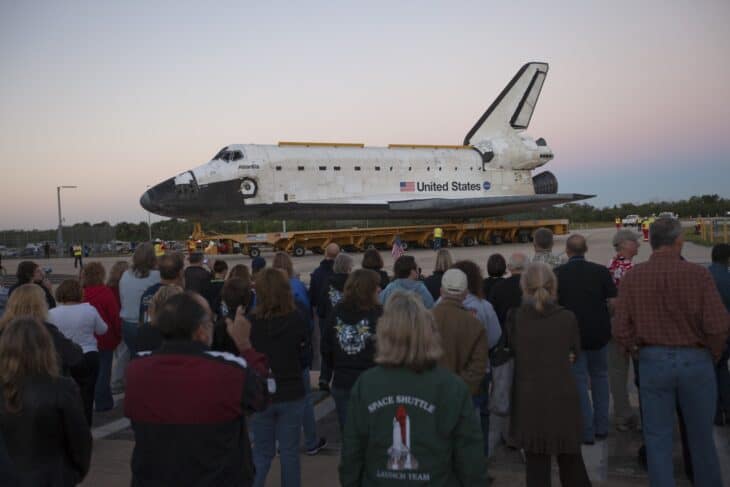
Atlantis is at the Kennedy Space Center Visitor Complex in Florida, where it launched from and landed for the last time. Endeavour’s new home, the Samuel Oschin Air and Space Center, is a $450 million expansion of the California Science Center, with an elevator that lifts visitors 140 feet alongside the orbiter. It is the newest stop among the aviation museums in California.

The only complete shuttle stack
Endeavour is displayed with a flightworthy external tank, ET-94, and a set of flightworthy solid rocket boosters. The California Science Center says that makes it the only place in the world showing a complete, authentic shuttle system.
Discovery may yet move. A 2025 budget law set aside $85 million to transfer a crewed spacecraft to Houston, a provision written with Discovery in mind, but moving it was estimated at $120 million to $150 million and could mean taking the orbiter apart.
NASA Administrator Jared Isaacman said in January 2026 that any move had to fit the budget, and as of November 2026 Discovery is still in Virginia.
Shuttles were spacecraft that landed like gliders, which is part of why they are so often grouped with aircraft. If you have ever wondered why an airliner cannot simply climb to orbit instead, our explainer on why planes can’t fly into space covers the physics.
FAQ
Sources and references used for research and fact-checking.
- NASA, Space Shuttle Orbiter Vehicles
- European Space Agency, Space Shuttle fleet
- Wikipedia, Space Shuttle orbiter
- Wikipedia, Space Shuttle Inspiration
- Wikipedia, Shuttle Carrier Aircraft
- Wikipedia, Buran (spacecraft)
- Beverly Press, Samuel Oschin Air and Space Center ready for liftoff
- Vintage Aviation News, California Science Center Set to Open the Samuel Oschin Air and Space Center on November 13
- FOX 5 DC, Space shuttle Discovery to remain in Virginia after efforts to move it to Texas stall
- Vintage Aviation News, Discovery Stays Put: NASA Halts Plan to Move Space Shuttle from Smithsonian
Get the Newsletter
The latest aviation news and stories sent to your inbox.
About the Author

Tim is the owner and lead editor of AeroCorner since 2019, overseeing aviation content covering aircraft, airlines, airports, and the broader aviation industry. Through years of researching, writing, editing, and publishing aviation-focused content, he has developed extensive practical knowledge of commercial aviation and air travel. Based in Asia and a frequent traveler himself, Tim also brings firsthand passenger experience to AeroCorner’s coverage. Outside of publishing, he has also explored aviation firsthand through hands-on flight training in New Zealand.